In a world increasingly uncertain, fragmented, and overwhelmed by shallow distractions, there is something quietly extraordinary about Poland, something the world still needs. It is not just the architecture of Kraków, the beauty of the Tatra Mountains, or the storied legacy of kings and uprisings. It is something deeper – it’s resilience, the kind that does not boast but endures.
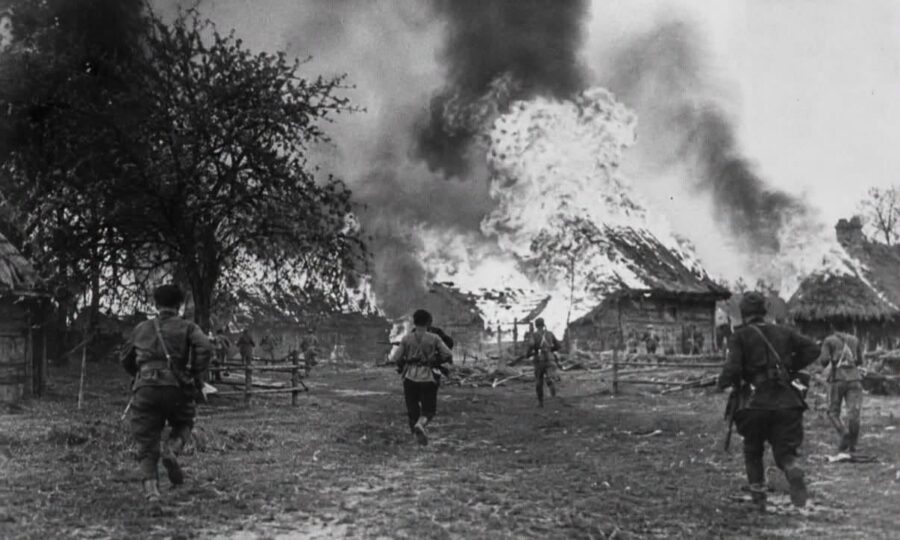
Poland is no stranger to hardship. This is a nation that was erased from maps for 123 years and yet never stopped being Polish. A people who fought for freedom in the shadows, through poetry, prayer, and underground resistance, when their voices were silenced. A country that withstood both German terror and Soviet chains and still emerged with soul intact. To face totalitarianism, genocide, betrayal, and occupation, and still walk forward with dignity is not merely survival. It is moral strength.
The Polish people carry something rare in today’s world, a memory that stretches beyond the last news cycle. They know what it means to lose everything and still rebuild, not just cities, but values. They still visit cemeteries. They still light candles. They still remember not only their heroes, but their neighbours and they still believe that history matters, not for politics, but for truth.
I know this not from books, but from life. Nearly two decades ago, I was an educator in Poland and I am still in touch with some of those students today. That alone says something about the kind of bonds this country fosters. I married a strong Polish woman, born under Communism, someone who knows what it means to endure and overcome with grace.
I have walked the streets where battles raged. I have stood in the rooms where resistance fighters were tortured. I have seen the sites where average Poles, shopkeepers, priests, farmers, were murdered in the death camps of Nazi Germany. And yet, from that horror, Poland rose, not with vengeance, but with humility and quiet strength.
This resilience is not bitter. It is warm, steady, and proud. It lives in the grandmother stirring soup from a recipe handed down through generations. In the soldier’s salute at Westerplatte. In the worn hands of the man who rebuilt Warsaw, brick by brick, because no one else would. It lives in the conviction that no matter how dark the night, Poland wakes again, singing hymns, teaching its children, and carrying its dead with honour.
In a world that too often chooses comfort over principle, forgetting over remembering, and division over tradition, Poland remains a defiant exception. It says, we do not forget. We endure. We do not abandon our roots, because they are the reason we still stand.
This is why the world still needs Poland, not just as a country, but as a conscience. Because Poland does not simply remember history. It lives it and in doing so, it quietly teaches the rest of us how to be strong without hate, faithful without fanaticism, and proud without arrogance.
Edward Reid, an American historian who specialises in WWII
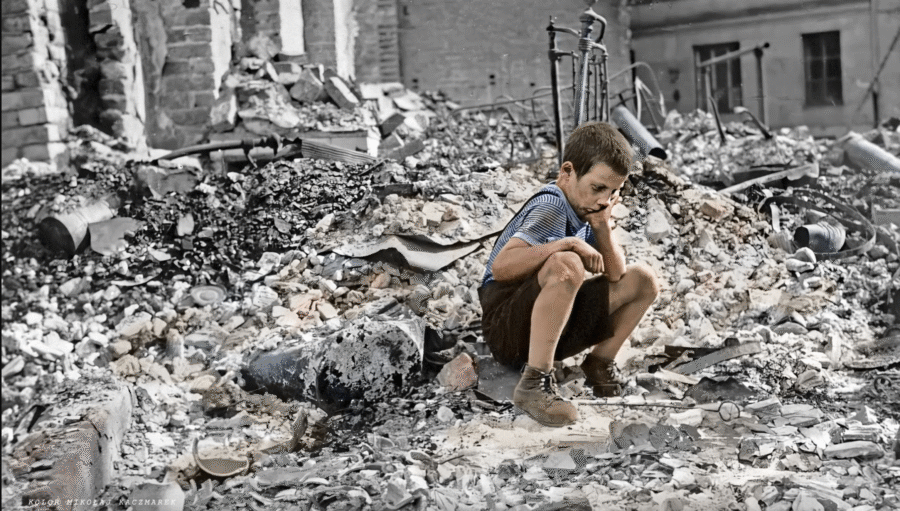
Photo: 9-year-old Ryszard Pajewski sitting on a pile of rubble next to his bombed-out home in Warsaw in 1939. Julien Bryan, the WW2 Museum in Gdańsk. Colourised by Mikołaj Kaczmarek