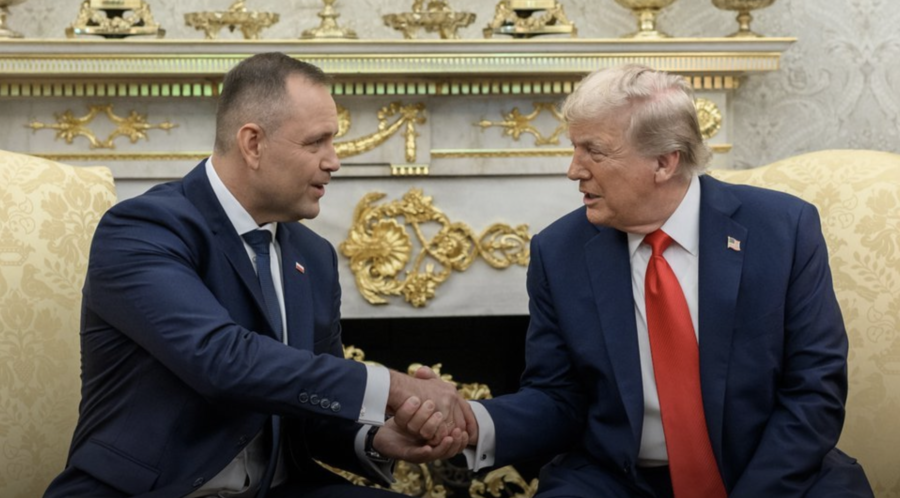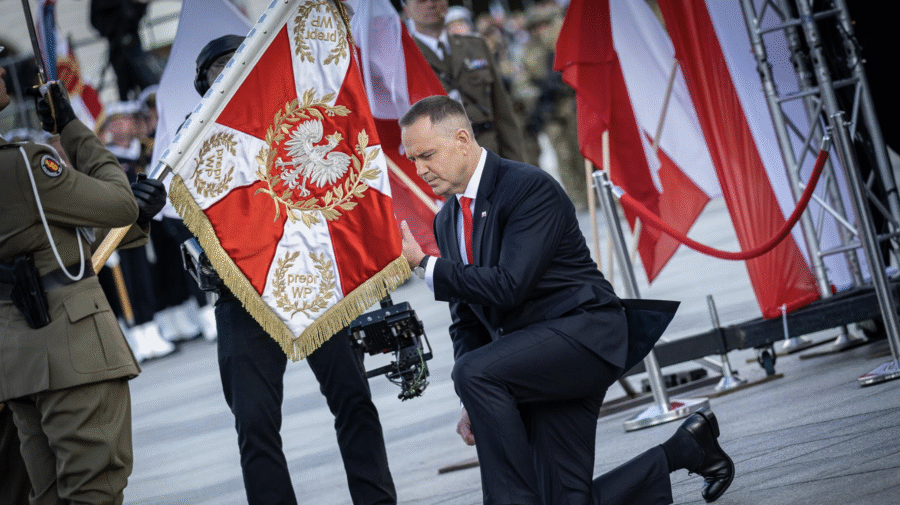
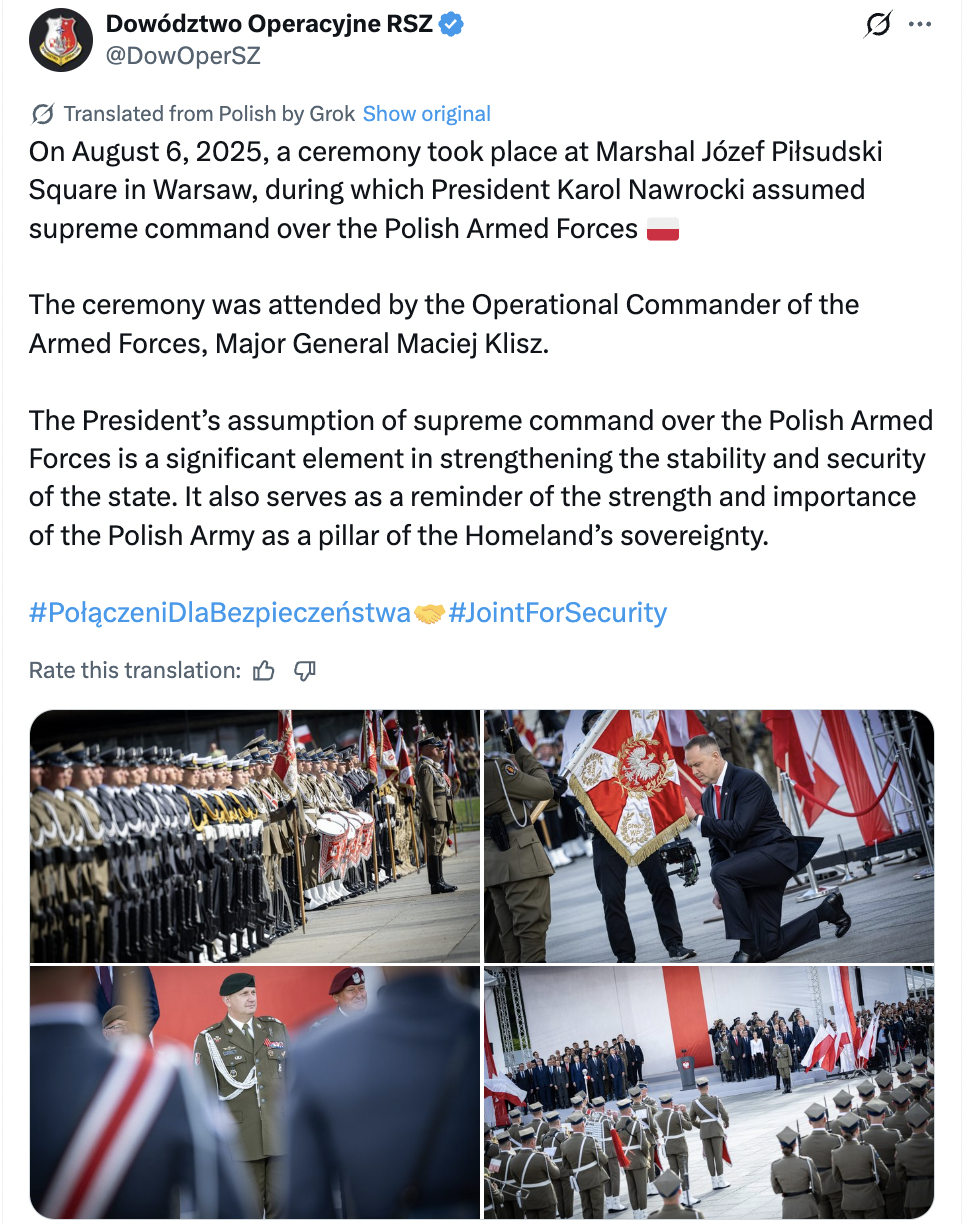
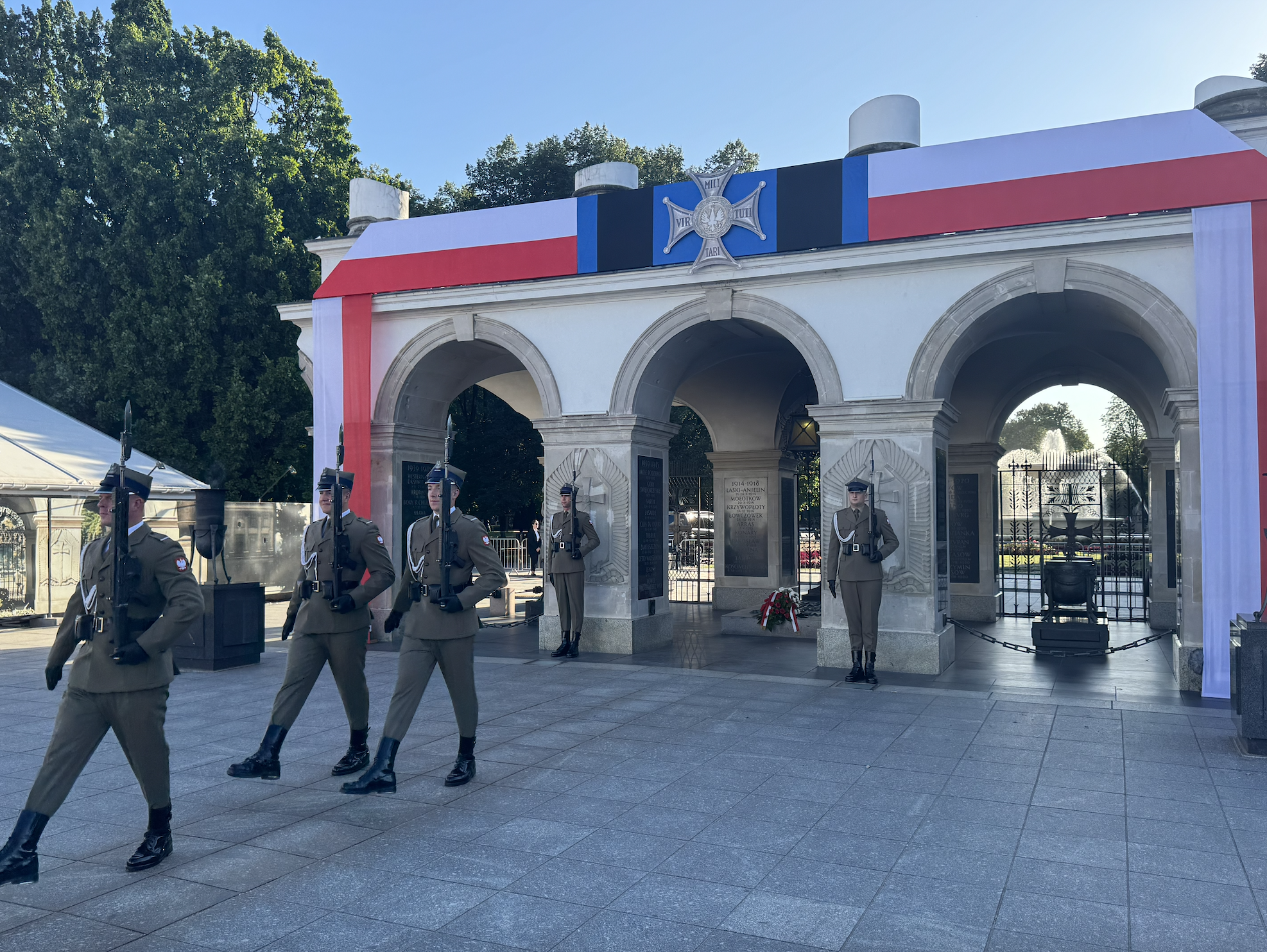
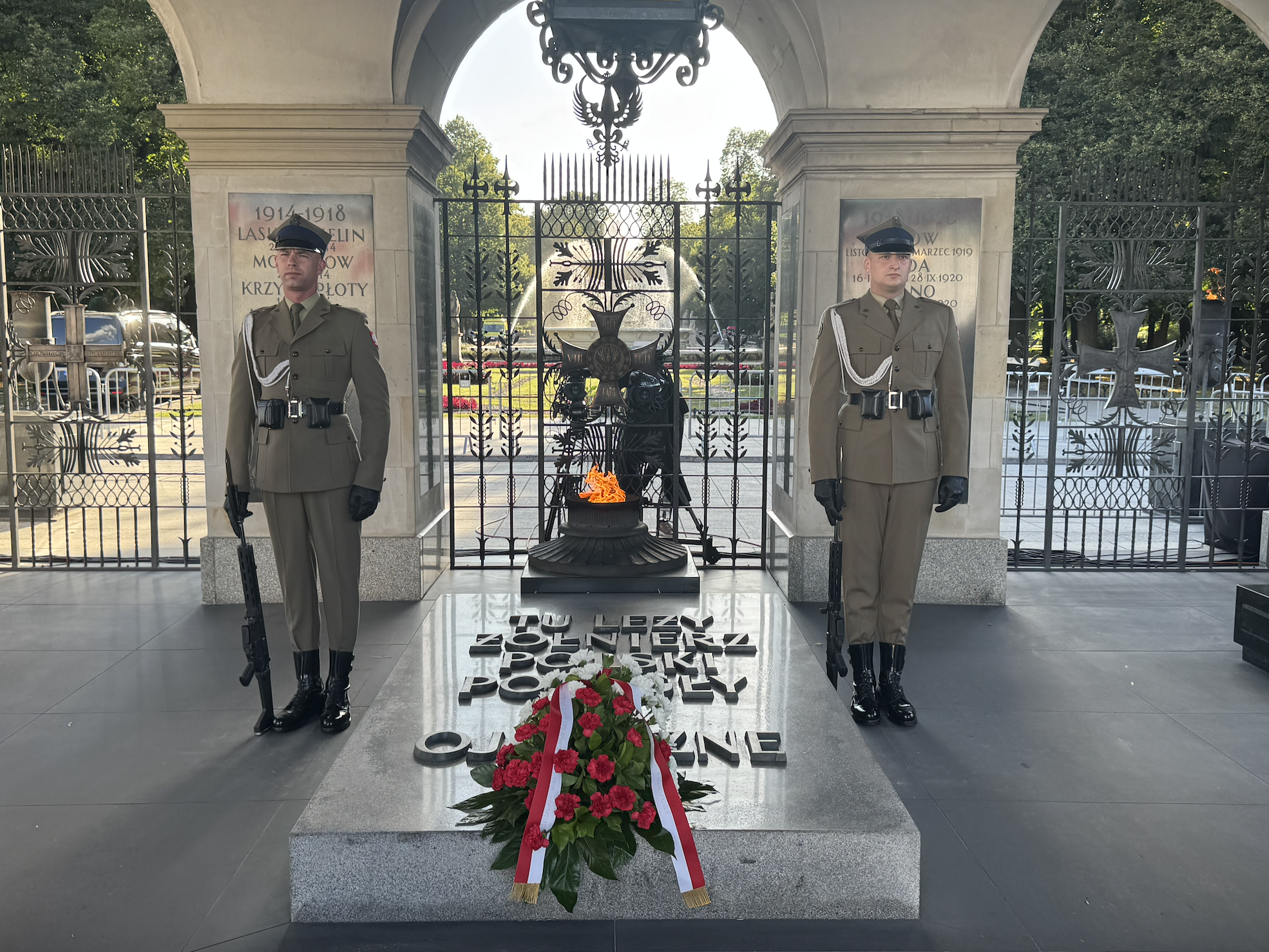
In a solemn ceremony held at Warsaw’s Piłsudski Square on Wednesday afternoon, President Karol Nawrocki formally assumed his role as the Commander-in-Chief of the Polish Armed Forces. Although he officially took over this constitutional duty upon taking the presidential oath earlier in the day, the symbolic event—marked by a military parade, the raising of the presidential standard, and the laying of a wreath at the Tomb of the Unknown Soldier—underscored the weight of the responsibility he now bears.
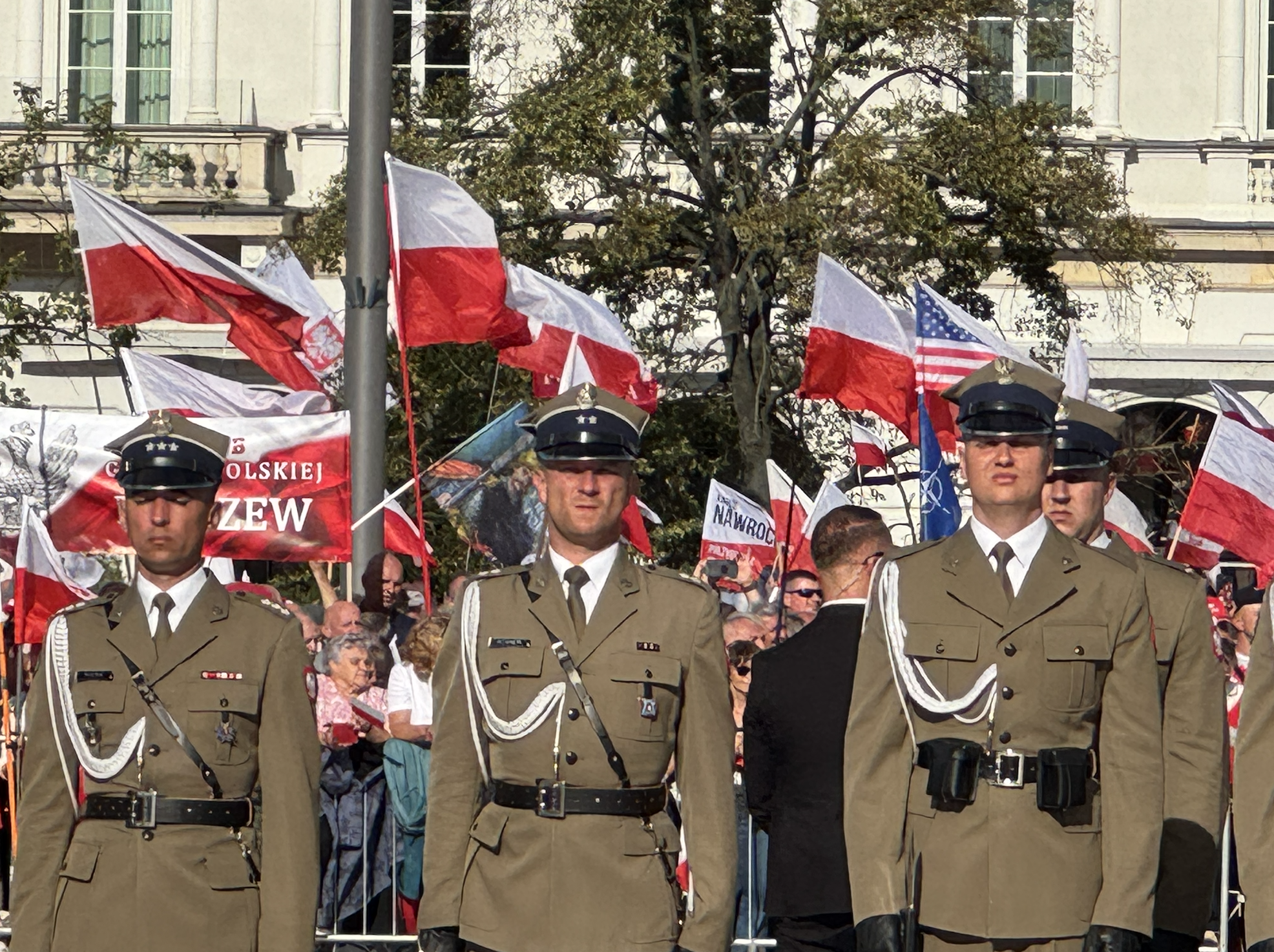
Speaking before assembled troops, top military commanders, and government officials, Nawrocki declared his intention to be “an active Commander-in-Chief” with a hands-on approach to military recruitment and modernisation.
The ceremony was assisted by all branches of the military, including the Polish Air Force, which flew 3 F-16 fighter jets to welcome the new president.
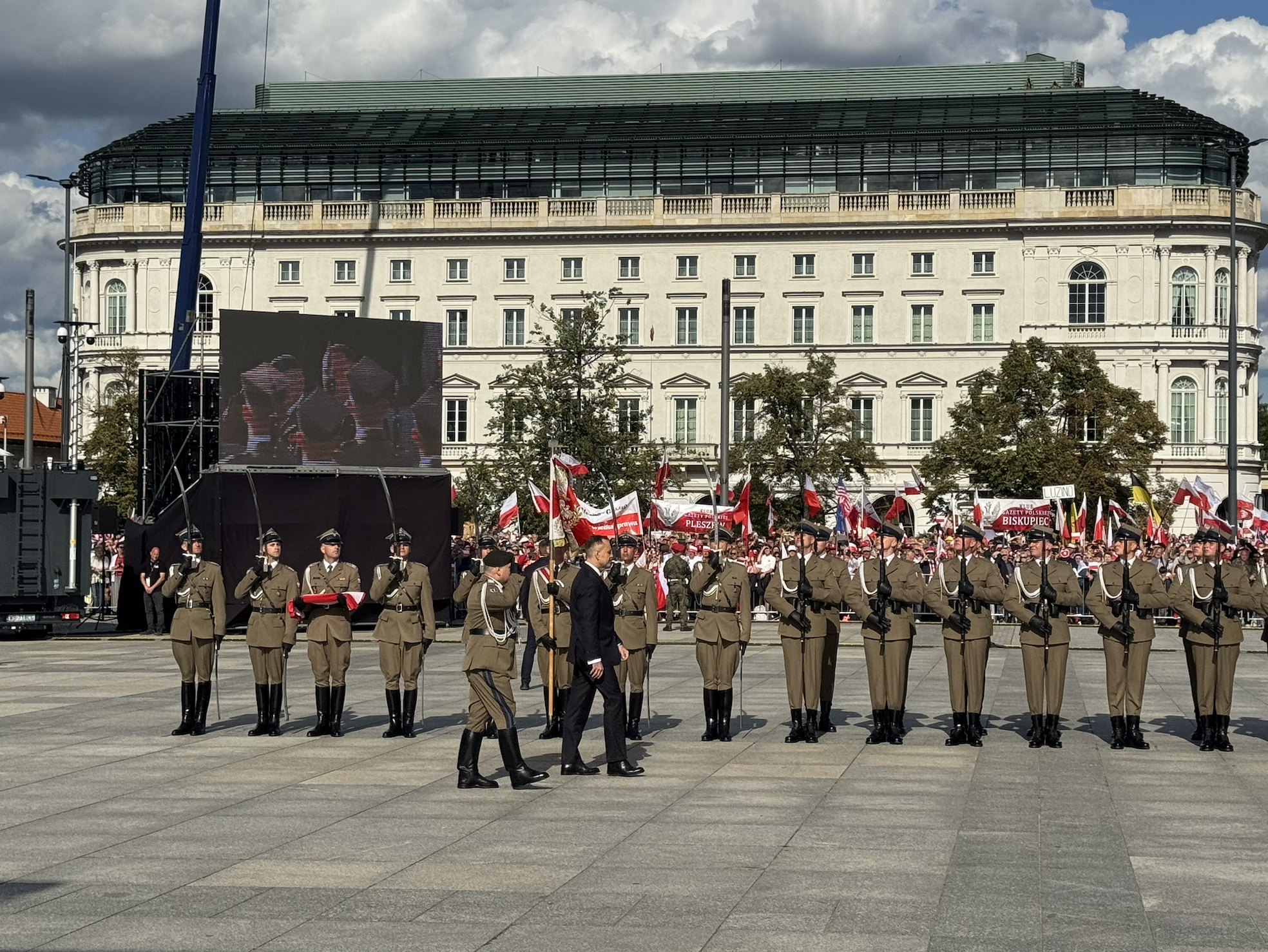
Addressing the gathered soldiers, Nawrocki evoked the legacy of Polish sacrifice: “We stand today at a place of immense national significance not just in history, but in the heart of every Polish soldier.”
Referring to the Tomb of the Unknown Soldier, he called it a symbol of sacrifice, adding that every member of the armed forces is a “hero of our time.”
In a pledge that set the tone for his five-year term, the president vowed to fulfil his constitutional duty to strengthen the military and support its growth, calling for unity and cooperation between the presidency, the Ministry of Defence, and the government.
The ceremony, however, was not without tension. Defence Minister Władysław Kosiniak-Kamysz was met with boos and jeers from supporters of the new president during his speech, in which he stressed the importance of keeping the military above political disputes.
“The army must remain free from politics,” he said, urging cooperation and mutual respect in the name of national security. He pledged his ministry’s full support in working alongside the president to prepare Poland for any threat that may arise.
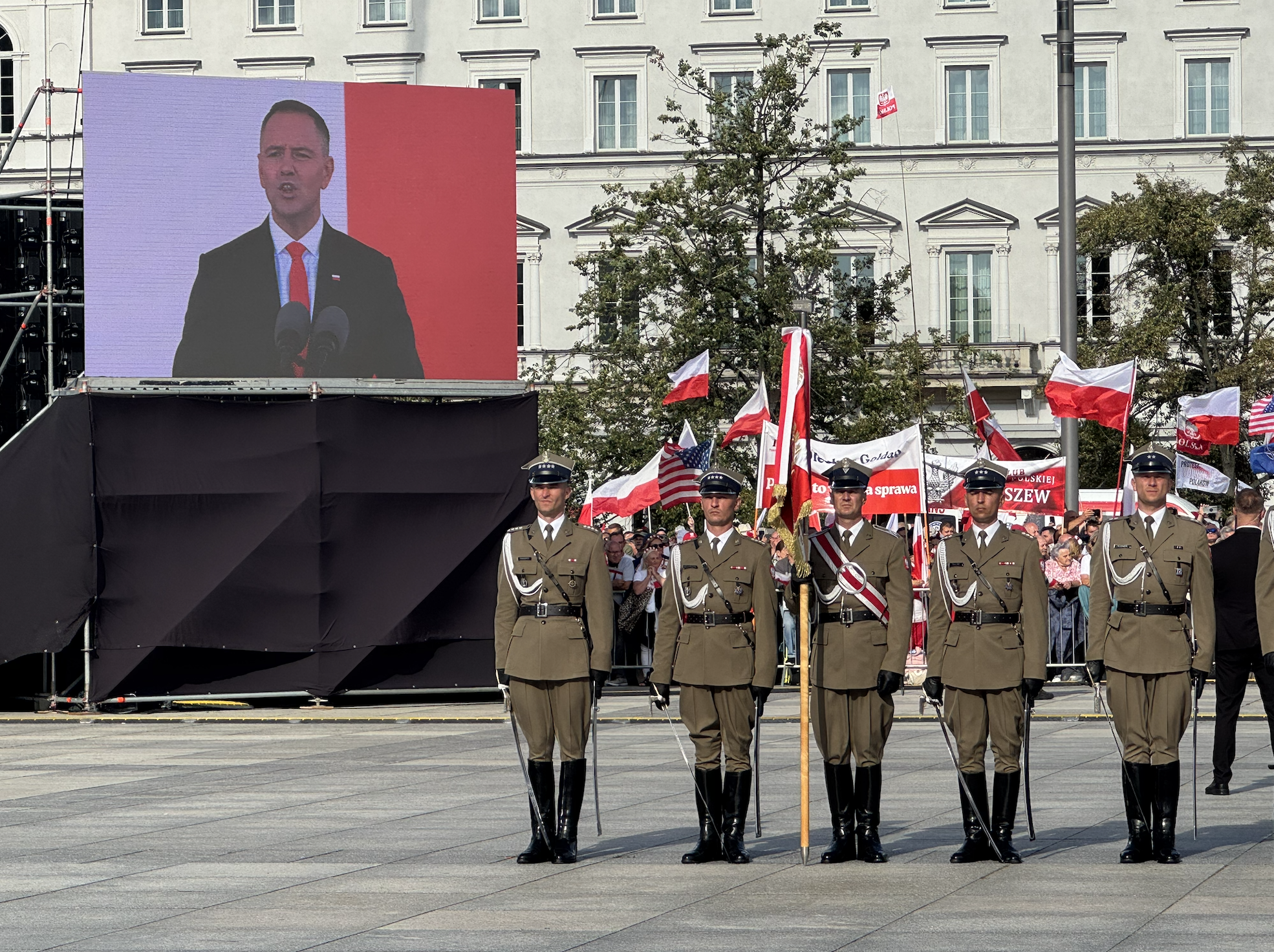
As jets from the Polish Air Force roared overhead in salute, President Nawrocki emphasised that the Presidential Palace and National Security Bureau, soon to be led by historian Sławomir Cenckiewicz, would serve not as a platform for government criticism, but as a “bastion of motivation and joint problem-solving.” He also expressed strong support for young Poles eager to join the army, describing them as the foundation of the nation’s defence.
Nawrocki echoed the long-standing vision of expanding Poland’s military to 300,000 troops, a goal first outlined by his predecessor, President Andrzej Duda. He promised to do everything within his power to realise this ambition and to ensure Poland fields the strongest land force among NATO’s European allies. While the president’s command over the armed forces is largely symbolic in peacetime and exercised through the defence ministry, it assumes a central role in times of crisis or war, as outlined in Article 134 of the Polish Constitution.
In the days ahead, Nawrocki will face the complex task of balancing his ceremonial, strategic, and supervisory role with the constitutional requirement to collaborate closely with both parliament and the government. His presidency begins at a time of heightened geopolitical tension and military transformation, a moment demanding not just vision, but resolve.
Source: PAP
Cover photo: @DowOperSZ
Photos: British Poles
Tomasz Modrzejewski