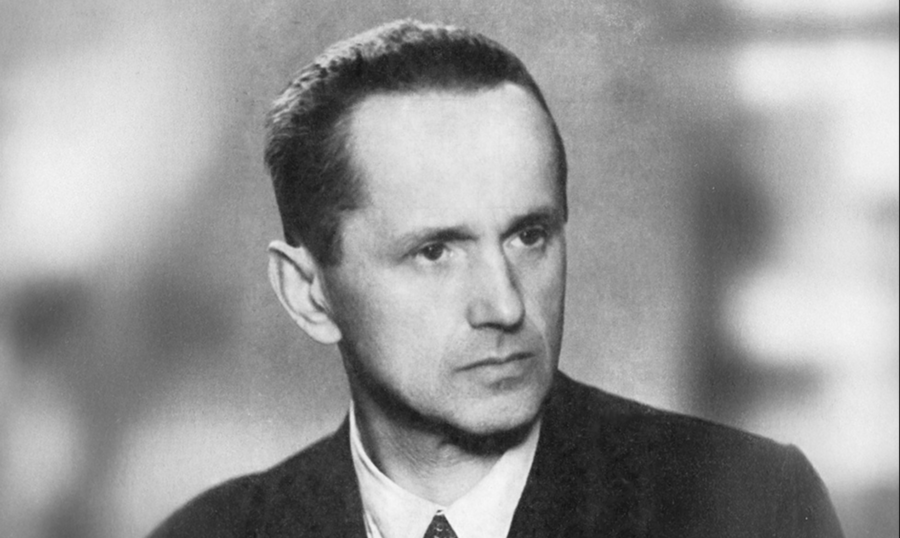
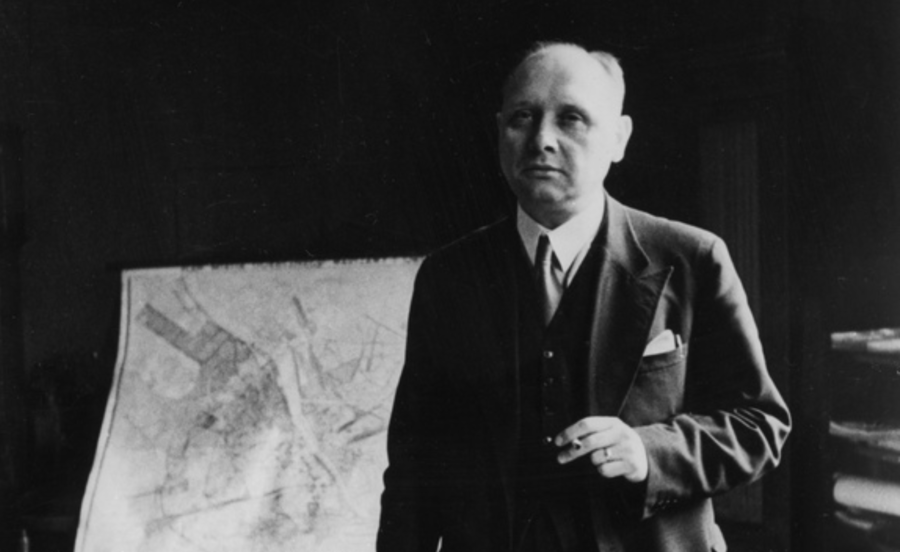
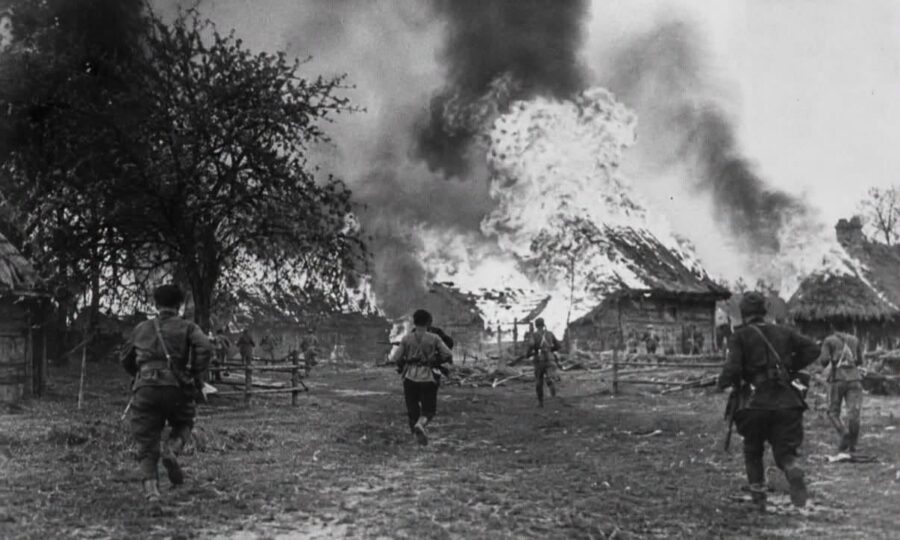
On 21 July 1952, the Supreme Military Court in Warsaw handed down death sentences to five Polish Navy commanders in what would become known as the infamous “Commander’s Plot”. Based on fabricated charges and falsified evidence, this sham trial culminated in the execution of three men and the long-term imprisonment of four others. It remains one of the darkest episodes of Stalinist repression in post-war Poland.
The accused were: Commander Stanisław Mieszkowski, Commander Jerzy Staniewicz, Lieutenant Commander Zbigniew Przybyszewski, Commander Marian Wojcieszek and Lieutenant Commander Robert Kasperski were condemned to death. Two others, Lieutenant Commander Wacław Krzywiec and Lieutenant Commander-pilot Kazimierz Kraszewski, received life sentences.

Though initially facing execution, Wojcieszek and Kasperski had their sentences commuted to life imprisonment in November by order of President Bolesław Bierut. The other three officers were murdered in the Mokotów Prison in Warsaw. Commander Staniewicz was executed on 12 December 1952, followed by Commander Mieszkowski and Lt. Commander Przybyszewski on 16 December, each shot in the back of the head.
These judicial killings were part of a broader Stalinist purge of Poland’s pre-war military elite. After the Second World War, officers associated with the pre-war state the so-called „Sanacja regime” in military were systematically removed under the guise of rooting out „class enemies”. Behind the scenes, the campaign was orchestrated to align the Polish army with Moscow’s political goals and remove officers who could undermine that process by their connection to the idea of independence.
The first major political trial targeting the armed forces was the so-called „TUN Trial”, named after Generals Tatar, Utnik, and Nowicki. Returning from exile in the West after the war, these officers had rejoined the Polish People’s Army and even handed over financial assets from the London-based General Staff’s Special Section known as the “Drawa Fund” to the communist authorities. Though initially decorated for their service, they were soon placed under surveillance and later arrested in November 1949.
Alongside them, several high-ranking officers, including Major Władysław Roman and Lieutenant Commander Szczepan Wacek, were also detained. Brutal interrogations involving torture led to a cascade of coerced confessions. The authorities claimed that between 200 and 300 officers were involved in a massive conspiracy, though no credible evidence was ever produced.
The idea of a “Trojan horse” within the army, a narrative promoted by the communists, suggested that pre-war officers only pretended to accept the new regime. In the event of a conflict between the East and West, they were accused of planning to switch allegiance and lead Polish forces to support the “imperialists”. Again, these were entirely baseless allegations.
The indictment in the „Commanders’ Plot” was approved in early July 1952. All seven officers faced the same charges: attempting to overthrow the government by force and espionage. A Soviet officer, Commander-Colonel Leonard Azarkiewicz, led the prosecution. The closed trial, held between 15 and 19 July, was presided over by a panel including Colonel Piotr Parzeniecki (a Soviet citizen) as chief judge, with Lieutenant Colonel Juliusz Krupski and Major Teofil Karczmarz as assessors.
The verdict came on 21 July, just one day before the announcement of the Stalinist constitution that would rename the country the Polish People’s Republic. The irony was bitter: the officers were sentenced to death in the name of the Republic of Poland, the very nation they had faithfully served.
Only in 1956, following Stalin’s death and the political thaw that ensued, were the victims of the trial posthumously rehabilitated.
For decades, the final resting places of Commanders Mieszkowski, Staniewicz, and Lt. Commander Przybyszewski remained unknown. Symbolic gravestones were placed in the so-called “Łączka” section of Warsaw’s Powązki Cemetery, an area used by the communist regime to secretly bury political prisoners. It was not until 2012, thanks to the efforts of the Institute of National Remembrance (IPN), that their remains were exhumed and identified.
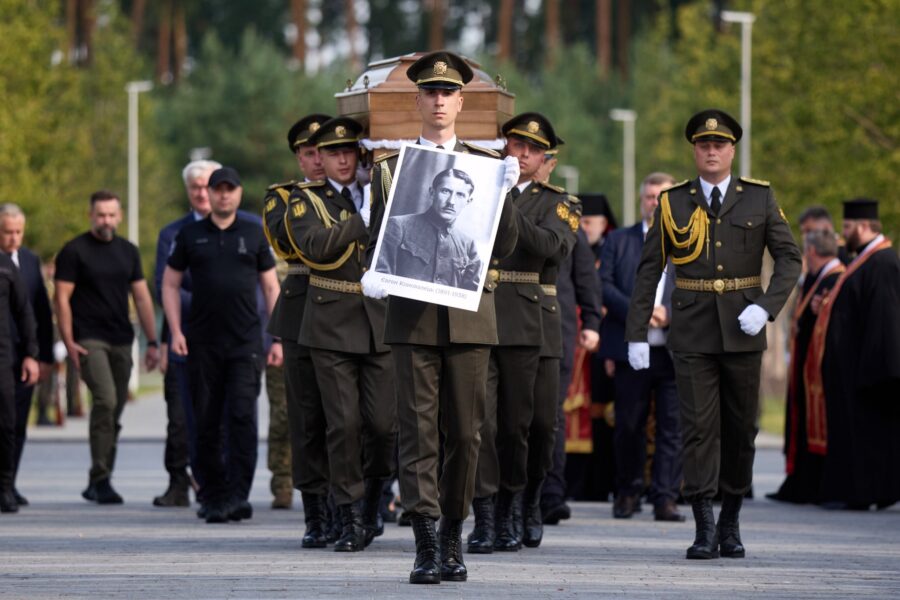
In December 2017, 65 years after their execution, the three commanders were laid to rest with full state honours at the Navy Cemetery in Gdynia-Oksywie. Their names were finally restored to the national memory as symbols of loyalty, dignity, and sacrifice in the face of tyranny.
Source: IPN
Photo: IPN
Tomasz Modrzejewski