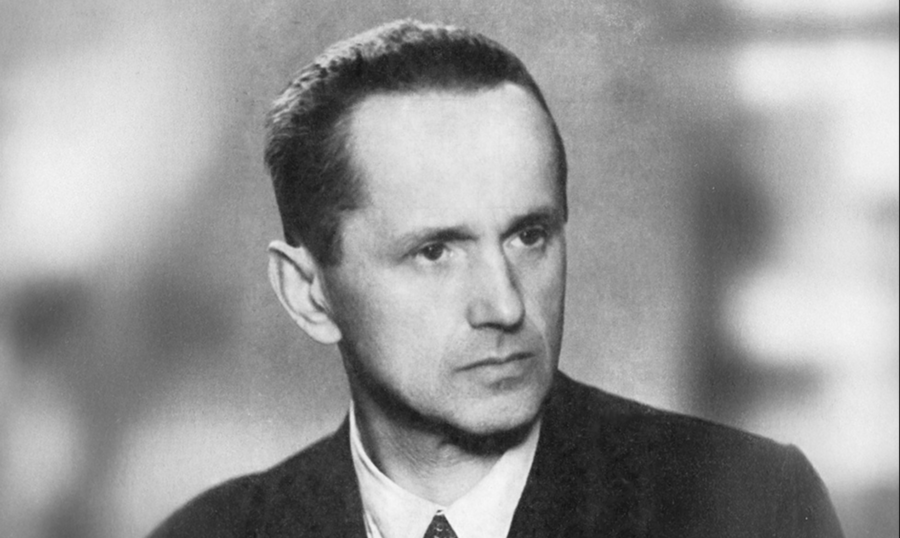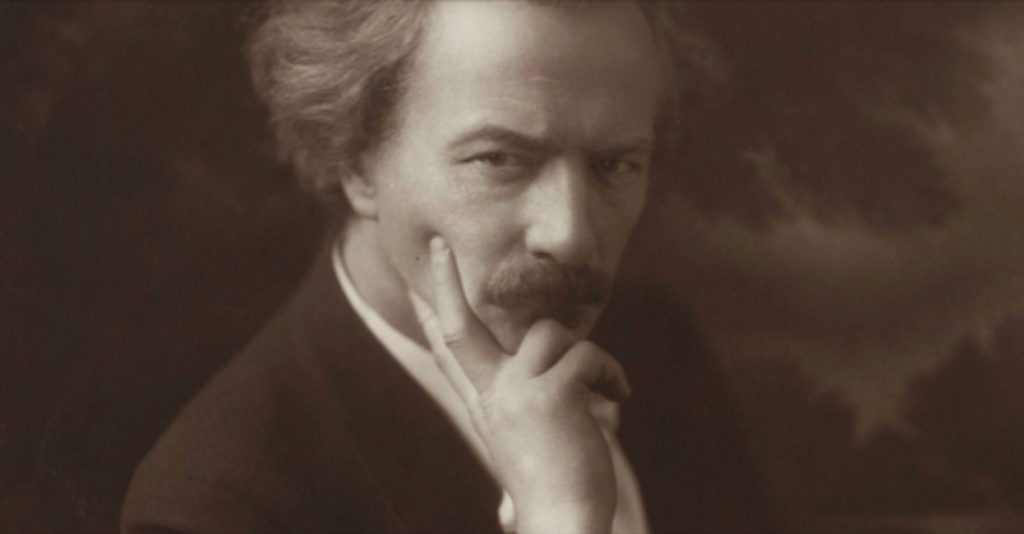
Aside from being an exceptionally talented musician, Ignacy Jan Paderewski is considered a freedom fighter and one of the fathers of Polish regained independence after the Great War. How has a pianist helped his country reappear on the European map and eventually become Poland’s Prime Minister?
An international star
Ignacy Paderewski was born on the 6th of November 1860 in Kuryłówka in Podolia. His hometown makes a prime example of the volatility of the borders in Central and Eastern Europe. The region used to be Polish, until Poland was partitioned for 123-years by Prussia, Austria, and Russia. Paderewski’s childhood was marked by the brutality of the Russian occupation, as well as the efforts of his relatives in the struggle for Polish independence. Despite being born into a country that did not exist on the map, his loyalties were clear. He cultivated two great passions throughout his youth: playing the piano and the dream of an independent Poland.
Paderewski graduated from the Warsaw Conservatory in 1879 with a distinction. From the late 1880s, he performed dozens of concerts and international tours, mainly in Western Europe and in the United States. His talent was out of the ordinary, and was quickly revealed to a large public. Gradually he became a renowned celebrity, and was regularly invited to the highest society salons.
He played concerts in the most prestigious halls in London, Vienna, Paris and Washington. From the early years of the twentieth century, Ignacy Paderewski became a worldwide star. Furthermore, he had an impact on the fashion universe. Indeed, in these times, the trend of wearing a tie „à la Paderewski” appeared.
Among the great personalities who attended his performances, we can notably mention Tsar Nicholas II, Queen Victoria and the American President Woodrow Wilson.
A founding father of Polish independence
A turning point in Paderewski’s life took on the 15th of July 1910 when the virtuoso from Podolia gave a fiery speech on the occasion of the unveiling of a monument (financed by himself) commemorating the 500 years of the victorious battle of Grunwald on the Krakow main square. In his emotional speech, Paderewski praised Polish patriotism and gave a glimmer of hope to his compatriots, who were moved to tears. Among other statements, he claimed that the country’s independence is a dream to be fulfilled. This marked the beginning of his political career.
The First World War appeared as an opportunity for Poland to rise up once again in the hope of regaining its independence. So, in January 1917, Ignacy Paderewski decided to use his musical superstar status to benefit his country. He then met with US President Woodrow Wilson and gave him a brief in which he pleaded for a free and democratic Poland, including the necessity of direct access to the Baltic Sea.
In his speech to Congress on the 8th of January 1918, the American President included the independence of Poland among his famous Fourteen Points: „An independent Polish state should be erected which should include the territories inhabited by indisputably Polish populations, which should be assured a free and secure access to the sea, and whose political and economic independence and territorial integrity should be guaranteed by international covenant.”
Most Polish historians agree that the influence of Paderewski’s lobbying had a decisive impact on Poland’s return to the international arena.
The unifier of a divided nation
The culmination of Paderewski’s political career took place in the aftermath of the Great War. The geopolitical position of freshly reborn Poland was then unstable. On the one hand, the country’s new Western border was fiercely contested by the entire German political scene. On the other hand, a precise Eastern border with the aggressive Bolshevik Russia showing had yet to be established.
Moreover, the Polish nation itself was polarised. On one side of the political scene, there were the supporters of Marshal Piłsudski, a remarkable military strategist and charismatic leader. On the other side, there were the sympathisers of Roman Dmowski, a polyglot diplomat and theorist of „national democracy”. It was in this context that Ignacy Paderewski achieved his double tour de force in 1919.
Ignacy Paderewski managed to carry out the complicated task of unifying the two camps by explaining that the unity of the nation is not only desirable but essential for the practical construction of the Second Republic of Poland. Building on this feat and his ever-growing popularity, he became Prime Minister on the 16th of January 1919. He held this position for almost a year.
Shortly after becoming the head of the government, he attended the Paris Conference, during which he brilliantly presented the territorial claims of the Polish State with the invaluable help of Roman Dmowski, in impeccable French. Paderewski was also the head of the Polish delegations, which signed the Treaty of Versailles on the 28th of 1919.
Between 1920 and 1921, while Poland was waging a ferocious war against the Soviets in order to secure its Eastern border, Ignacy Paderewski became the head of the Polish delegation to the League of Nations. He then resumed his activity as a pianist in 1922 and made a number of international tours until the mid-1930s.
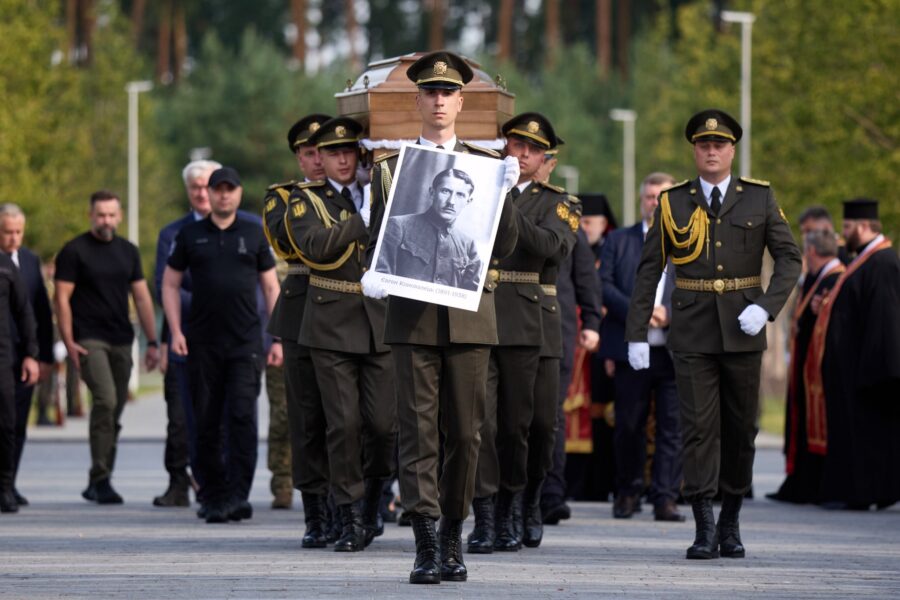
In 1939, Poland was again divided by its powerful neighbours, Nazi Germany and the Soviet Union, due to the Ribbentrop-Molotov pact. Poland was then crushed in horrible fashion and almost no support was delivered by Poland’s Western allies in the beginning of the war. In December of the same year, Paderewski took over as head of the Polish National Council in exile, a position he held until he died on the 29th of June 1941.
He used his popular musician’s status as leverage in order to push forward the existential needs of the newly reborn Polish state among Western partners. He never chased power for the sake of it and always remains dedicated to the common good of the Polish citizens. His ability to reunite the Polish nation in such a critical moment remains one of his most notable achievements.
During his life, he was decorated with many honours, including the Order of the White Eagle, the very prestigious Silver Cross of the Military Order of Virtuti Militari, the Grand Cross of the Order Polonia Restituta but also the Grand Cross of the Legion of Honor. He remains an inspiration for modern-day freedom-lovers, politicians and public figures who are willing to put their talents to the contribution of a good cause.
George Byczynski
Projekt dofinansowano ze środków Instytutu Dziedzictwa Myśli Narodowej im. Romana Dmowskiego i Ignacego Jana Paderewskiego w ramach Funduszu Patriotycznego.