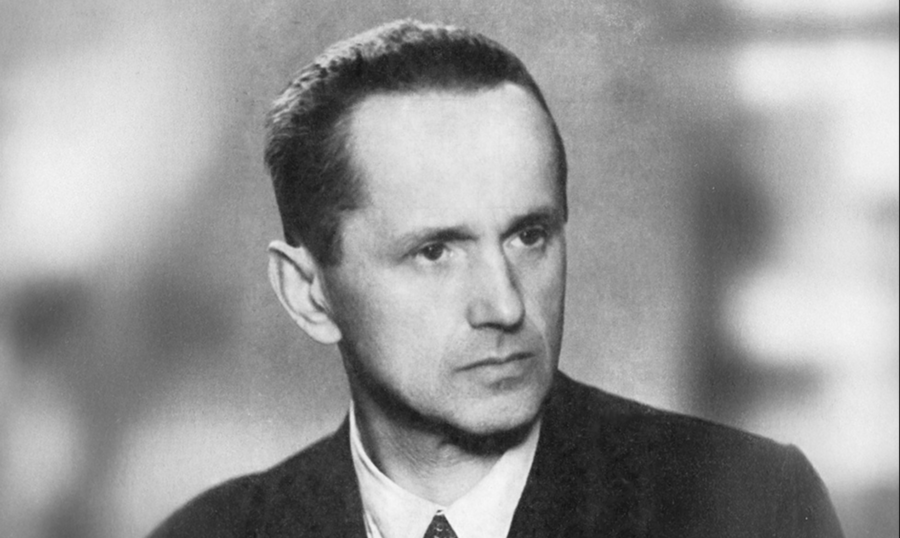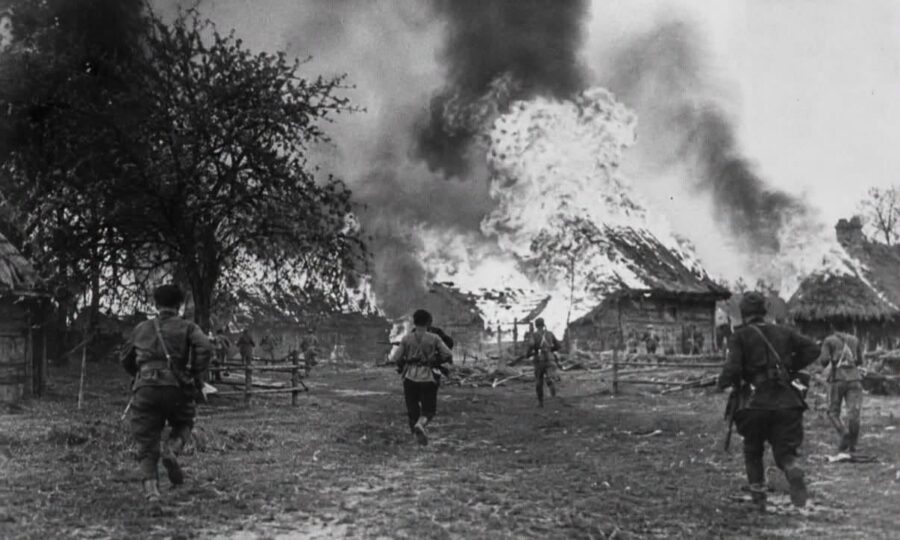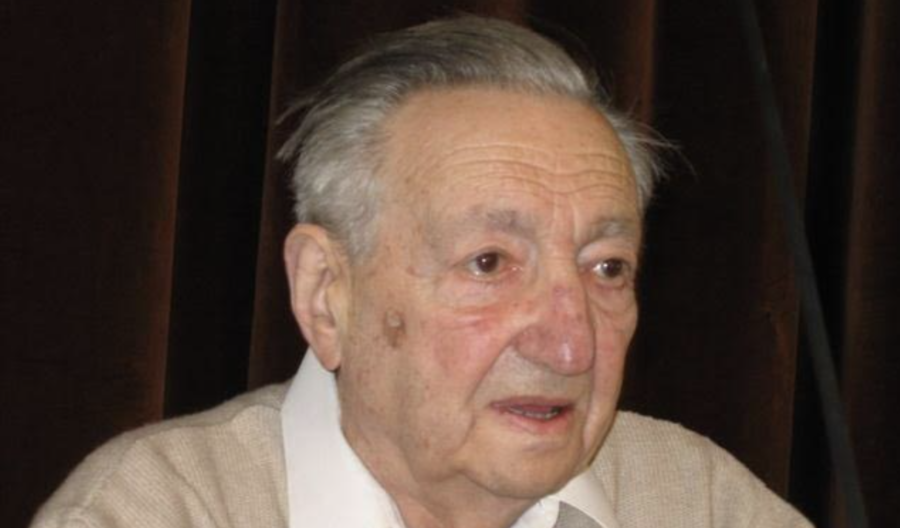
Marek Edelman remains one of the most compelling moral voices to emerge from the tragedy of the Second World War. One of the leaders of the Warsaw Ghetto Uprising and later a distinguished cardiologist, Edelman spoke with unusual clarity about both the horrors of the Holocaust and the complex realities of Polish–Jewish relations under German Nazi occupation.
In one of his most frequently cited reflections, he emphasised the scale of assistance provided by ordinary Poles to Jews in hiding:
“12,000 Jews survived in Warsaw until the uprising. For 12,000 Jews to survive, at least 100,000 people had to be involved. Warsaw had 700,000 inhabitants – every seventh Pole was engaged. I think there is no other city like this in Europe.”
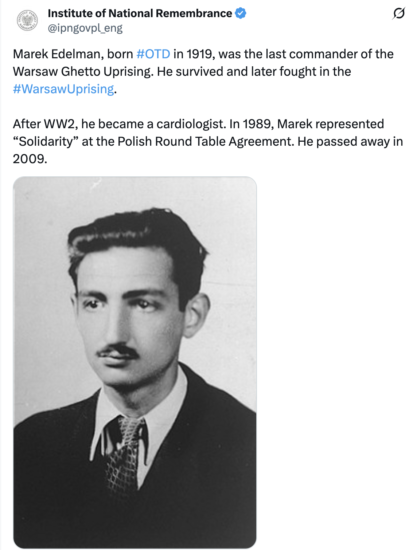
This statement is striking not only for its numerical reasoning, but for its broader implication: survival on such a scale required widespread, decentralised, and often clandestine cooperation. Edelman’s conclusion that Warsaw may have been unique in Europe in this respect challenges simplified narratives and invites a more nuanced understanding of wartime society.
Elsewhere, Edelman repeatedly acknowledged the indispensable role played by Polish civilians:
“Without the help of the Polish side, none of us would have survived. It was simply impossible.”
In another interview, he pointed to the everyday courage required to provide even minimal assistance:
“You have to remember that helping a Jew meant risking your life and the lives of your entire family. And yet people helped.”
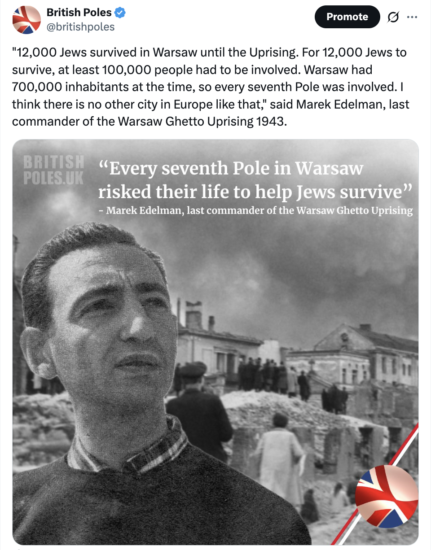
Edelman highlighted that the positive attitudes in Polish society during the occupation were much stronger than hostility or indifference:
“There were different attitudes, of course. But those who helped made survival possible.” and “You cannot say everyone helped—but those who did made all the difference.”
Edelman’s reflections underscore a crucial historical reality: in occupied Poland, where aiding Jews was punishable by death, even small acts of assistance carried extraordinary moral significance. His voice reminds us that the history of the Holocaust in Poland cannot be reduced to a single narrative. Instead, it is a mosaic of human choices, some tragic, some heroic.
By highlighting the scale of Polish involvement in rescuing Jews, Edelman offered not only a historical observation but also a form of moral recognition. His words continue to resonate as a call to acknowledge complexity, resist simplification, and remember the individuals whose quiet acts of courage helped save lives under the most extreme conditions.
Photo: Wikipedia, public domain
Tomasz Modrzejewski