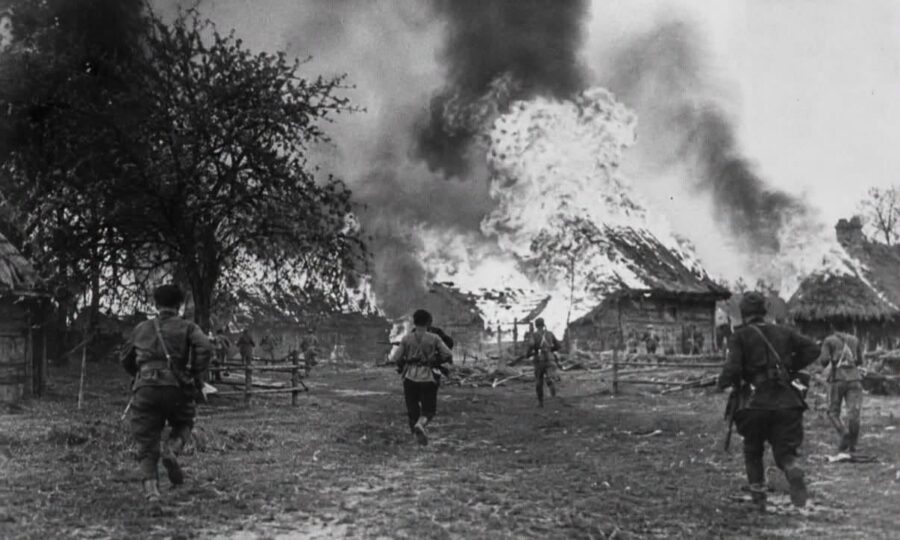
The mutual lack of understanding between Warsaw and Berlin when it comes to the topic of reparations for the damages committed by Nazi Germany in Poland during WWII is only getting worse.
On 3 October 2022, Poland’s Foreign Minister Zbigniew Rau handed a diplomatic note to Germany concerning reparations for damages committed by this state on Poland during WWII. Poland estimates its WWII losses caused by Germany at €1.3 trillion.
Three months later, Germany officially replied to the above-mentioned note by reiterating Berlin’s well-known stance that “the issue is closed”. Since then, Deputy Foreign Minister Arkadiusz Mularczyk turned his attention to the US and the UN to ask for support in Warsaw’s quest for justice in this matter.
https://twitter.com/PIASA_NY/status/1611735297162723328?s=20&t=rF9VQHlFq_lgb_aT9dTOWw
One of the reasons for Berlin’s attitude is to be found in the overall lack of knowledge of German society when it comes to basic facts of WWII. It’s worth mentioning a yearly study published by Bielefeld University about the stance of modern-day Germans regarding the country’s National Socialist past.
The 2022 edition of the report sheds light on the fact that just over one in three Germans believe that the fact their ancestors lived under Hitler’s rule has had “a significant impact on their lives”.
https://twitter.com/TVPWorld_com/status/1610722569350438912?s=20&t=eG8lwT00iRp7G4Ss3ajLyQ
The worrying conclusion of the research is that most Germans actually believe that they themselves were victims of Hitler’s National Socialist crimes rather than their perpetrators or – at least – accomplices.
According to the study, over 82% of Germans point to Jews as the primary victim of Nazism, followed by Sinti and Roma (44.5%), homosexuals (28.8%), members of the political opposition (27.8%), and the sick and the disabled (23.1%).
https://twitter.com/PremierRP_en/status/1613153565228269570?s=20&t=oO8lIkATsbj1zE8_V7pi4w
The worrying part here is that less than 5% answered that victims of Nazism included other national groups. In this context, it proves challenging to demand empathy or understanding from young Germans about the atrocities perpetrated by their ancestors on Polish nationals between 1939 and 1945.
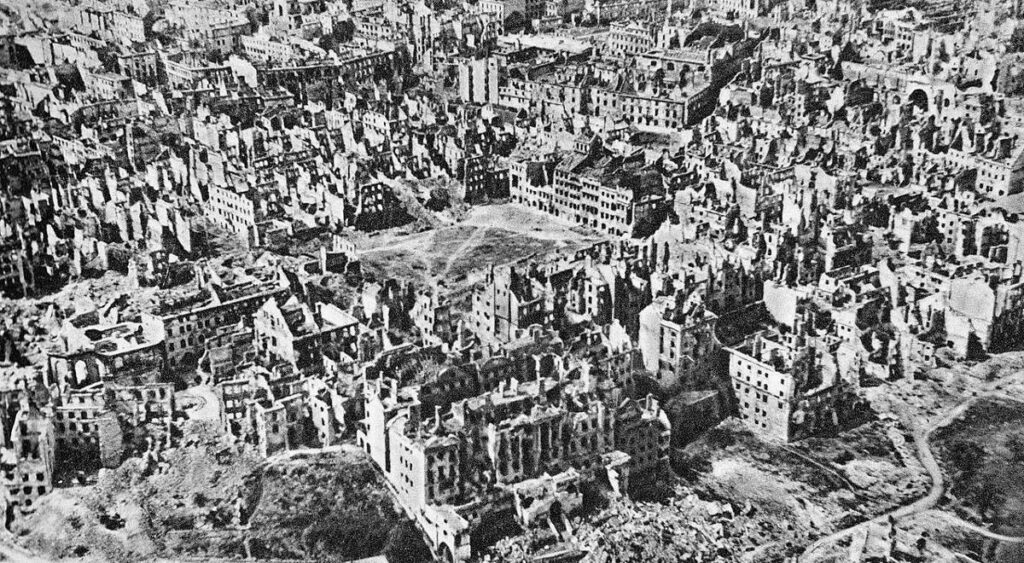
Image: Destroyed Warsaw, January 1945. Photo courtesy of Wikimedia Commons.
Author: Sébastien Meuwissen