On 2 October 1944, after 63 days of heroic and lonely battle between the insurgents and the German army, because of the lack of prospects for further struggle, representatives of the Home Army Headquarters signed an agreement to cease hostilities in Warsaw. The Warsaw Uprising’s military goal was to liberate the capital from the German occupation, which showed all of its brutality for the preceding five years.

When he learned about the rebellion, SS Reichsführer Heinrich Himmler issued an order in which he stated: “Every inhabitant must be killed, no prisoners are allowed to be taken, Warsaw is to be razed to the ground, and thus an intimidating example for the whole of Europe is to be created.”
For 63 days, the insurgents waged a heroic battle against the German army. In the end, due to the lack of prospects for further fighting, representatives of the Home Army, Colonel Kazimierz “Jarecki” Iranek-Osmecki and Lt. Col. Zygmunt “Zyndram” Dobrowolski signed a treaty to cease military operations in Warsaw at the SS-Obergruppenführer Erich von dem Bach-Zelewski headquarters in the Masovian town of Ożarów.
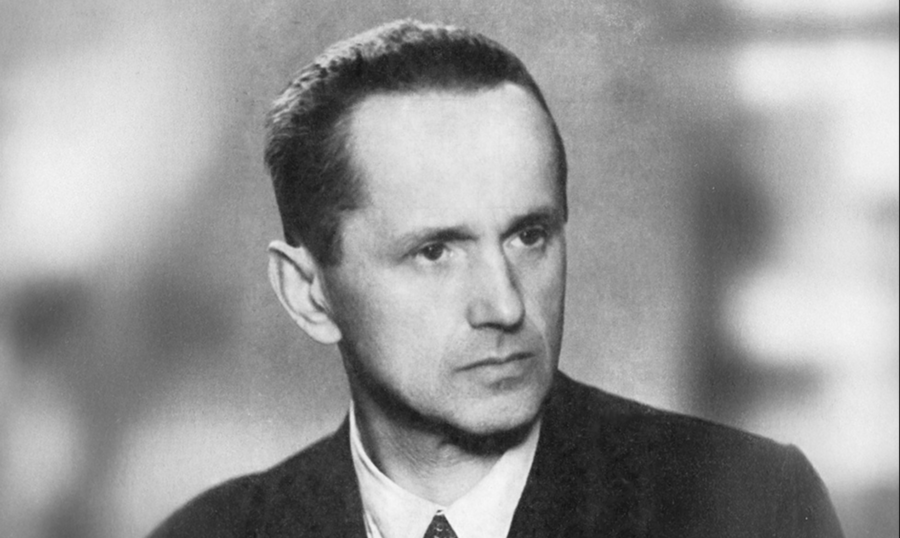
Recalling this event, Gen. Komorowski wrote: “For the second time in this war, Warsaw had to succumb to the advantage of the enemy. At the beginning and at the end of the war, the capital of Poland fought alone. But the fighting conditions in 1939 were completely different than in 1944. Five years ago, Germany stood at the peak of its power. The weakness of the Allies made it impossible to help Warsaw. The fall of the Polish capital was the first in a series of German victories. In 1944, the situation was the opposite regarding the Allies“.
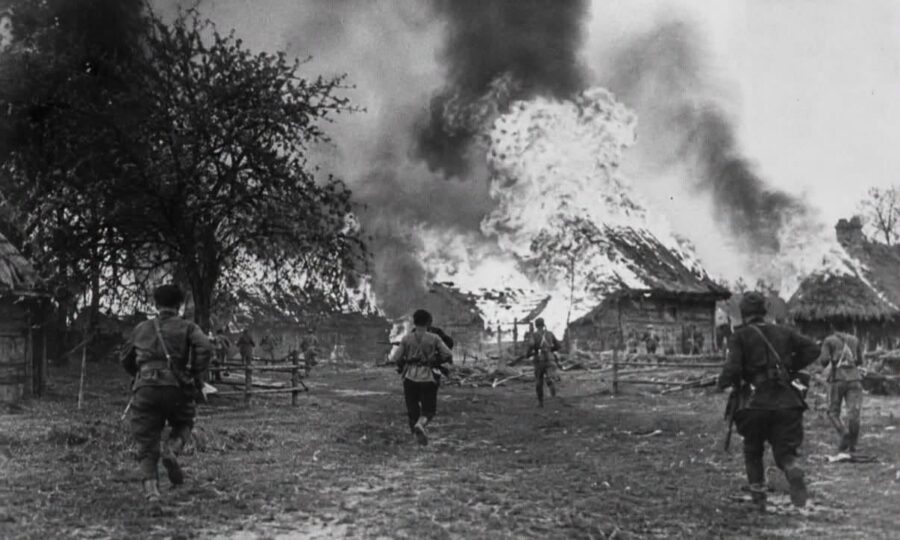
It is worth emphasising the brutality and cruelty which characterised the German occupation of Poland in the years 1939-1945. This cruelty manifested itself particularly in the Polish capital, Warsaw, during the Uprising. Not only were the German occupiers animated by a genuine feeling of hate toward the local population, they also felt the frustration caused by the upcoming loss of WWII, which they so confidently started in 1939.
Soldiers from the Wehrmacht committed numerous war crimes during the Warsaw Uprising. They murdered tens of thousands of civilians, including pregnant women, children, the elderly and the sick. Babies’ heads were smashed against walls, people were burned alive… Frankly, depicting these atrocities in detail here does not even seem appropriate.
What is not only appropriate but even necessary is to conclude with some data. On 2 October, 18,000 Polish soldiers were killed in the Warsaw Uprising. In only 63 day, the Germans killed at least 150,000 civilians, and more than half a million were forced to flee the city, from which 50,000 were sent to concentration camps.
The most notorious crime perpetrated by the Germans during the Warsaw was the Wola Massacre. From 40 to 60 thousand Warsaw’s Wola district inhabitants were murdered by the Germans in just three days, between 5-7 August 1944. Mass executions were carried out on Hitler’s orders to „clear Warsaw of its civilian population.” The Wola Massacre was the largest individual crime against the civilian population during the German occupation.
Poland has never received any compensation for the material and immaterial losses of the unlawful German attack in September 1939 and the subsequent German occupation.
Millions of Polish citizens who have faced unimaginable physical and psychological suffering, often losing all their possessions, have never been provided any compensation.
On 1 September 2022, “The report on the losses suffered by Poland as a result of the German aggression and occupation during the Second World War, 1939-1945” was published. The latter was prepared by the Parliamentary Team for Estimating the Amount of Compensation Due to Poland from Germany for Damages Caused During World War II, led by Minister Arkadiusz Mularczyk. A group of 30 scientists, including historians, economists, property appraisers, and reviewers contributed to the large document. The abridged version of The War Report in English is available here.
Image: IPN
Author: Sébastien Meuwissen