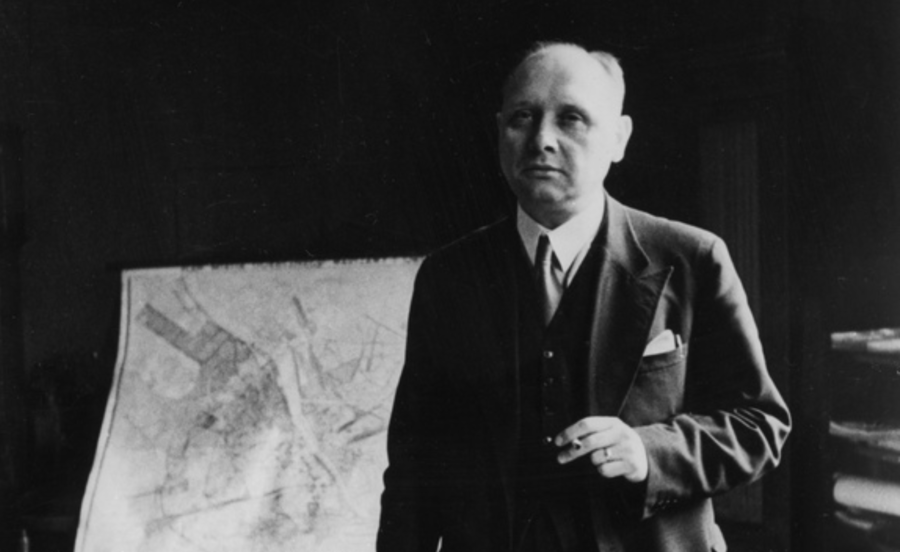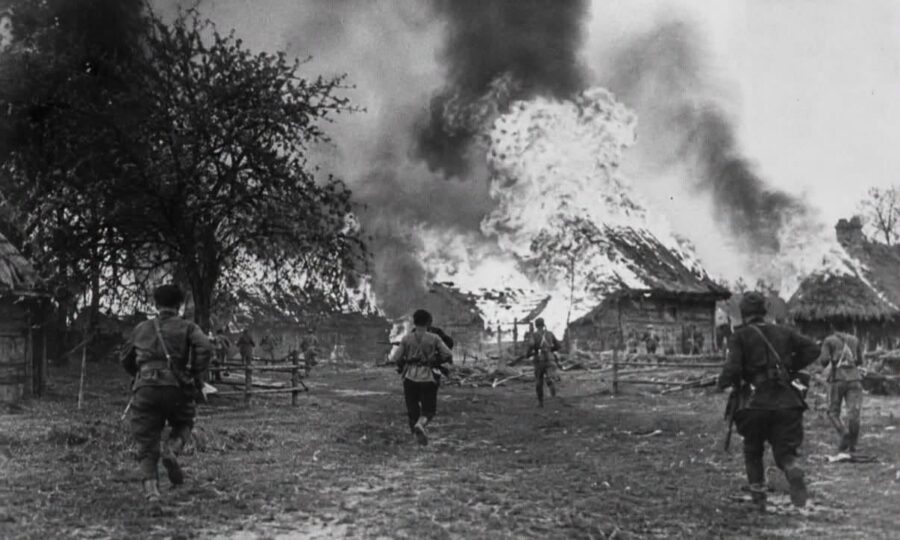
The Soviet troops awaited a potential French and British reaction to the German aggression against Poland on 1 September 1939. When it was sure the help would not come, Stalin ordered his troops to attack the Poles from the rear. The Polish officers who were not killed in battle were later murdered in the Katyń Massacre. Those days were the forgotten act of collaboration between Nazi Germany and the Soviet Union, which was never judged or condemned after the 2 World War.
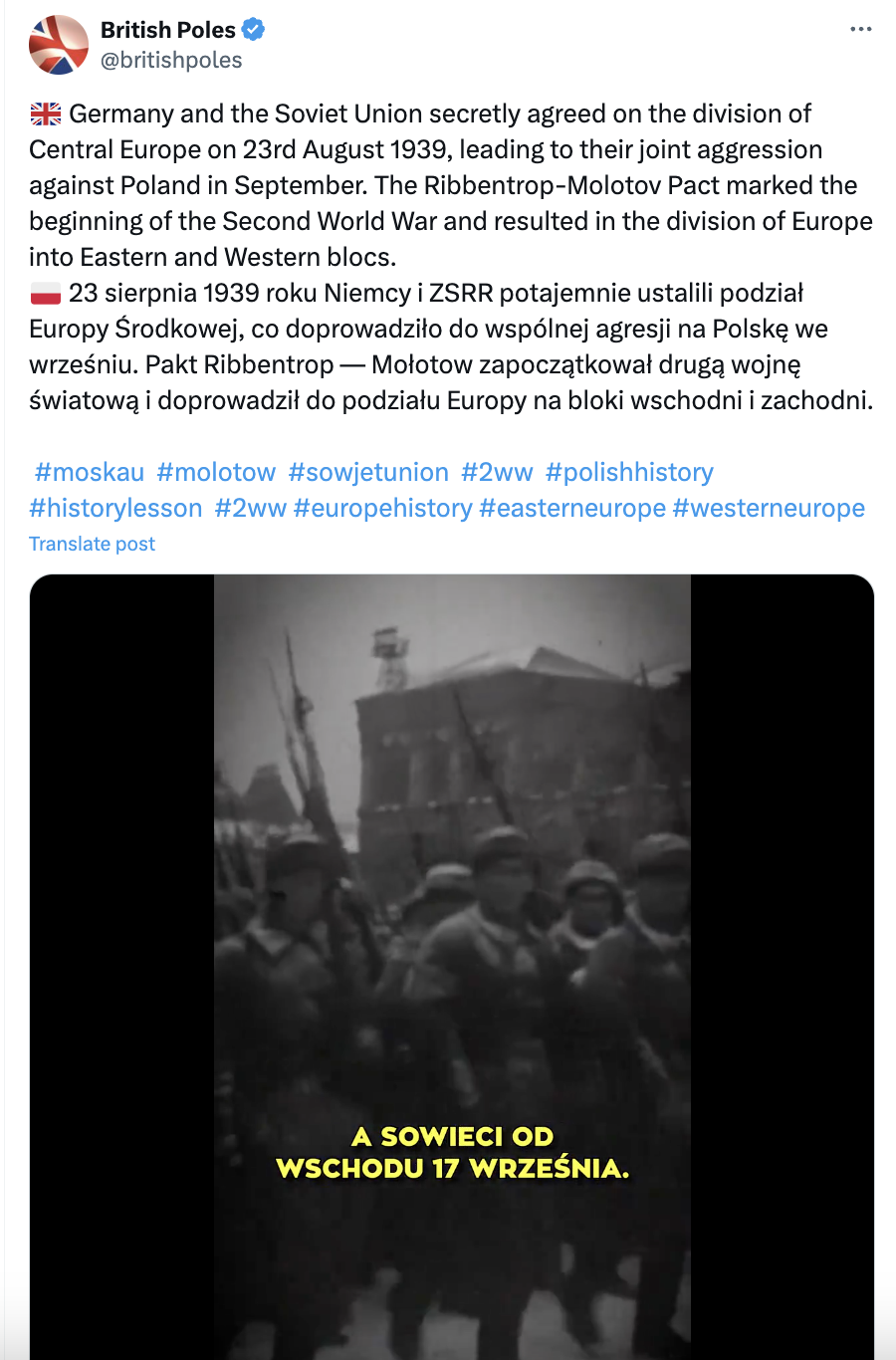
The stage for the Russian backstabbing of Poland was set in the Ribbentrop-Molotov pact signed in August of 1939 in which Soviet Russia and the Third Reich planned the 4th partition of Poland. And so the Red Army entered Polish territory in fulfilment of commitments to the Third Reich, made by the Soviets.
The secret part of the treaty that was directly connected to the fate of Poland said:
“In the event of territorial and political transformations in the territories belonging to the Polish State, the boundary of the zones of interest of Germany and the USSR will run approximately along the line of the rivers Narew, Vistula and San. The question of whether it will be in the mutual interest to maintain an independent Polish State and what the boundaries of this State will be can only be finally clarified in the course of further political developments. In any case, the two governments will settle this question by friendly agreement”.
On the morning of 17 September 1939, the Polish ambassador in Moscow, Wacław Grzybowski, received a note in which the government of the Soviet Union stated that the Second Polish Republic had ceased to exist as a sovereign state and that all previously concluded diplomatic agreements were no longer valid.
“On 17 September, in the middle of the night, I received a phone call from the secretariat of the deputy commissioner notifying me that he wished to convey to me an important statement from the Soviet government and asking if I could come to see him at 3.00 a.m.” the Polish Ambassador to the Soviet Union Wacław Grzybowski recalled.
“I was prepared for bad news, but the news that awaited me was even worse. I read the text of a Molotov note stating that the Polish state had ceased to exist, so the Soviet government ordered its troops to cross the Polish border. I protested vehemently against the lie and categorically refused to accept the note. When I left the office, it was 4.30 a.m. At 5.00 a.m., Soviet troops crossed into Polish territory,” the Polish Ambassador said while recalling the moment years after.
“There are dates in history when even a dispassionate historian can feel a tear under his eyelid and clenched fists. 17 September is certainly such a date,” a Professor of history at the University of Warsaw, Paweł Wieczorkiewicz said on Polish Radio.
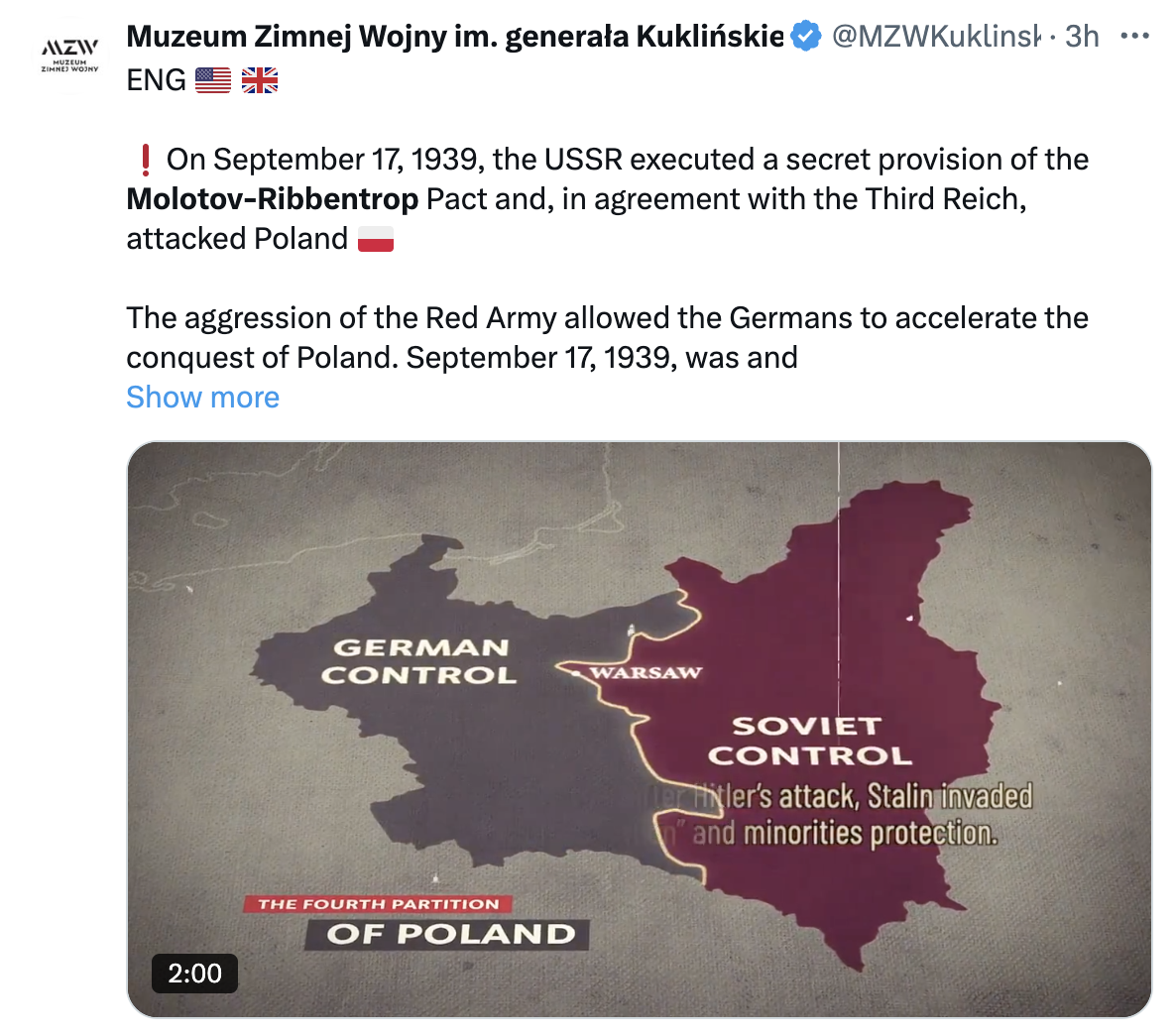
“It is a case of an unprecedented, unprovoked aggression, a shameful aggression because it was carried out on a collapsing, bleeding but fighting neighbour’s state, a genocidal aggression,” the Polish historian said.
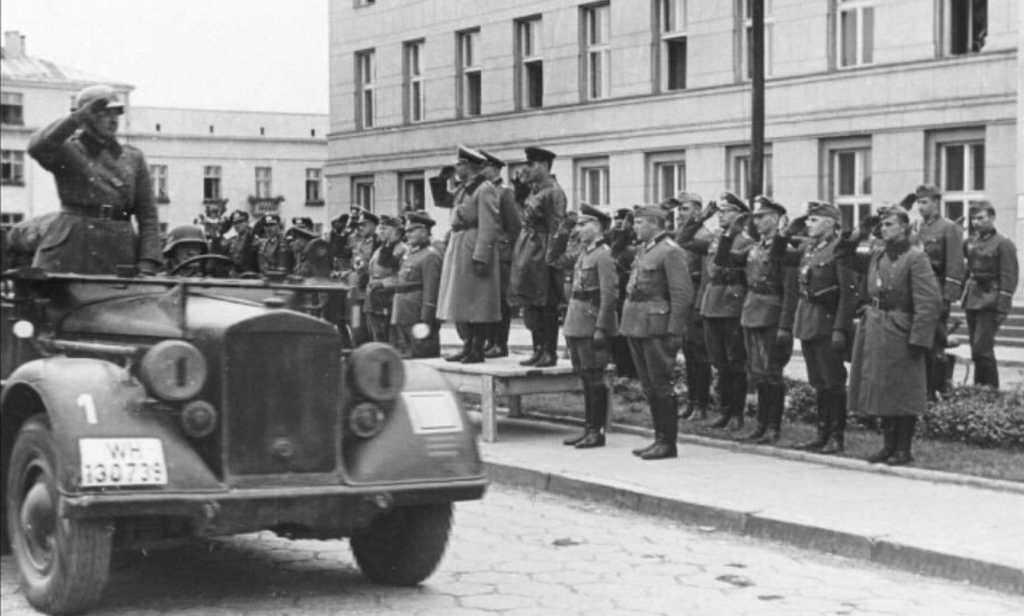
One of the most inconvenient pictures for both aggressors was the filmed, joint military parade of German and Soviet troops held in Brest Litovsk on 22 September 1939.
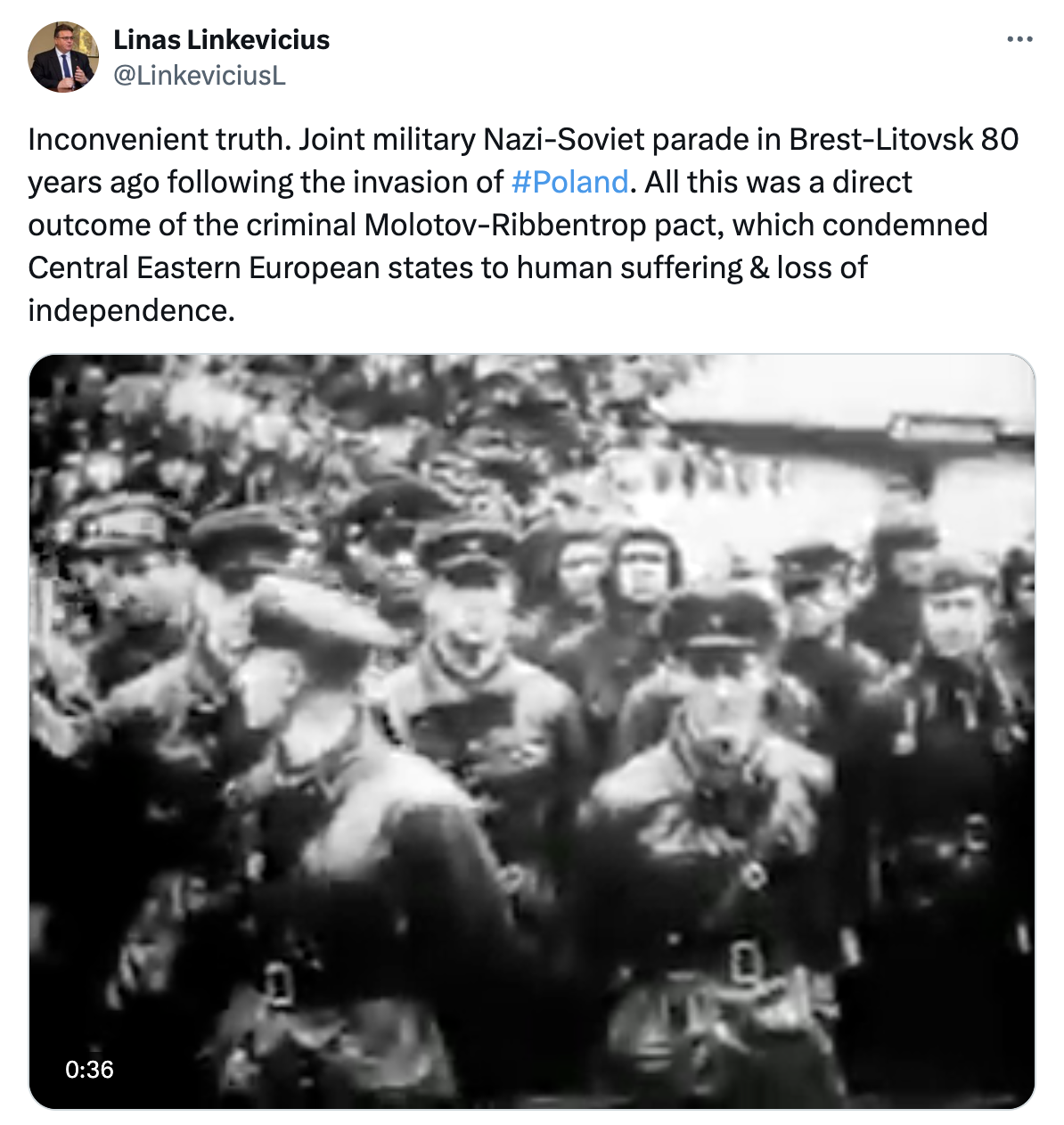
As a result of the Soviet aggression, some 14,500 Polish Army officers were later murdered with a shot to the back of the head in the Katyń Massacre and other places across the Soviet Union. Nearly 3 000 000 Poles were deported to labour camps, of whom 1,500,000 died of starvation and exhaustion.
Source: Polskie Radio, IPN
Photo: @JMichaelWaller
Tomasz Modrzejewski