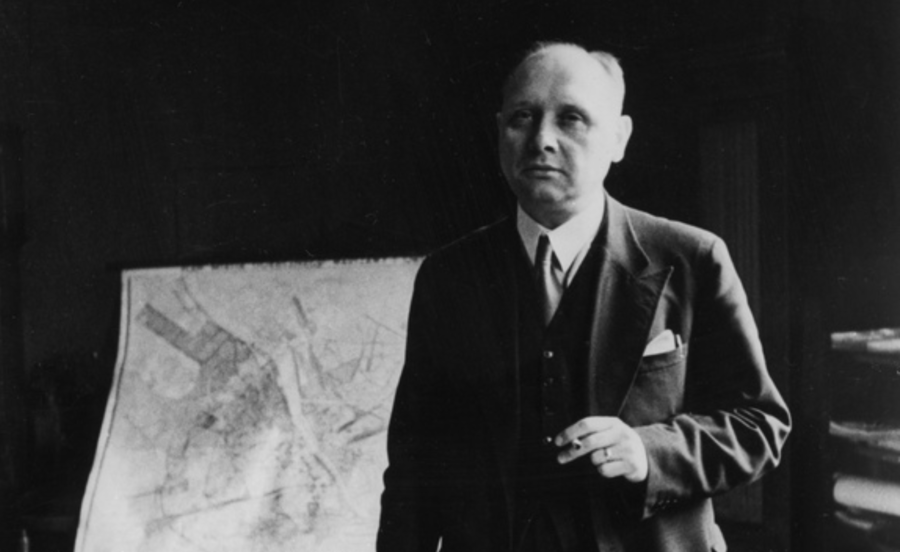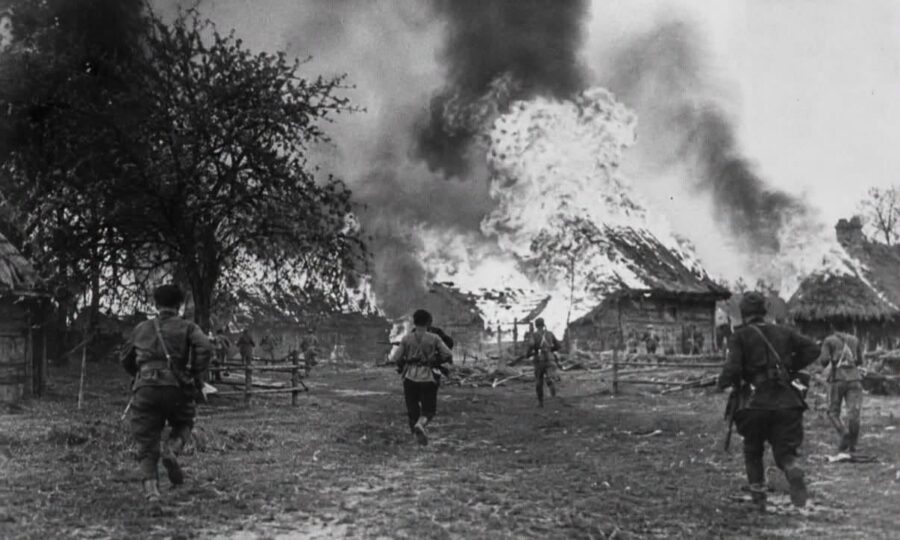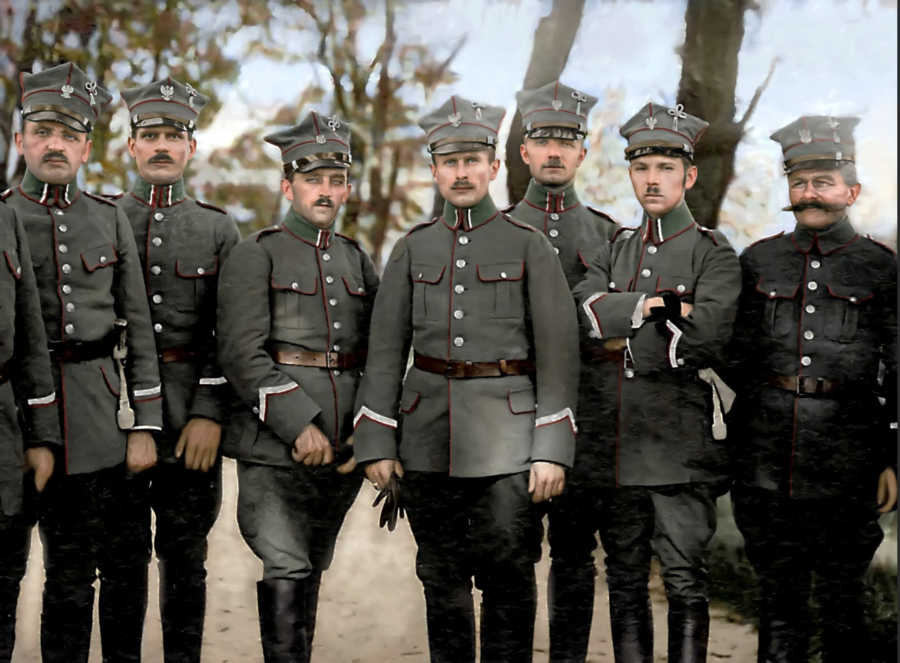
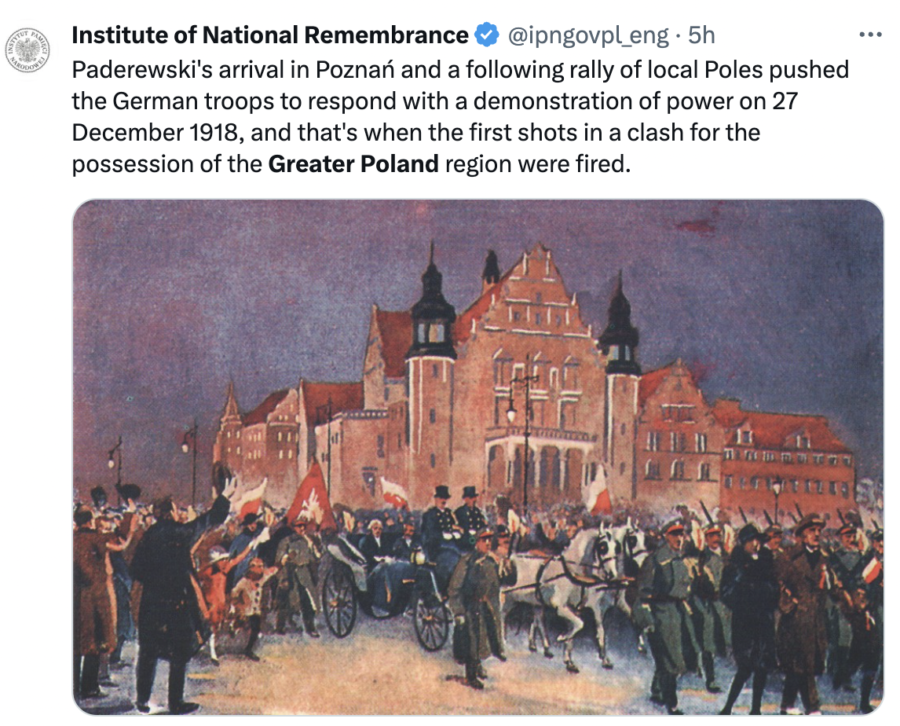
On 26 December 1918, during his visit to Poland, the famous pianist and political activist Ignacy Paderewski stopped in Poznań on his way to Warsaw, despite the protest of the German authorities. Decorated houses and crowds in the streets greet him. Paderewski gives a speech to his compatriots, leading to the outbreak of military action against the German garrison and a regional uprising in Greater Poland.
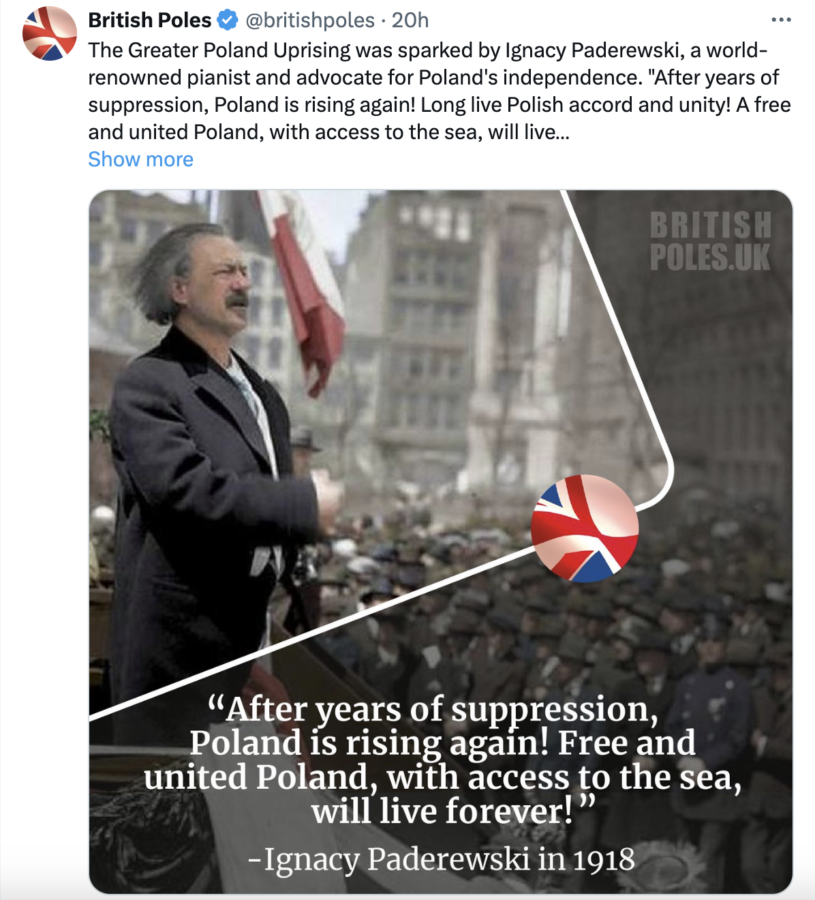
The end of the Great War ended the life of all partitioning powers that suppressed Poland for more than a century and brought hope for the restoration of an independent state based on the principle of self-determination of nations expressed in the famous Fourteen Points presented to the world by the US President Woodrow Wilson.
Days before the start of the Uprising, a Polish deputy to the German Parliament Wojciech Korfanty gave a famous speech that angered the German deputies.
On 25 October 1918, he addressed the German parliament with a demand that all Polish lands of the Prussian partition be given back to the Polish state.
“Your Majesties, we do not want an inch of German land. We demand only, by the provisions of point 13 of the Wilson programme, our own, one Poland consisting of the lands of the three partitions, with assured access to the sea. […] We do not want a single German district, but only demand Polish districts of Upper Silesia, Middle Silesia, Wielopolska, Polish West Prussia and Polish districts of East Prussia.”
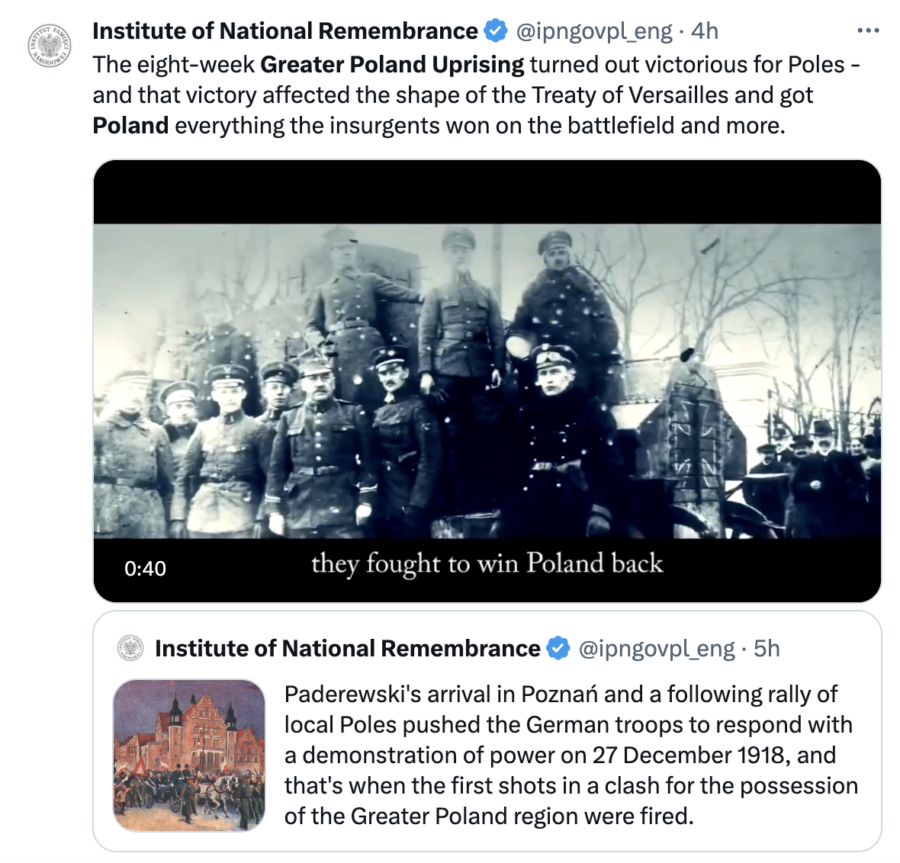
At the beginning of December, the District Parliament met in the Prussian partition and decided that decisions concerning Greater Poland should wait until the peace conference with Germany. The growing discontent and revolutionary sentiment among the Poles was strong.
On his way back to Poland from the US Ignacy Jan Paderewski a composer, pianist one of the most famous musicians in the world at the time and a personal friend of the US President Wilson stopped in Poznan on 26 December 1918.
He gave a powerful speech that day on the Bazar Hotel balcony addressing the people of Poznań crowded outside the building. It was a flashpoint. The next day, the Germans staged a military parade on St Martin Street to show their strength.
There was no shortage of acts of aggression and assaults on Polish institutions. Polish and coalition flags were also torn down. Those acts paved a clear way to the start of the uprising.
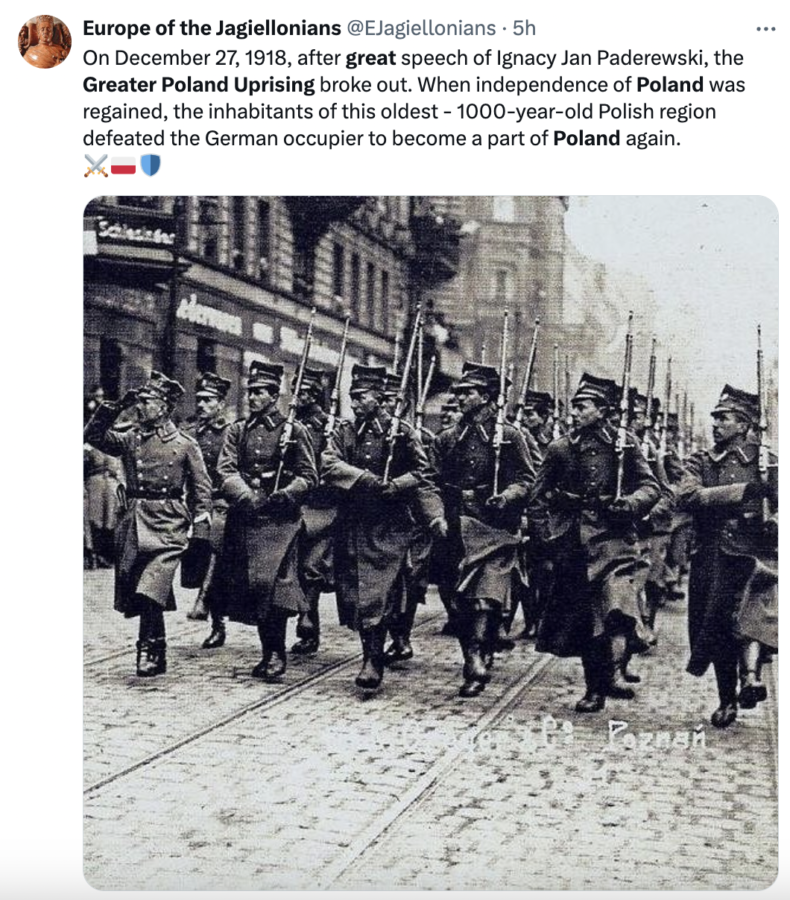
Just two days after the German parade the insurgents gained full control of Poznań, the capital of Greater Poland.
Participants in the uprising demanded the return of the lands of the Prussian partition to Poland. General Józef Dowbor-Muśnicki quickly organised the Army of Greater Poland, numbering 100,000 soldiers.
The Greater Poland Uprising broke out on 27 December 1918 in Poznań and ended on 16 February 1919. The fighting took place throughout Greater Poland, including in the Ostrów district.
In mid-January 1919, the Germans had amassed a larger force and were preparing to resume the offensive. Then, with his resolute attitude, Marshal Ferdinand Foch forced a ceasefire on the Germans.
The Germans did not have enough strength to oppose the Entente states, which supported the insurgents by extending the terms of the truce of 11 November 1918 to the Greater Poland region as well.
The Greater Poland Uprising lasted exactly 52 days. The people of Greater Poland fought an armed struggle to join Poland, regain independence and liberate themselves from the Prussian partition. Over 2,000 insurgents were killed and over 6,000 were wounded.
The Greater Poland Uprising is considered one of the few successful Polish uprisings, next to the 3rd Silesian uprising of 1921. According to most experts, the factors in favour of the Poles were the General’s Dowbor-Muśnicki input together with several hundred senior officers, who were able to create an able officer-soldier formation and the stubbornness and patriotism of the local Poles.
Source: Polskie Radio, Dzieje.pl, wlkp24.info
Photo: @KolorHistorii
Tomasz Modrzejewski