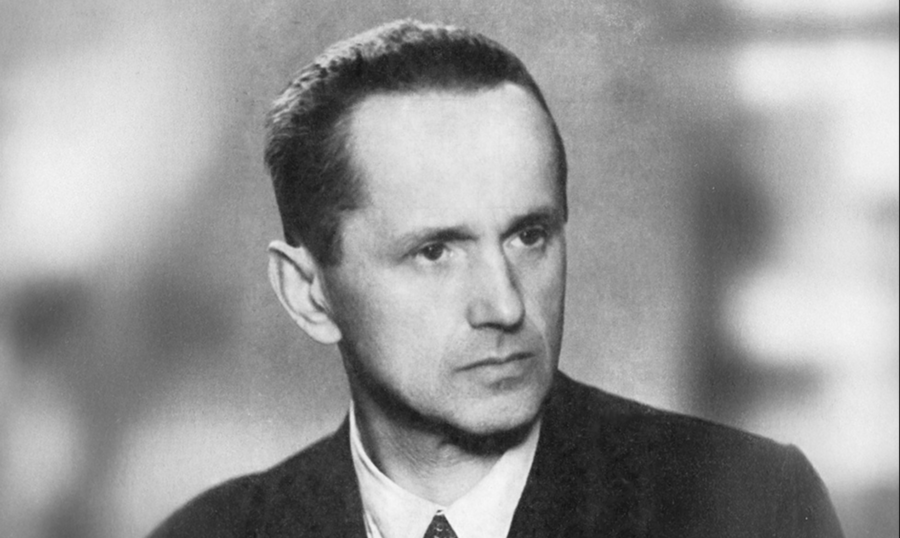
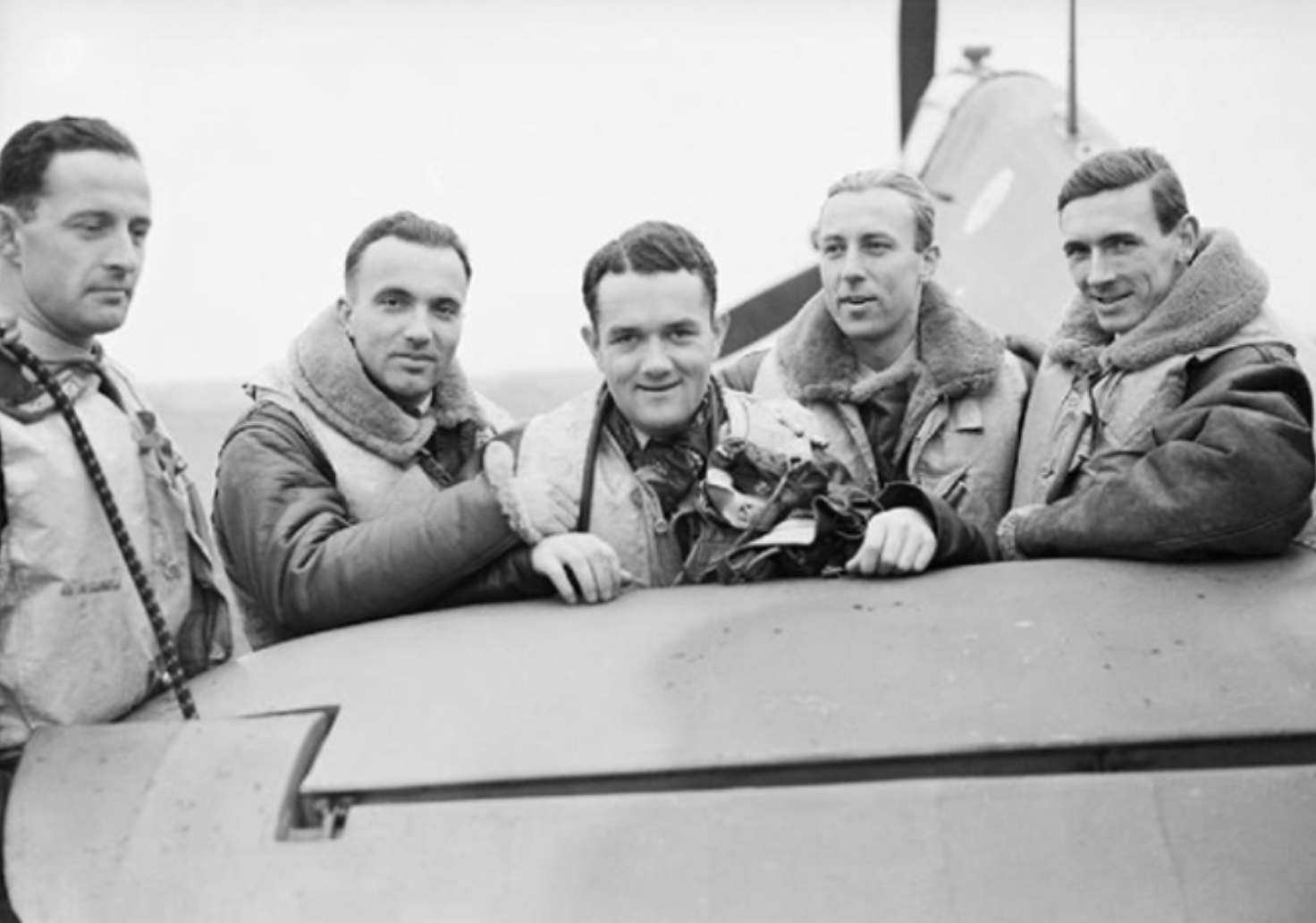
Jan Zumbach was a Lieutenant Colonel and a professional pilot in the Polish Army, a Lieutenant Colonel in the Royal Air Force and a fighter ace of the Polish Air Force in exile. From 19 May to 1 December 1942, he served as the famous Polish 303 Squadron commander within the RAF. He shot down 13 enemy aircraft during the Second World War.
Jan Eugeniusz Ludwik Zumbach was born on 15 April 1915 in Ursynów, then a small village near Warsaw. He was born into the family of a Swiss émigré – and thus held the citizenship of his father’s home country.
In 1922, the Zumbach family moved to a new family estate in Bobrowo near Brodnica, in the pre-war Pomeranian province. It was there where Jan’s fascination with aviation was started.
“It started with the fact that during the sunny seasons, every day at eleven o’clock in the morning, a plane of the Polish Aviation Works, a three-engine Fokker, would fly over our house. I stared at it until my neck hurt,” Zumbach wrote in his memoirs called “The Last Fight”.
This childhood dream came true when, in 1936, Jan was accepted into the Dęblin Air Force Officer Cadet School.
In 1938, he graduated from the Air Force Officer Cadet School in Dęblin. He was soon assigned to his first combat aviation unit – the elite 111th Fighter Squadron named after Tadeusz Kościuszko in Warsaw.
At the start of the Second World War, he was convalescing in the resort town of Zaleszczyki, located on the Polish-Romanian border.
Jan Zumbach at first tried to join his unit. When this failed, he acquired a small RWD-13 tourist plane and made several liaison flights for the Polish Army ground units.
Zumbach then escaped arrest in Romania and stole his plane to join the Polish Armed Forces in France under General Władysław Sikorski.
In France, Zumbach flew Morane Saulnier MS-406 and Marcel Bloch MB-152 fighters, and in May 1940 served under Major Zdzisław Krasnodębski.
On 12 June, covering French ground troops in a formation of four Polish MS-406s, the Zumbach was shot down in a dogfight with 16 German Messerschmitt Bf-109s and parachuted out.
After a short period of fighting in France he evacuated with the Polish and British forces to the UK.
After reaching the UK, Jan Zumbach was among those most irritated by the British sense of reserve toward the Polish pilots.
“The English were wasting our time with some childishness, yet we were all professional pilots”, he wrote at the time.
Zumbach scored his first victory on 7 September 1940.
“Below me I saw a Do.17, or Do.215, jumping away from the formation. I got on its tail. At that moment the German shot a short burst at me. Short, because it seems that at the first of my shots, his soul was being driven to the Land of Eternal Ghosts, into the arms of the good Manitou. The second series had no effect. Only the third, a very long one, ignited the right engine and the Dornier went down,” Zumbach wrote.
Zumbach claimed two Do17s destroyed on 7th September, Me109s on the 9th, 11th and 15th, a He111 and another Me109 on the 26th and a Me109 on the 27th.
He was awarded the VM (5th Class)(gazetted 23rd December 1940) and the KW (gazetted 1st February 1941).
On 2nd July 1941 Zumbach destroyed a Me109 and probably a second and two more on 13th and 24th October.
He was awarded a Bar to the KW (gazetted 10 September 1941) and the DFC (gazetted 30 October 1941). On 4 December Zumbach was posted to 58 OTU Grangemouth as an instructor.
On 23rd March 1942, he was promoted and rejoined 303 at Northolt as a Flight Commander. He probably destroyed an Fw190 on the 27th of April.
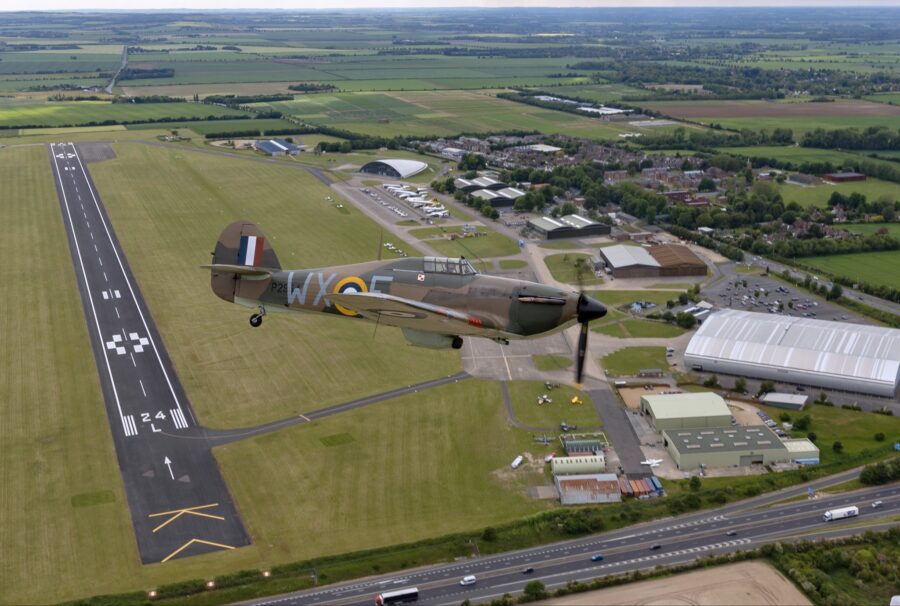
Zumbach took command of 303 on 18th May and over Dieppe on 19th August he destroyed a Fw190, probably another and shared a He111. He was awarded a second Bar to the KW (gazetted 20th August 1942), a third (gazetted 15th November 1942) and a Bar to the DFC (gazetted 15th November 1942).
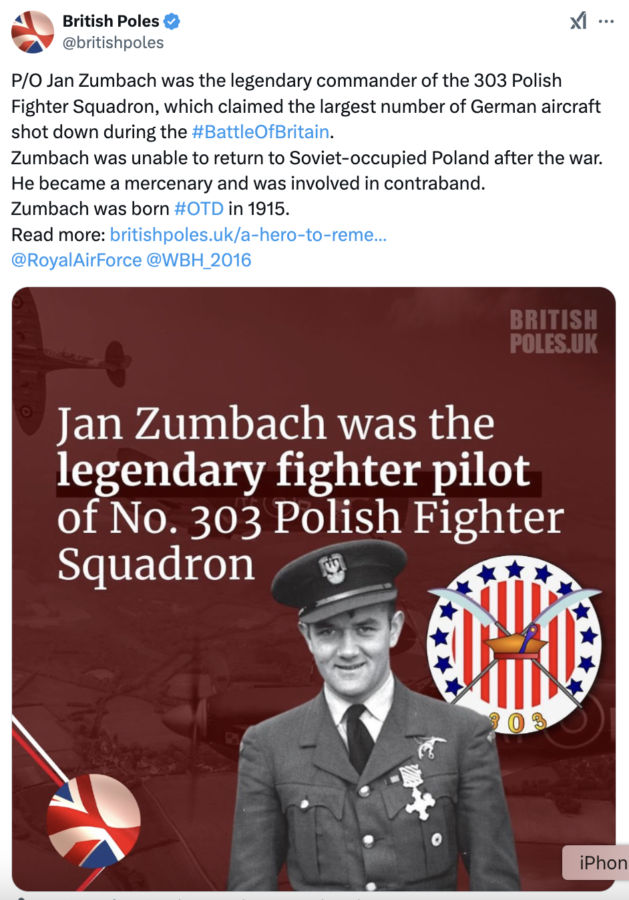
He was posted to HQ 9 Group Preston on 1st December 1942 as a Polish Liaison Officer.
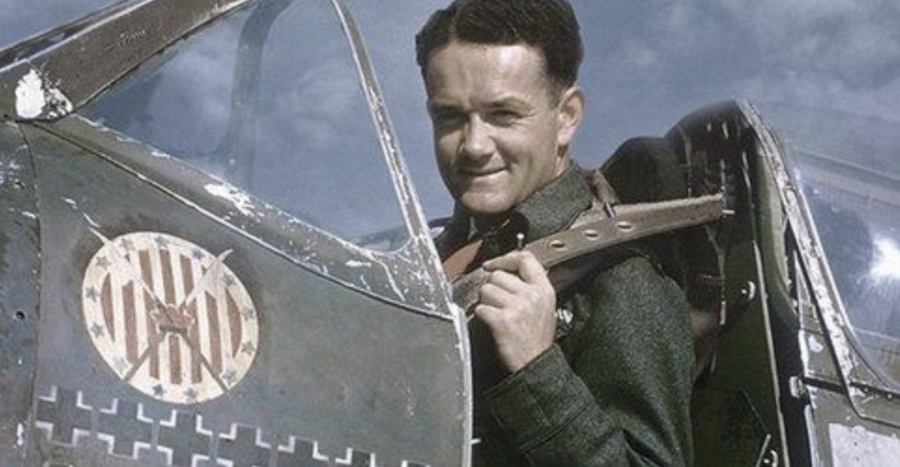
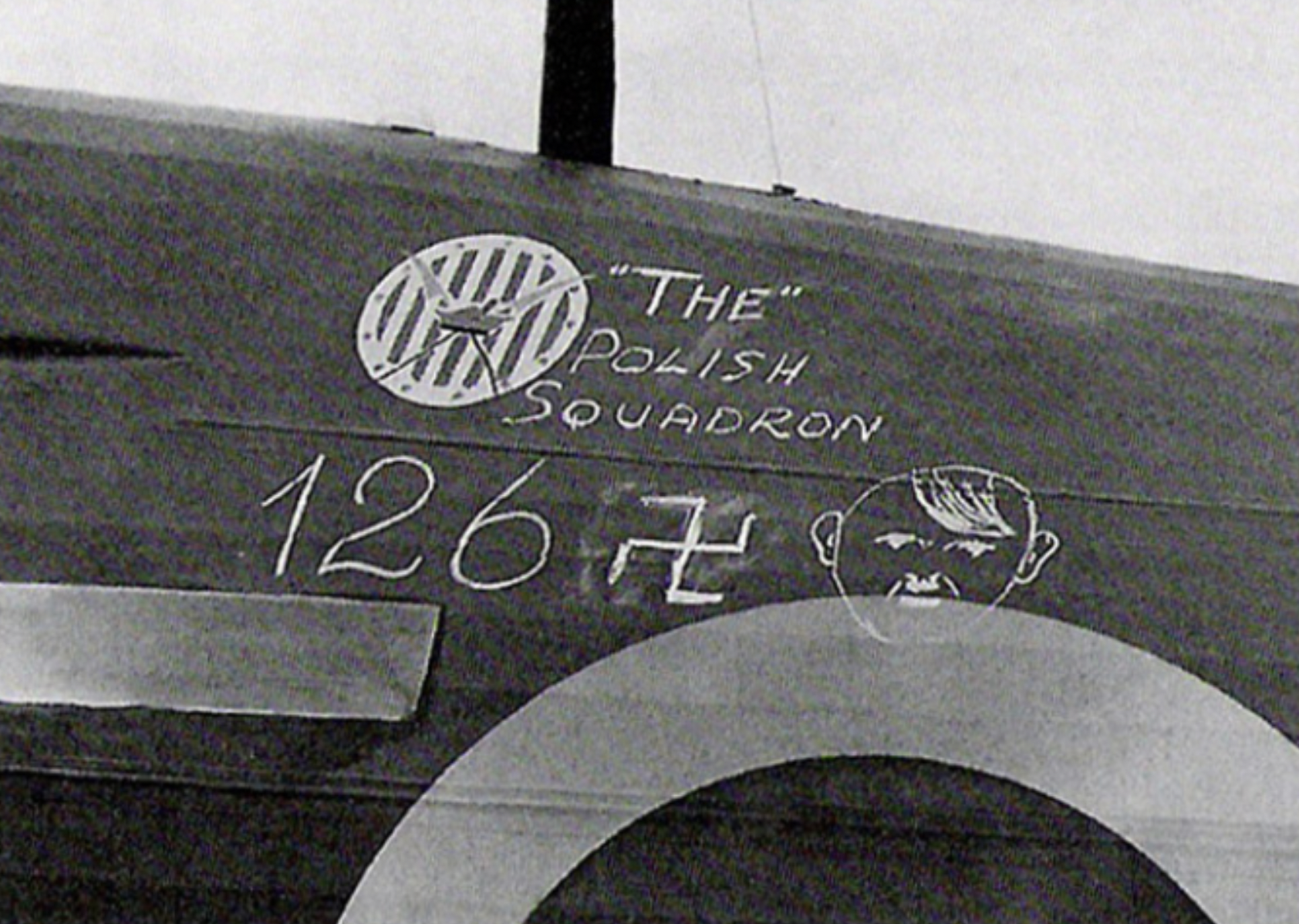
Zumbach had acquired the nickname 'Donald Duck’ for reasons currently unknown and his Spitfires carried a large illustration of DD forward of the cockpit.
On 15th April 1943, Zumbach was appointed Wing Leader of the Polish Wing at Kirton-in-Lindsey. Later in the year, he went on a course to the Polish Staff College, after which he went to Coltishall to resume leading the Wing. He probably destroyed a Fw190 on 25th September 1944 over Arnhem.

Zumbach was posted to HQ 84 Group on 30th January 1945 as an operations officer.
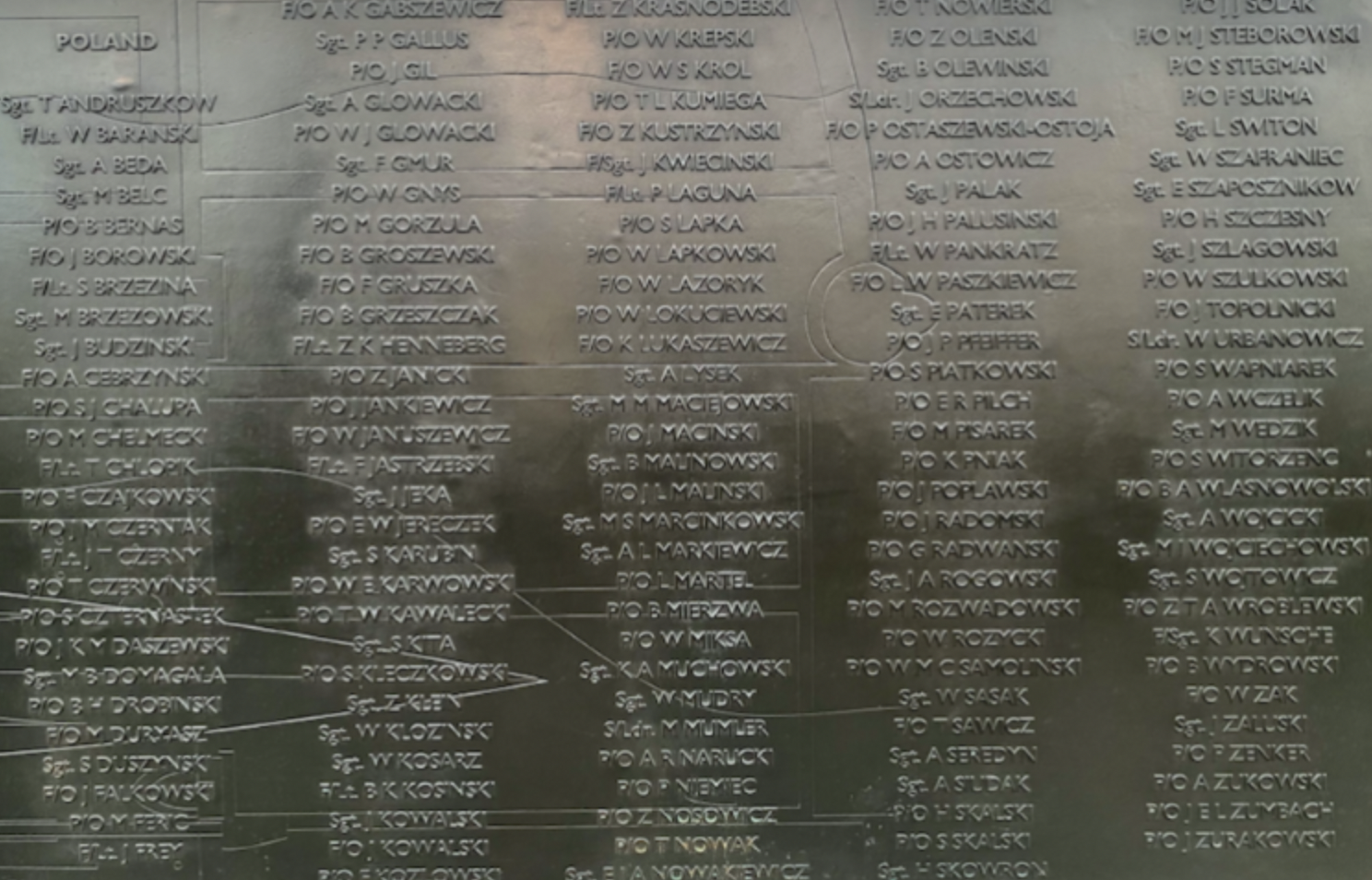
While on a tour of 84 Group units in Holland on 7th April 1945 he was flying with F/Lt. TW Kawalecki in two Austers. The aircraft became lost and landed in German-held territory, both men being taken prisoner. They were released when the Germans surrendered on 6th May. There is a well-researched account of this incident here.
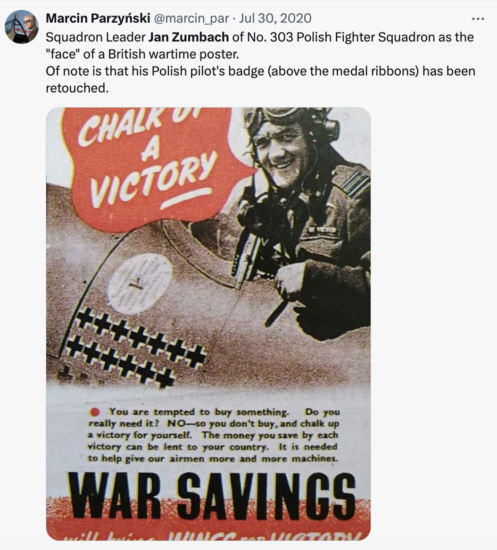
He was released from the Polish Air Force in October 1946.
Zumbach was able to use his Swiss passport to move around a chaotic postwar Europe and the Middle East, engaged in smuggling and arms dealing. He became a mercenary in January 1962 when he was paid to organise and run a rebel air force for the Congolese breakaway state of Katanga.
When a similar situation arose in 1967, with the Nigerian state of Biafra breaking away, he set up another force and took part himself, flying a B-26 Invader.
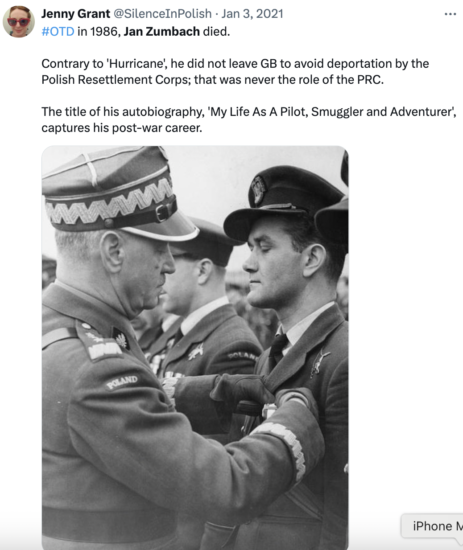
He retired to France in 1967 and died there on 3rd January 1986. Because of his activities, his friends were convinced that he had been murdered but no charges were made.
For his military service, Jan Zumbach was awarded the Silver Cross of the Virtuti Militari, the Cross of Valour four times and the British Distinguished Flying Cross twice.
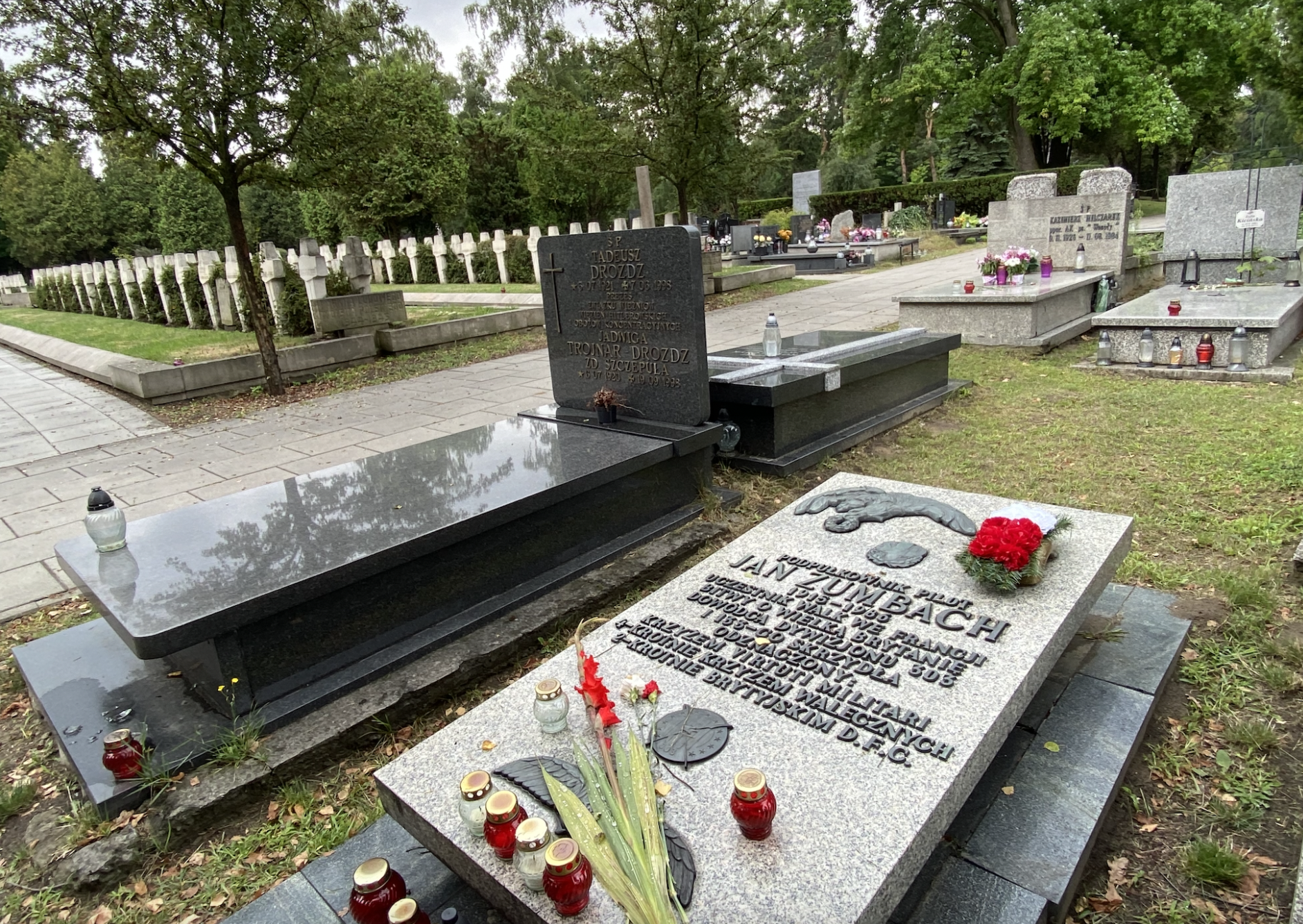
After the war, he continued to be a pilot, was involved in smuggling and was a mercenary fighting for the independence of Katanga and Biafra. He died at 71, on 3 January 1986 in Paris. The cause of death has not been established, so there is speculation that he was killed. He was buried at the Powązki Military Cemetery in Warsaw.
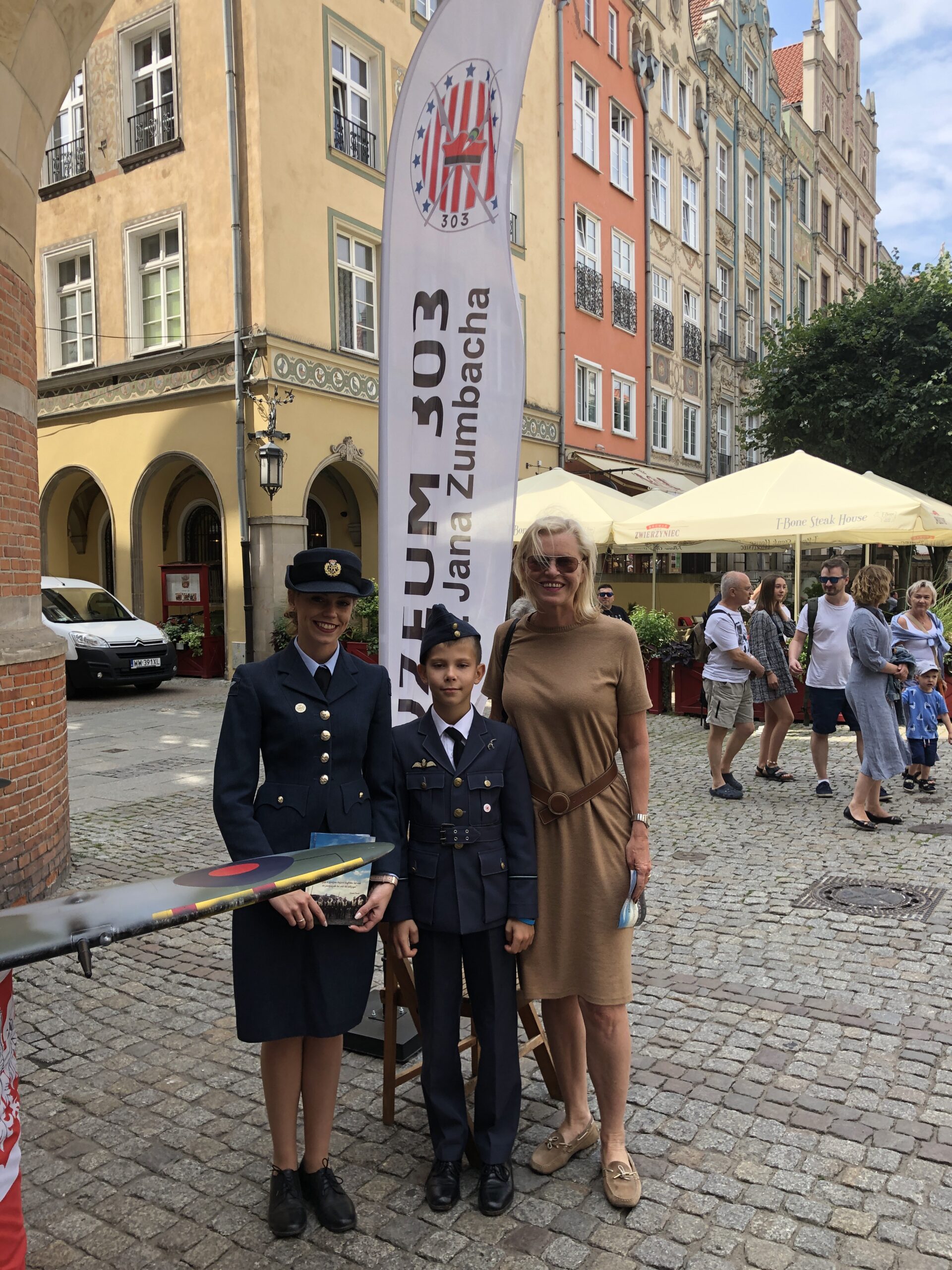
Source: ciekawostkihistoryczne.pl
Photo: Instytut Polski i Muzeum im. gen. Sikorskiego w Londynie, British Poles
Tomasz Modrzejewski