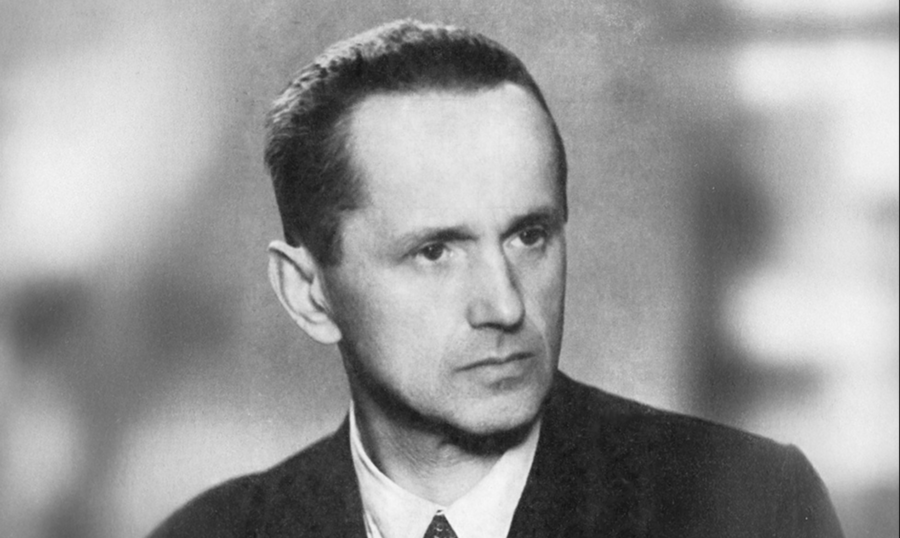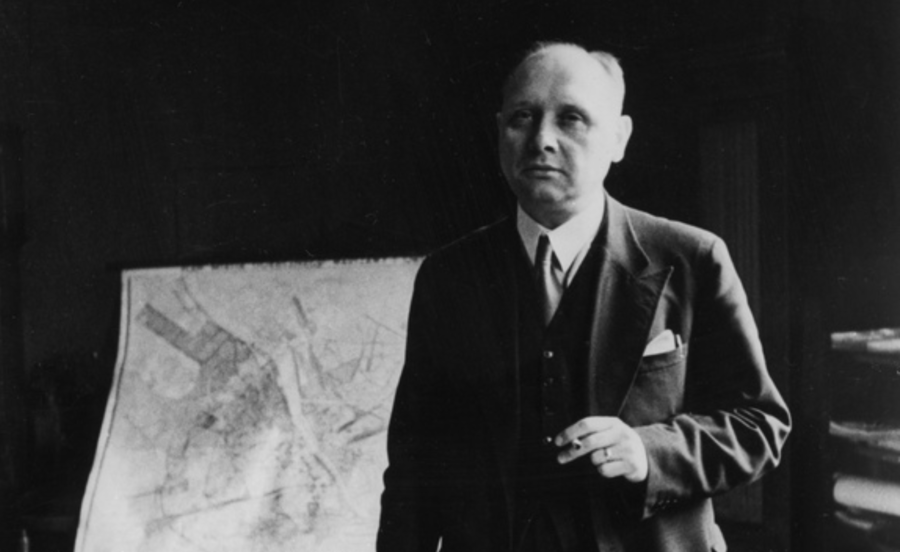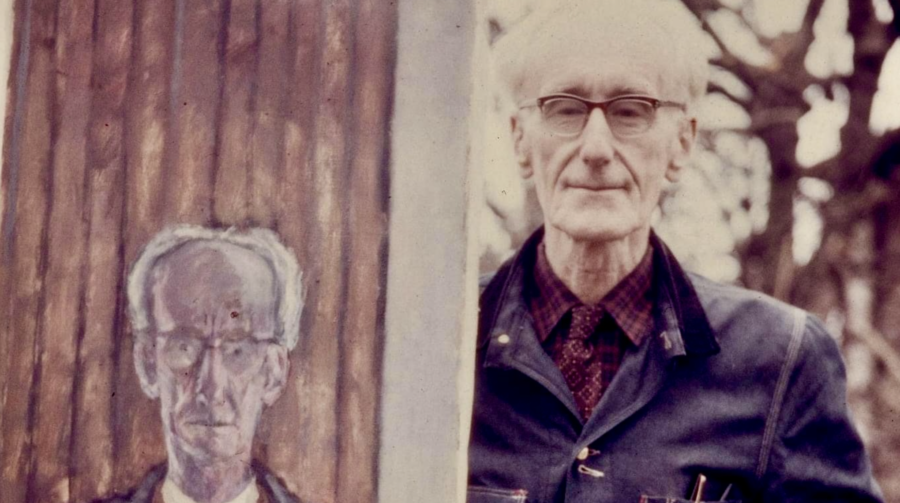
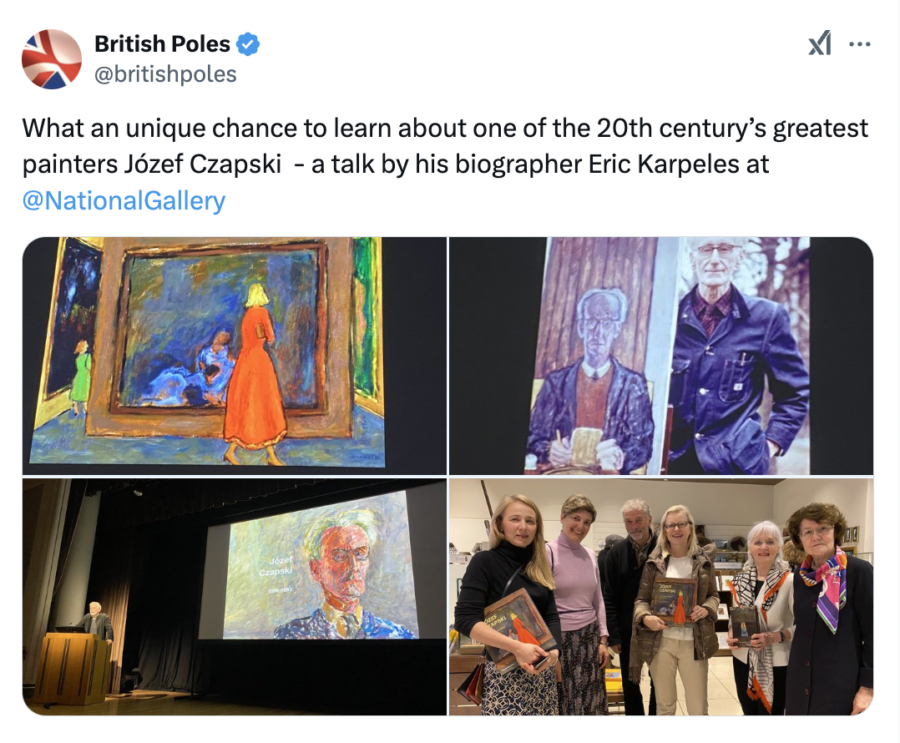
Józef Czapski was both a fearless soldier and a talented artist. His aristocratic background gave him outstanding education opportunities that he developed during the whole of his life. After the 2 World War, he was one of the most important founders of the Polish periodical “Kultura” which operated from Maisons-Laffitte and influenced Polish and Eastern European anti-communist opposition movements.
The Czapski family, who came from the lands of Polish Royal Prussia, settled in Lithuania due to their close ties to the powerful Radziwiłł family. In 1872 Count Emeryk Czapski bought a palace in Przyłuki, near Minsk in today’s Belarus.
There, Józef Czapski spent his childhood, although he was born, in Prague, in the palace of the Thun family, from which the future painter descended.
“My mother, at the age of twelve, decided to marry a Pole, because Poland was an unhappy country, and having married a Pole, she became Polish”, wrote Maria Czapska, Józef’s sister, in her memoirs.
Because of his aristocratic background, although Józef was mostly connected to Polish culture and language, he also felt close to the vast European heritage. During childhood, he was mostly surrounded by French and German teachers, and truly renewed his ties to Polish culture in military service for the Polish army.
After graduating from high school in 1915, he became a law student in St. Petersburg (at that time renamed ‘Petrograd’ because of the ongoing World War 1 in which Russia confronted Germany and despised the German-sounding name).
He was soon conscripted into the army and thanks to his family colligations he was admitted to the Tsar’s Page Corps.
After the Bolshevik Revolution, he joined the 1st Krechowiecki Cavalry Regiment, commanded by General Józef Dowbor-Muśnicki. His pacifist views made him drop his military career and begin studies at the School of Fine Arts in Warsaw.
He returned to the Polish Army with a mission to search for his comrades-in-arms missing in Russia who had been executed by the Bolsheviks on the Russian-Finnish border. He participated in the Polish-Soviet War in 1919-1920, serving on an armoured train ‘Śmiały’ fighting within the 1st Cavalry Regiment.
At the end of 1920, Józef Czapski enrolled at the Academy of Fine Arts in Kraków. Here, he studied under Wojciech Weiss, and later under Józef Pankiewicz. In 1923, together with his fellow students, he founded a group of painters known as the “Capists”, which was derived from his surname.
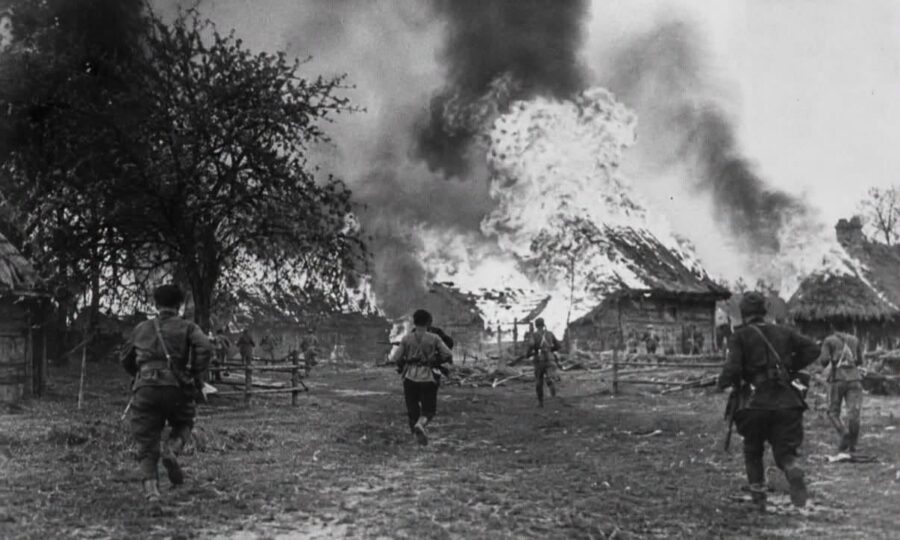
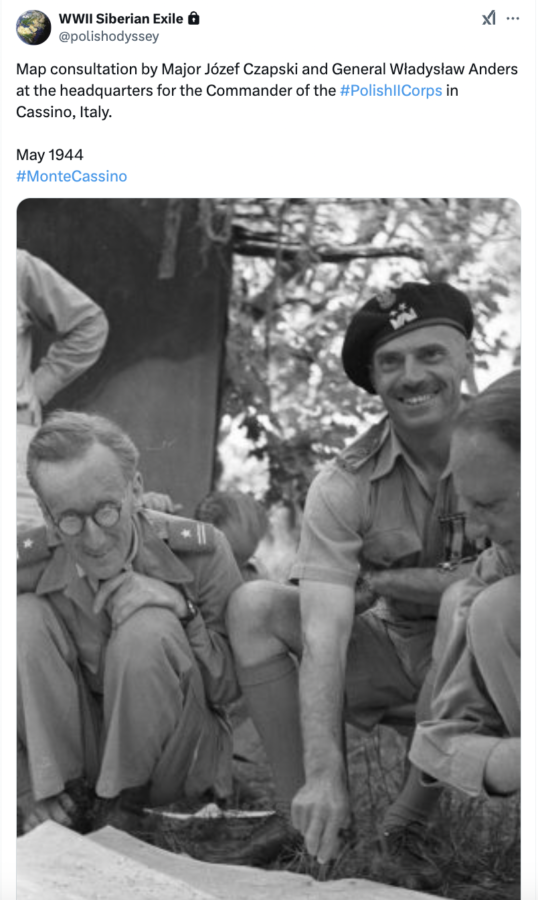
In 1939, Józef Czapski was conscripted into the army and soon taken prisoner by the Soviets and imprisoned along with other Polish soldiers and officers by the Red Army in Starobielsk, Pavlishchev Bor and Griazovets. After the Sikorski-Mayski Agreement (July 1941), he was released and joined the Polish Armed Forces in the USSR commanded by General Władysław Anders.
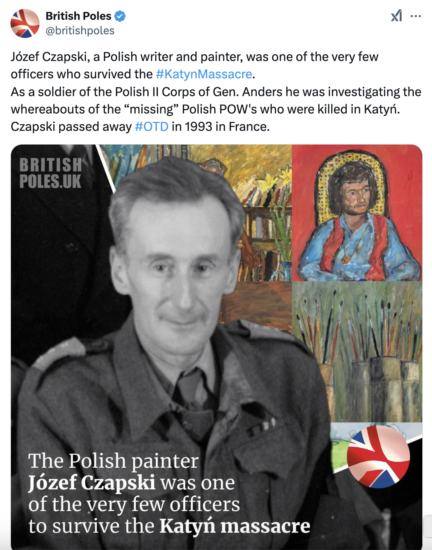
He was ordered to find out the truth about the fate of the Polish officers and soldiers in the Soviet Union who had been imprisoned in the camps at Starobielsk, Ostashkov and Kozielsk who “disappeared” in the spring of 1940. During his investigation, Czapski became sure they were murdered.
He then moved along with the Anders Army and travelled through Kazakhstan, Persia and Iraq to the Middle East, where, as an officer with the rank of major, he was responsible for the Department of Propaganda and Education of the Polish Army in the East.
In 1943, the Germans reported the discovery of mass graves of Polish officers at Katyń. A few years later, Józef Czapski participated, as a delegate of the Polish government-in-exile, in the international commission investigating the Katyń massacre.
In 1944 Jozef Czapski published two books that told the story of his time in a labour camp in the Soviet Union and later the search for the truth about the fate of the murdered Polish officers: “Wspomnienia starobielskie” (Memories of Starobiel) and “Na nieludzkiej ziemi” (On Inhuman Earth). The books were an early inspiration for Andrzej Wajda’s film “Katyń”.
In 1945, Czapski headed an outpost of the 2nd Corps (the Information Office) located at the Hôtel Lambert in Paris. When Instytut Literacki relocated there from Rome, it was first located in Maisons-Laffitte.
The famous Polish “Kultura” owes its first Paris headquarters to Czapski. At first, it served as the book and food warehouse of the 2nd Corps. In 1947, Józef Czapski moved in with his sister Maria.
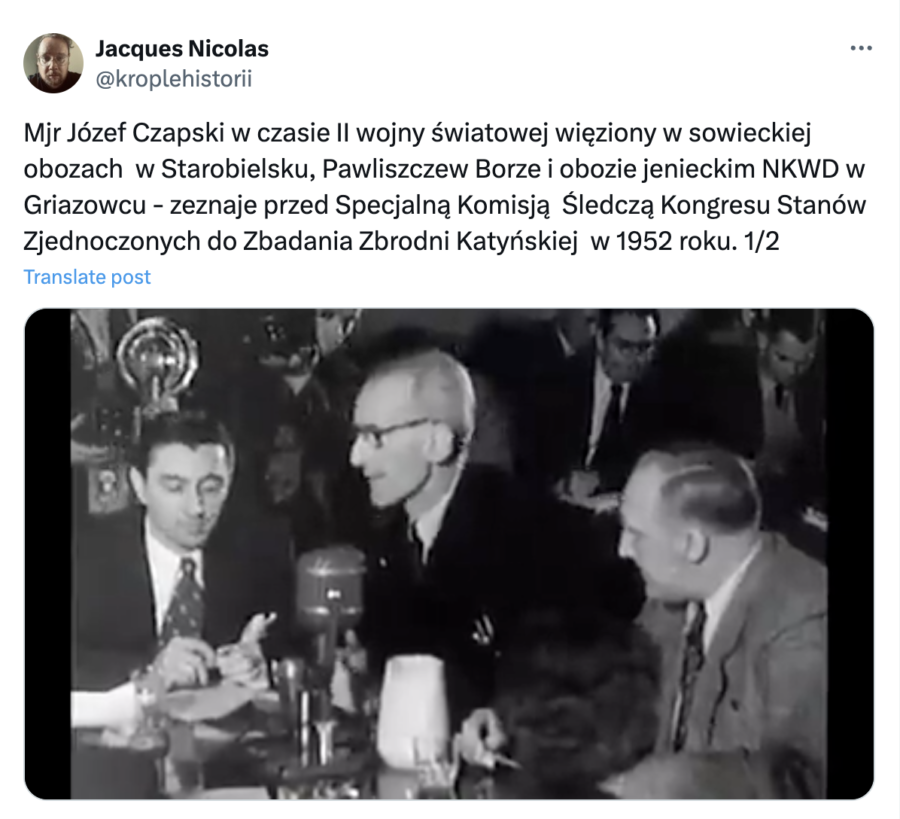
In 1952 Czapski testified before a US Congress Commission tasked with explaining the Soviet Katyń Massacre of 1940.
In his apartment, Czapski created a huge archive of some 3,500 books that he created over 50 years of his life, including 278 volumes of his diaries, as well as correspondence and painting accessories. After his death, the archives were donated to the National Museum in Kraków.
Józef Czapski died on 12 January 1993 in Maisons-Laffitte.
Source: British Poles, Polskie Radio
Photo: X @IPN
Tomasz Modrzejewski