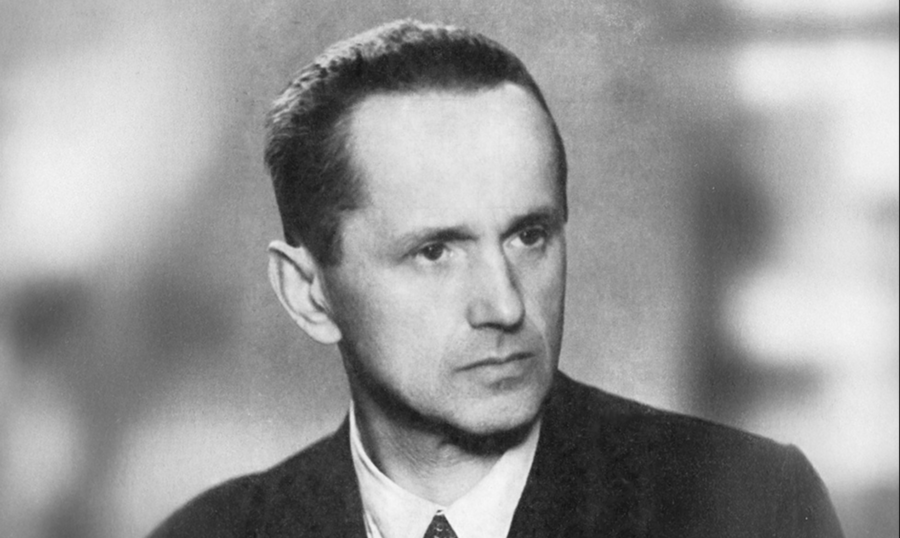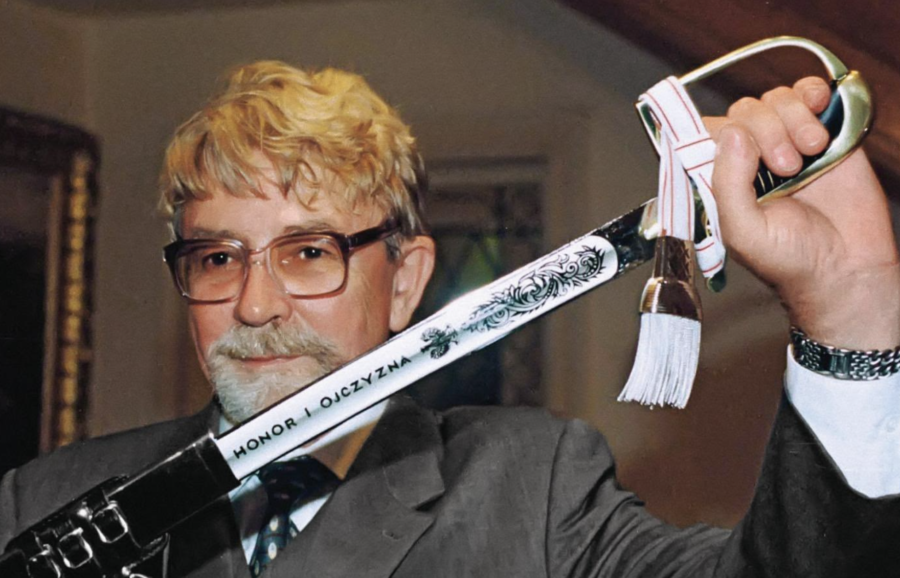
Kukliński served as general staff officer of the Warsaw Pact and was considered one of the most trustworthy by both the Soviets and Polish communist leadership. When he was sure Poland could be annihilated in nuclear war he decided to cooperate with the US intelligence. The information he provided was crucial for shaping NATO’s strategy vis a vis the Soviets and alerting them about the coming martial law that was introduced in Poland in 1981.
Ryszard Kukliński was born on 30 June 1930 in Warsaw. Soon after the end of the 2 World War in 1946, he joined the Polish Workers’ Party and became a student at the Officer Infantry School No. 1 in Wrocław.
In 1950 he became a graduate with the rank of warrant officer.
He worked on his education and was often promoted for his skills. In 1964, he graduated from the General Staff Academy.
From 1967 to 1968, he served with the International Surveillance and Inspection Commission in Vietnam. After his return to Poland, he work on exercises and plans for the invasion of Czechoslovakia by Warsaw Pact troops.
In 1972 Kukliński was promoted to the rank of colonel in the Polish People’s Army.
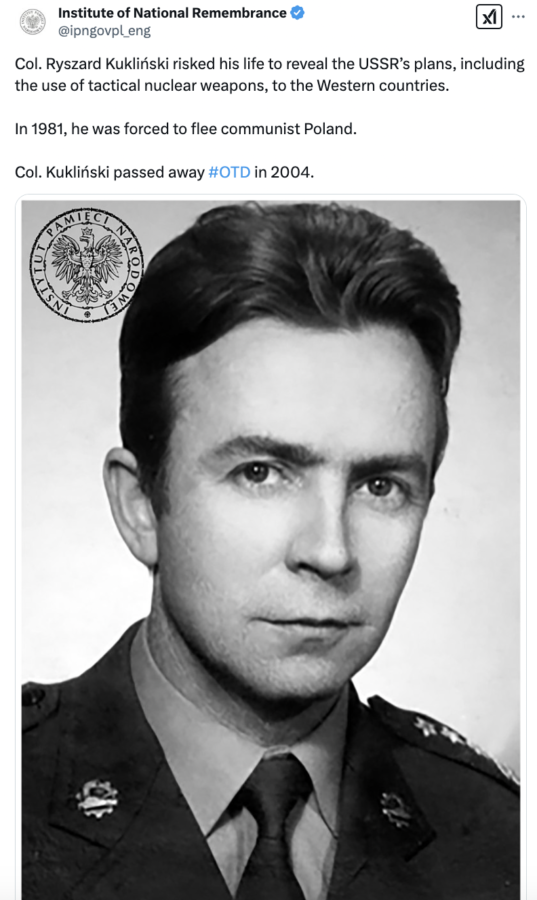
As an officer of the General Staff’s Board I, he learnt many of the secrets of the People’s Polish Army and the Warsaw Pact, including the strategic war plans against the West. In the early 1980s, he also participated in the preparations for the introduction of martial law in the People’s Republic of Poland.
He started his cooperation with the Polish Internal Military Service in 1962, and became very close to General Wojciech Jaruzelski, Czesław Kiszczak and the ‘Soviet comrades’.
According to the American officers Kukliński provided strategic information, and was considered the most important US spy in the Soviet bloc, even more important than the famous Oleg Pienkowski.
The codename he received from the American intelligence was “Jack Strong”.
His work for US intelligence began in 1972. Within ten years, he provided the Americans with more than 40,000 pages of documents describing the Soviet Warsaw Pact military doctrine and plans.
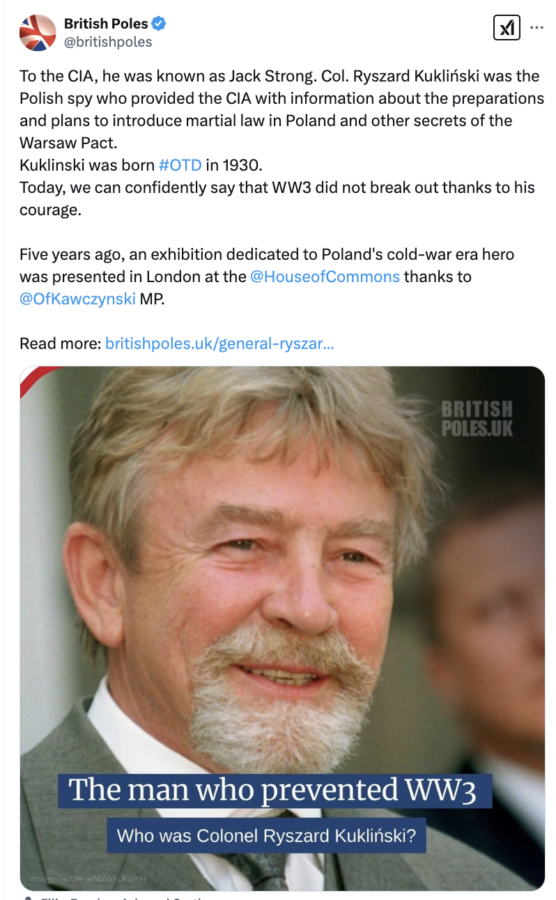
The disclosure of Soviet plans for aggression against Central Europe helped NATO countries to prepare for defence and perhaps saved the world from World War III.
Threatened with deconspiration and arrest, Kukliński, his wife and two sons were evacuated from Poland by the CIA in November of 1981.
In 1984, the Warsaw Military District Court sentenced him in absentia to death. In the first half of the 1990s, both of the colonel’s sons died a few months apart in mysterious circumstances – most probably in an act of vengeance from the Soviet intelligence.
In 1995, the Military Chamber of the Polish Supreme Court revoked the verdict against Kukliński. The investigation into his case, which was resumed at that time, was discontinued in 1997. The prosecution considered that the Colonel had acted in a state of superior necessity.
Kukliński had planned to visit Poland after 1989, when he regained full citizenship rights, but feared for his safety. He received a Polish passport in 1998 but never visited his homeland.
Ryszard Kukliński died at the age of 73 in Tampa, Florida.
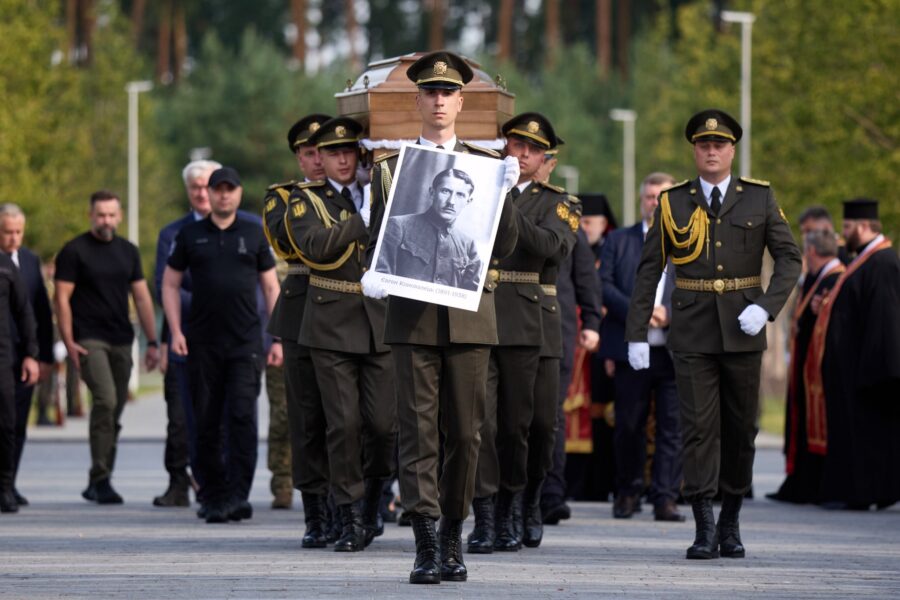
The urn containing the Colonel’s ashes was returned to Poland and was placed in the Alley of the Honor Lane at the Powązki Military Cemetery in Warsaw on 19 June 2004.
Source: IPN
Photo:@MZWKuklinski
Tomasz Modrzejewski