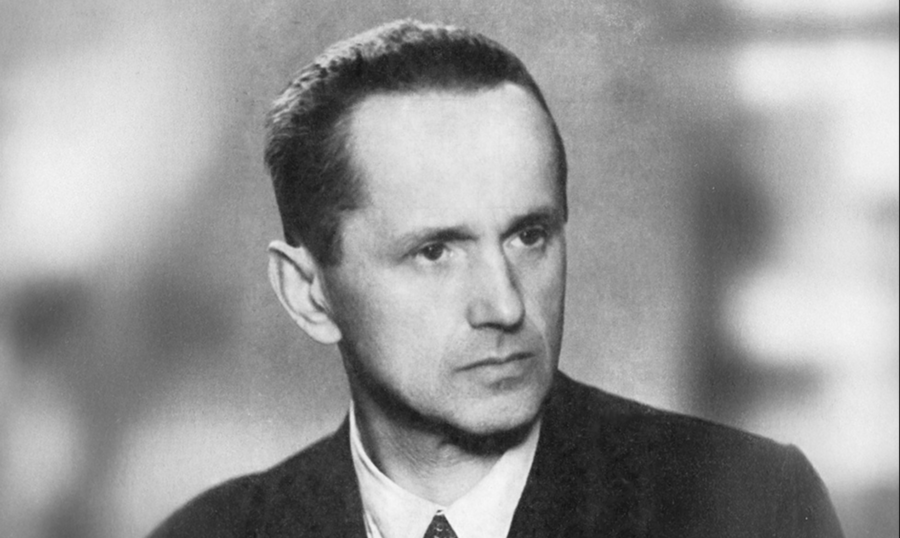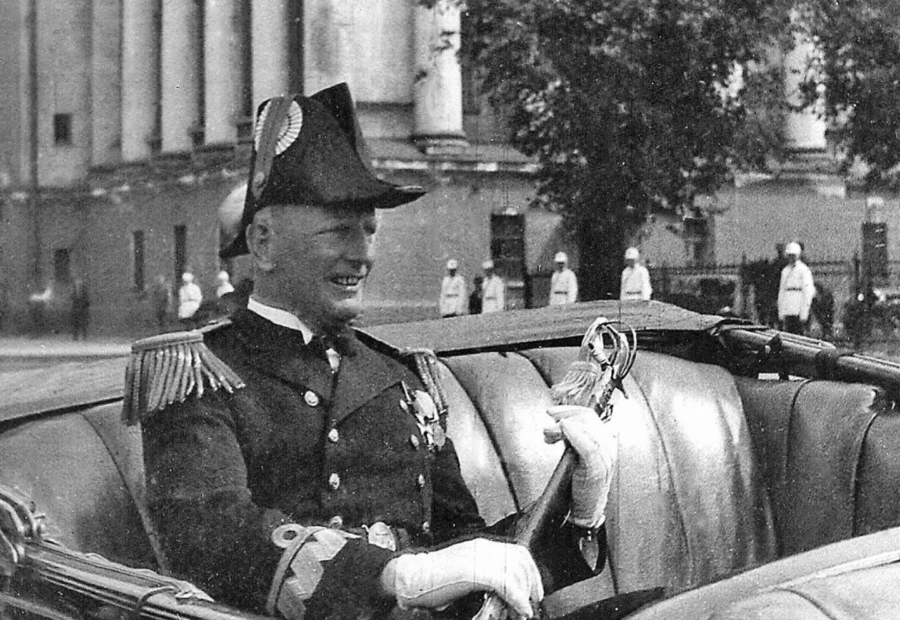
Józef Unrug was born on 7 October 1884 in Brandenburg, near Berlin, to a family cultivating Polish military traditions dating back to at least the 16th century, when the ancestor of the noble family Unruh (Unrug), Krzysztof I, received a Polish noble title and settled in Greater Poland. Joseph continued the family military tradition. His father, Tadeusz, a general, served in the Prussian Army.
The Polish roots of the Unrug family reach back to King Bolesław III the Wrymouth. The first Unruh fought under his command against German Emperor Henry V in the famous Polish-German war of 1109. Polish chronicler Jan Długosz mentioned that a man of such name was the Polish prince’s envoy to the emperor.
Young Józef attended a school in Dresden. He then started studies at the Marineakademie in Kiel, from which he graduated in 1907.
As a professional navy officer, he served on cruisers and battleships. During the Great War, he fought on submarines. He was second officer and commander of the UB-25, UC-11 and UC-28, commander of the submarine school and commander of the flotilla.
Until the end of the First World War, Józef Unrug fought in the German Empire’s navy as commander of a flotilla and commander of a submarine school. Shortly after regaining independence, he resigned from his service in the German navy and, together with other Polish soldiers who had so far fought on the side of the partitioners, returned to Poland to begin service in the Polish Army.
In 1919, having learnt of the creation of the navy of independent Poland, Unrug dismissed himself from service in the Imperial Navy. After verification, he received the rank of captain of the navy.
In 1921, he married Zofia Unrug. The marriage had one child, son Horacy (born in 1930).
In 1925, Józef Unrug became commander of the 2nd Polish Fleet.
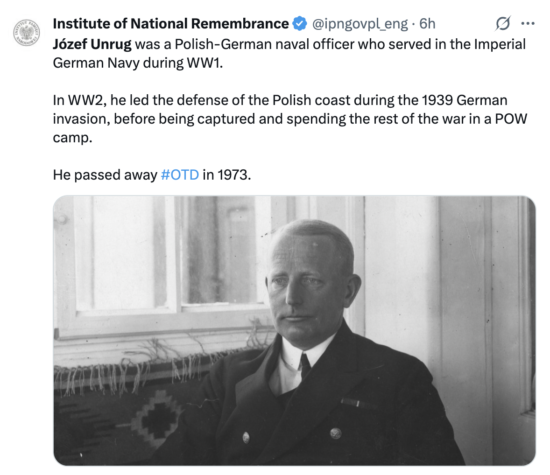
In 1933, Jozef was promoted to the rank of Rear Admiral, and just before the outbreak of the Second World War, he was appointed Commander of the Fleet and Coastal Defence.
The Polish coast, together with Hel peninsula, was defended by Admiral Józef Unrug and his soldiers and was one of the longest-held points of resistance of the 1939 September campaign of the 2nd World War.
However, after the surrender of the Polish capital, understanding the deadly pressure of the German army, the poor situation of the Polish land forces, and, above all, out of concern for the fate of the civilian population, Józef Unrug decided to sign capitulation.
On 2 October 1939, when German soldiers entered the Hel peninsula, they could not believe that the Poles were so effective in attacking their fleet with a handful of heavy artillery, namely four heavy guns.
“After all, I decided to surrender Hel only because I believed that this war would turn into a world war and that we would win it, otherwise, we would defend Hel to the end, to the last soldier. After all, I calculated that twenty-five per cent of the fleet’s personnel could die in this war; the rest must stay because they would be needed to rebuild the Polish Navy in an independent Poland. After all, I am already old, and it is not known whether I will return to my homeland, but you youngsters should, and you must not now recklessly risk your lives,” Józef Unrug said when describing his command of the defence campaign of 1939.
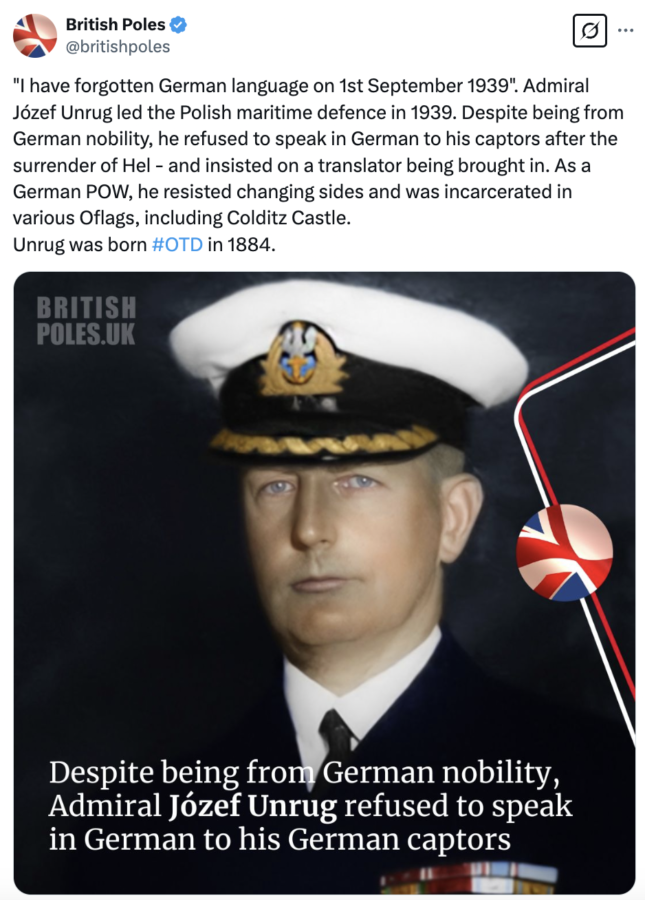
During his time in captivity, Unrug would receive numerous offers to accept Third Reich citizenship and a military position. He refused all of them and always demanded a translator to assist him in any talks, explaining he “forgot how to speak German on 1 September 1939”.
When his wife Zofia arrived at Woldenberg, Admiral Unrug refused to see her until other Polish officers had a similar opportunity.
Admiral Unrug regained his freedom in 1945 after the liberation of the Murnau camp by the US Army.
In London, Józef Unrug took up the post of first deputy chief of Naval Management. He managed to bring his wife and son to England. In 1946, he was promoted to vice admiral. He refused to receive an extraordinary British military pension.
In 1955, the Unrug family moved to France to the Lailly-en-Val Polish Home for Pensioners near Orléans. The Admiral worked as a driver and began to write down his memoirs. Towards the end of his life, he struggled with cancer.
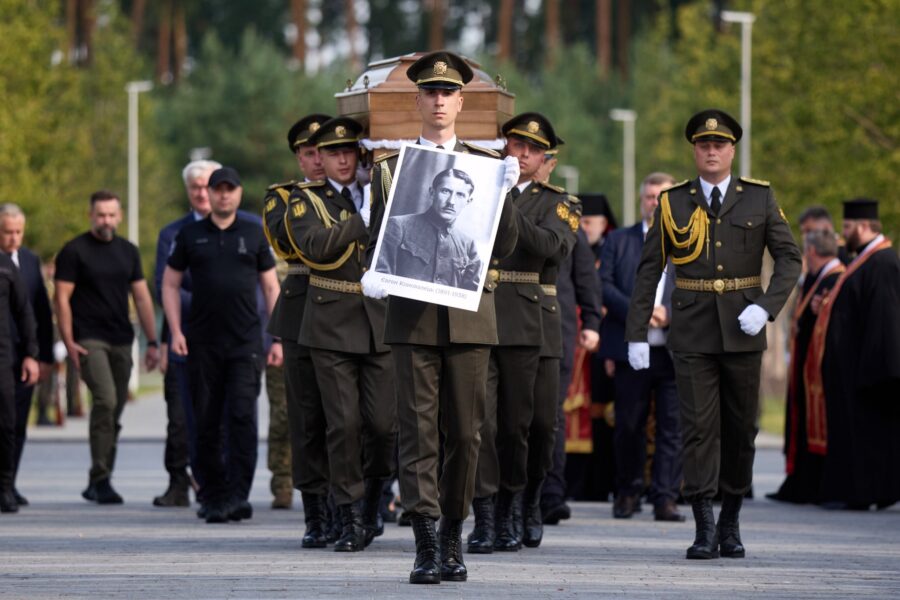
Józef Unrug died on the night of 28 February to 1 March 1973. He was laid to rest in the cemetery at Montresor on the Loire. The funeral was attended by representatives of the UK and French navies.
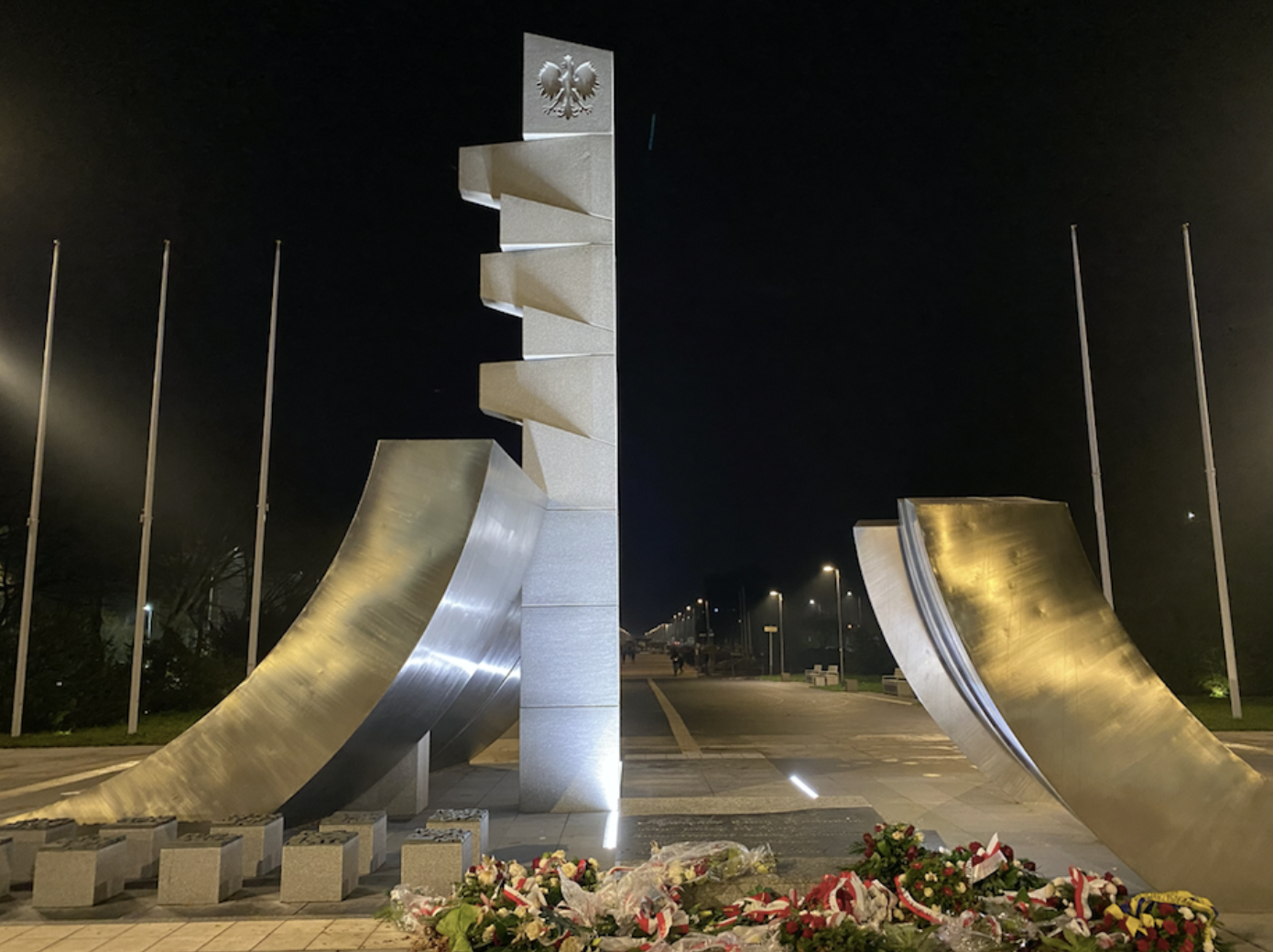
On 21 September 2018, President Andrzej Duda posthumously appointed Vice Admiral Unrug as Admiral of the Fleet. Unrug’s remains were exhumed and moved to Gdynia on board the ORP Kościuszko frigate. On 2 October 2018, they were laid to rest in the Memorial Quarters at the Navy Cemetery.
Source: Dzieje.pl, IPN
Photo:@zibi20201
Tomasz Modrzejewski