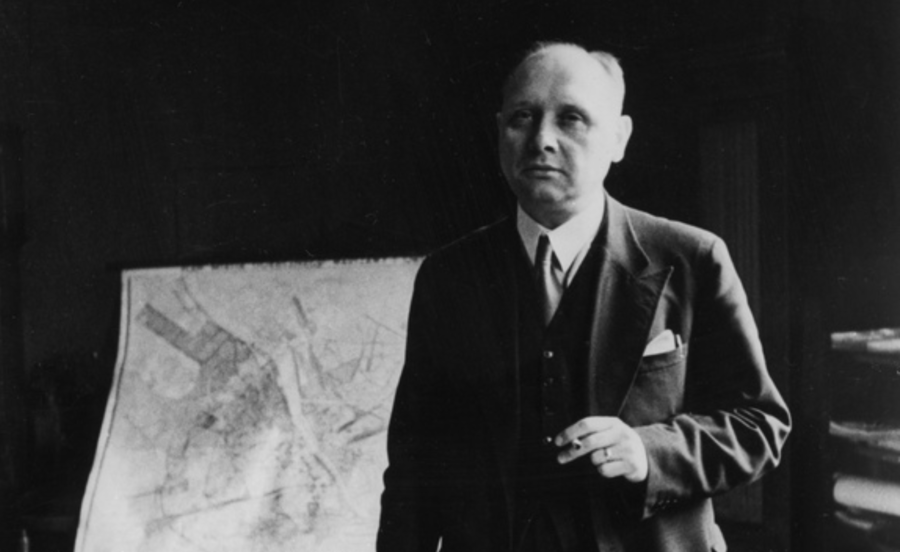
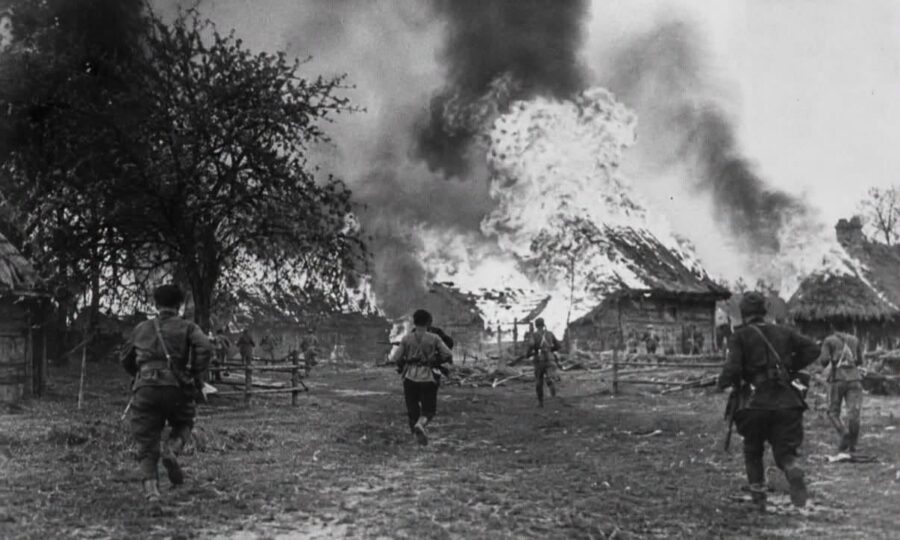
The end of the Second World War in Europe brought relative peace to the Western world, an illusion of a peaceful coexistence with the victorious Soviets. Before the Cold War started, it was too late, and Poland—the first of the Allies that faced Hitler—was left behind and fully controlled by Stalin. The famous 1946 VE Parade was organised without the participation of Polish troops, and interestingly, overshadowed by serious economic troubles in Britain.
VE Day, or Victory in Europe Day, is celebrated in the United Kingdom on 8 May to mark the formal end of World War II in Europe in 1945. On that day, Britain and its Allies accepted Nazi Germany’s unconditional surrender, bringing an end to nearly six years of war on the continent. The original celebrations saw spontaneous street parties, dancing, and cheering crowds across the UK, with London’s Trafalgar Square and Buckingham Palace at the heart of the jubilation.
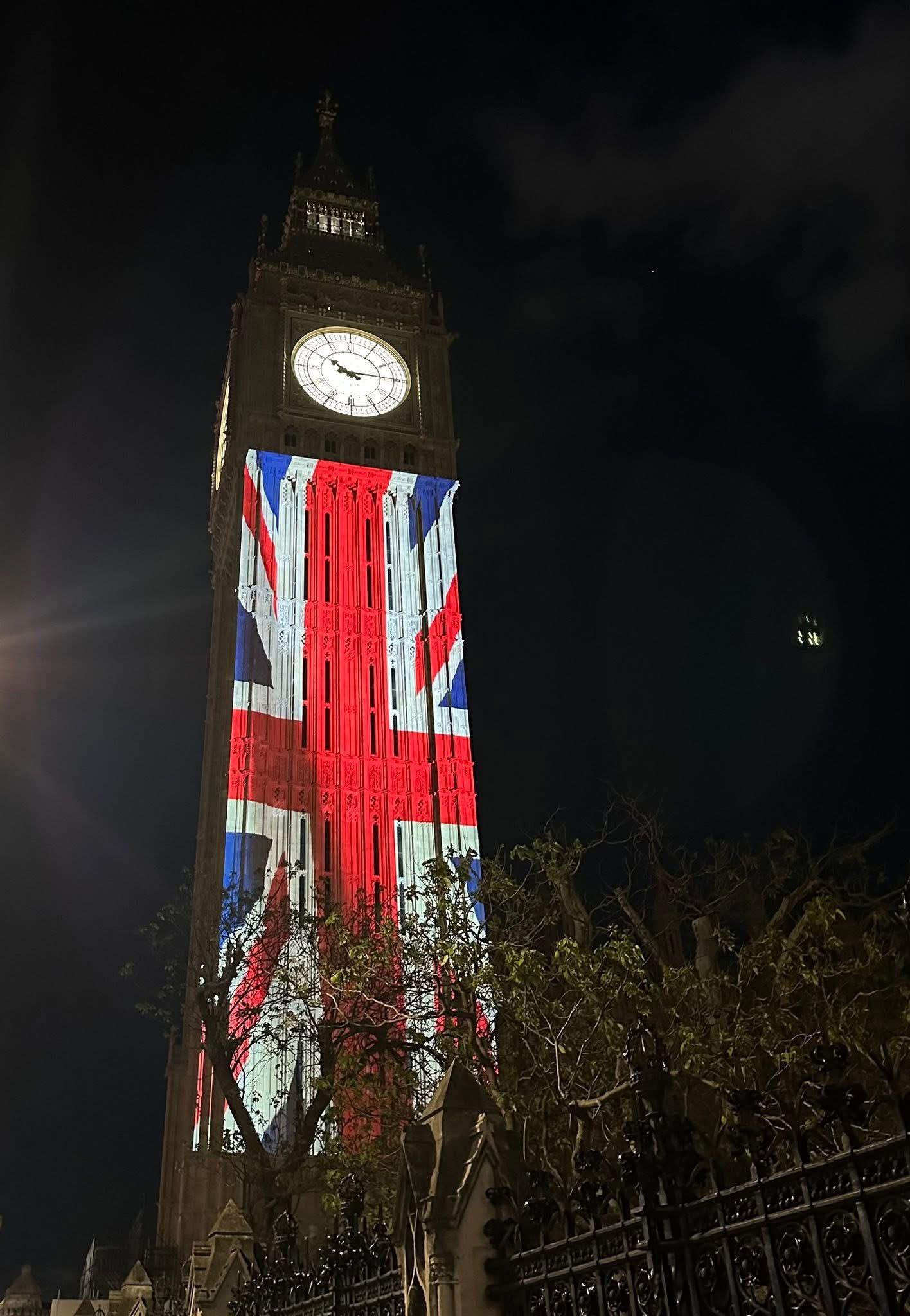
Each year, the British people commemorate VE Day to honour the courage and sacrifice of those who fought in the war, both on the front lines and at home. The day often begins with a national moment of silence at 11 a.m., followed by church services, parades, and the laying of wreaths at war memorials. Many towns and communities also host 1940s-themed events, encouraging people to dress in period attire and play music from the era.
While much of Europe celebrated the end of World War II with parades and public rejoicing, a deep injustice was dealt to the Polish soldiers who had fought bravely alongside the Allies.
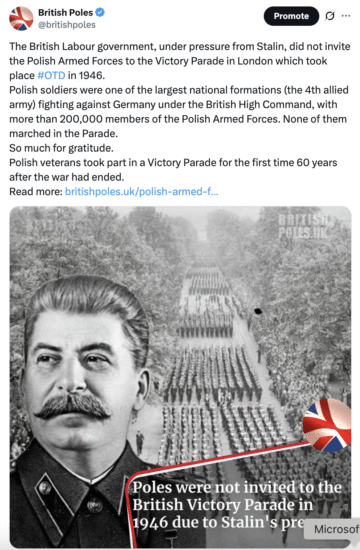
In the 1946 Victory Parade in London, Polish troops, particularly those from the distinguished Polish Armed Forces in the West, were not officially invited to march. These were the same soldiers who had taken part in key battles such as Monte Cassino, Arnhem, and the Battle of Britain. The decision, made under political pressure from Stalin, who objected to any recognition of non-communist Polish forces, left many veterans and observers shocked and deeply wounded.
This exclusion symbolised a greater tragedy: despite being the first nation to resist Hitler’s aggression in 1939, Poland was betrayed at the end of the war. While Western Europe was liberated, Poland was handed over to Soviet control.
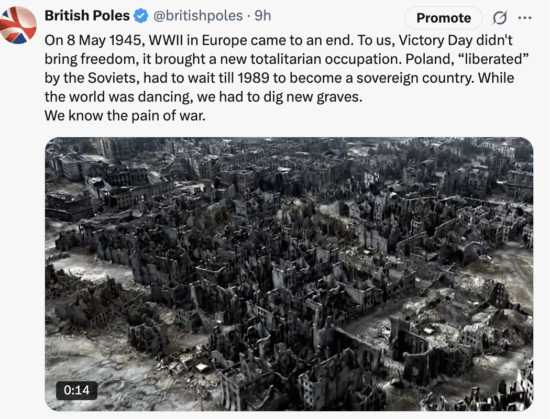
The Yalta Conference decisions allowed Stalin to establish a communist regime in Poland, effectively replacing the Nazi German occupation with Soviet domination. The promises of free elections and independence for Poland were broken, and the nation fell behind the Iron Curtain for nearly half a century, until 1989.
Many Polish veterans chose exile rather than return to a homeland now ruled by a communist puppet government. Their sacrifice was overlooked, and their stories, for decades, were largely forgotten in Western public memory. Today, the omission of the Polish forces in the 1946 parade stands as a painful reminder of political compromise at the cost of justice, and of the Polish people’s long struggle for true freedom.

It is important to add that the first parade celebrating the British victory was held in London on 8 June 1946 and was officially called the “Victory Celebration”, not the “VE Day Parade”.
It was organised to mark the total Allied victory in the Second World War, both in Europe and the Pacific. While VE Day falls on 8 May, the parade was scheduled for a month later – 8 June – primarily for practical and political reasons.
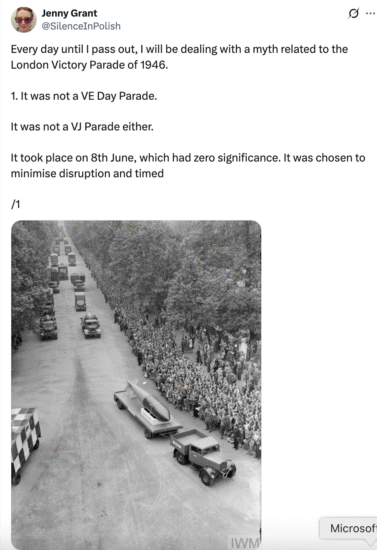
The choice of date was not unrelated to Britain’s economic situation. In June 1946, the country was facing deepening post-war hardships, and just a few days after the parade, bread rationing was introduced—something that had not occurred even during wartime. This came as a shock to many Britons and sparked public discontent. As a result, historians note that although the parade was meant to be a triumphant occasion, it took place under the shadow of mounting economic difficulties.
During this year’s VE Day Parade, the British soldiers were joined by representatives of the Ukrainian military, selected from the UK armed forces’ training programme for the Ukrainian Armed Forces recruits.
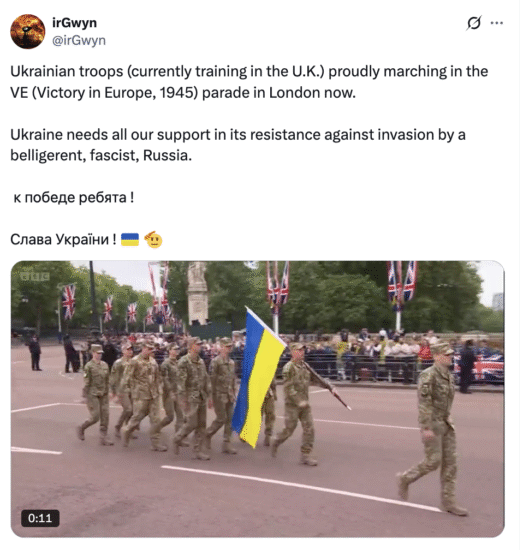
The NATO troops that took part in the parade included personnel from Poland, Lithuania and Sweden, who marched in the procession wearing their national uniforms under the NATO flag.
The British Royal Family watched the commemorations. King Charles III, dressed in a Royal Navy uniform, was seated beside 98-year-old Joy Trew, a veteran of the Women’s Auxiliary Air Force who served as a radio operator during the war. The King was joined by Queen Camilla, while Prince William, Princess Kate, and their three children observed the proceedings from the viewing platform.
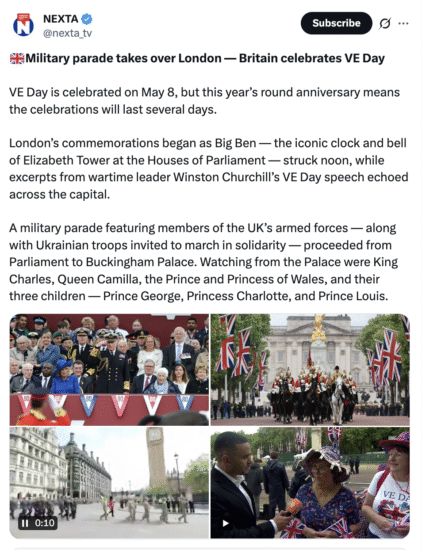
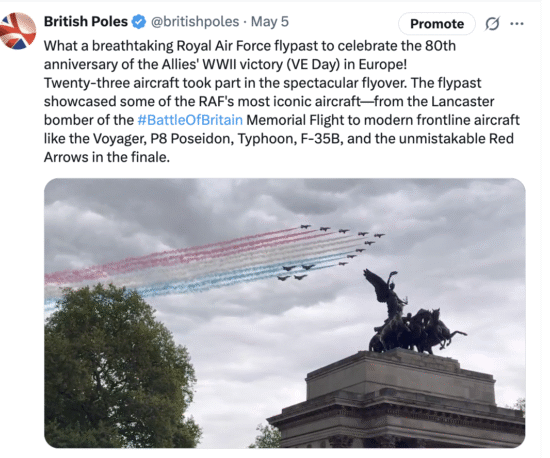
Following the parade, the Royal Family appeared on the balcony of Buckingham Palace to witness a flypast by the Royal Air Force. The aerial display featured both modern and historic aircraft, including the Voyager transport plane—used in Britain’s support mission for Ukraine—and the iconic Red Arrows, which streaked across the London sky trailing red, white, and blue smoke.
The commemorations marking the 80th anniversary of the end of the Second World War in Europe will continue across the UK until Thursday. On Tuesday, the Tower of London will unveil an art installation made up of 30,000 ceramic poppies, a striking tribute first displayed in 2014 for the centenary of the First World War. The exhibition will remain in place until 11 November.
On Thursday, VE Day itself will be marked with a national service at Westminster Abbey. Across the country, events including concerts, wartime heritage tours, afternoon teas with veterans, and anniversary church services are set to honour the occasion.
Source: The Guardian, PAP
Photos: X@nexta_tv and British Poles
Tomasz Modrzejewski