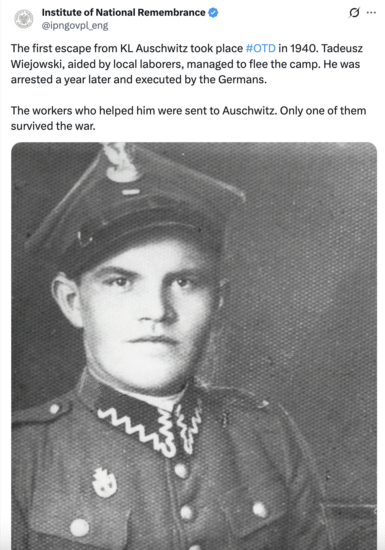
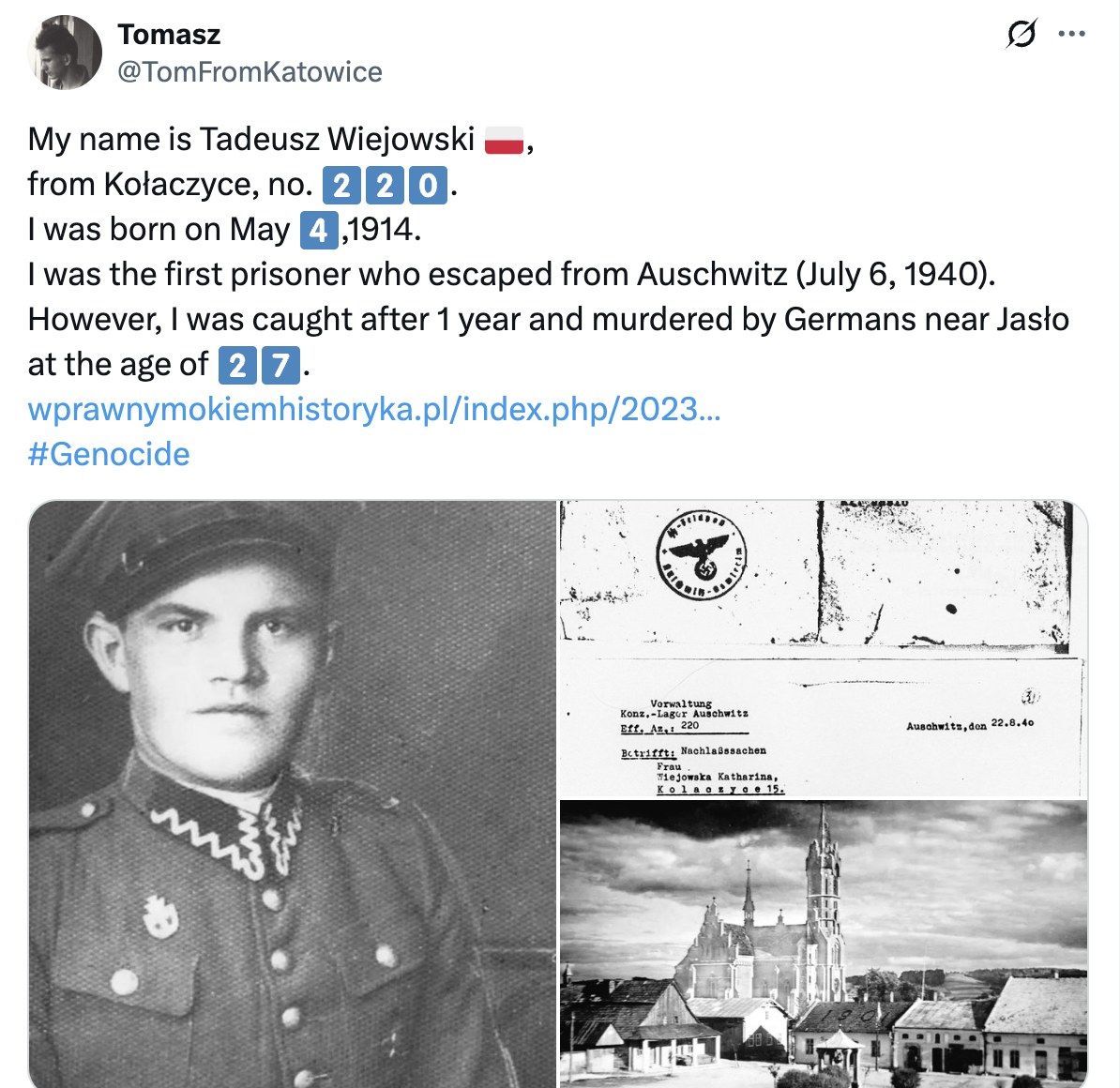
On 6 July 1940, Auschwitz Nazi German death camp witnessed its first prisoner escape. Tadeusz Wiejowski, a Polish inmate bearing camp number 220, managed to escape from the camp. In retaliation, the Germans subjected all prisoners to the longest roll call in the camp’s history, which lasted 20 hours.
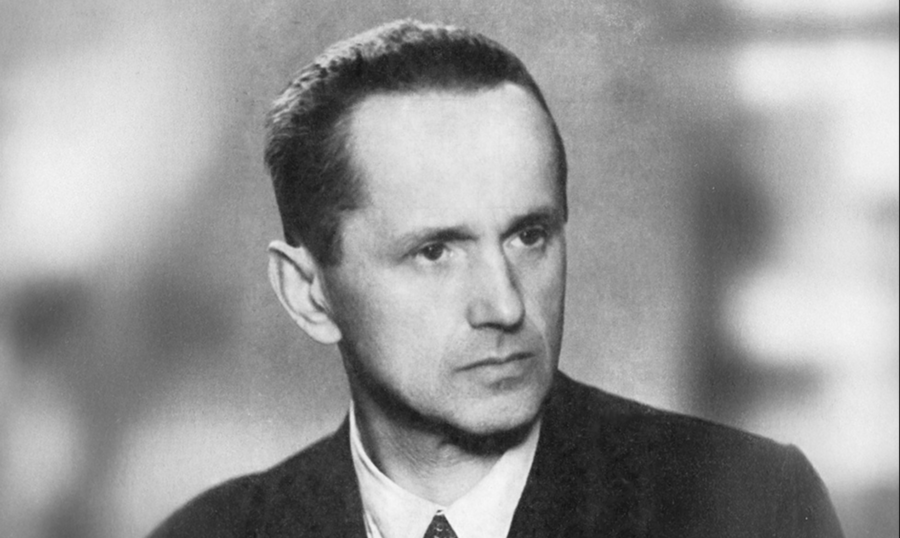
Wiejowski was a shoemaker from the town of Kołaczyce. He had arrived at Auschwitz in the very first transport of Polish prisoners, brought from Tarnów prison on 14 June 1940. His daring escape was made possible by a group of Polish civilian electricians employed at the camp by a German company.
Bolesław Bicz, Emil Kowalowski, Stanisław Mrzygłód, Józef Muszyński, and Józef Patek assisted, disguising Wiejowski in workmen’s clothes and slipping him out alongside them. They also gave him food and money. He fled the area aboard a freight train.
When the escape was discovered, the SS responded with a punitive „standing roll call” that began at 6 p.m. and did not end until 2 p.m. the following day. All 1,311 inmates then held in the camp were forced to stand in formation without rest. Throughout the night, SS guards patrolled the lines, beating and kicking prisoners. It was also during this roll call that the first public flogging at Auschwitz took place.
It is important to note that the German Nazi death camp in Auschwitz was at first designed to be the extermination site for Poland’s elite, including members of intelligentsia, soldiers and even boy scouts.
Among those facing harsh repression was Dawid Wongczewski, a Polish Jew who had arrived at Auschwitz on 20 June, who was already tortured before his incarceration. He did not survive the night and became the first known victim of the brutal repression.
Following the event, the Gestapo launched an intensive investigation into the circumstances of the escape. The five Polish workers who had aided Wiejowski were arrested, subjected to torture, and imprisoned in Auschwitz. Though initially sentenced to death, their punishment was later reduced to flogging and internment. Of the five, only Bolesław Bicz survived the war, dying shortly after.
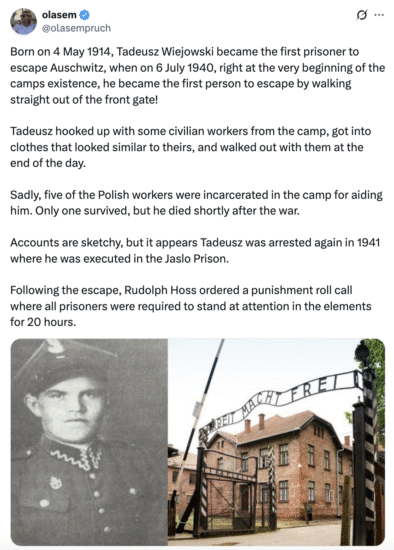
Wiejowski himself remained in hiding in Kołaczyce for over a year. In the autumn of 1941, he was captured and imprisoned in Jasło. Not long after, he was executed at a disused oil shaft near the town.
Auschwitz was established in 1940 as a concentration camp for Polish political prisoners. Two years later, Auschwitz II-Birkenau was built and became the epicentre of the Holocaust, where European Jews were murdered on an industrial scale. The Auschwitz complex eventually developed into numerous subcamps. By the time it was liberated, at least 1.1 million people – primarily Jews, but also Poles, Roma, Soviet POWs and others – had perished there at the hands of the Germans.
The suffering of ethnic Poles during the Holocaust is too often overlooked. Targeted on two fronts, they fell victim not only to Nazi German atrocities but also to Soviet crimes following the dual invasion of Poland in September 1939, carried out under a secret agreement between Hitler and Stalin. According to the Polish Institute of National Remembrance (IPN), around 150,000 Poles died as a result of Soviet repression through executions or forced deportations to Siberia, which was part of a broader campaign that saw approximately 320,000 deported, an act now recognised under the Rome Statute as a crime of genocide.
Source: British Poles, Polonijna Agencja Informacyjna
Photo: IPN
Tomasz Modrzejewski