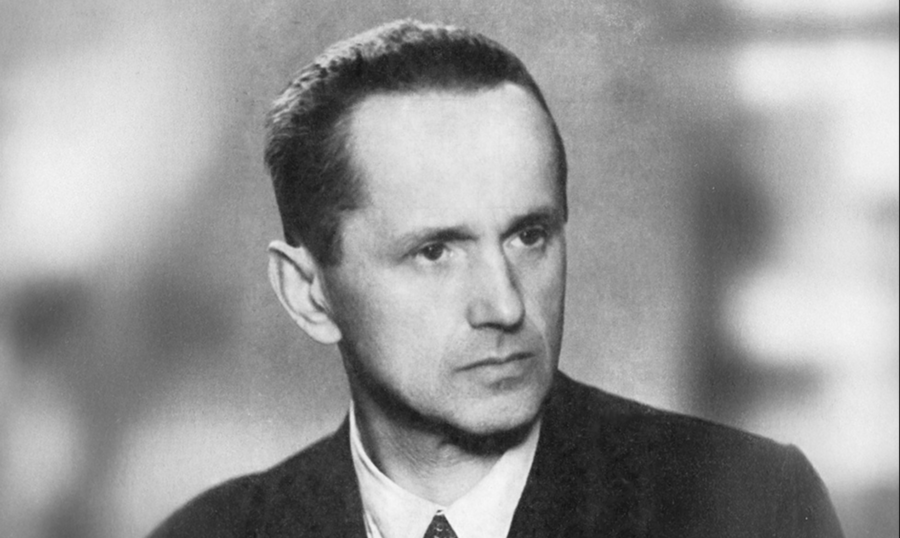
Witold Zacharewicz was born on 26 August 1914, in Płock, at a time when Poland was still under partition. From an early age, he displayed remarkable talents, not only in acting but also in languages, speaking English, French, and German fluently. During the 1930s, he rose to prominence in Polish cinema, starring in some of the most beloved films of the era, including Znachor (1937), Halka (1937), and Profesor Wilczur (1938). His natural charisma, artistic sensitivity, and versatility quickly made him one of the brightest young actors of his generation.
In 1938, he even received an offer from United Artists in Hollywood, an extraordinary achievement for a Polish actor of his time. Yet, instead of pursuing international fame, he made the patriotic decision to enlist in the Polish Army in September 1938, choosing duty to his country over the promise of stardom abroad.
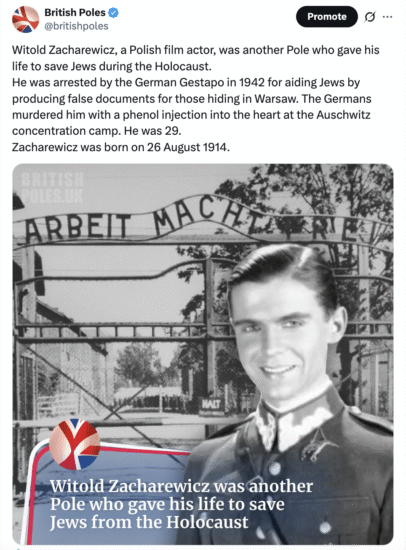
When the German occupation of Poland began in 1939, Zacharewicz’s career and life changed forever. No longer able to perform freely on stage or screen, he turned instead towards quiet but dangerous acts of resistance. Alongside his mother and a small group of conspirators, he began helping Jews in hiding. Their efforts were not small gestures; they were directly involved in producing false identity documents, an action punishable by death if discovered. This work required extraordinary courage, for it meant deceiving the Gestapo and the entire machinery of German terror. Despite his youth, promise, and a future once bright with opportunity, Zacharewicz risked everything to protect others.
On 1 October 1942, the Gestapo discovered his activities. He was arrested and soon deported to Auschwitz in November of that same year. There, stripped of his identity and reduced to prisoner number 76174, he endured the horrors of the camp. Accounts from fellow prisoners suggest that he was killed on 16 February 1943, most likely by a lethal phenol injection to the heart — a common method of execution at Auschwitz. Other testimonies leave the exact circumstances uncertain, but what remains beyond doubt is that this gifted young man, once destined for international recognition, perished in the darkness of one of history’s most infamous killing grounds.
Witold Zacharewicz’s life was brief, but its meaning endures. He was an artist who chose integrity over personal gain, a patriot who set aside his own dreams to serve his country, and a man of conscience who risked his life to protect the persecuted. His sacrifice places him among the countless “silent heroes” of Poland — ordinary people who committed extraordinary acts of bravery under German occupation.
Though his films remain a testament to his artistic talent, it is his resistance and ultimate sacrifice that make his memory most profound. His story is not simply that of a promising actor cut down in his prime, but of the eternal truth that true heroism is found not in fame or fortune, but in the willingness to lay down one’s life for others.
Edward Reid
Photo: IPN