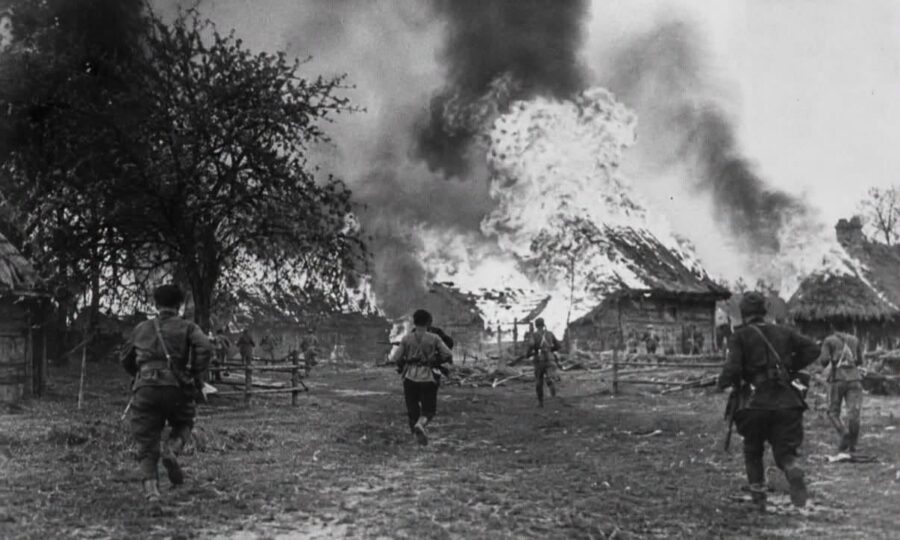
This year is the 80th anniversary of the outbreak of World War II, a tragedy that touched the lives of almost every Pole, and Polish medical professionals were among those most affected by war atrocities. They had to deal on a daily basis with immeasurable suffering of wounded victims, hunger and diseases, and did their best to provide medical care in extreme war conditions. Moreover, being a part of the Polish society elite, they became a subject of systemic extermination policies of both German and Soviet occupying forces.
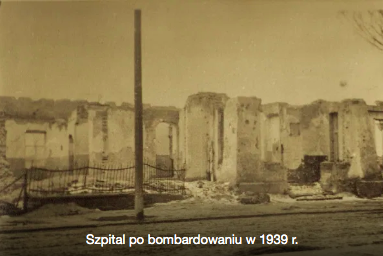
The war began in the early morning of September the 1st with the inhuman Luftwaffe bombardment of Wielun Hospital which killed 26 patients, 4 nurses and 2 nuns. We all remember the fate of doctor Janusz Korczak, a director of the Warsaw Ghetto orphanage. He stayed with his orphans when they were all sent by the Nazis to Treblinka extermination camp in 1942. These two examples give the glimpse of suffering and heroism of doctors, nurses and paramedics during the war.

Polish doctors sufferings and fights.
Prof Witold Lisiecki, historian and former director of the Polish Military Museum in Warsaw, in his book ‘Polish Health Service in National Uprisings 1794-1944’ writes: “In 1939, thousands of doctors and nurses were serving in field hospitals, sanitary trains and field ambulances. Medical military staff worked in extremely harsh conditions, during daily bombing raids, fires and shelling. They effectively arranged every medical assistance possible for thousands of people”. They served under the efficient leadership of Dr Leon Strehl and Prof Edward Loth, the first was head of the Sanitary Unit of the ‘Warsaw’ Army, and the other was a commander of the Warsaw Regional Hospital. Dr Strehl, a World War I and II veteran, fought in the uprisings of Greater Poland, Silesia and Warsaw and serving up to the rank of the colonel of the Polish Army and the Home Army. In March 1944 he was appointed the sanitary commander of the Home Army Headquarters and served mainly in the city centre. After the Uprising ended, he organized the evacuation of the Maltese Hospital from Senatorska street and took part in the surrender negotiations, seeking the best conditions for the transfer of the wounded. He joined the next available transport to the Stalag IVB / Z Zeithain camp in Saxony, carrying the entire operating room installations and medical supplies. In the Śródmieście district of Warsaw, in the vicinity of Jazdów, John Lennon streets and AL Avenue is a small square of his name with the memorial stone erected in his memory. Prof Loth was less fortunate, he, his wife and daughter, lost their lives under the debris of a townhouse hit by a bomb near Tenisowa Street, in Mokotow district of Warsaw. At the time of his death, he was performing surgery on a wounded patient.
According to Lisiecki’s book, in the aftermath of the September Defence War, many doctors were involved in teaching at the underground medical colleges, sanitary points, and some of them provided medical assistance during underground partisan actions. They were also active in organising care for displaced children, the victims of the Nazi’s ethnic cleansing program of the Zamosc region of Eastern Poland. One of these doctors was Janusz Zeyland, an outstanding Polish bacteriologist and paediatrician who specialised in the treatment of pulmonary tuberculosis. He was shot by the Germans at the Wolski Hospital premises during the Wola massacre in 1944.
On the 6th November 1939, Germans deceitfully arrested 180 Jagiellonian University academics during Nazi carefully organised extermination plan code-named Sonderaktion Krakau and part of the Intelligenzaktion program aimed to eradicate the Polish intellectual elite. Immediately after the arrest, they were transported to the extermination camp in Sachsenhausen, subjected to torture, humiliation and starvation before being put to death. Many prominent doctors were among those victims, including Prof Dr Stanisław Ciechanowski, pathologist, member of the Polish Academy of Sciences, Prof Dr Henryk Hoyer, anatomist, former rector of the Jagiellonian University, member and vice-chairman of the Polish Academy of Sciences, Prof Dr Józef Kostrzewski, infectious diseases specialist, and Prof Dr Ksawery Lewkowież, a paediatrician. Dr Józef Hano, a pharmacologist and Lecturer at Jagiellonian University, was one of the few who survived.
Following Krakow’s arrests, Germans proceeded with mass-killing of 25 professors of Lviv University along with their families, including prominent medical professionals of the city such as Prof Dr Antoni Cieszynski, head of Dental Clinic, Prof Dr Wladyslaw Dobrzaniecki, head of the Surgery Department of the State Hospital, Prof Dr Jan Greka, a faculty member of the Internal Medicine Clinic, Dr Jerzy Grzedzinski, head of the Eye Clinic, Prof Dr Henryk Hilarowicz, a surgeon in the Surgical Clinic, Prof Dr Edward Homerski, head of the Department of Infectious Diseases, prof Tadeusz Boy-Zelenski, a gynaecologist, translator of French literature, writer and publicist. The executions were carried out by an Einsatzgruppe SS unit.
In his book, Lisowski also mentions Prof Dr Franciszek Raszeja who died in the Warsaw ghetto while providing medical assistance and treatment for the sick Jewish men. Professor Raszeja, was an officer of the Polish Army, a soldier in the September Defence Campaign, co-founder of the Polish Orthopaedic and Traumatological Society, former head of the Orthopaedic Clinic of the University of Poznań. At the time of his death, he was the head of the Surgical Department of the Polish Red Cross Hospital in Warsaw. The heroic death of Franciszek Raszeja can be a perfect example for every aspiring doctor of medical ethics principles, humanity and boundless devotion to every patient in need.
The Soviets were equal with Germans in the mistreating of Polish medical professionals during the war. According to Lisowski, around seven hundred doctors, sanitary officers and pharmacists were detained in the prisoner-of-war Soviet camps in Kozielsk, Starobielsk and Ostaszków. Many prominent doctors were killed in the Katyn massacre, including Stefan Pieńkowski, Professor of Neurology and Psychiatry at the Jagiellonian University and major in the Polish Army reserve forces, Colonel Dr Roch Brzesko, Prof Dr Karol Chodkowski from the University of Warsaw, Prof Dr Włodzimierz Józef Godłowski from the Stefan Batory University in Vilnius, Captain Dr Witold Mitkus – head of the Psychiatric Ward, Colonel Jan Nelken – Scientific Director of the Psychiatric Ward, Colonel Dr. Jan Załuska, the chief doctor of the First Polish Corps in Russia in 1915-1918, Knight of the Order of Virtuti Military, Prof Dr Marcin Zieliński and Prof Dr Tadeusz Żuralski, both from the University of Poznań.
According to Eugeniusz Duraczyński, a Polish historian born in 1931 and the faculty member of the Institute of History of the Polish Academy of Sciences, Poland lost 47% of all doctors and 50% of dentists during the war!

War Crimes of German doctors
At the same time, many German doctors became part of the inhuman German war-crime machine. Joseph Mengele was a doctor in the German death camp of Auschwitz. He was nicknamed ‘the Angel of Death’ and was well known for performing fatal medical experiments on prisoners. He was never prosecuted for his crimes and enjoyed a peaceful life in exile in Brazil. His colleagues killed innocent civilians with phenol heart injections. Czeslawa Kwoka was one of many displaced children from the Zamosc region that was a victim of these deadly injections.
Professor Johann Paul Kremer, a German surgeon and anatomist, wrote in his diary shortly after arriving in Auschwitz: „Compared to what is happening here, Dante’s hell looks to me like a comedy.” In March 1941 a research station of the German Medical Chamber was established for experimentation with tuberculosis and malaria on prisoners in Dachau and Professor Claus Schilling, retired head of the Tropical Diseases Department at the Robert Koch Institute in Berlin (1942-1945), designed and performed experiments infecting prisoners with malaria parasitic protozoans. Carl Schneider, a leading proponent of the Nazi euthanasia program, was responsible for involuntary euthanasia of psychiatric ward patients under the so-called Action T4 program, which cost the lives of 200,000 innocent people. German doctors treated the prisoners of concentration camps as guinea pigs, infecting them with various diseases or drowning them in ice water to test the possibility of saving German pilots who, after being shot, fell into the North or Baltic Seas. These are just a few examples of misusing medical skills and forgetting or ignoring medical professional ethic principles by German doctors.
Krzysztof Boczek, a journalist for the monthly ‘Health Service’ journal emphasizes: „At the outbreak of World War II out of 60 thousand doctors working in Germany up to 46,000 were members of the Union of National Socialist Doctors – popular with keen followers of Adolf Hitler. The Third Reich offered medical scientists an incredible but most gruesome ‘opportunity’ for advance in research – instead of using rodents, they could carry out their experiments on a massive scale using human beings imprisoned in the concentration camps.”
Attempts on Defamation of Poland
Therefore, in the face of irrefutable evidence for the responsibility of Nazi Germany for the maltreatment and systemic extermination of Polish citizens of all ethnic groups, how we should react when the world mass media, politicians and scientists write and talk about „Polish concentration camps” or spread claims about Poles joint responsibility for the Holocaust of Jews? As an activist of the Polish media organization „Polish Media Issues”, I have been fighting against the defamation of Poland for years. Most often it was the lack of proper knowledge about World War II history, even pure ignorance or simply responding to mass media actual trends rather than attempts to falsify Polish history. However, sometimes it is a result of deliberate actions. The most notorious are left-wing media like, for example, „New Yorker” weekly magazine or similar titles with xenophobic journalists with an agenda, Israeli left-wing politicians like Yair Lapid, or sociologists and historians like Jan Tomasz Gross or Jan Grabowski.
If we do not defend our history, others will write it for us!
One of the possible action is to talk to open-minded journalists, historians and filmmakers about Poland’s situation during the war. Discussions with people like Lapid, Gross or Grabowski make no sense, because these people are ideologists and not reliable as researchers, therefore no logical arguments or historical truth is ever going to convince them. One of these educational initiatives is the international historical conference „Poland First to Fight” (iPoland.org), which will take place on November 18-20th this year at the prestigious National Press Club in Washington. This conference is a grass-roots community initiative in cooperation with Polish historians. It is designed to show Americans the fate of Poland and its citizens during the war and its dramatic consequences. Next to historians, archivists, and publishers, target groups are also journalists, politicians, employees of education departments and representatives of the film industry. The chairman of the Program Council is prof. Marek Kornat from the Institute of History of the Polish Academy of Sciences, the same institute where the historian Eugeniusz Duraczyński once worked.
Let’s not let the memory of brave medical professionals who fought against the German and Soviet occupying forces, who died on the battlefield, in Katyn massacre or in German concentration camps, and who risked their lives for taking part in teaching in the underground medical colleges during the war, to be defamed.
If we don’t defend our history, someone else will write it for us!
Author: Dr Marek Blażejak, ipoland.org.
Dr Błażejak is Trauma and Orthopedic Consultant Surgeon and Chairman of the Committee of the Conference „Poland First to Fight”.
Translation: Jolanta Pitera
Picture: Museum Auschwitz-Birkenau, former German Nazi Concentration and Extermination Camp