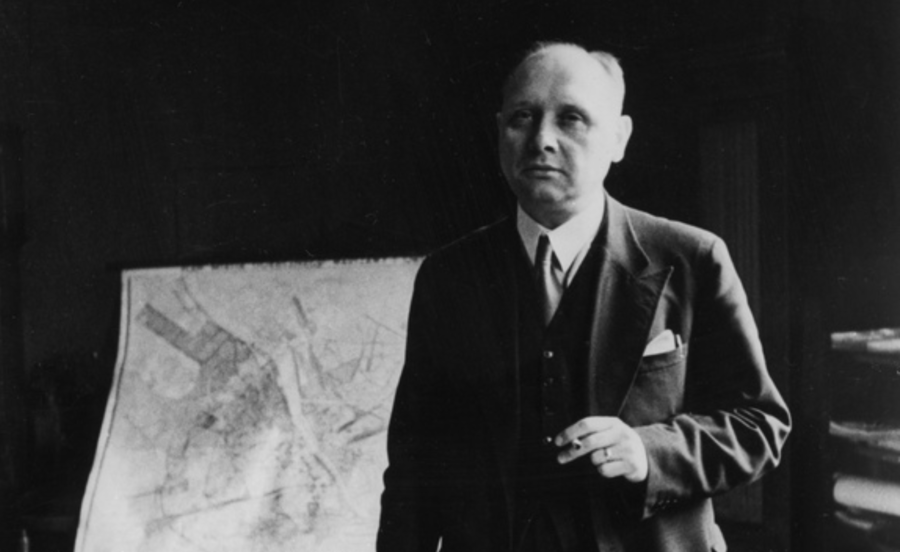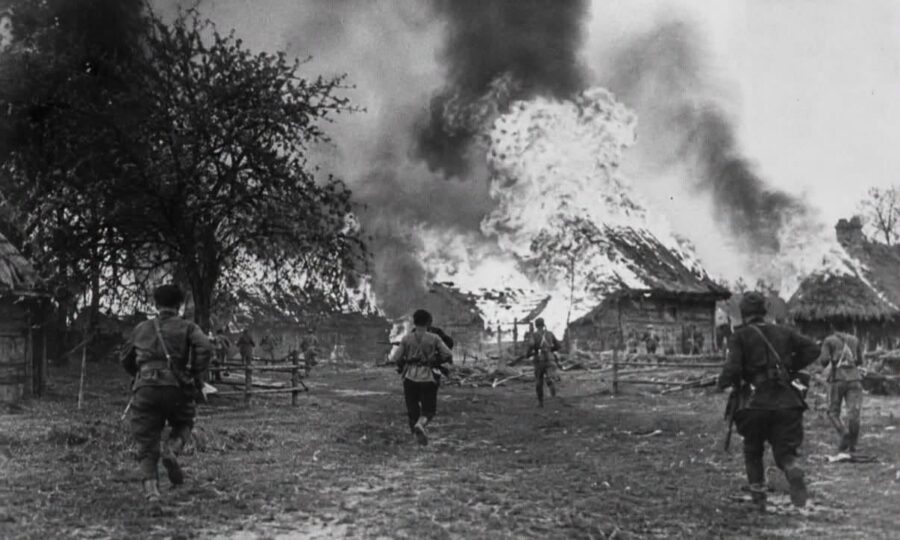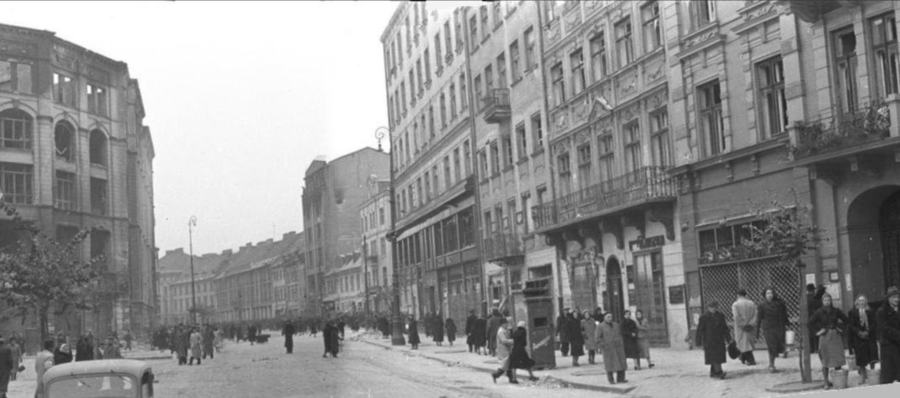
On 26 March 1943, members of the Polish resistance carried out one of the most iconic operations of World War II in occupied Warsaw. Known as the “Operation Arsenal,” the mission was organised by the Szare Szeregi, a clandestine branch of the Polish scouting movement operating within the wider underground state. Their goal was urgent and personal: to rescue their captured comrade, Jan Bytnar, who had been arrested and brutally interrogated by the Gestapo.
Bytnar’s arrest in March 1943 triggered immediate action among his fellow resistance fighters. Intelligence indicated that he was being transported from the Gestapo headquarters on Szucha Avenue to the notorious Pawiak prison. The underground command quickly approved a rescue plan, recognising that time was critical due to the severity of the torture he was enduring.
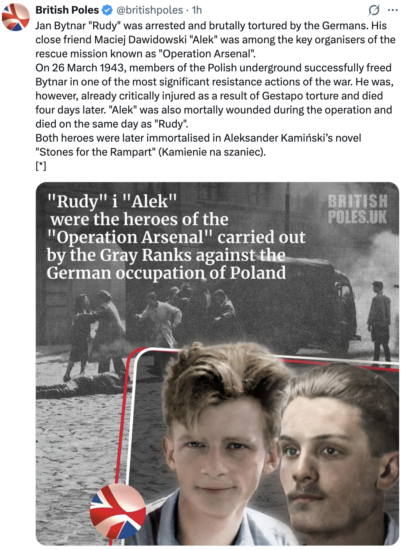
The operation, codenamed “Meksyk II,” was carefully coordinated by a small but determined unit of about 28 young fighters. Many of them were barely in their twenties, yet already experienced in sabotage and urban combat.
The rescue took place near the historic Arsenal building at the intersection of Długa and Bielańska streets. As the German prison transport passed through the area, the Polish fighters launched a sudden attack. One group blocked the route, while another attacked the escort, forcing the vehicle to stop.
In the chaos that followed, the resistance fighters overpowered the guards and opened the truck, freeing Bytnar along with more than twenty other prisoners. The entire operation lasted only minutes but required precise timing, discipline, and extraordinary courage.
“For the first few moments I paid him no attention, changing spent magazines and watching the street,” recalled Tadeusz Zawadzki, who was sitting beside “Rudy” in the car. “After a moment, I looked back at Janek. (…) There was a smile on his face despite the spasm of pain. He took my hand in his and held it tightly. His hands were black and swollen. He said: ‘Tadeusz, oh Tadeusz, if only you knew.’ I tried to calm him, saying that ‘he would be home shortly.’ After a while: ‘I didn’t think you would manage it.’” (Kamienie na szaniec – account of Tadeusz Zawadzki “Zośka”, April 1943)
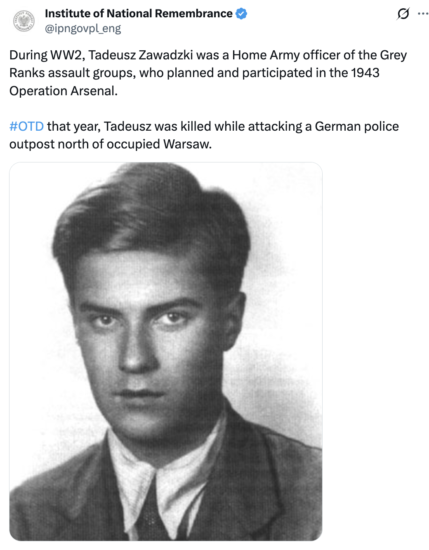
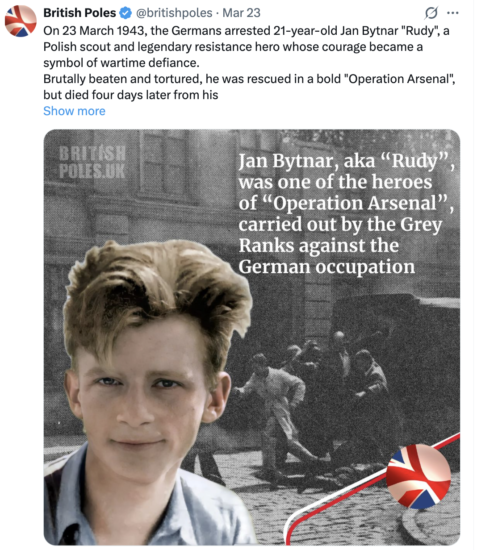
Although the mission itself succeeded, its aftermath was tragic. Bytnar, severely weakened by torture, died just a few days later. Other participants were also gravely wounded, and some would not survive their injuries.
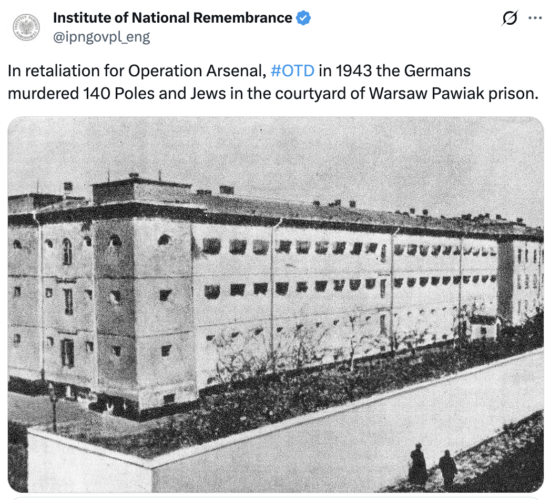
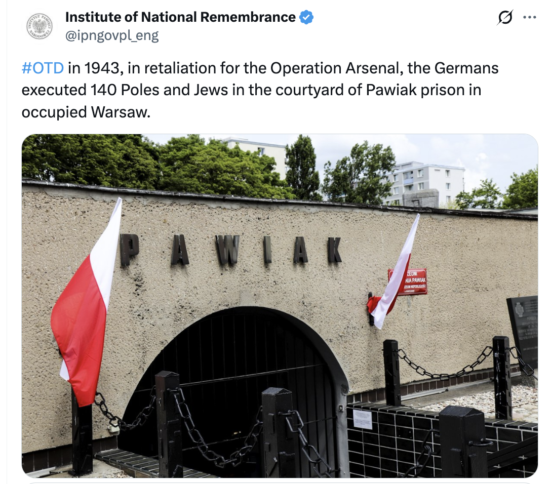
The German authorities responded with brutal reprisals, executing large numbers of prisoners in retaliation. Despite these consequences, the operation became a powerful symbol of solidarity and resistance.
Operation Arsenal was one of the first large-scale urban actions carried out by the Polish underground and demonstrated its growing strength and coordination. More importantly, it embodied a core principle of the resistance: no one would be left behind.
Over time, the story of the young fighters, often remembered through figures like Tadeusz Zawadzki and Maciej Dawidowski, became a lasting part of Polish historical memory. Their actions under occupation continue to symbolise courage, loyalty, and sacrifice in the face of overwhelming odds.
Photo: x/@ipngovpl_eng
Tomasz Modrzejewski