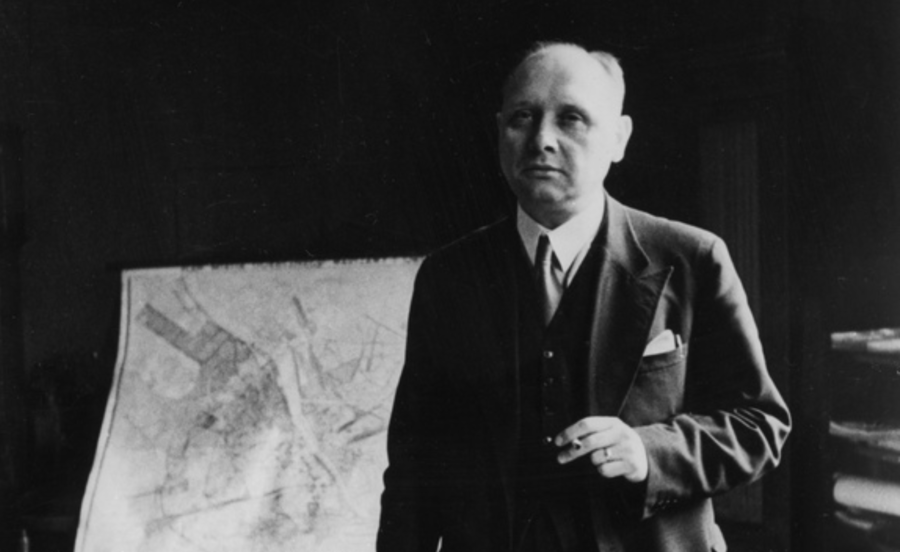
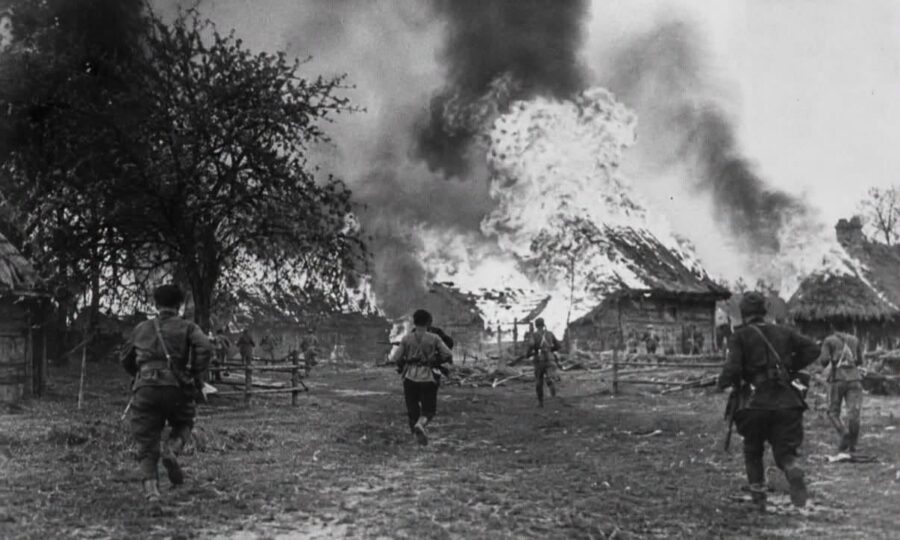
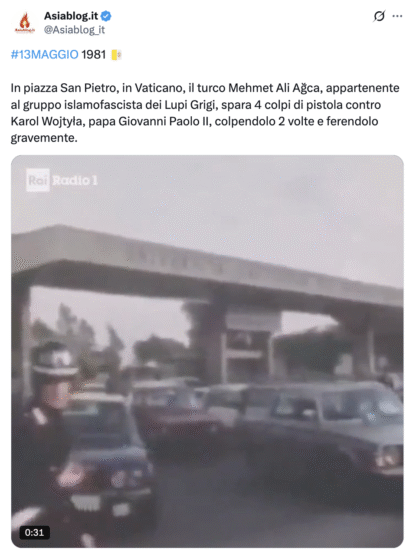
At precisely 5:19 p.m. on 13 May 1981, Mehmet Ali Ağca fired shots at Pope John Paul II. The world held its breath, anxiously awaiting news of whether the Holy Father would survive. According to Poland’s Institute of National Remembrance, there is no doubt that the would-be assassin was acting under the influence of Bulgaria’s communist secret services—operatives widely believed to have been directed by the Soviet KGB.
On 13 May 1981, during a general audience for pilgrims in St Peter’s Square, two gunshots scared the crowds waiting for the Pope’s blessing. John Paul II, travelling in an open-top vehicle—against the advice of his security team—was making his customary rounds to greet the faithful when he was shot with two pistol bullets.
One hit his abdomen, the other his hand. The shots came from within the crowd. Panic swept through the square, yet the assailant was quickly apprehended. He was identified as Mehmet Ali Ağca, a 23-year-old Turkish national and a member of a pan-Turkish nationalist group called the Grey Wolves or Bozkurtlar in Turkish.

Mehmet Ali Ağca was born near the city of Malatya in eastern Turkey. After completing secondary school, he began studying pedagogy and historical-economic geography at a university in Ankara. However, he never finished his degree.
Instead, he quickly became involved with the Turkish National Liberation Movement (TNLH), a left-wing terrorist organisation. As a member of this group, he underwent terrorist training in Syria. The TNLH’s close ties with the Bulgarian and Soviet secret services were well known, and his training was reportedly conducted by East German operatives, with possible involvement from Bulgarian agents as well.
In November 1979, Ağca took part in the assassination of Abdi İpekçi, the editor-in-chief of the Turkish newspaper Milliyet. Arrested and convicted for the murder, he later escaped from prison with the aid of those behind the killing.
As it later appeared, the attack was inspired by the Soviet KGB and the special services of communist Bulgaria.
As the attacker later recalled the moment of the attack: “I got rid of the camera by throwing it to the ground and at the same time pulled out the pistol I had tucked into the waistband of my trousers on the left side. I fired two or three shots in the direction of the Pope. I couldn’t fire any more because some people nearby realised what I was doing and grabbed me, pulling on the arm with which I was holding the gun.”

The Pope was rushed from the square directly to the Gemelli Clinic, where he underwent emergency surgery lasting several hours. News of the attack spread rapidly; broadcasters around the globe interrupted their programming to report on the Pope’s condition. The world waited in anxious silence.
In Poland, following an appeal from the country’s bishops, churches filled with people praying and holding vigil through the night for the Holy Father. At 8:00 p.m., the great Sigismund Bell rang out over Kraków. Later that night, a glimmer of hope emerged: John Paul II had regained consciousness.
The Pope later attributed his survival to the protection of Our Lady of Fatima—the attack, after all, had taken place on 13 May, the anniversary of the Marian apparitions in Fatima. In 2000, the Vatican revealed that part of the “Third Secret of Fatima” had foretold the attempt on the Pope’s life.
Ağca was sentenced to life imprisonment by an Italian court in July 1981. After serving 19 years, he was pardoned and handed over to Turkish authorities to serve time for unrelated crimes. He was released from prison in January 2010.
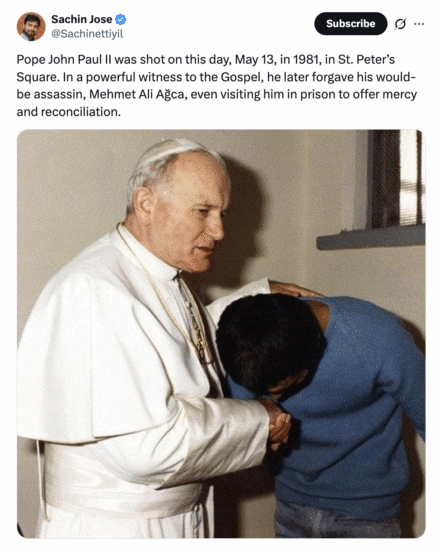
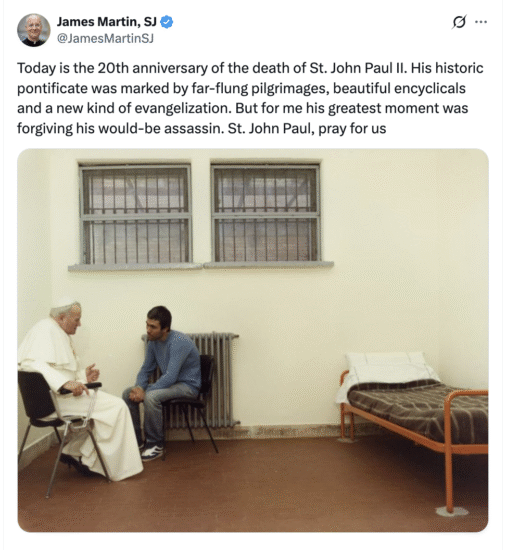
Perhaps the most important part of that tragic event was the symbolic victory of Christianity that manifested during the meeting of the Pope and the man who tried to shoot him in a prison cell, during which John Paul 2 showed an amazing power of forgiveness.
More than 40 years after the attempt on John Paul II’s life, the full truth remains elusive. Mehmet Ali Ağca was apprehended and swiftly brought to trial, but his accomplices managed to escape. No Bulgarian agents involved in preparing the attack were ever convicted, and despite considerable evidence, the so-called “Bulgarian connection” continues to be questioned to this day.
Source: Polskie Radio, Vatican News, Przystanek Historia
Photo: X @VaticanNews
Tomasz Modrzejewski