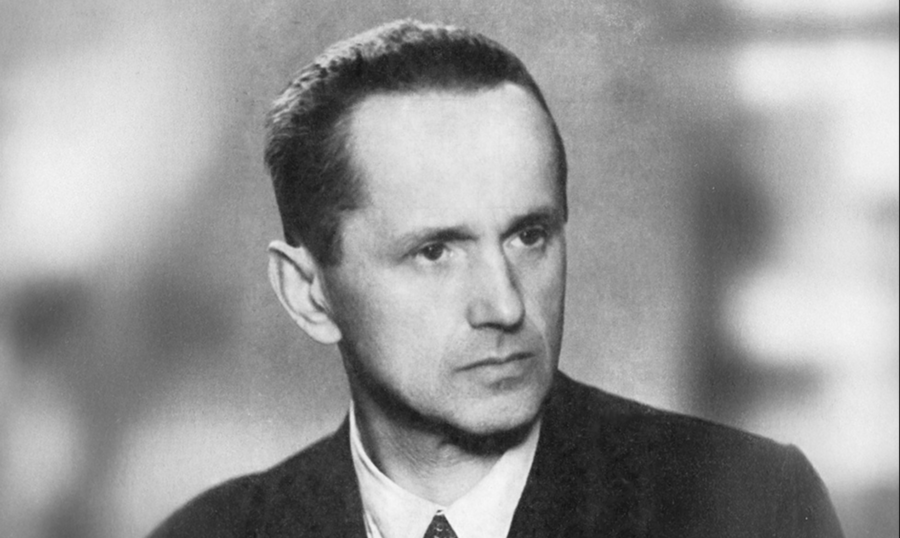
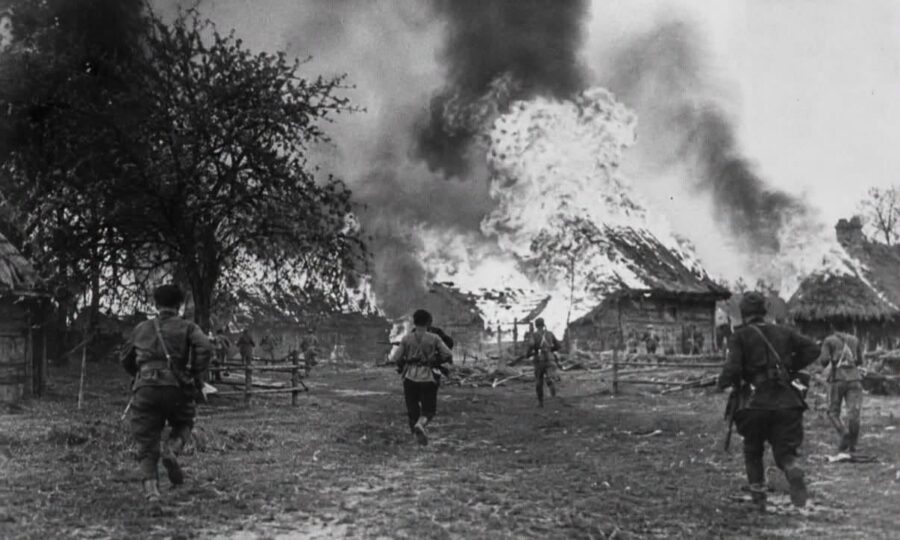
Between 7 and 10 September 1939, in one of the most heroic stands of the Second World War, approximately 720 Polish soldiers under the command of Captain Władysław Raginis held off more than 30,000 advancing German troops near the villages of Wizna, where the rivers Narew and Biebrza meet. Their mission: to defend key river crossings vital to the Wehrmacht’s push into north-eastern Poland.

The northern section of the Polish defence was manned by the Modlin Army, the Independent Operational Group „Narew” (SGO „N”), and the Operational Group „Wyszków” — a reserve force of the Commander-in-Chief. General Czesław Młot-Fijałkowski led SGO „Narew”, which was tasked with defending a vast 200-kilometre stretch of territory, up to 70 kilometres deep, anchored by the Narew and Biebrza rivers and the Augustów Canal. His forces included the 18th Infantry Division, the 33rd Reserve Infantry Division, the Suwałki and Podlaska Cavalry Brigades, three air squadrons, border defence troops from the 3rd KOP Regiment, and three additional battalions.

Despite the apparent strength of this grouping, it was woefully inadequate for the size of the area it was meant to defend. As a result, General Młot-Fijałkowski focused his limited resources on the most likely routes of German advance. The 18th Infantry Division was deployed along the line from Ostrołęka through Nowogród to Łomża, with the Podlaska Cavalry Brigade positioned on its forward flank and the 33rd Reserve Division stationed to the south. Key strategic points further east — leading towards Białystok — were protected by the fortified line at Wizna and the Osowiec fortress, while the Suwałki Cavalry Brigade held the Augustów sector near Grodno.

The Wizna defence line, stretching nine kilometres along the eastern banks of the Narew and Biebrza rivers, ran from Kołodzieje to the village of Maliszewo. It was divided into two sectors: the northern „Giełczyn” sector and the southern „Strękowa Góra” sector, separated by a narrow causeway built on marshy ground — the only road leading to Białystok in that area. This causeway, along with the approaches from Kołodzieje to Grądy Woniecko and towards Jedwabne, was the primary focus of the Polish defenders.
The line featured a system of fortified bunkers, trenches, anti-tank obstacles, and barbed wire entanglements. Construction of the defences had begun only in the spring of 1939 and remained incomplete by the time the war broke out, hindered by a lack of time and resources.

At the core of the line stood six heavy reinforced concrete bunkers — four to the south of the Narew near Strękowa Góra, Kurpiki, and Maliszewo, and two to the north near Giełczyn. With 1.2-metre-thick walls, armoured domes, and built-in wells, they represented the strongest points of the line. These were supplemented by eight smaller bunkers near Kołodzieje and Perkusy, and two light defensive positions at Sulin-Strumiło, aimed at halting any German advance along the road to Białystok.
The initial contact with the enemy came on the afternoon of 7 September, when a German reconnaissance unit from the 10th Panzer Division approached from Jedwabne and overran a Polish cavalry scouting platoon. They aimed to seize the Narew bridge, which Polish troops managed to destroy in time.
The following day, German forces began reconnaissance and artillery positioning. By the afternoon, with their guns in place, they launched a sustained bombardment of the Polish fortifications. Polish artillery under Lieutenant Stanisław Brykalski offered only sporadic and largely ineffective resistance. One of the westernmost Polish bunkers was abandoned under pressure that evening.

On 9 September, General Heinz Guderian arrived at the front. Surveying the area and noting the lack of progress, he ordered a full-scale assault. Around 10 a.m., a relentless artillery barrage commenced, accompanied by Luftwaffe airstrikes. The Polish artillery was silenced, Brykalski was killed, and Captain Raginis was wounded. The Germans also destroyed the bridge near Strękowa Góra.
Meanwhile, fierce fighting broke out in the „Giełczyn” sector. Heavily outnumbered, the Polish troops resisted for several hours, hampered by the lack of ventilation in their bunkers. Eventually, they were forced into open trenches, but by late afternoon, the defence was overwhelmed. Most surviving soldiers withdrew in the direction of Białystok or Osowiec.
While some German units captured the „Giełczyn” sector, others were still crossing the Narew. Around 4 p.m., Captain Raginis radioed his superiors, acknowledging the overwhelming German superiority but vowing to continue the defence. Shortly afterwards, the radio was destroyed, cutting off further communication.
The final bunkers held out through the night of 9 September. By the next morning, only Captain Raginis’s command post remained under Polish control. With ammunition exhausted, he ordered his men to surrender — and took his own life.

Wizna had fallen.

In 2012, on the 73rd anniversary of the battle, both Raginis and Brykalski were posthumously promoted. Raginis was made a major, and Brykalski a captain — a symbolic recognition of their courage during what came to be known as “Poland’s Thermopylae.”
Source: Dzieje.pl, Przystanek Historia
Photo: British Poles
Tomasz Modrzejewski