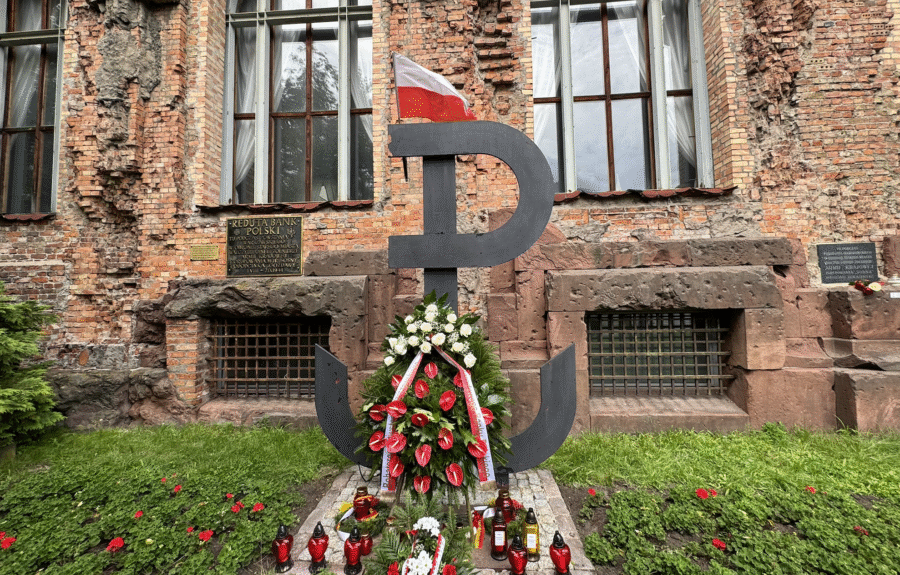
Warsaw lives with the memory of the Warsaw Uprising long before 1 August. This is most evident when visiting places of remembrance sanctified by the blood of our heroes. Sadly, there are countless such places in Warsaw—far too many. At every monument and memorial plaque, candles burn, passers-by lay flowers, and scouts stand guard. City buses, trams, and taxis travel adorned with small Polish flags fluttering in the wind, and many private drivers choose to express their patriotism in the same way. Television broadcasts films like Kanał, Kolumbowie, Powstanie Warszawskie, and Miasto 44. Young people proudly wear T-shirts with the Uprising’s Anchor symbol. Polish flags are everywhere. Increasingly, one sees and hears foreigners visiting the capital to learn more about our painful history.
This year, we marked the 81st anniversary of the Warsaw Uprising of 1944, the largest armed resistance action in German-occupied Europe. Planned to last a few days, it endured for over two months. Its military goal was to liberate the capital from the brutally oppressive German occupation that began in September 1939. The consequences of this struggle were tragic, but respect is due to those who never surrendered and remained faithful to their principles. They fought so we could be free today. On 1 August, all of Warsaw honours them in a deeply moving way.
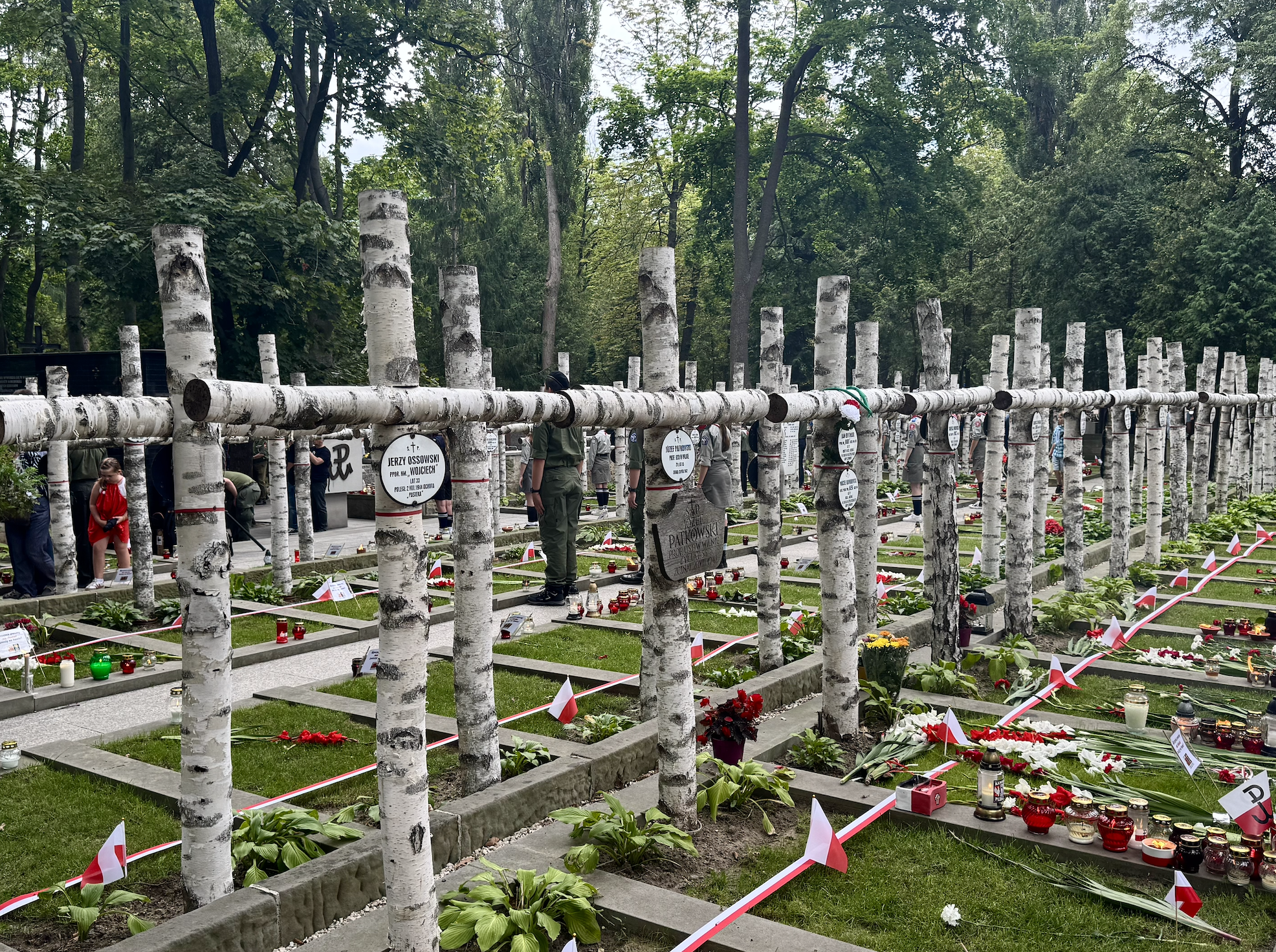
As every year, we selected a few places where commemorations take place with immense involvement from residents, who honour the freedom fighters with emotion and respect.
Warsaw Uprising Monument
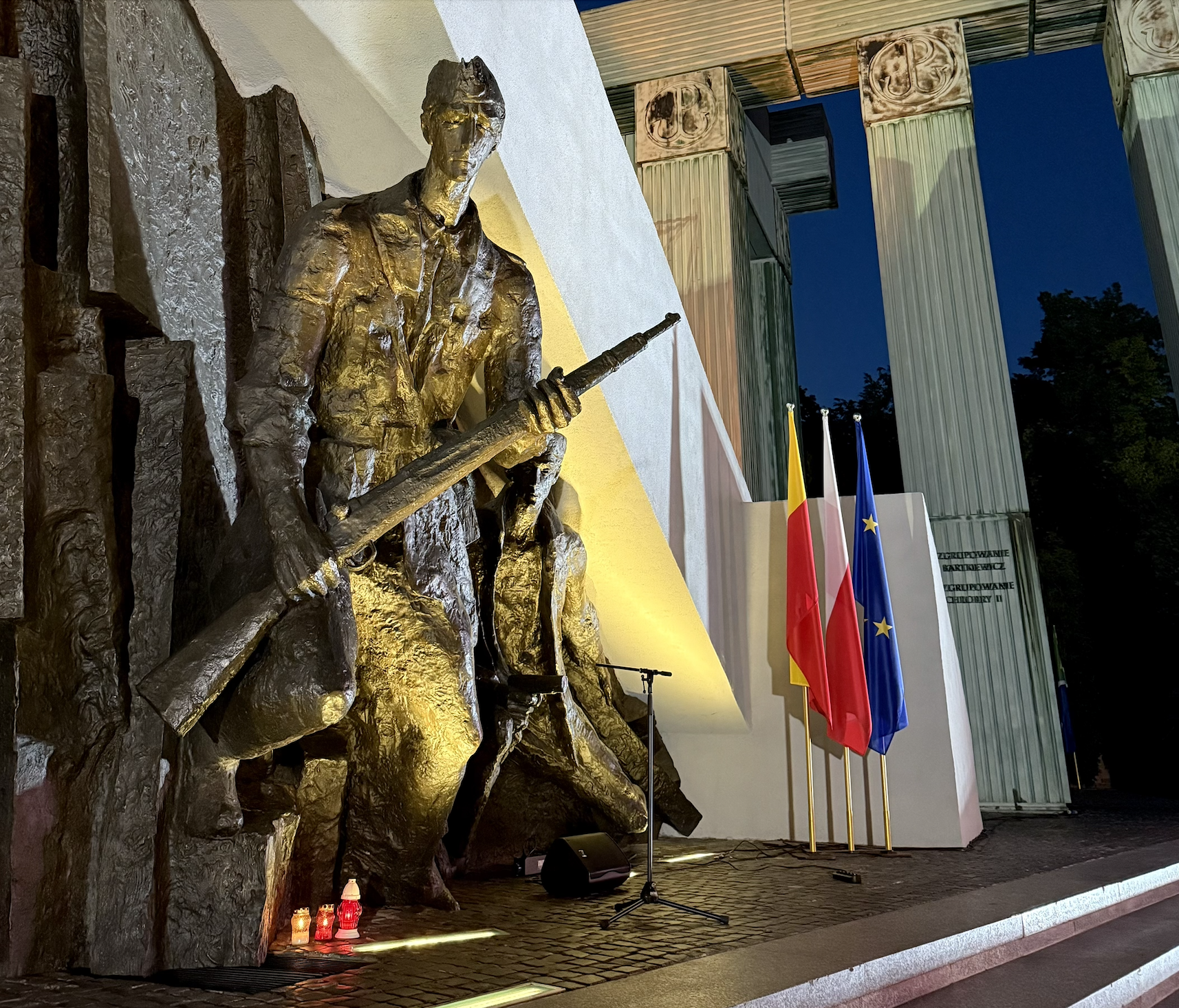
On the eve of the anniversary, 31 July, we attended a solemn Mass, speeches by Poland’s President Andrzej Duda and Warsaw’s Mayor Rafał Trzaskowski, and a ceremonial roll call at the Warsaw Uprising Monument. Also present were President-elect Karol Nawrocki, Deputy Speaker of the Sejm Krzysztof Bosak, Speaker of the Senat Małgorzata Kidawa-Błońska, several Uprising veterans, representatives of numerous political and social organisations, and a crowd of Varsovians.
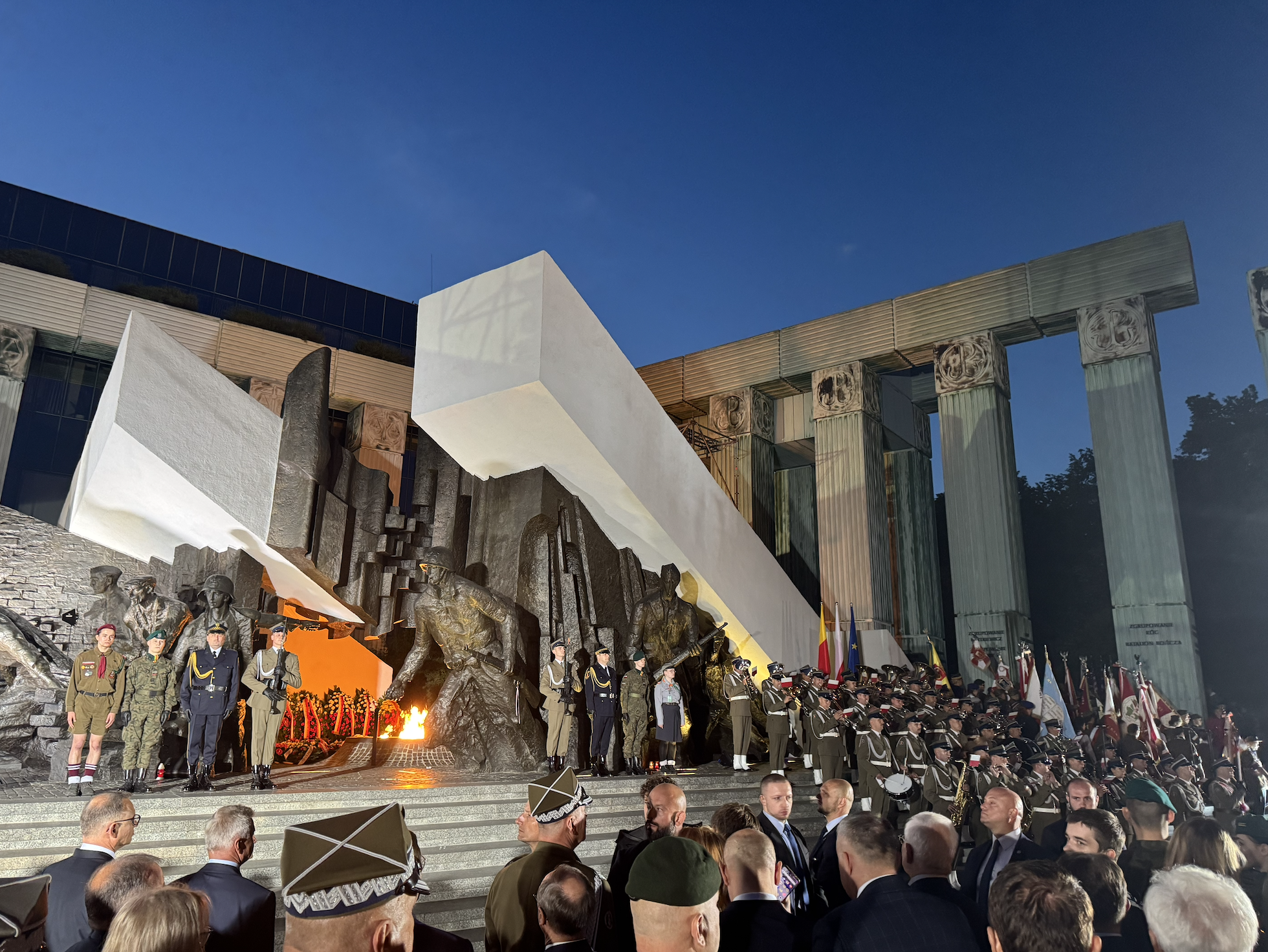
The monument was designed by Professor Wincenty Kućma and is located on the eastern side of Krasiński Square in Warsaw. It was unveiled on 1 August 1989. Last year, during the 80th anniversary of the Uprising, the words of German President Frank-Walter Steinmeier resonated with all: “I ask for forgiveness at this moment and in this place (…) We, Germans, in whose name I speak today, cannot forget the Warsaw Uprising. We cannot forget and will not forget the suffering we inflicted on Poland.”
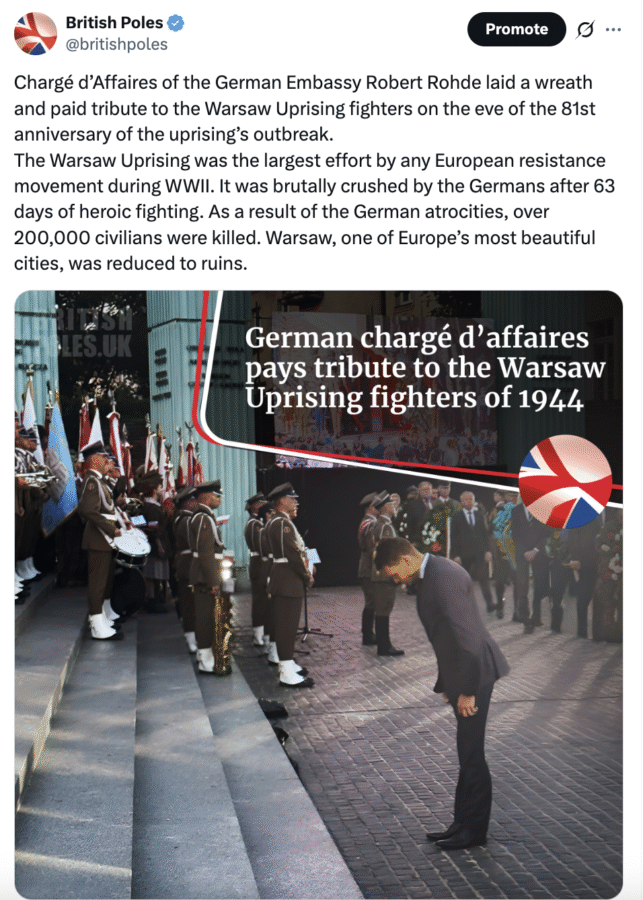
This year, the German President was absent. Only the chargé d’affaires of the German Embassy, Robert Rohde, laid a wreath at the monument but did not speak.
At the monument, Varsovians laid flowers and candles throughout the day, and in the evening, a solemn concert marks the culmination of the Warsaw Uprising March (about which we will write shortly).
Warsaw Uprising Park/Cemetery
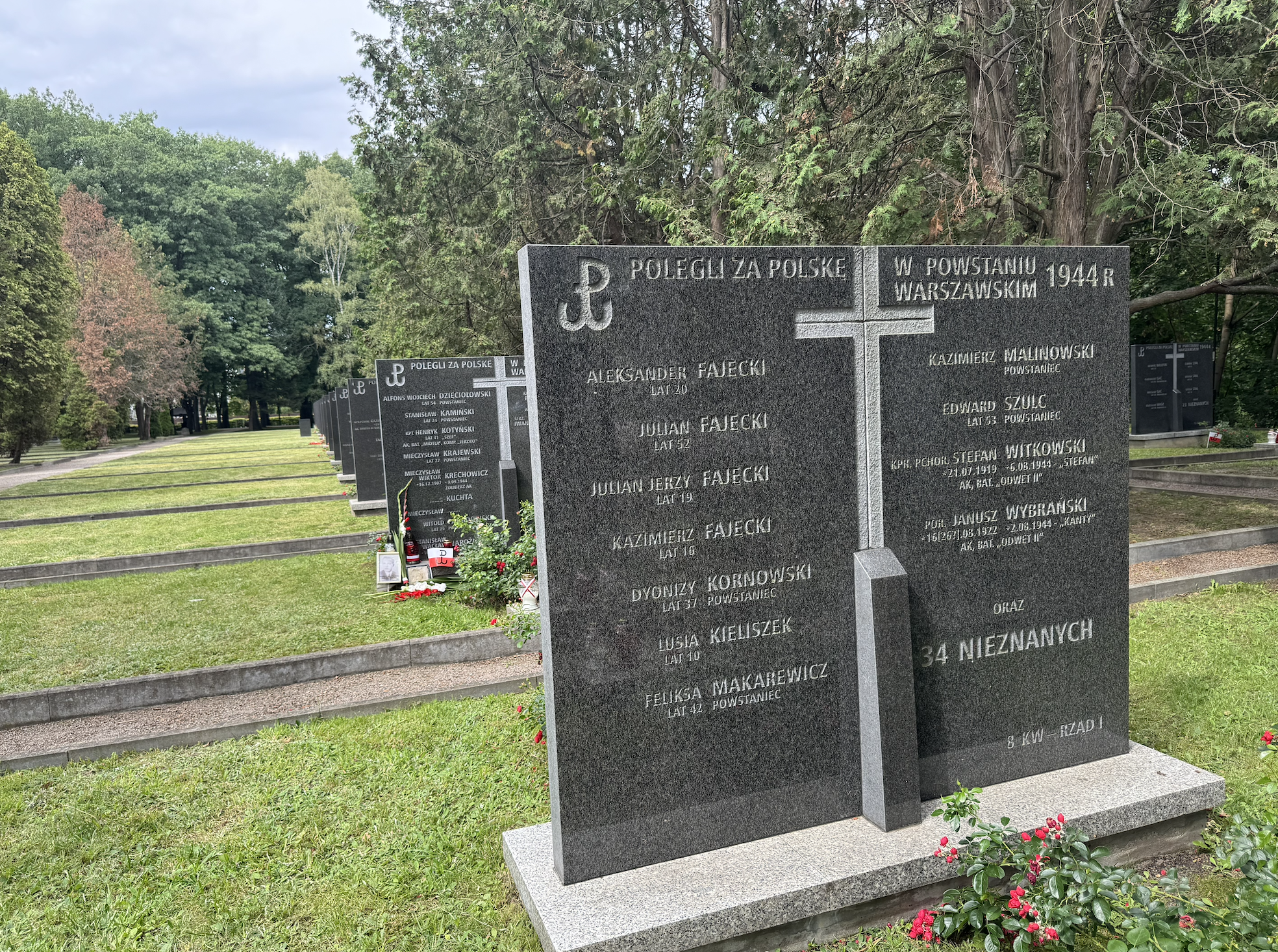
Located in Warsaw’s Wola district at Sowińskiego Street, this is Poland’s largest war cemetery (one of the largest in Europe), opened on 25 November 1945 for the burial of individuals exhumed from temporary mass graves on the city’s streets and squares during the Uprising. The first burials at the Warsaw Uprising Cemetery took place in November 1945 and continued into the early 1950s. The largest burial occurred on 6 August 1946, after the Wola Massacre, when 5.5 tonnes of ashes (117 coffins) of murdered and incinerated Uprising fighters were interred. According to cemetery records, 104,105 people rest at the Warsaw Uprising Cemetery.
The “Fallen Unconquered” Monument
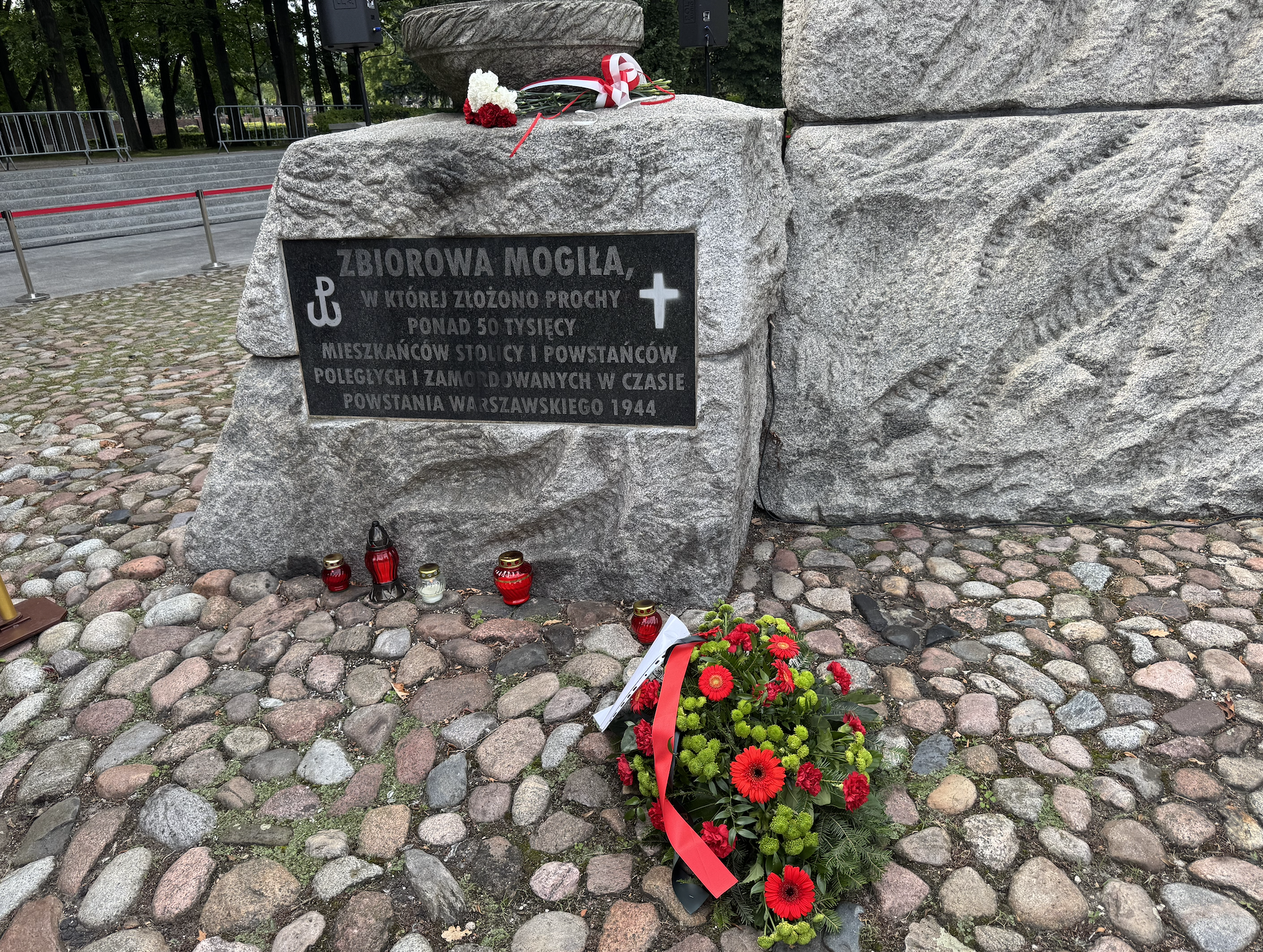
Another site drawing Varsovians is the “Fallen Unconquered” Monument, unveiled in 1973. Designed by sculptor Gustaw Zemła, it depicts a fallen warrior with a shield. This was the first monumental tribute to the Warsaw Uprising. Its integral part is a vast mound containing 12 tonnes of human ashes (remains of approximately 50,000 people).
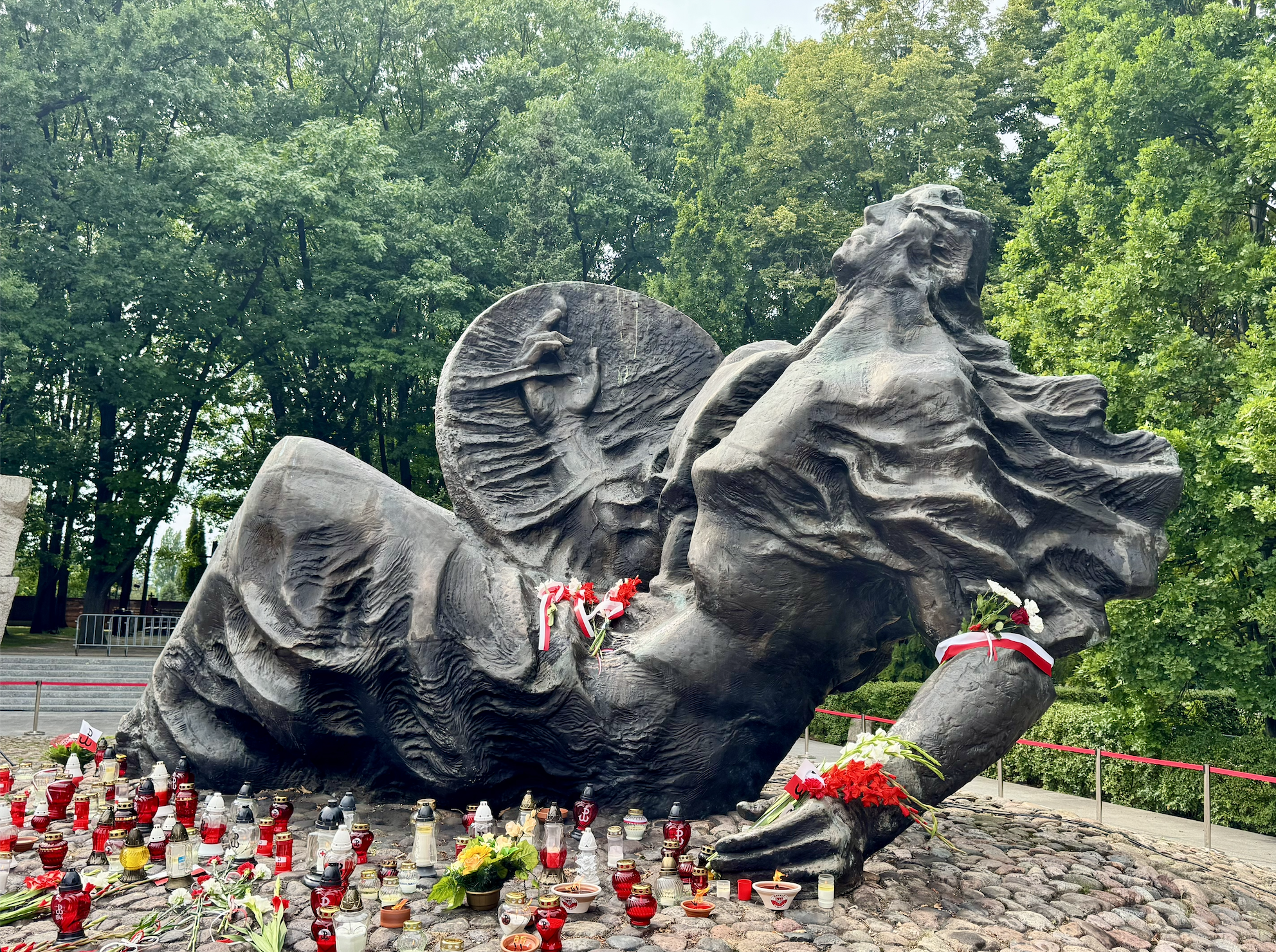
A plaque on the mound reads:
“Here lie the ashes of over 50,000 Poles, civilian residents of Warsaw and Home Army soldiers, who died for the homeland’s freedom, murdered by the Germans during the Warsaw Uprising in August and September 1944.
On 6 August 1946, 117 coffins with the ashes of those murdered and incinerated were interred here, brought from sites including the Gestapo headquarters on Szucha Avenue, Wolska Street, Górczewska Street, Sowiński Park, St. Stanislaus Hospital (Franaszek Factory), Moczydło Street, and Młynarska Street.”
Little Insurgent Monument
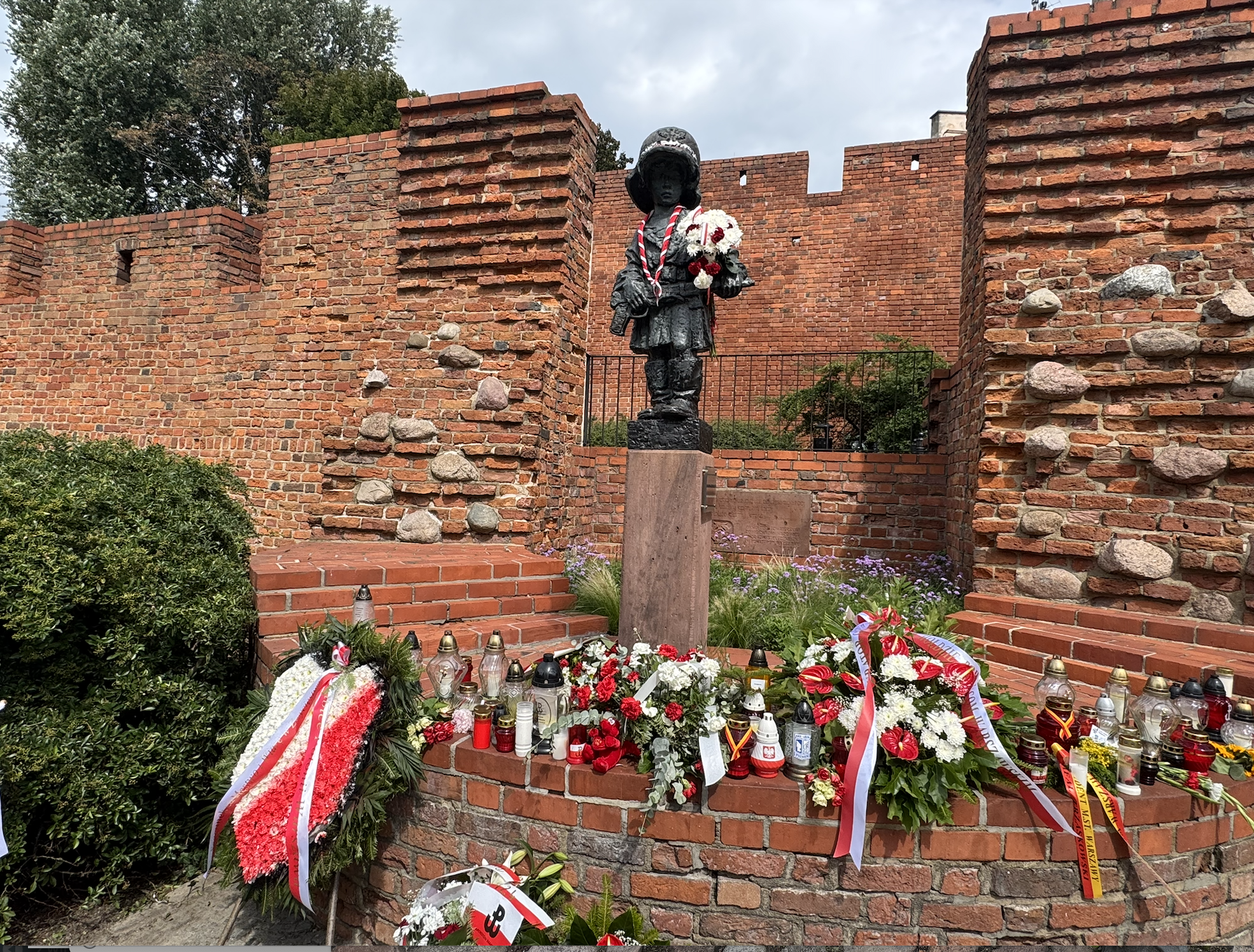
Sometimes a picture is worth more than a thousand words. Antek, the Little Insurgent, was killed by the Germans at the age of 13. The monument commemorates the youngest participants of the Warsaw Uprising. This remarkable monument was designed by Jerzy Jarnuszkiewicz in 1946. The artist donated his design to the Scouts free of charge. A public fundraiser was organised to fund its construction. On 1 October 1983, the monument was unveiled on Podwale Street, by the outer defensive wall of Warsaw’s Old Town.
Behind the monument is a plaque inscribed with the words of the song “Warszawskie Dzieci,” composed by Andrzej Panufnik:
“Varsovian children, we’ll go to fight,
for every stone of yours,
Capital, we’ll give our blood.”
PASTA Building
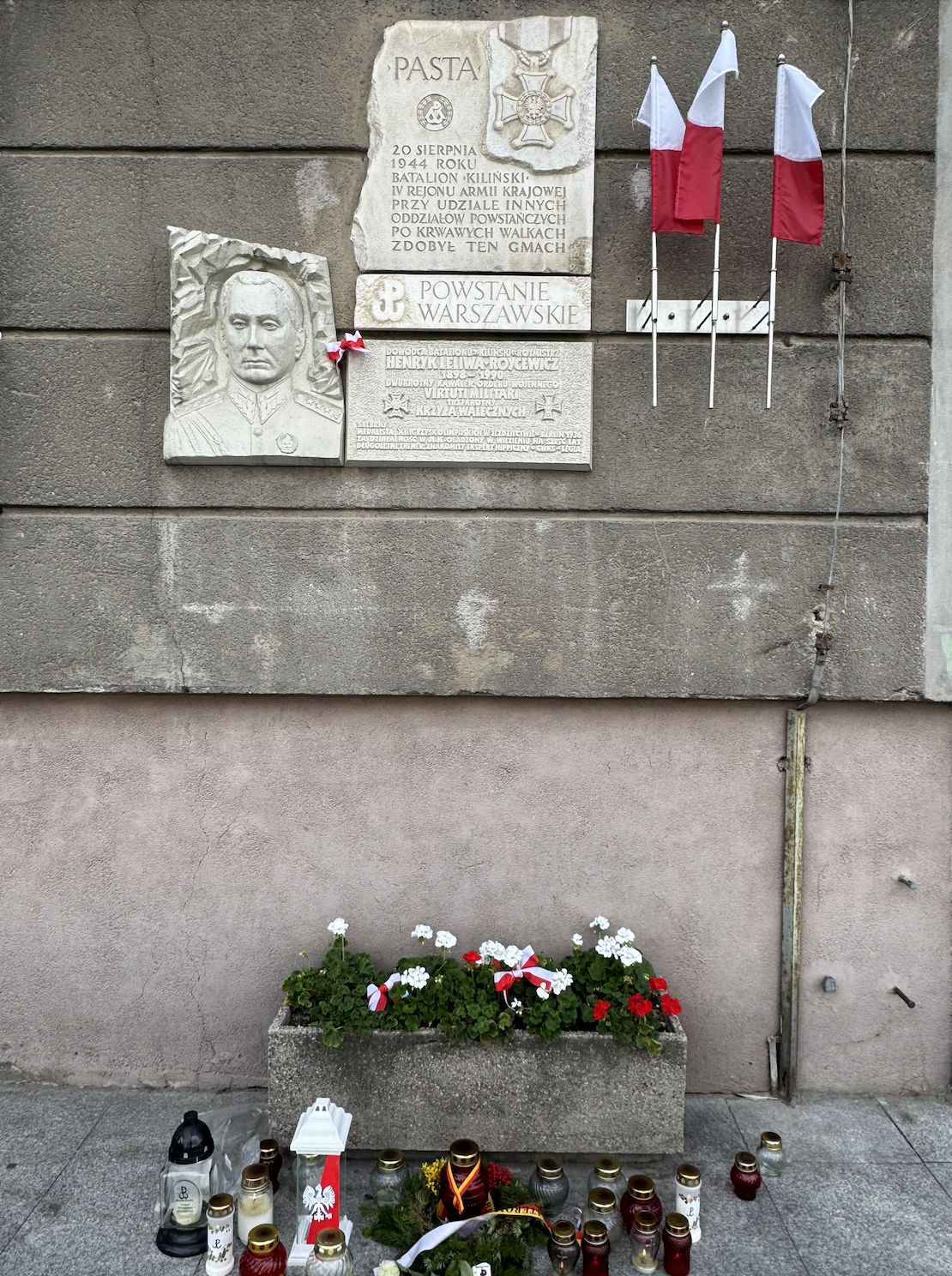
Erected between 1906 and 1908, it was Warsaw’s tallest building at the time. During the Warsaw Uprising, it was the site of fierce fighting. The building was heavily defended by the Germans. Uprising battles to capture the structure lasted from 2 to 20 August and ended in success, though the building was severely damaged. It remained in the hands of the insurgents until the day of capitulation.
Powązki Cemetery and “Gloria Victis” Monument
The monument, erected in 1946, honours the Home Army (AK) soldiers who fell during the Warsaw Uprising and the German occupation. Surrounding the monument are graves of soldiers from all AK units that fought in the Uprising, exhumed from various parts of the city between 1945 and 1947.
The front of the monument bears the Virtuti Militari Cross symbol and the Latin inscription “Gloria Victis” (Glory to the Vanquished). Anniversary commemorations are traditionally held here, attended by government officials, veterans, their families, and Warsaw residents.
We chose this site, among dozens of others, to honour “Hour W” (the codename for the “Storm” operation that launched the Uprising).
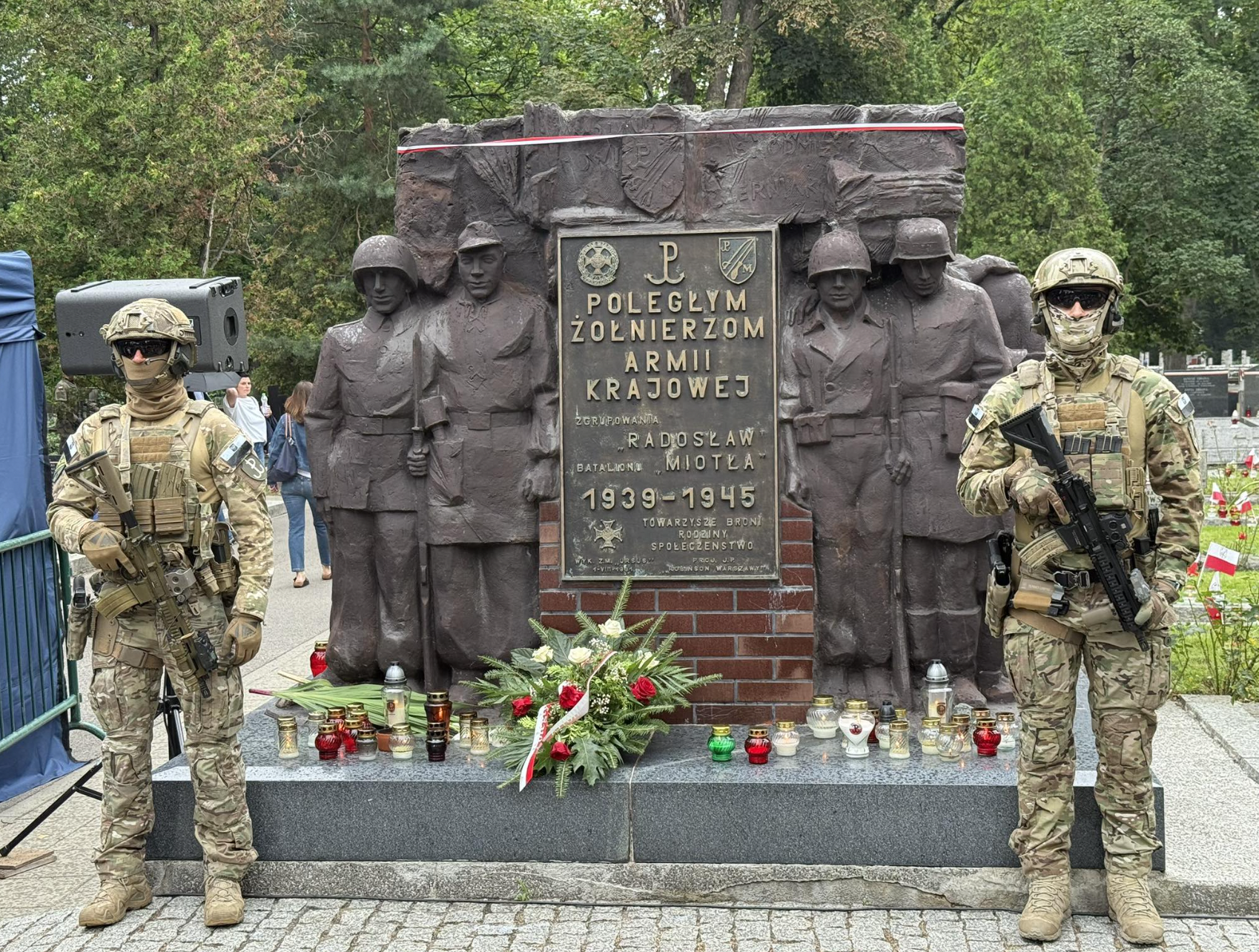
The ceremony began with a prayer for the fallen insurgents led by the Military Bishop of Poland, Wiesław Lechowicz. In addition to veterans, attendees included President Andrzej Duda, President-elect Karol Nawrocki, Senate Speaker Małgorzata Kidawa-Błońska, Deputy Prime Minister Władysław Kosiniak-Kamysz, Warsaw Mayor Rafał Trzaskowski, and Deputy Speaker of the Sejm Piotr Zgorzelski.
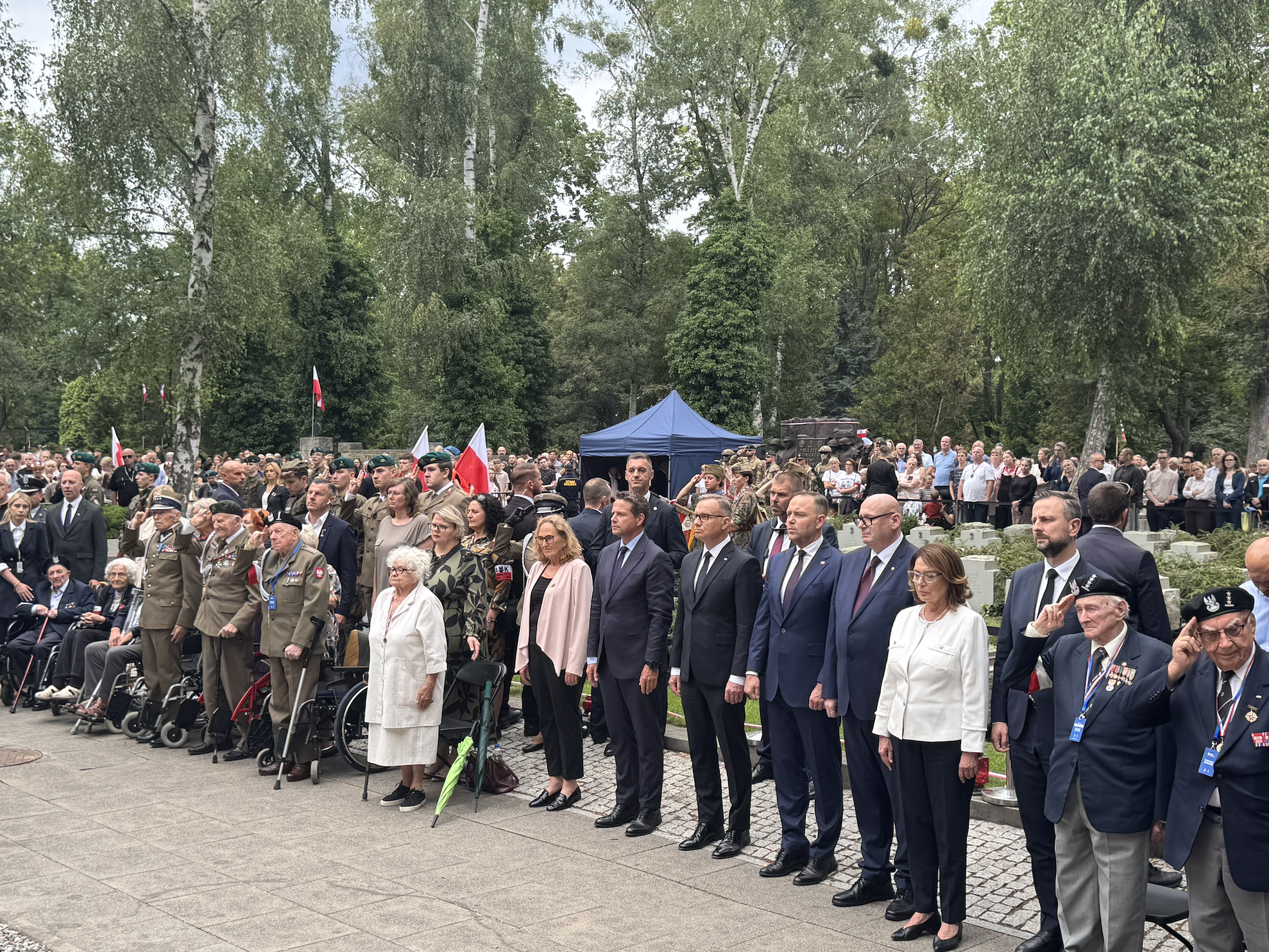
Those gathered observed a minute’s silence in memory of the insurgents. The Polish national anthem, „Mazurek Dąbrowskiego”, was sung, the Warsaw bugle call was played, and the military fired a ceremonial salute.
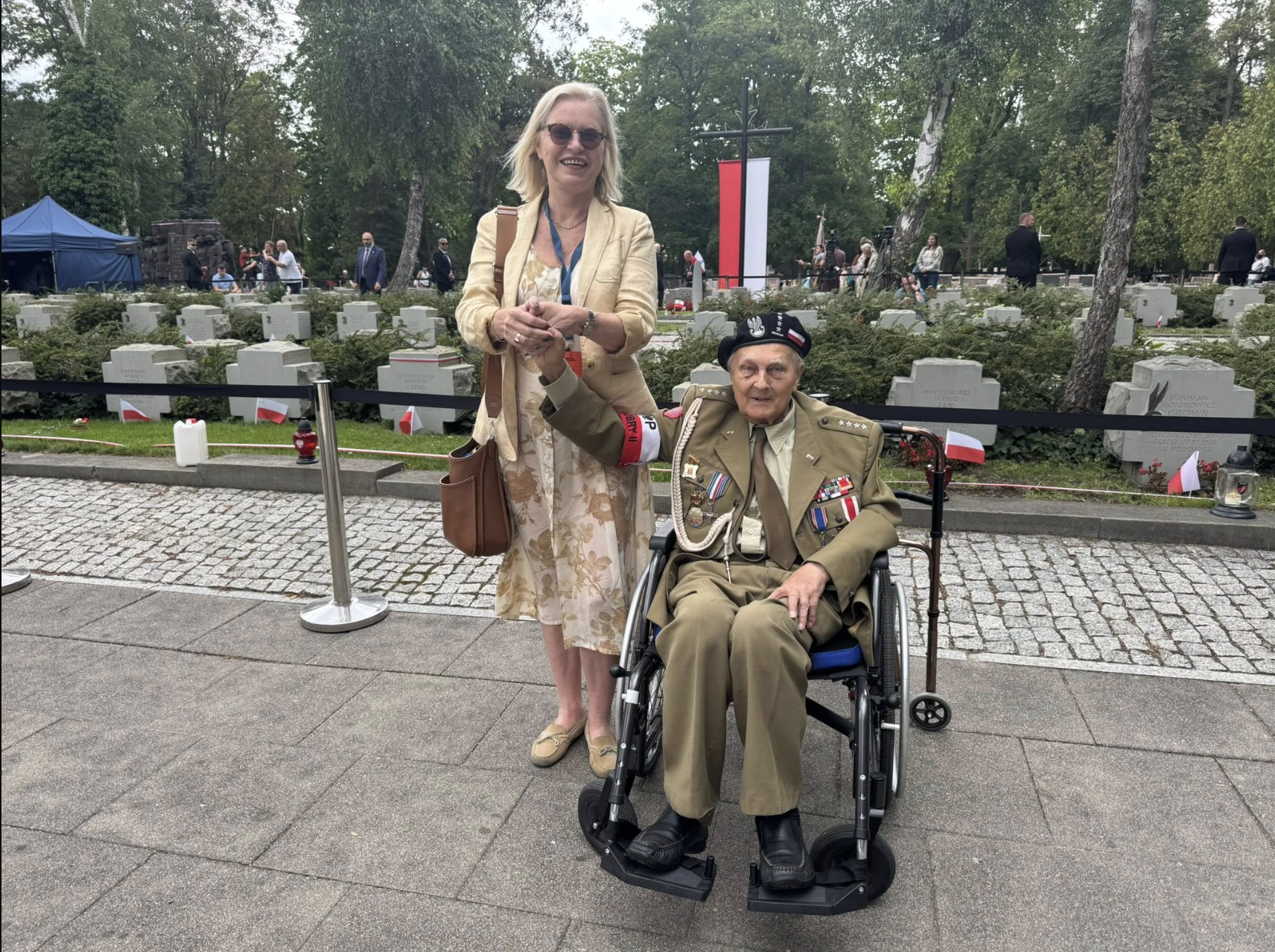
At the close of the moving ceremony, wreaths and flowers were laid at the Gloria Victis Monument as a tribute to the insurgents’ sacrifice and memory.
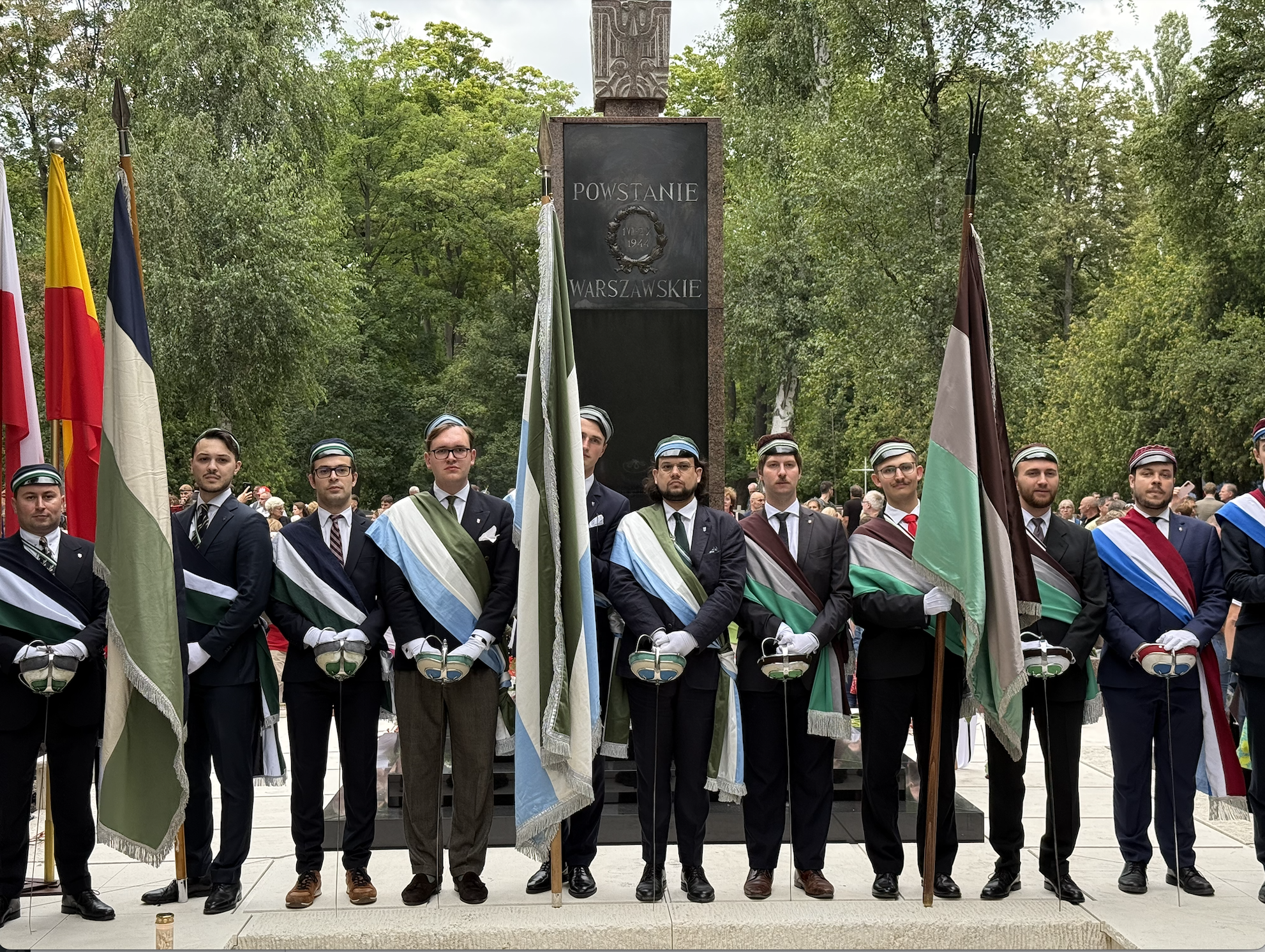
Dmowski Roundabout and the Warsaw Uprising March
This is one of the main gathering places where Varsovians come to honour “Hour W” (the codename for the “Storm” operation that launched the Uprising). At 5pm, to commemorate the outbreak of the Warsaw Uprising, the entire city pauses for a minute to pay tribute to the insurgents. Pedestrians stop, cars halt, and public transport comes to a standstill.
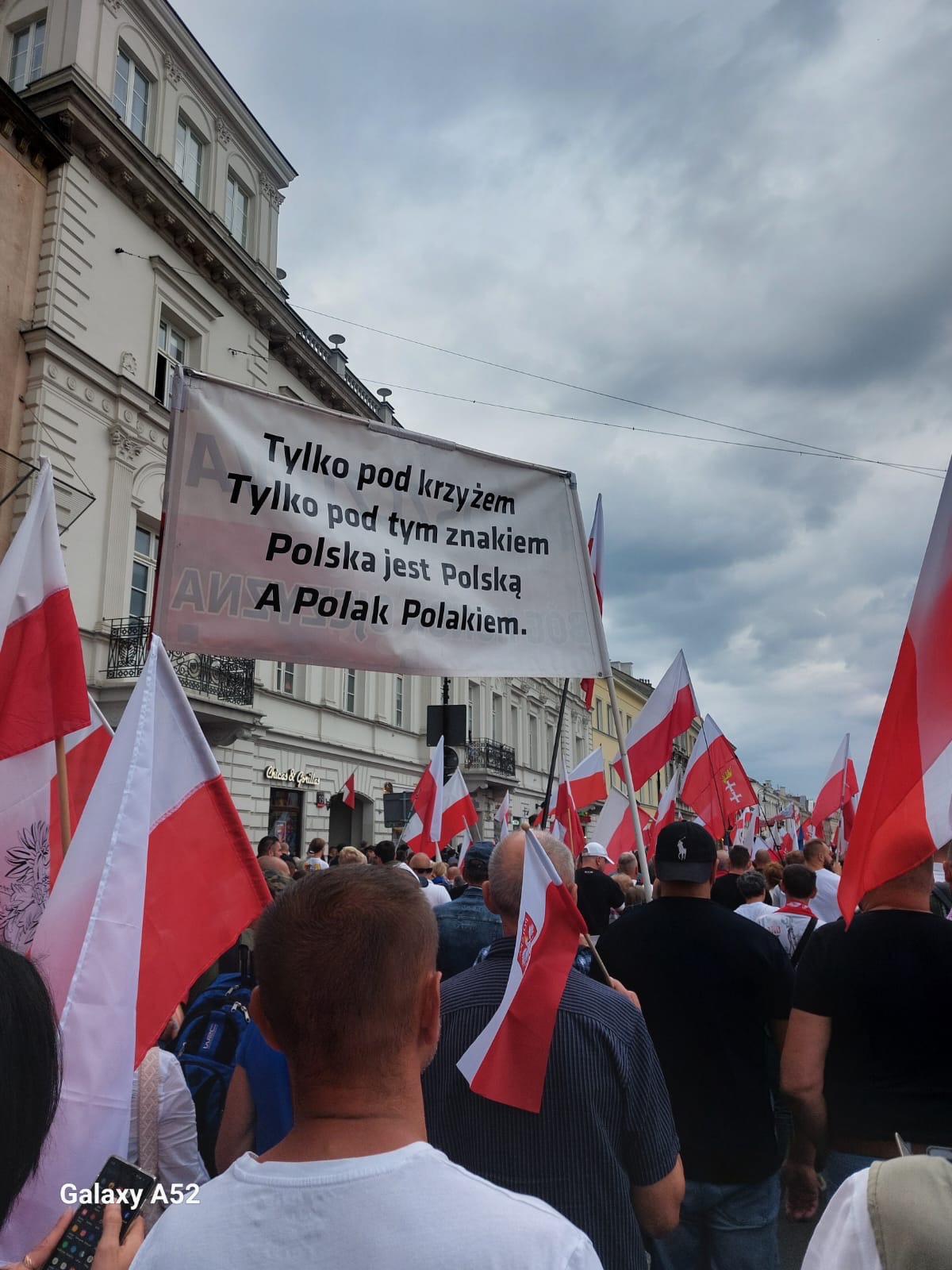
For one minute, the piercing wail of city sirens echoes across Warsaw. At Dmowski Roundabout, the Uprising commemorations traditionally included residents, soldiers, veterans, members of nationalist groups, and motorcyclists. This year, the event was further enhanced by a flyover from the Warsaw Aeroclub, whose planes formed the Anchor symbol of Fighting Poland in the sky.
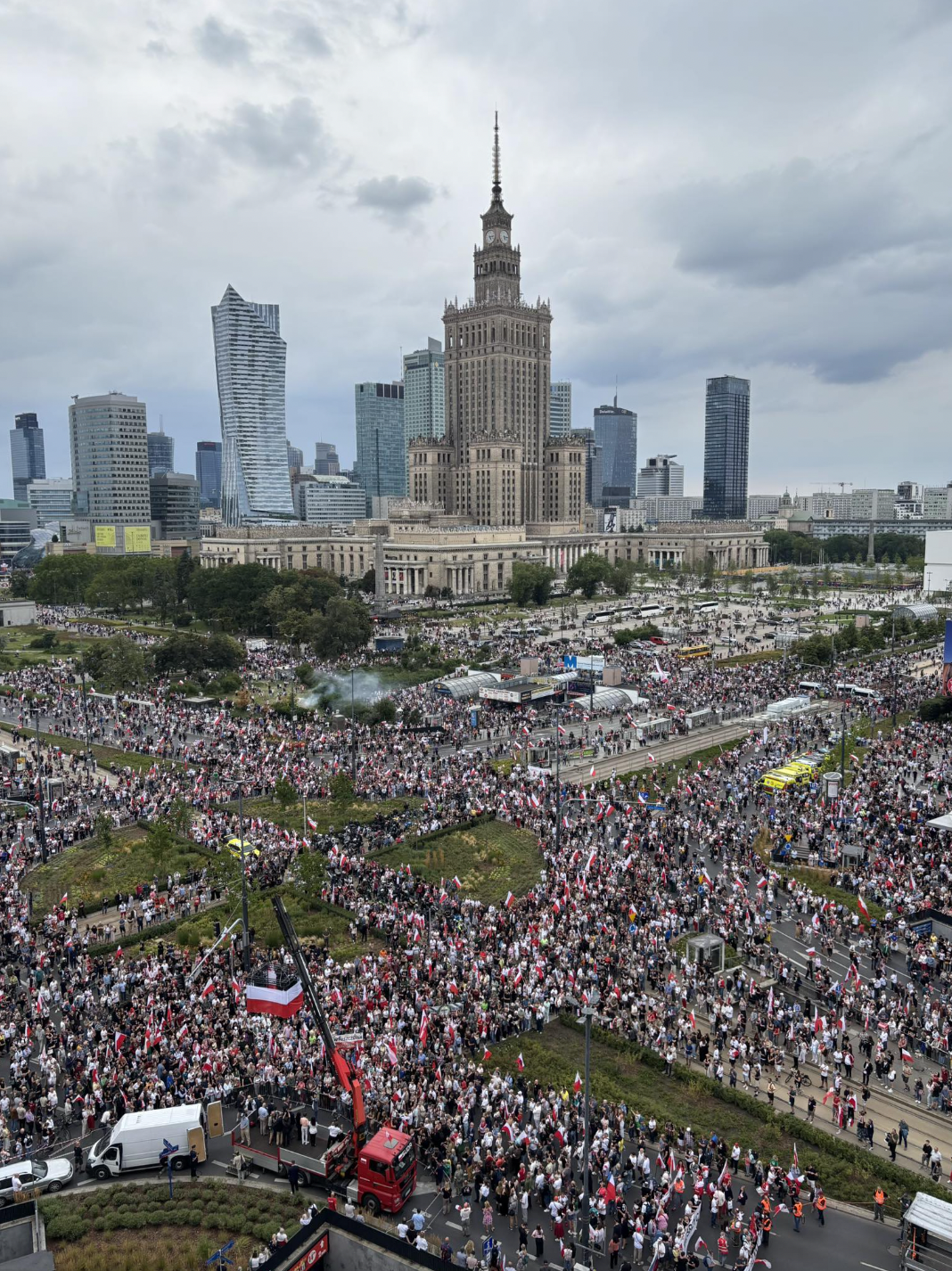
After “Hour W,” the annual Warsaw Uprising March proceeded through Jerozolimskie Avenue, Nowy Świat, Castle Square, and Miodowa Street, concluding at the Warsaw Uprising Monument on Krasiński Square.
Singing (Un)Forbidden Songs
This is the final, evening part of the commemorations, one of the most cherished by Varsovians and gathered guests. Crowds filled Piłsudski Square hours before the concert began, vying for the best spots.
Just before 8.30pm, everyone raised songbooks printed and distributed by the Warsaw Uprising Museum. The repertoire was impressive, including songs like “Siekiera, motyka,” “Piosenka o mojej Warszawie,” “Marsz Mokotowa,” “Dziś idę walczyć – Mamo!,” “Hymn Szarych Szeregów,” “Hej chłopcy, bagnet na broń,” “Pałacyk Michla,” and “Warszawskie dzieci”. At the close, all proudly sang the National Anthem, “Mazurek Dąbrowskiego.
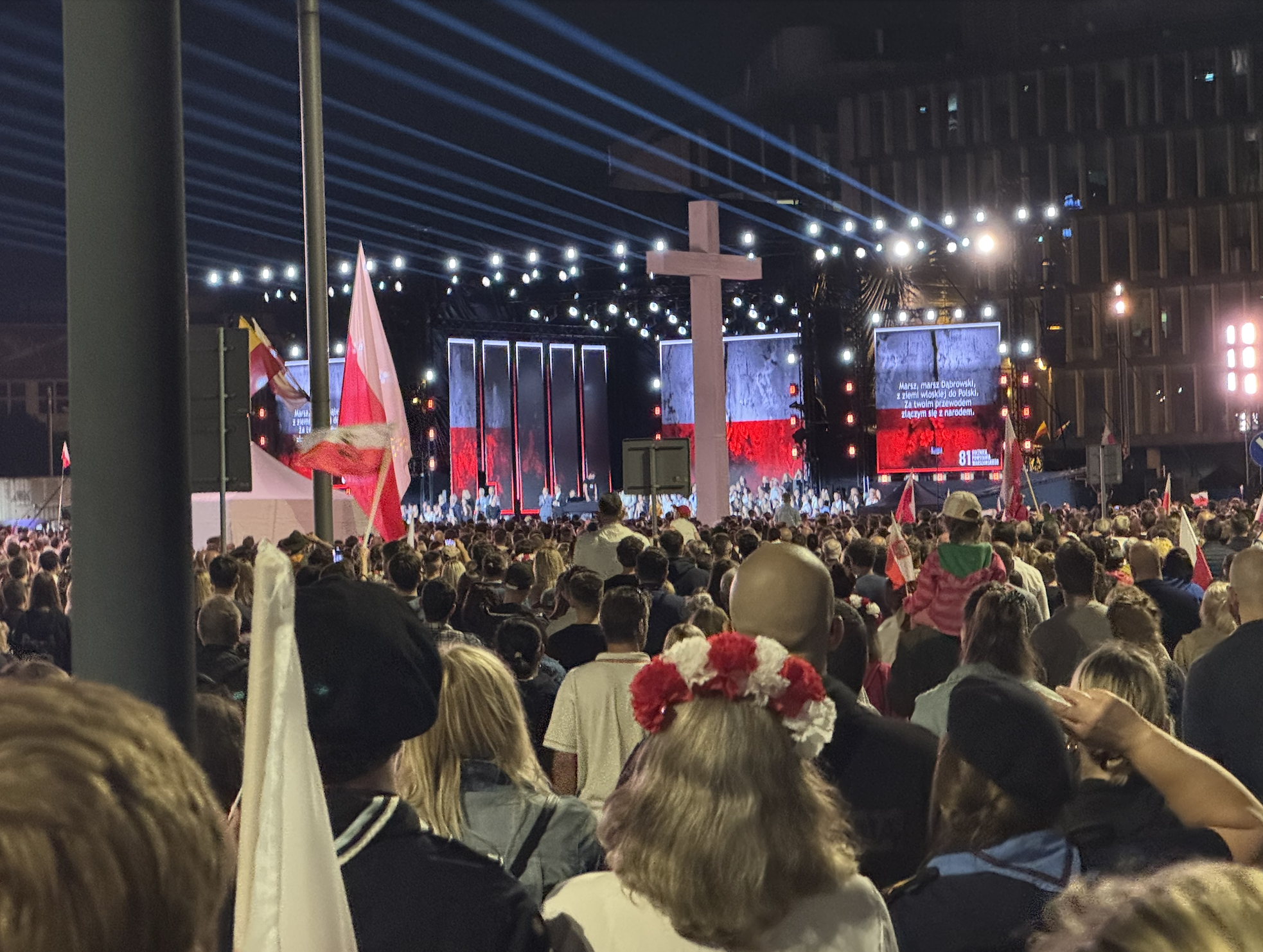
Everyone stood to attention, cyclists dismounted, and patrons of nearby cafés on Piłsudski Square, often foreigners, rose respectfully to join the throng of patriotic Poles.
It is hard to describe this day, as it is an annual blend of sorrow for the insurgents’ tragic fate, emotion for their sacrifice, and national pride for their heroism. We are the last generation able to personally thank the insurgents.
Glory to the Heroes and may the memory of them never be lost!
Author: Maria Byczynski
Photos: British Poles, Caroline Byczynski, Małgorzata Stankiewicz, Alex Cadier