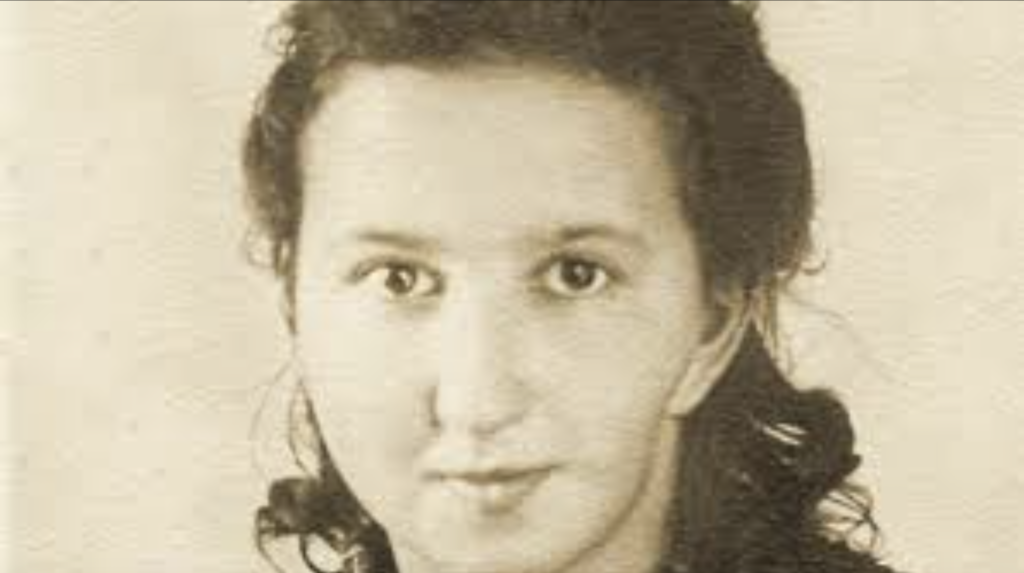
Danuta Siedzikówna ‘Inka’ was born on 3 September 1928, in the village of Głuszczewina near Narewka, Bielsk Podlaski district, the daughter of Wacław and Eugenia. She attended primary school in Olchówka and the Sisters of the Salesians school in Różany Stocz near Grodno in today’s Belarus.
In December 1943, she was sworn into the Home Army. Her father, a forestry officer, was deported to the USSR and in 1941 he joined General Anders’ Army but died of exhaustion after reaching Teheran. Her mother was arrested in November 1942 and executed by the Gestapo in September 1943 for her work with the Polish underground.
At the turn of 1944/45, Inka went through nurse training.

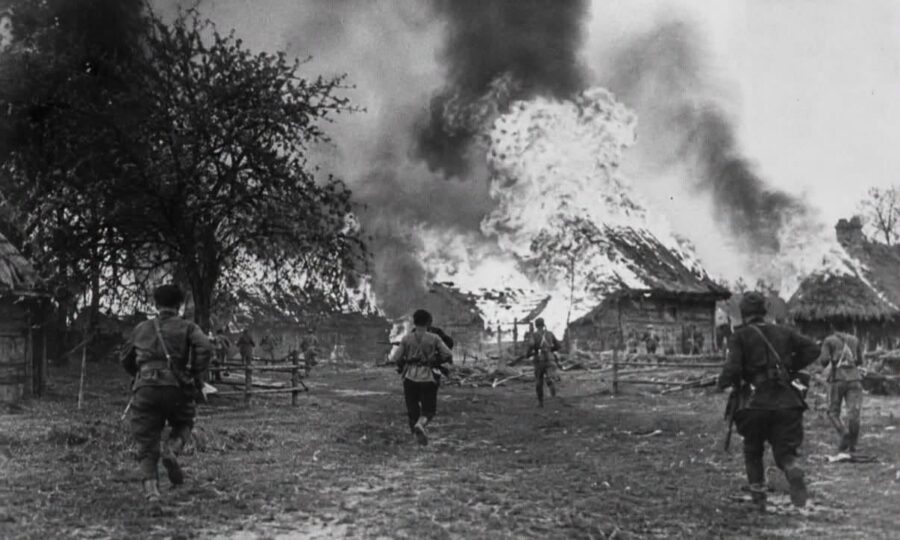
She was arrested on 6 June 1945 together with all the employees of the Hajnówka forest inspectorate where she worked. The reason for the arrest was the alleged collaboration with the so-called ‘forest soldiers’ which was how the communists described the Polish democratic underground.
During transport to the headquarters of the political police office in Białystok, she was recaptured by an armed patrol of the 5th Wileńska Brigade of the Home Army (subordinate at that time to the Home Army Białystok District Headquarters), commanded by Stanisław Wołonciej ‘Konus’.
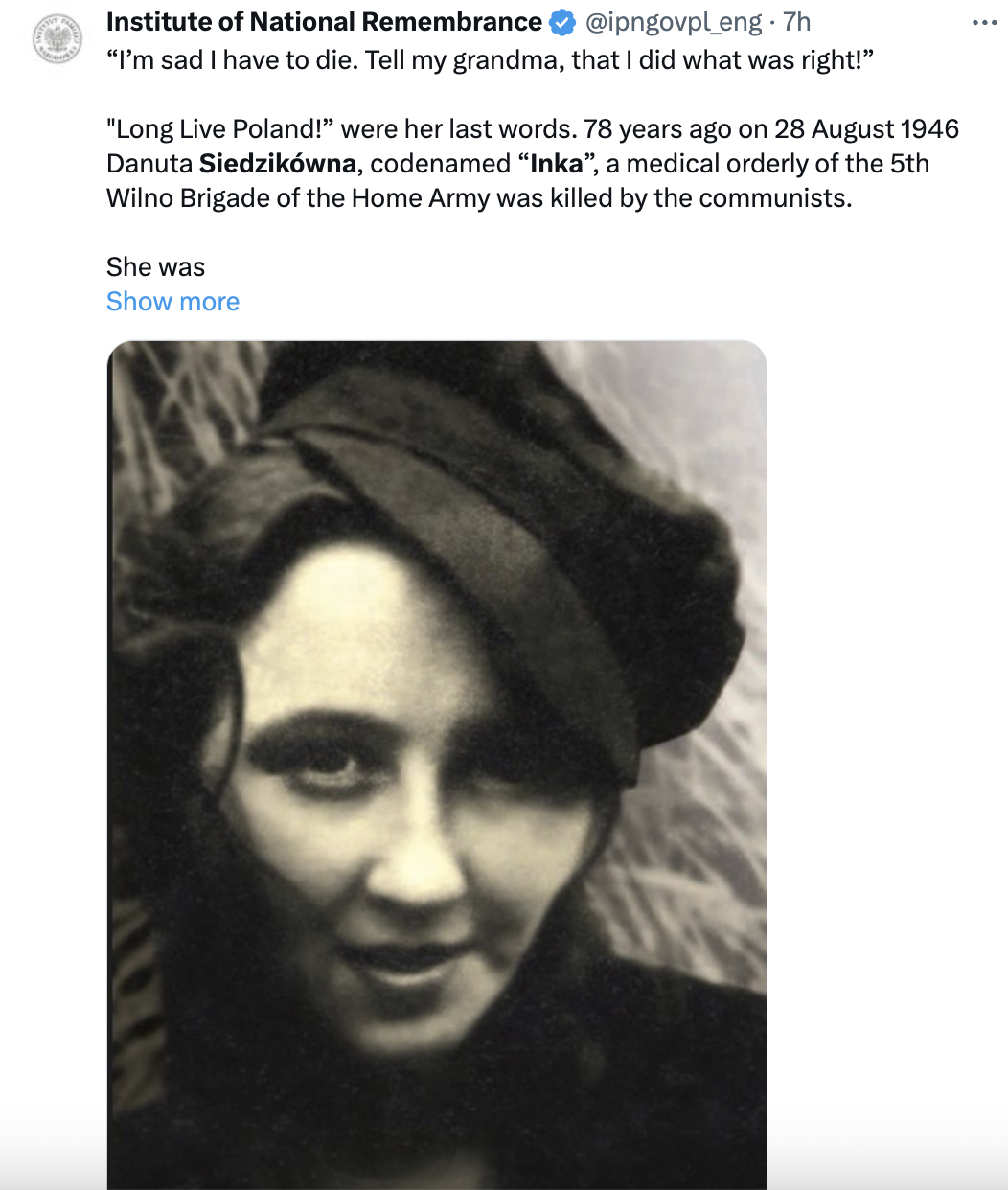
The group of medics found itself under the command of Major Zygmunt Szendzielarz ‘Łupaszka’, in the village of Śpieszyn. Siedzikówna began working as a nurse under the nickname ‘Inka’. She served in the squadrons of Lt. Jan Mazur ‘Piast’, and then of Lt. Marian Pluciński ‘Mścisław’.
In September 1945, after the Brigade was disbanded, she left for Olsztyn, where she took up a job in the Miłomłyn forest inspectorate near Ostróda, under the name Danuta Obuchowicz.
In January 1946, after the Brigade’s activity had resumed she was resigned to the squadron of Lieutenant Zdzisław Badocha ‘Żelazny’.
‘Inka’ also served in the unit as a liaison officer. She took part in many operations of her unit. On 13 July 1946 the new squadron commander, Lt. Olgierd Christa ‘Leszek’, sent her to Gdańsk.
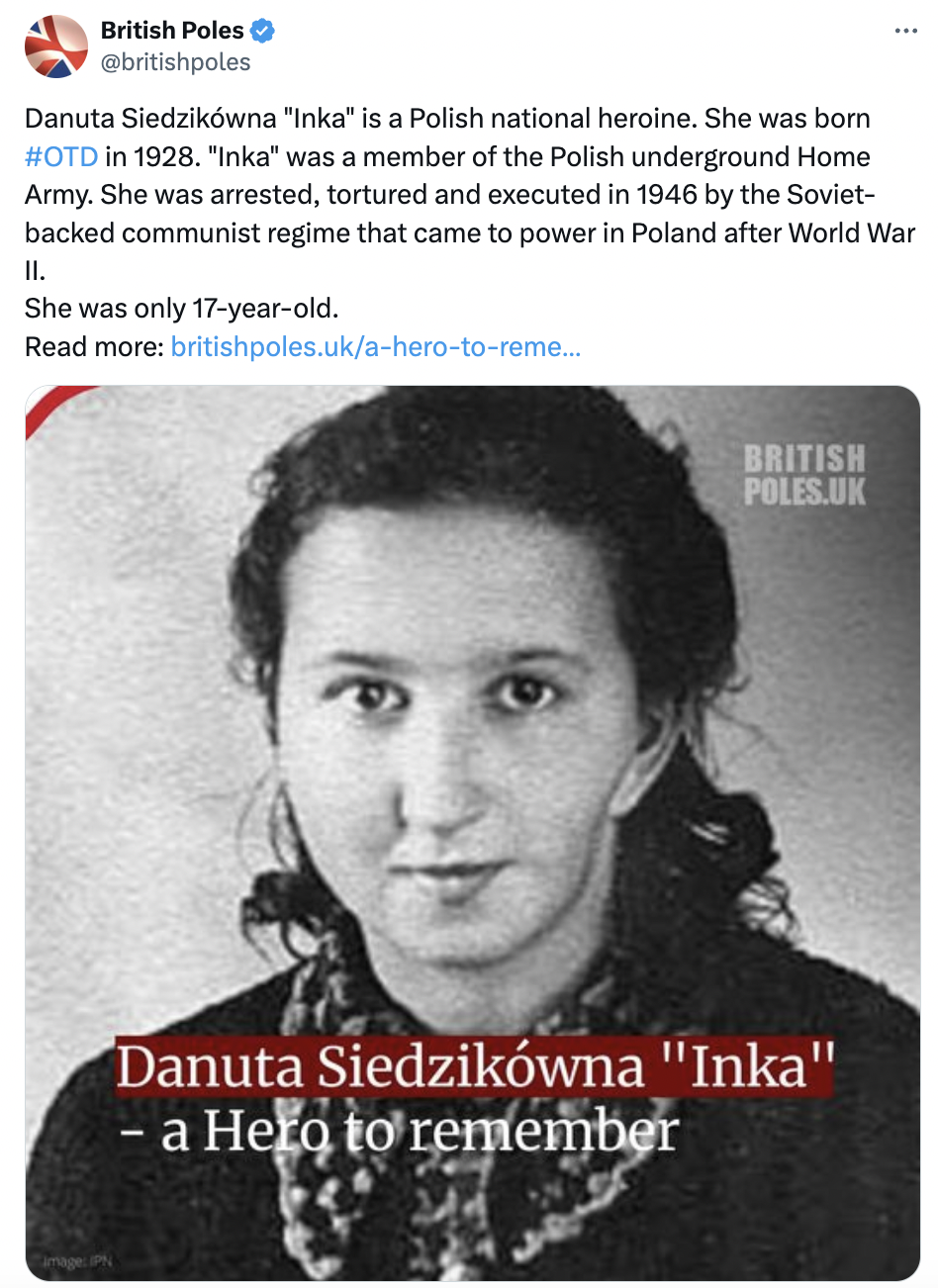
She was arrested on the night of 19 to 20 July 1946 as a result of denunciations made by a previously arrested ‘Łupaszka’ nurse, Regina Żylińska-Mordas, ‘Regina’.
‘Inka’ went through a brutal interrogation but she did not give any of the conspiratorial contacts known to her, nor any other information about the partisan unit. She was tied in an ad hoc court procedure in the prison on 3 August 1946.
Danuta Siedzikówna ‘Inka’ was accused of murdering the wounded and inspiring executions. Despite the lack of any evidence, she was sentenced to death together with Feliks Selmanowicz ‘Zagończyk’.
The President of the communist Poland Bolesław Bierut refused to use his prerogative of mercy and the sentence was carried out on 28 August 1946.
When the prosecutor gave the order for the execution squad to fire, both prisoners simultaneously shouted (in Polish) „Long Live Poland!” (Niech żyje Polska!).
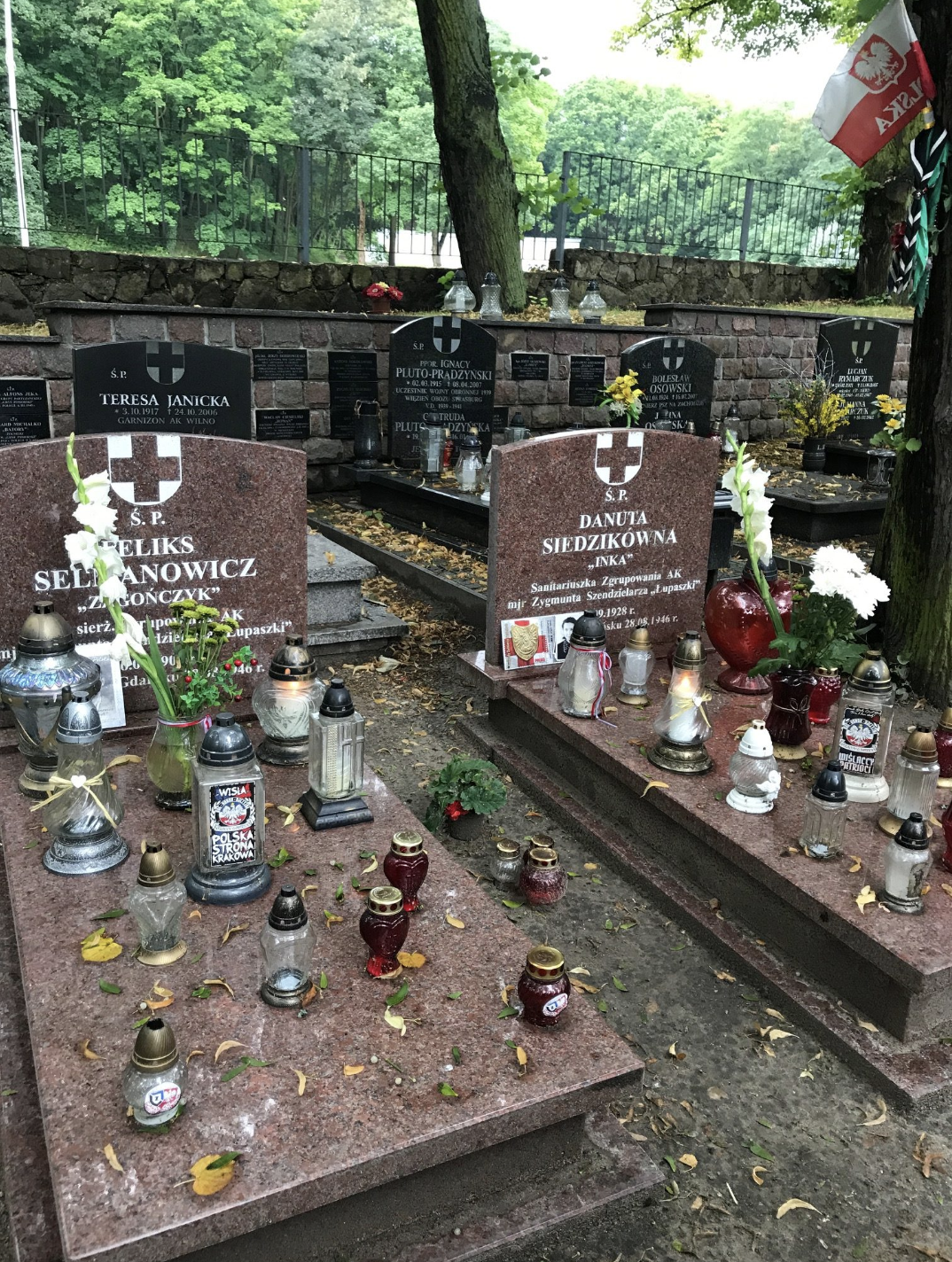
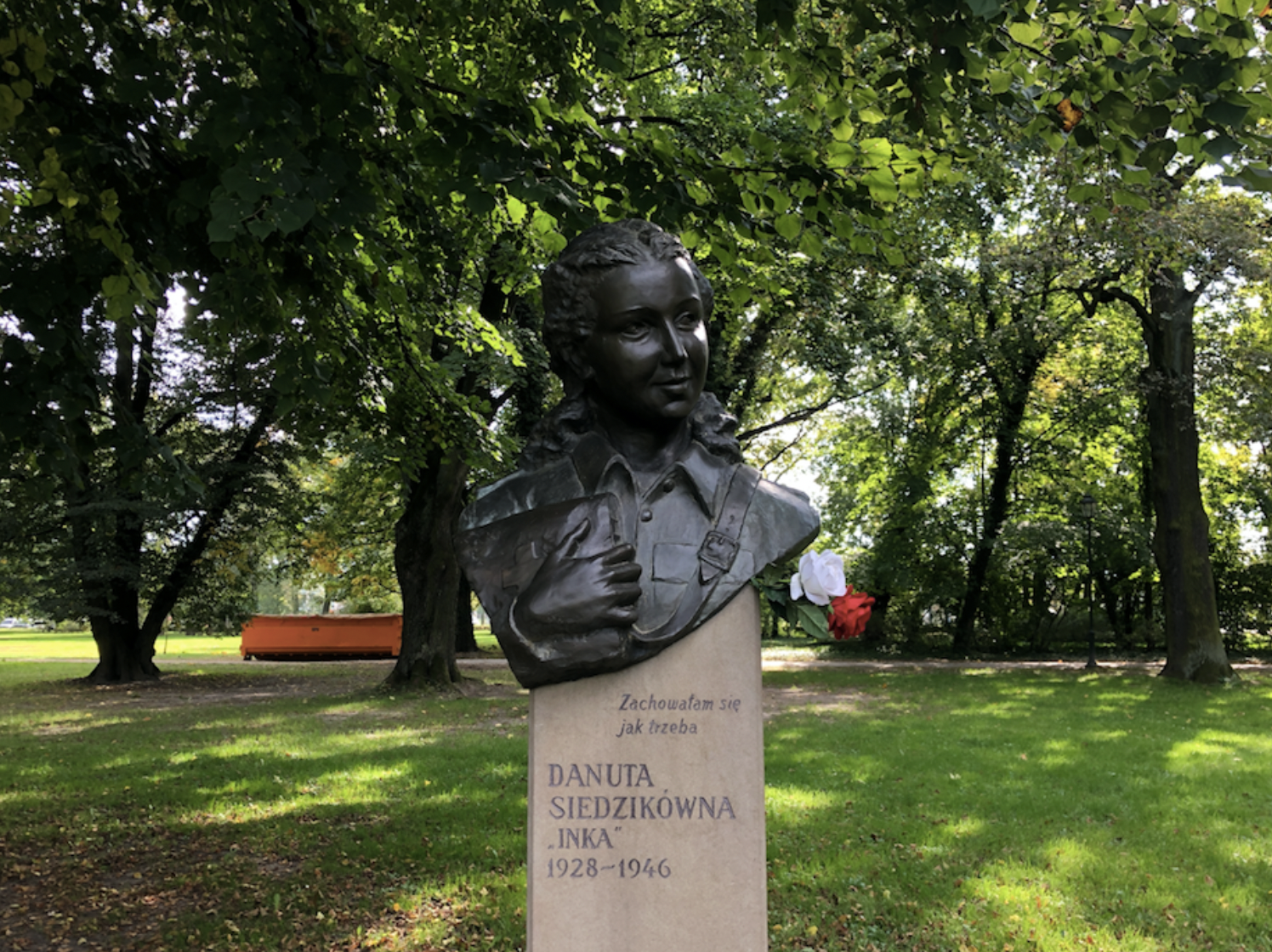
At the moment of her death ‘Inka’ was only 17-year-old. Her unjustified death became a symbol of patriotism and sacrifice. The story of Danuta Siedzikówna remains a symbol of the brutality of the communist regime and the resistance of Polish youth.
Tomasz Modrzejewski
Photos: British Poles