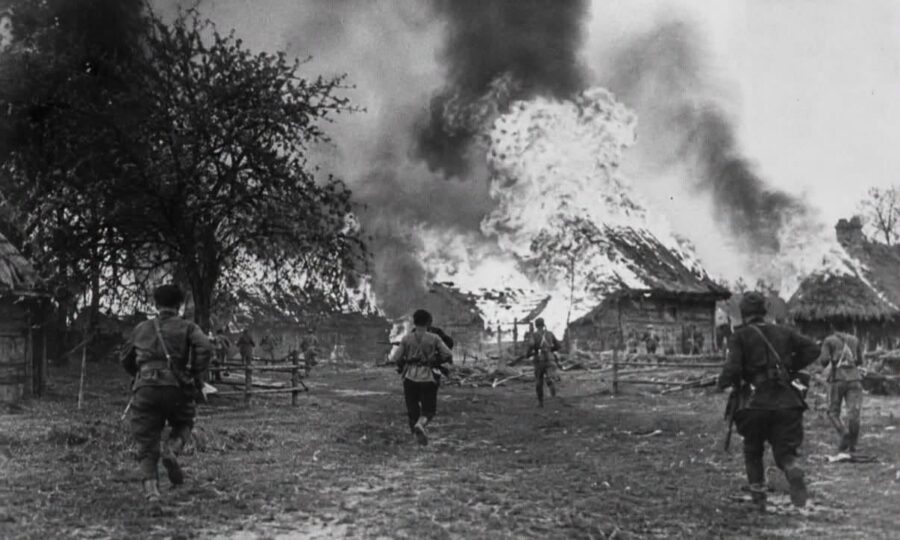
After the German aggression of Poland and the start of the 2 World War, Dr Lazowski was mobilised and travelled to Brest in the eastern Borderlands of the country. He was first arrested by the Soviets but was able to escape transport to Siberia.
When he returned to Poland he was arrested by the Germans. He ended up in a POW from which he also escaped. After their return to Warsaw, he was invited by Princess Anna Lubomirska to become a doctor at their family estate in Rozwadów.
Rozwadów was a small town near Stalowa Wola, with a large Jewish population. The German occupation authorities created a ghetto for the local Jews which shortly became a place of severe disease and suffering.
According to sources Dr Łazowski would always visit those in need if they placed a peace of white cloth on their homes.
Together with another Polish doctor, Stanisław Matulewicz, Łazowski discovered that the commonly occurring harmless bacterium Proteus vulgaris gave the same results in the commonly used Weil-Felix test as another bacteria that caused typhoid fever.
The Weil-Felix test was used by the Germans to confirm whether patients were infected with typhus.
“We can cause an artificial typhoid epidemic to scare the Germans. They will be afraid to wander into our countryside, take people to the Reich, and maybe arrests and searches will stop?” Łazowski wrote in his book describing the times of German occupation called the “Private War”.
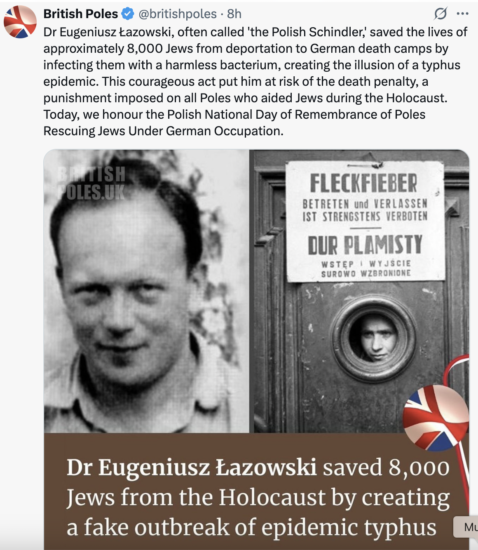
The doctors did not disclose the truth to relatives or even their patients about the false cases of typhoid fever. They kept the secret and even long after the war hardly anyone knew that there were no actual cases of typhoid when Łazowski and Matulewicz spotted them.
Although the Germans had full access to the examinations carried out and information about the ongoing epidemic in the vicinity of Stalowa Wola, the constant mortality rate of the inhabitants made the soldiers begin to have some suspicions about its authenticity.
In 1944 the German authorities organised a special visit to the local ghetto but Łazowski and other medical workers were able to get them drunk and formally confirm the presence of typhus.
Łazowski and his family escaped, and in 1956 he left for the USA, where he continued to practise paediatrics and became a professor.
The world learned about the actions of the two Polish doctors from Lazowski’s memoirs, written down in the 1970s. Matulewicz went to Africa after the war. In Zaire, he became one of the most respected radiologists.
Łazowski died in Oregon in 2006. The media hailed Łazowski as the ‘Polish Schindler’.
According to various estimates, Eugeniusz Łazowski was able to rescue some 8,000 Jews during the time of his work in Rozwadów.
Source: PAP, Dzieje.pl, Medonet
Photo: @analizuje
Tomasz Modrzejewski