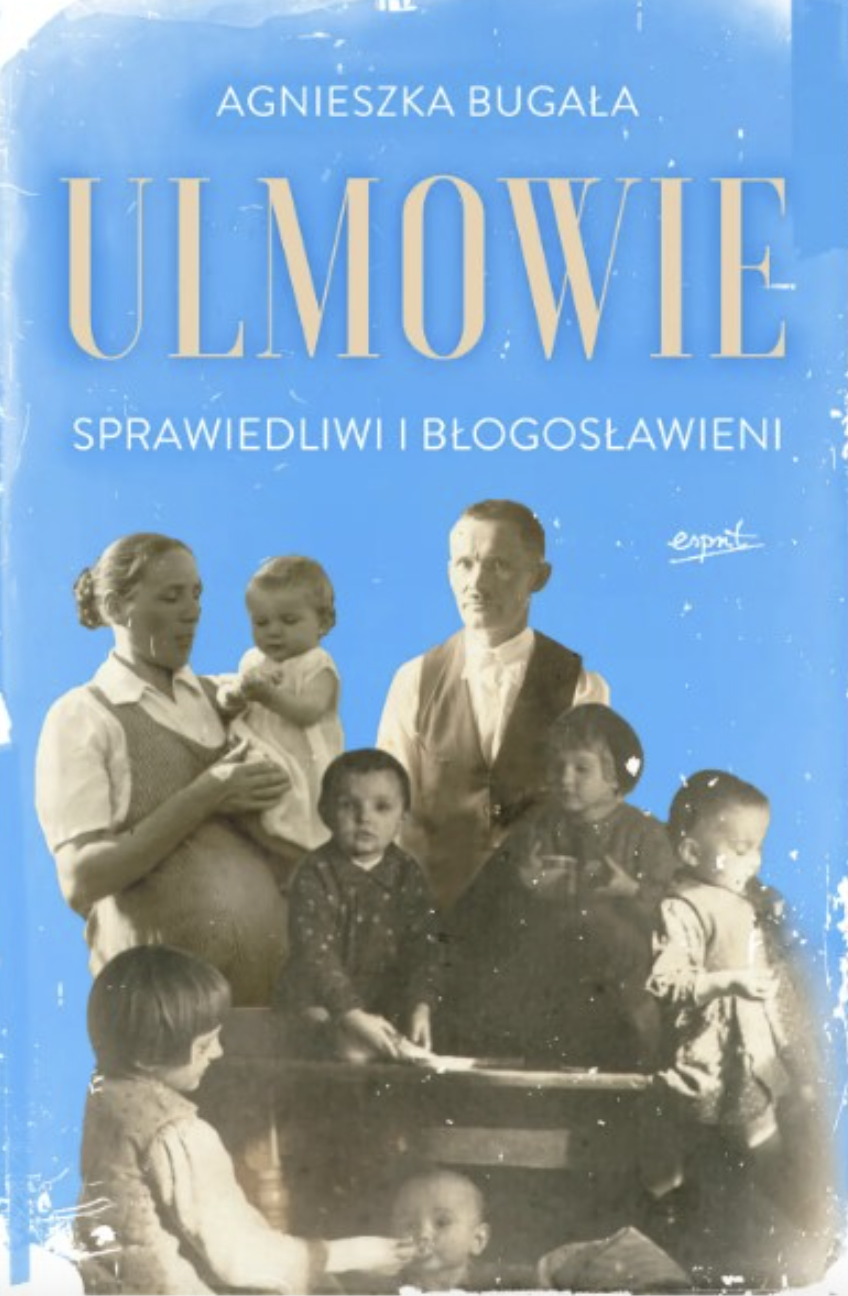
Agnieszka Bugała is a journalist, reporter, and author of the book The Ulmas: Just and Blessed (Ulmowie: Sprawiedliwi i Błogosławieni). She spoke to Piotr Włoczyk for Sovereignty.pl.
PIOTR WŁOCZYK: Were Józef and Wiktoria Ulma aware of the danger that their whole family of eight faced?
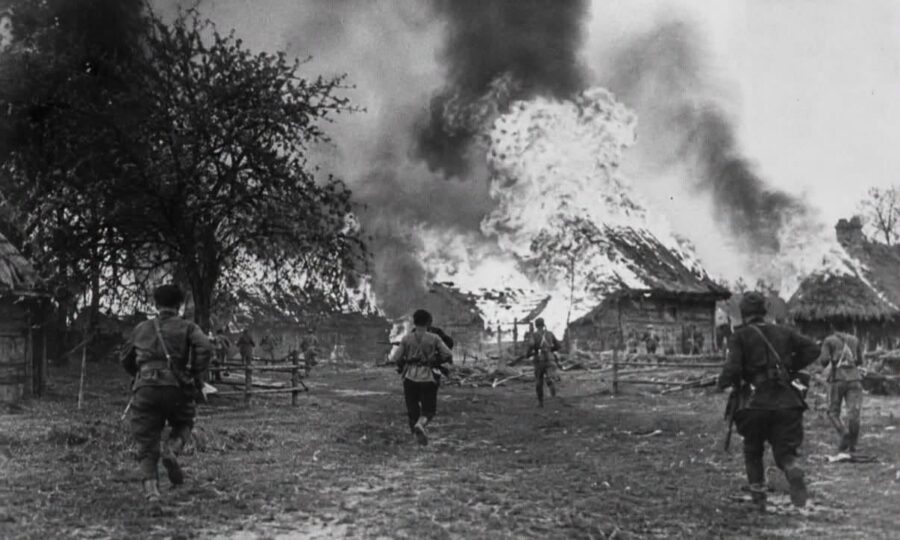
AGNIESZKA BUGAŁA: Yes. All Poles understood that the Germans inflicted the death penalty on those who assisted Jews. They could see from their house the trench that the Germans had chosen as the place in their village where Jews would be murdered. It was a pit where residents of Markowa had previously disposed of dead animals, but after Germany’s invasion of Poland, the occupiers killed Jews there. The sounds of shots and cries would reach the Ulmas’ home… So Józef and Wiktoria were fully aware of the German cruelties.
In 1939, of Markowa’s 4500 residents, about 120 were Jews. From the beginning, in spite of the draconian punishments meted out by the Germans, the people of Markowa came to the Jews’ aid. The Germans wanted to terrify the Polish community with brutal punishments for helping Jews, and thus to drive a wedge between the two groups. It turned out, however, that this policy was not as effective as the Germans had anticipated.
The death penalty for aiding Jews was something quite unknown in the Western countries that were occupied by the Third Reich…
It was a really unique situation. Poland was the only German-occupied country where people were murdered for helping Jews.
How do we know what happened on the Ulmas’ farm on the morning of March 24, 1944?
The only reliable witness to the crime was the then 17-year-old Edward Nawojski, whom the German gendarmes forced to drive them by wagon from Łańcut, where they were posted, to Markowa about six miles away. Years later, at the trial of one of the Ulmas’ executioners, it was Nawojski who testified as the main witness.
The action was commanded by Eilert Dieken, chief of the German gendarmerie in Łańcut, and carried out by four German gendarmes and three Polish officers from the Blue Police, which was subject to the German occupying authorities. One of those policemen was Włodzimierz Leś. It was probably he who informed the Germans that there were Jews hiding in the Ulmas’ house. Dieken’s right-hand man was Josef Kokot, a Czechoslovak volksdeutsch, known to locals as an extreme sadist.
Who died first?
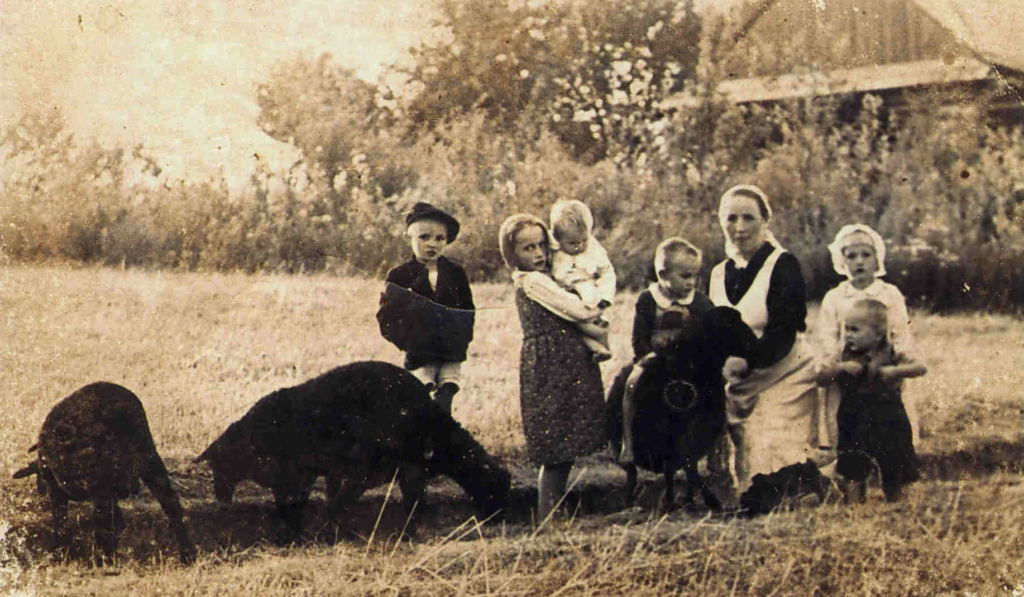
The killing began in the attic of the Ulmas’ home, where eight Jews were hiding. Two people were murdered there. The remaining six Jews, including a small girl, were shot by the Germans in front of the house. Next they drove the whole Ulma family into the yard. The first to die was Józef, and next was his wife Wiktoria, who was in her ninth month of pregnancy. After murdering the couple the Germans paused, as they disagreed about what to do with the children. According to Nawojski’s testimony, a discussion took place. However, Dieken decided that the children would be shot as well. He explained this by a desire to spare the people of Markowa the trouble of caring for the orphans… The Germans therefore murdered Stasia, Basia, Władzio, Franio, Antoś and Marysia. The oldest child was eight, and the youngest was aged a year and a half.
Josef Kokot, whom locals called the “devil of Łańcut,” shouted to the coachmen after the murder: “That’s how Polish swine die when they help the Jews.”
The murdered victims were then robbed – the Germans searched their bodies for jewelry and money. Kokot was extremely satisfied to find some valuables. It is very likely that the Ulmas’ wedding rings were stolen at that time.
The Germans then summoned the village elder and told him to organize a group of men to dig graves for the victims.
How did the residents of Markowa react to this horror?
News of the massacre at the Ulmas’ farm spread like lightning through the village. Markowa was then overcome with fear. We know that 21 Jews survived the war in that village, and therefore some must have continued to hide in its attics and cellars. Despite the unimaginable emotions, and a fear that a round-up was just beginning, the people did not give up the Jews who were still in hiding. And we know that four or five Polish families were hiding Jews at that time.
Dorota Szylar, who had seven Jews in her home, turned gray on the spot after the murders, and her first reaction was to tell her husband that those people had to leave. The Jews threw themselves at Antoni Szylar’s feet, weeping and begging him not to throw them out. It was a dramatic and unimaginable situation. Finally, the Jews remained in hiding on the farm. Mrs. Szylar paid for the dramatic experience with her health. To the end of her life she was neurotic and had to take sedatives.
Markowa is an exceptional place on the map of villages where Jews were saved. Mateusz Szpytma, vice-chairman of the Institute of National Remembrance, has established that more of the “Righteous” lived in Markowa than in any other Polish village.
How were the Ulmas remembered by their neighbours?
The residents of Markowa remembered the Ulmas as just ordinary people. And it was this ordinariness that very much endeared them to me. They where people who did what they had to do. Józef was remembered as a person of great honesty and dependability. He was also very much ready to give help. We know that he tried to save not only those eight people who were found hiding in his attic. In the summer of 1942 he dug a shelter for three Jewish women and the daughter of one of them, and for two weeks his wife brought them food and water. The couple were remembered as very hospitable people, and Józef was always very active in the community. They were poor people who lived in Spartan conditions. During the war, when there was always a shortage of everything, those extra eight people must have been a huge burden to them, but they nevertheless did everything to make sure that they could somehow cope. And importantly, we know that the Ulmas did not take any money from the Jews they were hiding – not for shelter, or even for food…
What do we know about the period of over a year when the Ulmas lived in one house with the concealed Jews?
We know little about those people from the attic.
(…)
Read the full article here.
Agnieszka Bugała
Photo: Institute of the National Remembrance