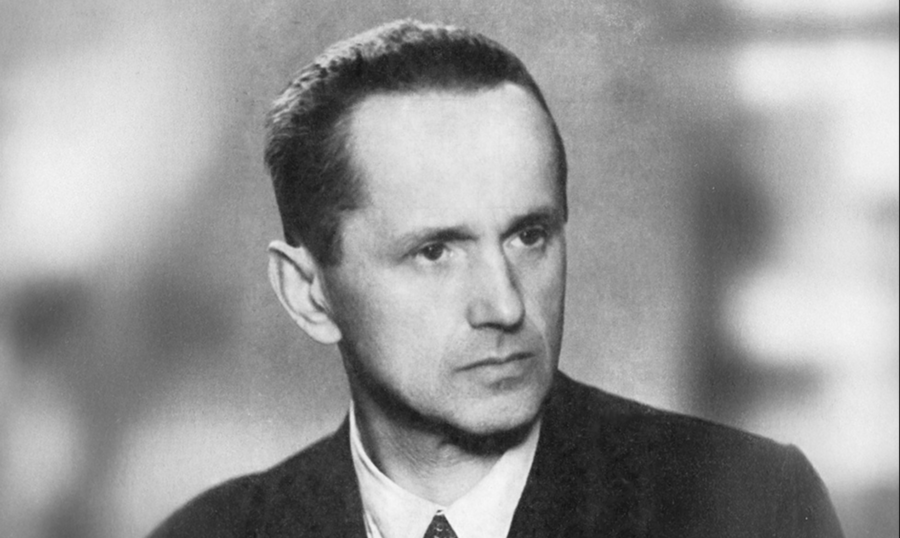
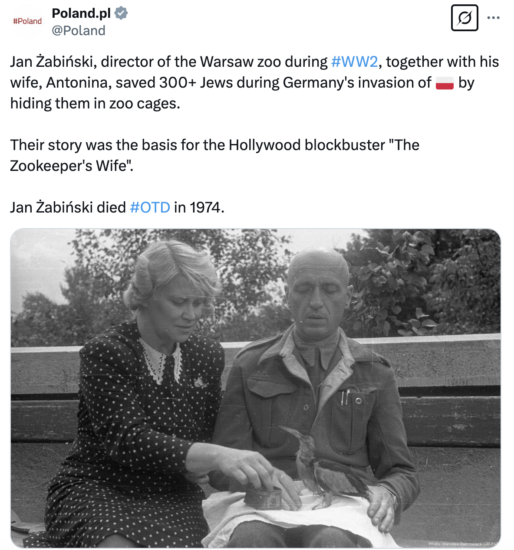
Jan and Antonina Żabiński volunteered to save some 300 Jews and hide them in various places in their villa near the Warsaw Zoo. They were able to survive the occupation, and Jan himself fought as a Home Army soldier in the Warsaw Uprising. After the war, he remained the director of the Zoo until 1951.
Jan Żabiński was the head of the Warsaw Zoo for many years. He was one of the founders of the Warsaw Zoo and, in 1929, became its director. He held this position until 1951.
Before the war, the Warsaw Zoo was regarded as one of the best-organised gardens in Europe. It was the place of first outside breedings of many tropical animals.
In September 1939, the zoo was bombed by the Germans. Many animals died or escaped from the zoo at that time. The animals that survived were taken to different zoo’s around Germany.
During the German occupation of Warsaw, Jan and Antonina decided to use their villa as a hideout for Jews. For their aid, they could face immediate execution by the occupation services.
When the situation endangered the hiding Jews, Antonina would start playing ‘Offenbach’s aria “Beautiful Helena” on her piano, which meant that it was dangerous and the house should be left by those hiding through a tunnel leading outside. There, the hiding Jews had to wait for safety.
During the Warsaw Uprising of 1944, Jan Żabiński served as a soldier of the Home Army and was a commander of a unit. He was wounded during the fighting and spent some time in a German POW camp.
The remains of the pre-war Zoo were almost razed to the ground by the Germans.
In the first years after the war, the Żabiński family became involved in rebuilding the Zoo, but in 1951, Jan was forced to resign as director.
From 1952 to 1954, he worked at the State Pedagogical School in Warsaw, created books on animal life and was a frequent guest for programmes aired on the Polish Radio.
In 1965, Jan and Antonina were awarded the medal “Righteous Among the Nations”.
Source: Dzieje.pl
Photo:@Poland
Tomasz Modrzejewski