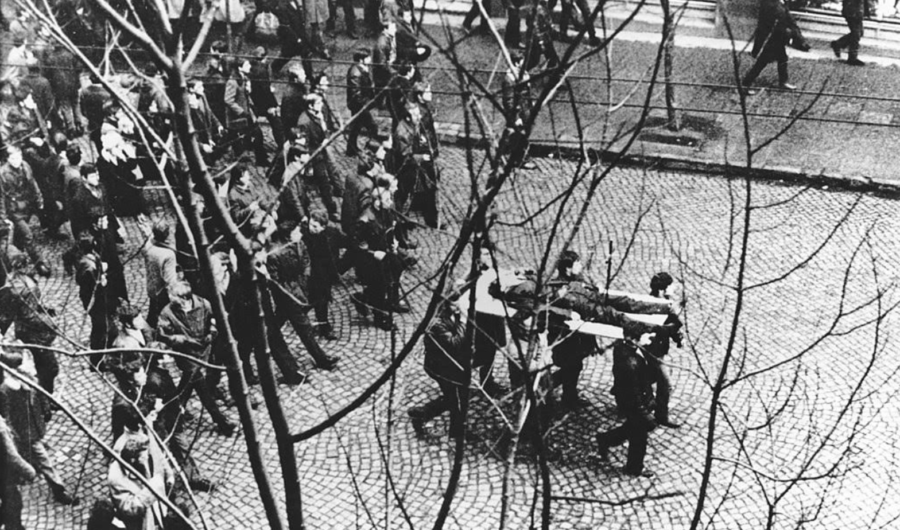
A tragic symbol of December `70 was the procession carrying the body of a young man and a bloodied red-and-white flag on a door. The photograph that captured the scene showed eighteen-year-old Zbigniew Godlewski, an employee of the Gdynia Shipyard named after the Paris Commune.
The worker strikes and riots on the Polish Baltic Coast were the result of a harsh social and economic policy model proposed under the rule of the head of the Polish Communist Party Władysław Gomułka.
In an attempt to save the supply situation in trade, the authorities announced increases in the prices of the standard goods, mainly food, just eleven days before Christmas.
The communist government expected that people would become accustomed to this information.
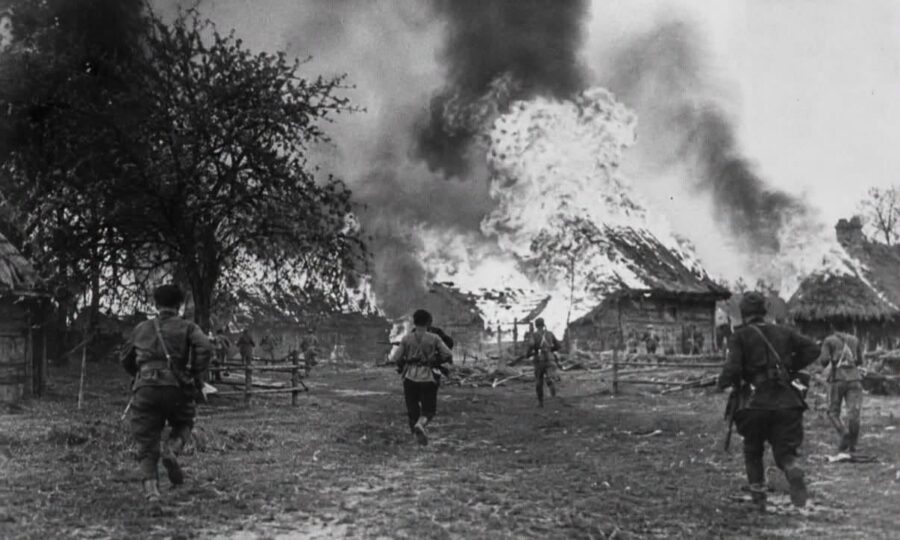
On 15 December, the unrest and strikes broke out in factories and shipyards in Gdańsk and Gdynia. On Wednesday, 16 December, militia troops in Gdansk opened fire on strikers. By that day, the conflict had spread to Slupsk, Elbląg and even Kraków.
On Thursday, at 6 a.m. in Gdynia, the soldiers fired directly at workers rushing to work in the shipyard. Eighteen people were killed. The press first reported the activities of “hooligan and adventurous elements” in the Tricity. One of the victims was a young worker named Zbigniew Godlewski.
The symbolic procession with his body laid on a door and the Polish national flag became the most important picture showing the brutality of the communist regime.
Over the next two days, 16 people were killed in another Polish coastal city Szczecin.
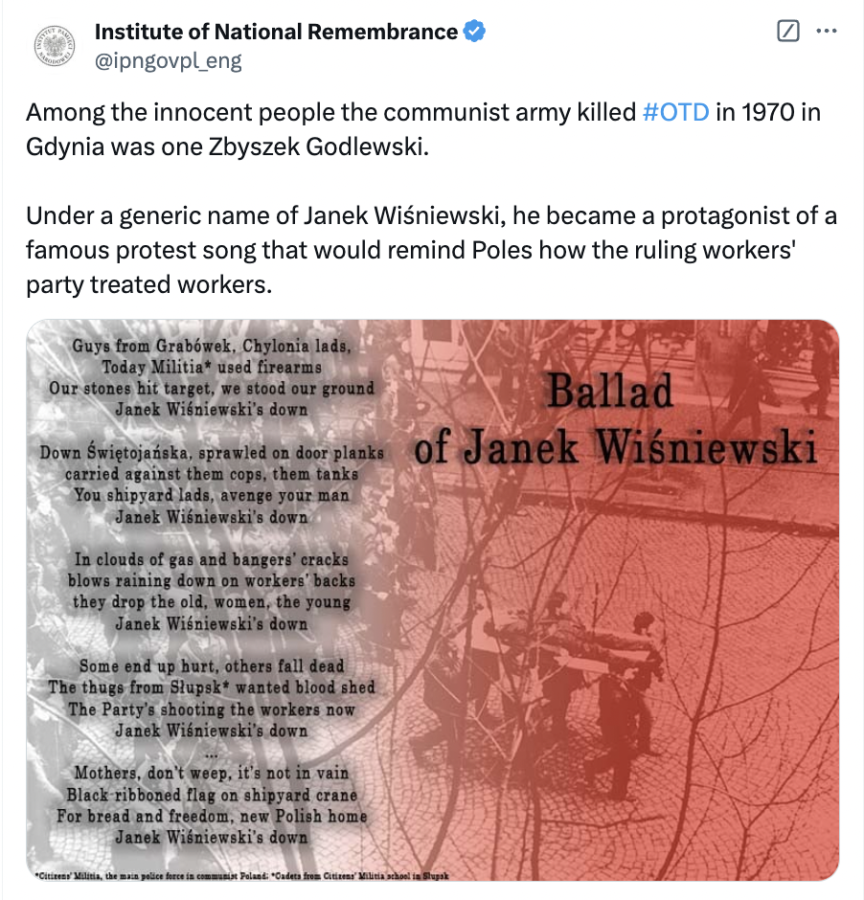
The fate of the young shipyard worker inspired an architect and opposition activist, Krzysztof Dowgiałło, to write the lyrics of a song. As the real name of the shop worker was not known at the time, a random, typical Polish name was used.
Zbigniew Godlewski, like the other victims of the Gdynia massacre, was buried secretly, under cover of darkness, in the cemetery in Gdańsk-Oliwa. A year later, the family managed to have his remains exhumed and moved to his hometown of Elbląg.
The outcome of the 1970 strikes on the Coast was tragic. According to official figures, 45 people were killed and 1165 injured, including 153 people with gunshot wounds.
Today, one of the streets in Gdynia is named after the young shipbuilder. There is also a Godlewski street in Zielona Góra, where he was born.
“Don’t cry mothers, it’s not for nothing,
Above the shipyard a banner with a black bow.
For bread and freedom and a new Poland,
Janek Wisniewski fell.”
Source: Dzieje.pl
Photo:@ipngovpl_eng
Tomasz Modrzejewski