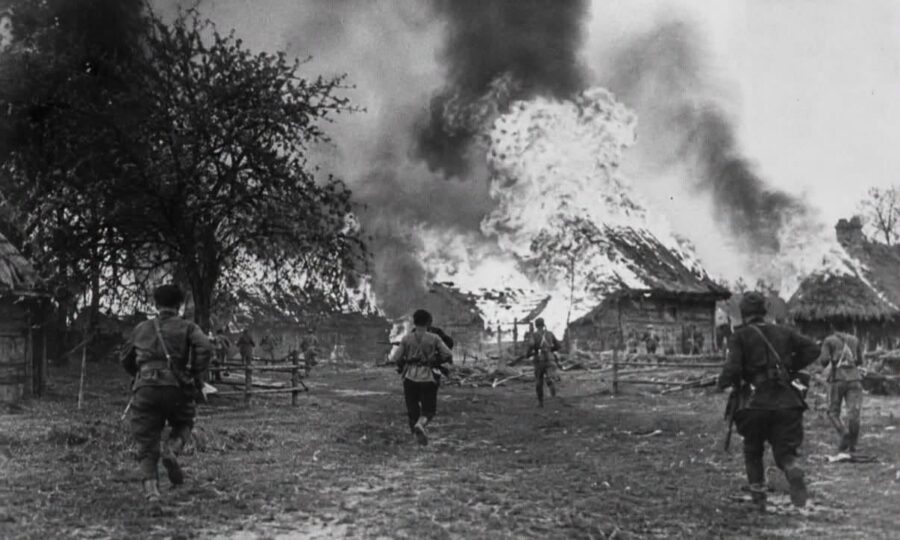
Despite the threat of loss of life and destruction of their works, more than two thousand nuns engaged in rescuing their Jewish fellow citizens during the German occupation of Poland. The nuns gave them food, medicine, and hid them. They took risks because this was what the Gospel and the sense of universal solidarity demanded.
‘There was hardly a religious congregation in Poland that did not come across the issue of helping Jews, mainly women and children in hiding, during the occupation, even though pressure from the Gestapo and surveillance of monasteries were very strong, and the forced resettlement of religious houses, arrests, and deportations to concentration camps seriously hampered underground activities,’ wrote Władysław Bartoszewski in his recent book ‘Polacy. Żydzi. Okupacja.’ [‘Poles. Jews. Occupation.’].
One of the most eminent historians of the Second World War summarises his many years of research in this book. But his conclusions are also confirmed by surveys conducted in 1962 and 2009 in women’s congregations and by individual studies – nuns risked their lives to save their Jewish fellow citizens from death.
Long list of rescuers
In the country conquered after the defensive war of 1939, terror grew against the Poles (murdering the intelligentsia) but especially against their Jewish fellow citizens. Jews were ordered to wear armbands, their property was confiscated, and they were locked in ghettos. Governor-General Hans Frank issued a decree on October 15, 1941, introducing the death penalty for Jews leaving the ghettos. Helping Jews, even giving them a slice of bread, a glass of water or medicines, meant immediate death for the entire family. Closures of ghettos and deportations to extermination camps began in 1942.
In the face of the deadly threat, many women’s convents became a veritable place of rescue for their Jewish fellow citizens. The nuns had the conditions to do so because their houses were often on the outskirts of towns or in villages, the cloisters were closed to outsiders, the Germans avoided infirmaries because they were afraid of infectious diseases, and there were also farm buildings surrounded by orchards and vegetable gardens. The nuns, who from the beginning of the war took care of the poor, refugees and homeless people and joined the underground struggle and secret teaching, soon realised that an equally urgent task was to help the persecuted Jews.
This help was varied and consisted of giving food, medicines, clothes, shelter for a few days or for many months or even years. Many of these people came to the nuns by chance like the little boy thrown out of a transport to Auschwitz, who was taken care of by nuns from the Benedictine Samaritan Sisters in Henryków. Tadeusz, as this was the name he received from his new caretakers, was wrapped in pillows, so he was unharmed and luckily survived until the end of the war. The Servant Sisters of St Mary of Starowiejski from Piotrków Trybunalski took care of a several-month-old boy and also successfully protected him; after the war, his parents came forward and left with him for Palestine. The Michalite nuns of Radom, whose convent was adjacent to the ghetto, gave food to Jewish children.
Sister Antonina Jaworska from the Congregation of the Sacred Coeur in Zbylitowska Góra used to give food that she hid under her apron to Jews. When Sister Antonina Bulczak of the same congregation, working in a hospital in Lviv, gave a piece of bread to a Jew, she was almost shot. The Franciscan Sisters of the Hospital in Ludwikowice, who ran an old people’s home, showed great energy and determination – they dug under the ghetto fence and gave food to those imprisoned.
The nuns usually took care of children, but also adults. The Benedictine nuns – samaritans from Henryków – hid sixteen adult Jewish women in their cloister. Maria Kiepurowa – the mother of the world-famous tenor Jan Kiepura, the ’boy from Sosnowiec’ – hid in the Cracow convent of the Felician Sisters.
The cloister was also a place of refuge for the Horn family in the convent of the Canons of the Holy Spirit in Lublin, and when they were arrested and imprisoned in Majdanek, Sister Alojza Truszkowska got them out of the camp because she showed the Germans a certificate that they were workers in the convent. The whole family survived the occupation.
Unfortunately, not all the stories ended well. The nuns of the Congregation of the Immaculate Conception of the Blessed Virgin Mary, Sister Ewa Noiszewska, and her superior Marta Wołowska, hid the Kagan family in the attic, orangery, and stables of the Słonim convent. They also treated Jews, and Sister Ewa, a doctor by profession, wrote prescriptions for them. It was the prescription that led the Germans to traces of help – one of the men murdered by them had a prescription written by a nun in his pocket. Both nuns were murdered in December 1942 with a shot to the back of the head.
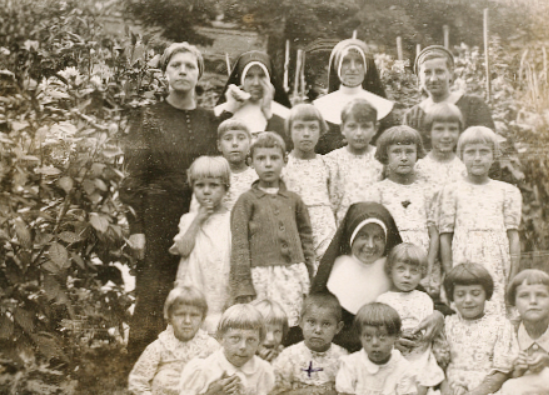
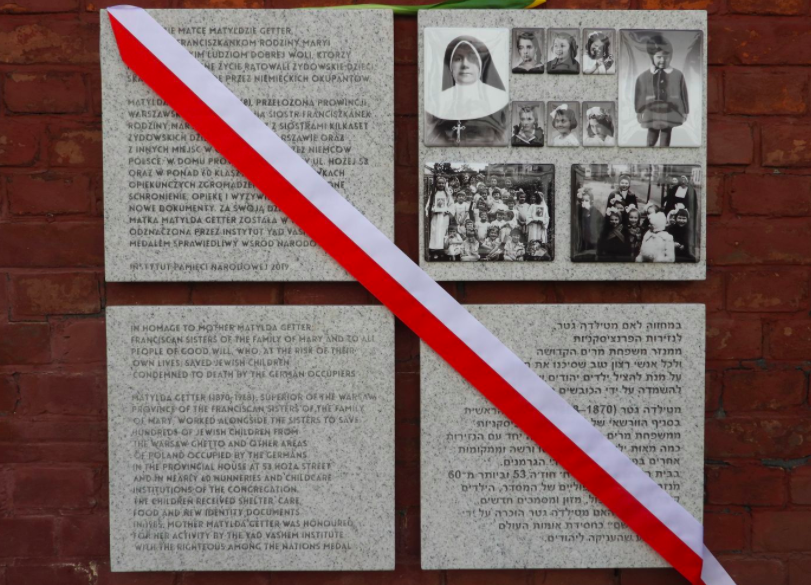
At the Carmelite nunnery on Wolska Street in Warsaw, located near the ghetto walls, the nuns provided „standard” help, handing over food and medicines, as well as false documents with which it was possible to survive on the Aryan side. The convent was also an underground location on the Aryan side for Jewish underground liaison officers – Ari Wilner, Tuwie Szejngut, and others. ’Seventeen nuns lived in 1942-43 in constant danger, not shying away from cooperating in even the riskiest undertakings’ – states Władysław Bartoszewski in the book already quoted. The sisters of the Congregation of Franciscan Sisters of the Family of Mary in Warsaw saved the most, almost five hundred children and about two hundred and fifty adults. The nuns ran orphanages and during the occupation even founded new ones. The Mother Superior Ludwika Lisówna and the Mother Superior of the Warsaw Province, Mother Matylda Getter, organised a systematic action to save Jews. Mother Matylda collaborated with the head of the children’s department of the Council for Aid to the Jews, Irena Sendlerowa of Żegota, with the parish priest of the ghetto, Marceli Godlewski, and with the charity activist Izabela Radziwiłłowa. Children smuggled out of the ghetto were placed in the congregation’s institutions or given to Polish families for care. Although Mother Matylda was almost seventy years old when the war broke out, she did not stop her efforts to save lives. 'Whoever comes to our courtyard and asks for help, in the name of Christ, we must not refuse,’ she used to say. Sister Teresa Antonietta Frącek, the congregation’s historian and archivist, calculated that over one hundred and twenty sisters from the congregation were involved in the rescue work, that is every tenth sister. The action was perfectly organised – all people taken care of by the congregation happily lived to see the end of the war.
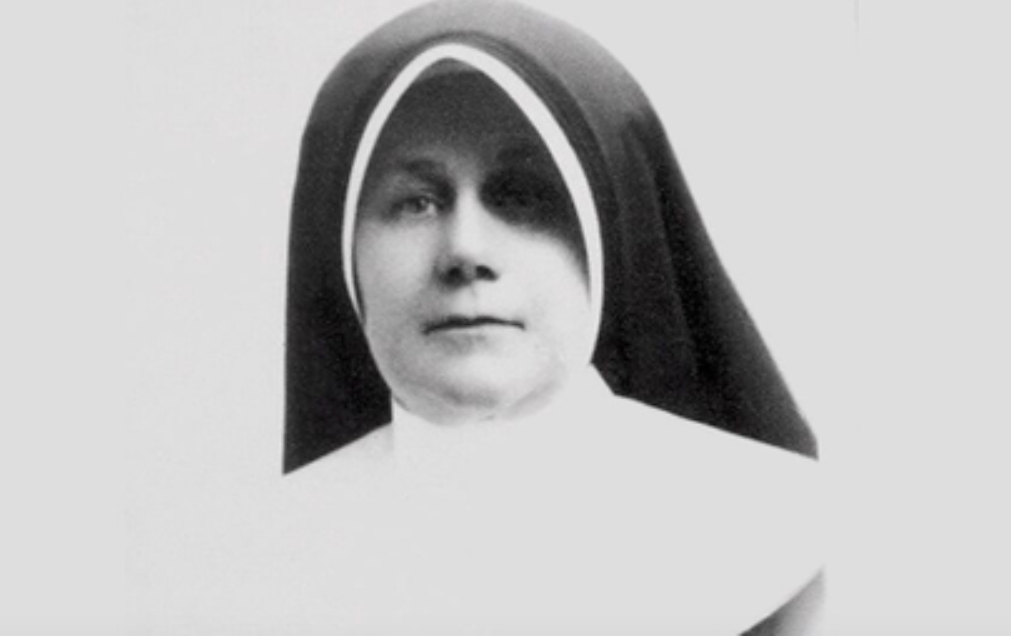
The nuns operated in an atmosphere of constant danger, German searches were very frequent, and there were also native denouncers hanging around the convents blackmailing those who rescued Jews.
Strategy
The list of rescuers is very long. It must be remembered that the rescuer took responsibility for people’s lives and had to take a number of steps to make the undertaking a success. In this struggle, the nuns showed unusual creativity, cold blood and sometimes flippancy. The first step was to 'legalise’ the hidden person, that is, to create a false identity. Cooperation with priests was invaluable, as they issued baptismal certificates. Testimonies about six hundred and sixty priests who joined the rescue operation have been preserved in the Memorial Park in Toruń. Many nuns learned to forge Aryan documents by aging them with lamp lighting.
Children hidden in orphanages among Polish peers had to be taught prayers, participation in mass, and poetry. Their hair was dyed, and when a search was expected, the nuns would bandage the faces of pupils with clear Jewish features or keep the Germans out of the infirmary, claiming that they were sick with infectious diseases.
The monastic habit also provided protection against deconspiration. Eugenia Szymanska, disguised as a postulant of the Benedictine Sisters of the Samaritans, worked in the railway workshops supervised by the Germans in Pruszkow. Father Tadeusz Puder, who was hiding in an institution for boys in Białołęka, also put on a habit at the time of the greatest danger, thanks to which he survived.
Why did they rescue?
The moral attitude of the nuns was all the more beautiful because their aim was not to gain new followers for the Church but to save human lives. Baptism was administered very rarely, only at the request of a few older children, and only after a long catechetical preparation. ’I remember Sister Stefania’s attitude to these matters – how greedy she was in saving, how eagerly she accepted every Jewish baby into the institution,’ writes Władysław Bartoszewski in his book ‘Polacy. Żydzi. Okupacja.’
Numerous testimonies show that the nuns were inspired by the Gospel, by the words of Christ, who says that ’there is no greater love than this: that a person would lay down his life for the sake of his friends’. Mother Matilda was guided by a passage from the Gospel of St Matthew, expressing the charism of her congregation: „Whoever shall receive one of such little children in My name, receives Me”. She trusted that Providence was watching over each household member. During the search, the sisters prayed in the convent chapels. To her fellow sisters, Mother Mathilde used to say, 'We are saving a man’.
They risked their lives in the name of interpersonal solidarity.
Alina Petrowa-Wasilewicz
Pictures: IPN, www.sprawiedliwi.org
The article has been published on www.dlapolonii.pl
About the author: Polish journalist and publicist, for many years connected with the Catholic Information Agency, winner of the journalist award 'Ślad’ [’Trace’], author of several books, including the latest 'Uratować tysiąc światów’ [’Save a Thousand Worlds’] about Mother Matylda Getter