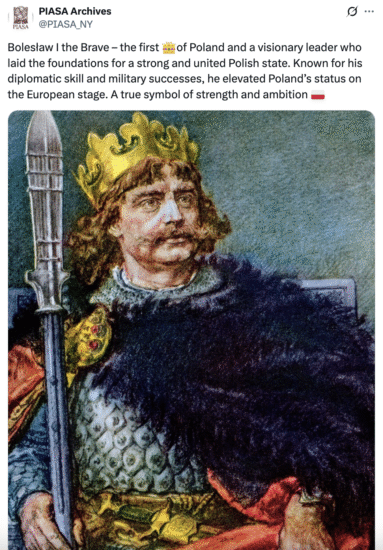
The exact date and location of Bolesław the Brave’s coronation remain uncertain. Due to conflicting historical accounts and the absence of definitive archaeological evidence, scholars have long debated where the ceremony occurred. Three cities have typically been considered: Gniezno, Poznań, and, less commonly, Kraków.
From as early as 973, during his childhood, Bolesław was taken from his parents and sent to the German imperial court as a political hostage – a common practice in medieval Europe. His presence there served as a guarantee of peace between his father, Mieszko I, and the German margrave Hodon.
Though effectively a hostage, Bolesław was heir to the Polish throne and is believed to have enjoyed considerable freedom during his time in Germany. The experience proved formative: it offered him exposure to courtly life, diplomacy, and military affairs – skills that would serve him well upon his return to Poland.
At one point, Bolesław’s prospects of succeeding his father, Mieszko I, diminished. In 977, his mother, Dobrawa, died, and Mieszko later fathered children with his new wife, Oda – a woman determined to secure the throne for her sons.
After returning from Germany, Bolesław probably stayed in Prague with his grandfather, Boleslaus I of Bohemia. However, historians tend to favour the view that Mieszko installed him in Kraków, a city recently brought under Polish control from the Czechs.
This idea comes from the so-called Dagome iudex, a document dating to around 990, in which Mieszko, Oda, and their sons placed their dominion under the protection of the papacy, notably omitting Bolesław’s name, which suggests he was no longer considered part of the dynasty.
In the early years of his rule, Bolesław maintained good relations with the Holy Roman Empire. He supported imperial campaigns against pagan Slavic tribes along the lower Oder River by providing troops or taking part in person.
These military efforts were often carried out in alliance with the Czechs, reflecting a period of pragmatic cooperation between the region’s emerging powers.
In 997, with Bolesław’s backing and a military escort provided by the Polish duke, Bishop Adalbert (Wojciech) set out on a missionary journey to the lands of the pagan Prussians, travelling first to Elbląg and then deeper into their territory. He was killed shortly after arriving – a martyr’s death that Bolesław would later skilfully use to his political advantage.
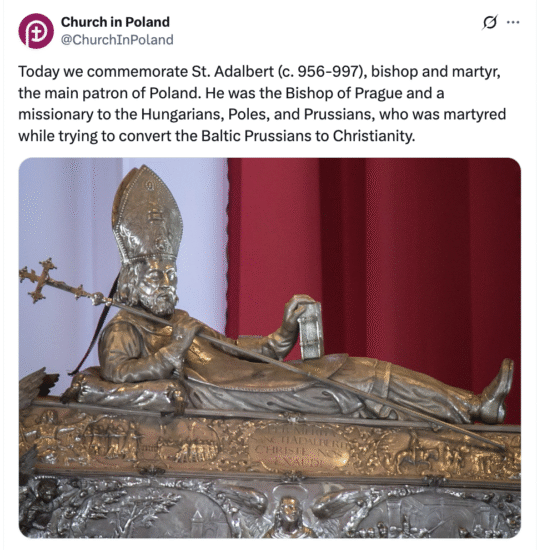
The swift canonisation of Adalbert and the subsequent support of Pope Sylvester II played a crucial role in securing greater autonomy for the Polish Church. Building on the already established missionary bishopric in Poznań, Bolesław oversaw the founding of additional episcopal sees in Kraków, Wrocław, and Kołobrzeg – laying the foundations for an independent ecclesiastical structure within the emerging Polish state.
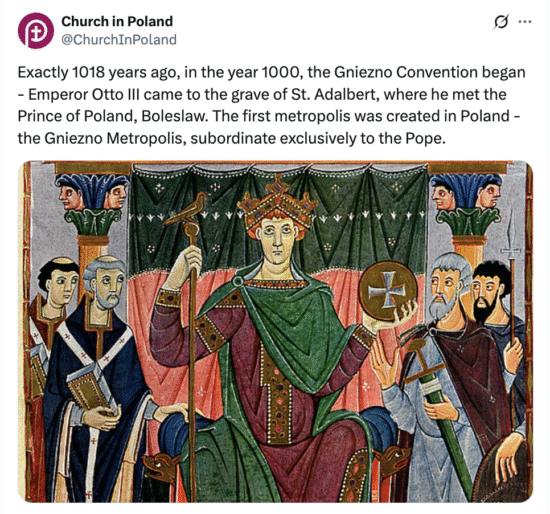
In the year 1000, the Holy Roman Emperor Otto III paid homage to the grave of St. Adalbert, who was also his personal friend and mentor. It is believed that during that visit, which in Poland is called the Congress of Gniezno, Bolesław’s future coronation was approved.
The first Polish chronicler, Gallus Anonymus, described the events in Gniezno:
“Bolesław received him with all the honour due to a king, to a Roman Emperor and most distinguished guest. For the Emperor’s arrival, he had prepared marvels beyond imagining. First came ranks of knights, arrayed in splendid formation, followed by nobles stationed like choirs upon a great plain. Each contingent stood apart, distinguished by the unique colours of their garments.
Yet this was no gaudy display of common finery – the clothing was of the richest fabrics known anywhere in the world. In Bolesław’s time, neither knight nor courtly lady wore garments of linen or wool; instead, they were robed in cloaks of precious cloth. Even the finest furs, if worn at his court, were not shown unless lined with costly textiles and trimmed with gold fringe.
Gold, in those days, was as commonplace as silver is today, and silver as cheap as straw. So awe-inspiring was Bolesław’s wealth, power, and magnificence that the Roman Emperor, astonished, exclaimed: “By the crown of my empire! What I behold here exceeds all I have heard in a tale!”
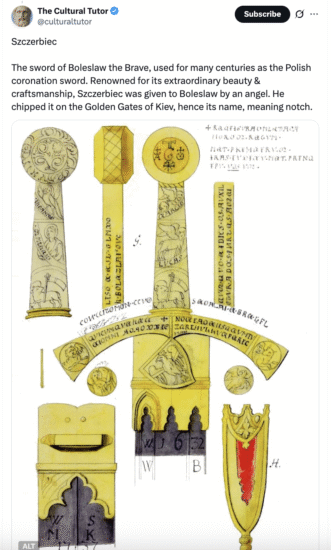
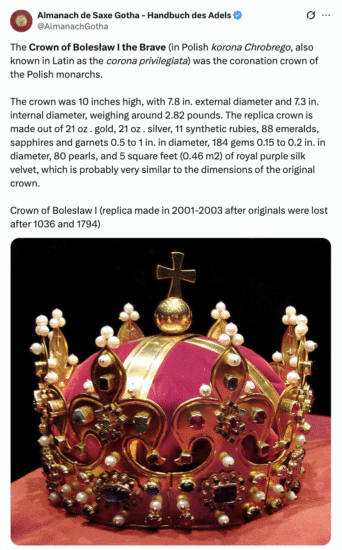
And, heeding the counsel of his nobles, he declared before all present: “It is not fitting to call such a man–so great and worthy-a mere duke or count, as though he were one among many. Rather, he must be raised to a royal throne and crowned as king.”
It was another great triumph for Bolesław. He was granted the right to appoint the archbishop and bishops, as well as to govern and distribute any lands he might in future conquer for Christendom. He was recognised as a “brother and co-worker of the Emperor” and as an “ally of the Roman people.”
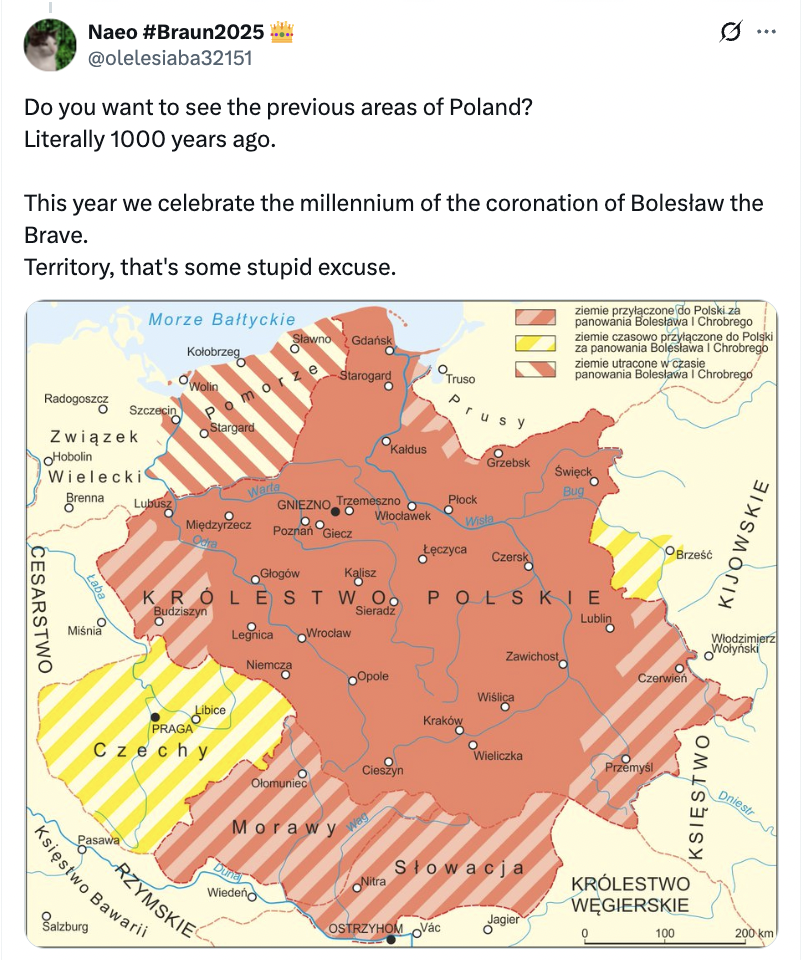
The time of good relations between Poland and the Holy Roman Empire ended shortly, and turned into many wars with its predecessor, Henry II. Bolesław will lead many campaigns and defensive wars against the Germans until Henry died in 1024.
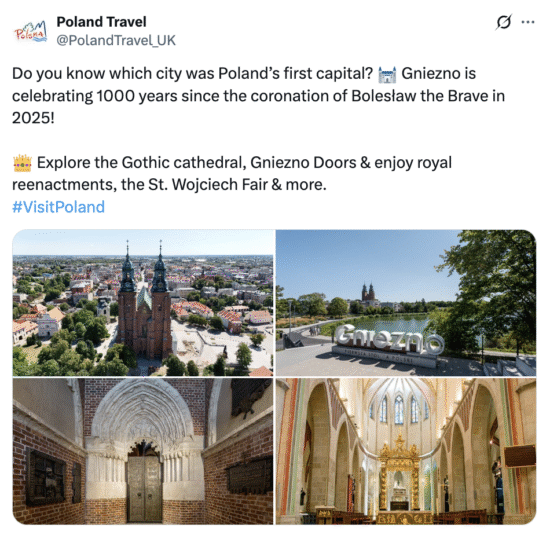
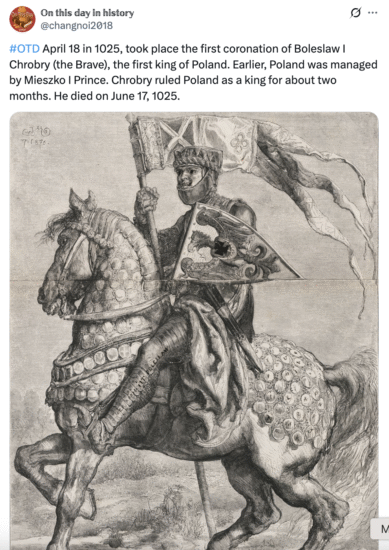
The culmination of Bolesław’s efforts took place on Easter, 18 April 1025. This date is widely accepted by historians as the day of Bolesław the Brave’s royal coronation.
“To strengthen his position among the nobility, including those dissatisfied with the prince’s centralising policies, Bolesław the Brave took advantage of the death of Emperor Henry II and had himself crowned King of Poland in Gniezno in 1025. The coronation symbolised the Polish ruler’s elevation within the feudal hierarchy of Europe. It also marked a promotion for the Polish state itself, signifying its recognition as equal to other sovereign nations. Poland became a kingdom – a political entity of a higher order, according to the political thought of the time. Regardless of the kingdom’s shifting fortunes, this moment laid the foundations for a sense of identity and self-worth among its people,” said Prof. Henryk Samsonowicz.
“The coronation of Bolesław himself elevated both him and his descendants above the rest of society, including members of lesser-known branches of the Piast dynasty. It is worth emphasising that although Conrad II and those close to the German court reacted with outrage to both royal coronations—that of Bolesław and later of Mieszko—even circles generally sympathetic to the Piasts, such as the Abbey of St Michael in Bamberg (a beneficiary of Mieszko II’s patronage), appeared unwilling to acknowledge what they saw as an undeserved royal title. Nonetheless, the German side did not, at any point, challenge the legality of the 1025 coronations—neither that of the father, nor the son,” noted Prof. Jerzy Strzelczyk.
Bolesław the Brave was most probably crowned in Poznań, which was the place with the most significant church building in Poland at the time. He was crowned by Bishop Hipolit, but interestingly, there are not many sources to describe that fact.
The Polish court most probably believed that the true coronation was concluded during Emperor Otto’s visit to Poland in the year 1000.
Source: Dzieje.pl
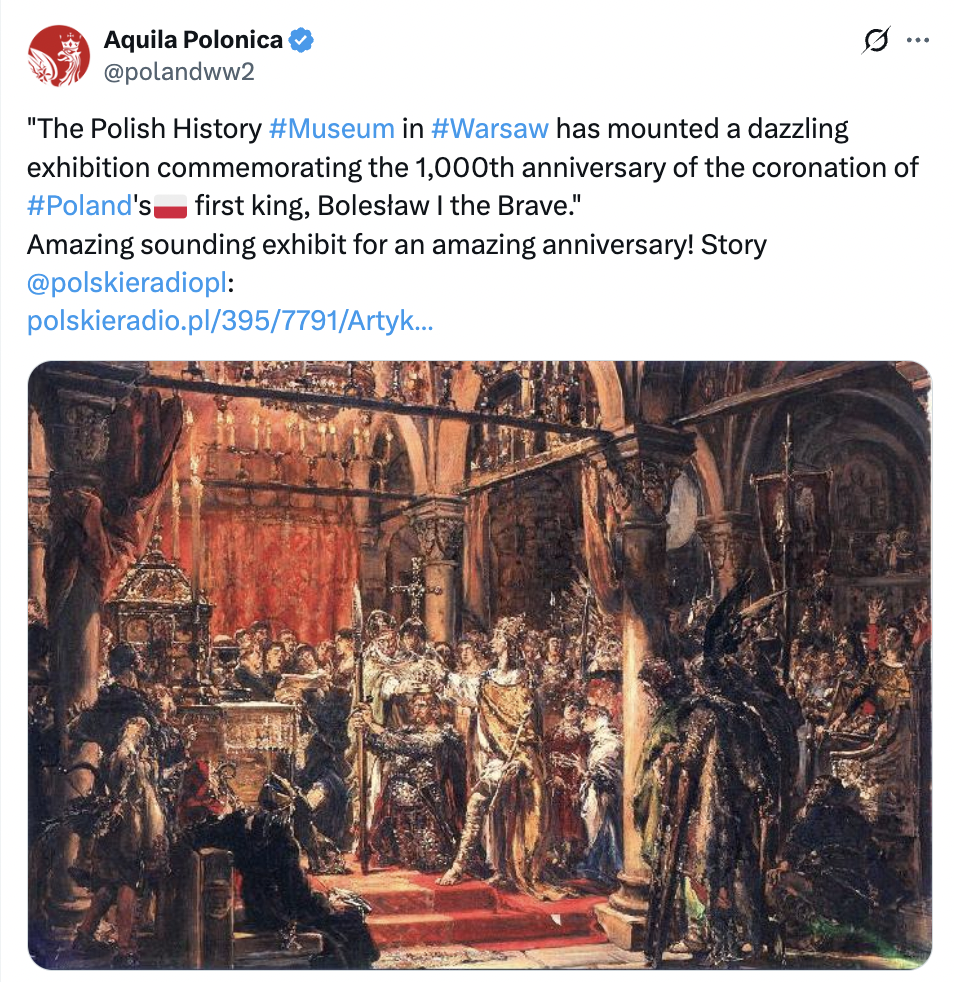
Photo: Ewa Suchodolska, Marek Wrede, „Coronation of the first king”, Jan Matejko, Royal Castle in Warsaw
Tomasz Modrzejewski