This weekend, Poland is commemorating one of the major events of the 19th century as far as the country is concerned: the January Uprising.
https://twitter.com/PolandMFA/status/1617056091178782721?s=20&t=qSEpEOhINbIJyeTWlj0YcQ
Polish President Andrzej Duda paid tribute to Poland’s freedom fighters of 1863-1864, together with his Lithuanian counterpart Gitanas Nauseda. He underlined that this historical insurrection is of major importance not only to Poles, but also to Lithuanians, Belorussians, and Ukrainians, who were all part of the Polish-Lithuanian Commonwealth and jointly fought against the tsar’s authoritarianism. https://twitter.com/RzecznikMSZ/status/1617091075184656386?s=20&t=qSEpEOhINbIJyeTWlj0YcQ
The January Uprising (1863-1864) took place in a particular historical context. At the time, Poland had been wiped out of the map by its belligerent neighbours for over 70 years. The overwhelming majority of what once was the Polish-Lithuanian Commonwealth fell under Russian control.
Minister @wkolarski dla #PAP: Prezydent @AndrzejDuda wraz z Prezydentem Litwy @GitanasNauseda w poniedziałek w Warszawie upamiętnią 160. rocznicę wybuchu Powstania Styczniowego. To wydarzenie będzie przesłaniem o potrzebie solidarności w obliczu rosyjskiej agresji na Ukrainę. pic.twitter.com/mJ2y19Nnji
— Kancelaria Prezydenta (@prezydentpl) January 21, 2023
The tsar not only wanted to make Poland his own. He ambitioned to destroy Poles as a nation, with their culture, traditions, and language. In these times, attempts to change the Polish alphabet from Latin to Cyrillic were even undertaken. To do so, all the already numerous Polish literature would need to be re-written with the alphabet used in the Orthodox world. This attempt failed miserably, but shows how determined the Russians were to annihilate the Polish soul.
Painters of the January Uprising https://t.co/LkkLMMOCId pic.twitter.com/wNCeixufIY
— Wojtek44 (@Wojtek_44) January 21, 2023
The January Uprising was not the first time that Poles organised and rebelled against the Russian occupier. They did so in 1794, then in 1830-1831. This time, their determination was even stronger, despite the fact that as many as 200,000 Russian soldiers were on Polish soil at the time. In today’s proportions, that would mean largely over a million Russian troops…
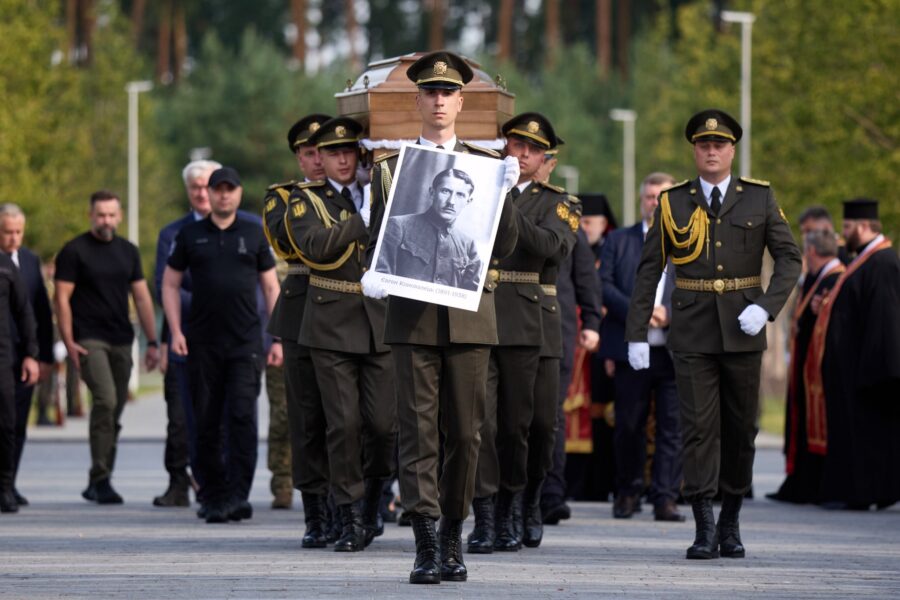
Poles, Ukrainians and Lithuanians jointly commemorated the 160th anniversary of the January Uprising – at the Kyiv Fortress, where the freedom fighters were imprisoned by the tsarist Russia. https://t.co/wQMnNj8lVF
— Bartosz Cichocki (@B_Cichocki) January 21, 2023
Nevertheless, a whole underground state was organised, and Polish freedom fighters clashed for one and a half year with the tsarist forces in what was mainly guerilla warfare. An estimated 1,200 battles were fought between the insurgents and Moscow’s troops. Poles managed to win back some cities here and there, but the war seemed lost before it began.
Despite all the goodwill and efforts of Poland’s courageous patriots, this remarkably long display of resistance to oppression ended in a disaster. It was eventually crushed by the Russians with such brutality that Poland would need to wait over half a century to observe the potentiality of regaining freedom. Romuald Traugutt, the leader of the Uprising, was executed along with members of the illegal Polish National Government.
160 years have passed since these tragic events. However, they resonate with us in a special way, given the ongoing war in Ukraine. Indeed, the oppressor didn’t change in the meantime. Russia is still imposing its will by force. Moscow’s plans are easily relatable to the reality of the 19th century. Up until this day, the Kremlin knows no other way than the use of violence to subordinate its neighbours.
Image: The Insurgent’s Arrest, Stanisław Masłowski, oil on canvas, 1910, photo: the National Museum in Warsaw
Author: Sébastien Meuwissen