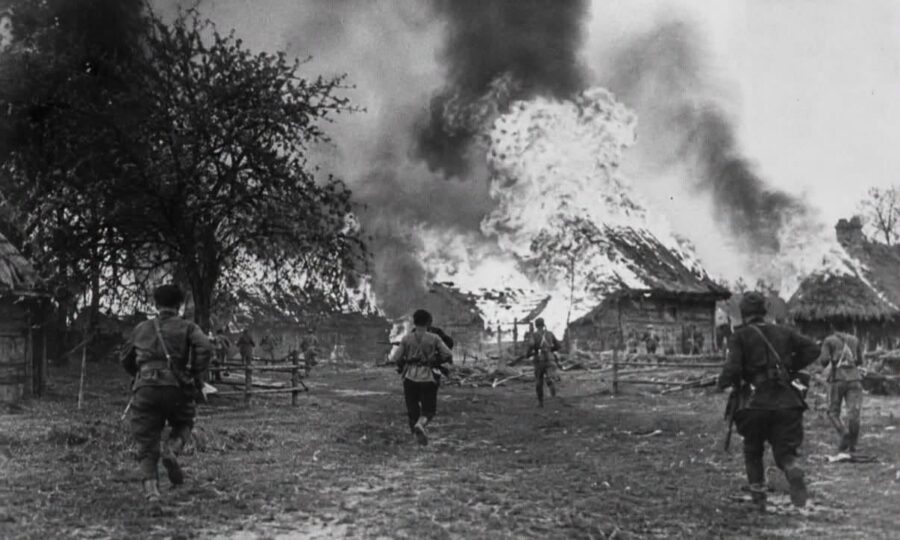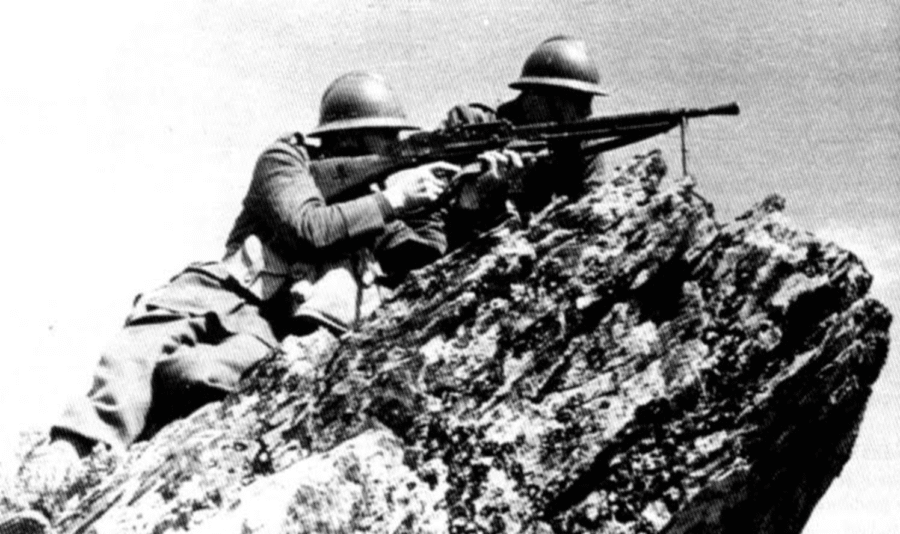
In May 1940, Polish forces played a decisive role in the Allied campaign in Norway, culminating in the Battle of Narvik—the first major Allied victory of the Second World War. The Independent Podhale Rifle Brigade fought alongside British and French troops in brutal Arctic conditions to dislodge German forces from the strategically vital port. At sea, Polish destroyers supported the land offensive and faced deadly Luftwaffe attacks. Though ultimately withdrawn due to the deteriorating situation in France, the Polish contribution to the battle was significant, courageous, and remains a powerful testament to their commitment to the Allied cause.
The German invasion of Norway and the port city of Narvik came as a profound shock. “How in God’s name could it happen that most of the troops in Narvik were caught completely off guard, asleep in their beds?” Norwegian soldier Captain Gudleif Holmboe recalled.
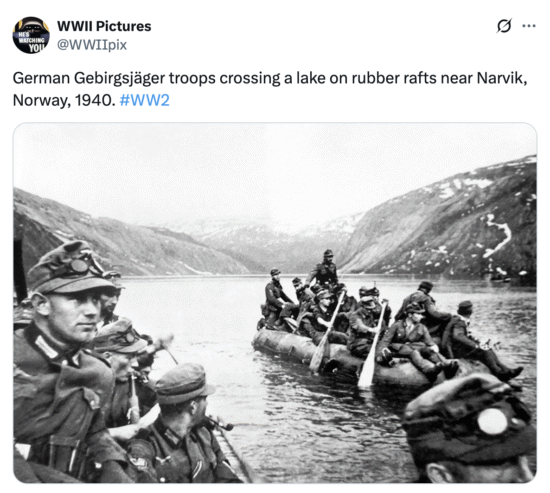
Scandinavia held little strategic interest for Adolf Hitler at the outset of the war. His focus remained on the West, preparing for a major offensive against France, Belgium, and the Netherlands. Early invasion plans—dubbed Studie Nord—envisioned a broad assault along the Norwegian coastline, from Oslo in the south to Tromsø in the north.

These plans were first presented on 20 January 1940, but the Wehrmacht’s command received them with scepticism.
“The generals believed the occupation of Norway was simply too risky. Nonetheless, Grand Admiral Raeder continued to press the case, warning that Britain was likely to make a move in Scandinavia,” notes historian Asbjørn Jaklin.
Just a week later, Hitler issued a directive to establish a special task force to turn Studie Nord into a factual invasion strategy. The resulting operation, codenamed Weserübung, would lead to one of the most dramatic early battles of the 2 World War.
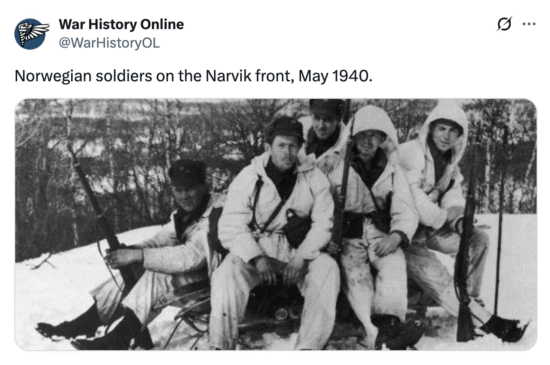
Around 10,000 Norwegian troops took part in the defence of Narvik.
“Shopkeepers, farmers and fishermen were sent to war armed with Krag-Jørgensen rifles—and they held their own in the fight against the enemy,” one contemporary account records.
They were joined by 25,800 Allied soldiers: 14,100 British and 11,700 French and Polish troops. The German force, roughly 6,000 strong, was eventually driven out of Narvik and pushed closer to the Swedish border.

On 13 April 1940, the Kriegsmarine suffered a devastating blow, losing ten destroyers in a fierce naval battle. Combined with other losses incurred during the Norwegian campaign, this severely crippled Germany’s naval capabilities.
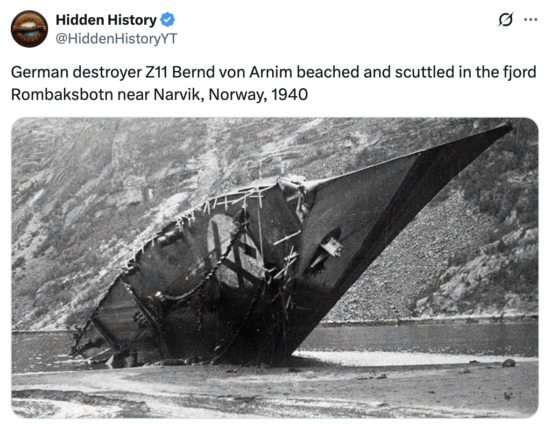
The consequences rippled far beyond Norway. As Winston Churchill later declared, “The German navy could no longer pose a threat at the time of the invasion of Britain.”
Churchill viewed the Norwegian campaign not merely as a regional conflict, but as a pivotal event in the broader course of the Second World War—one that reshaped Germany’s military strategy and helped alter the balance of power in Europe.
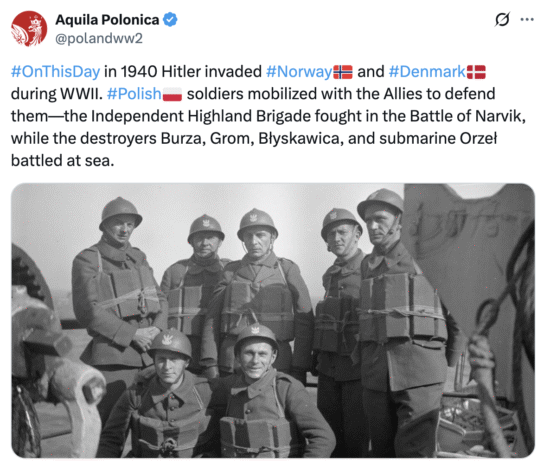
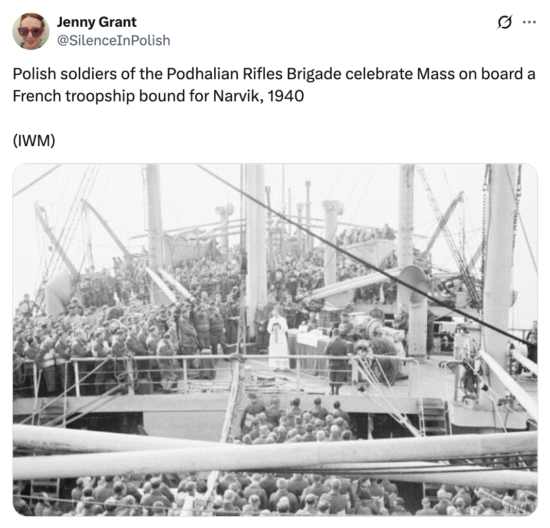
On 8 May 1940, the Independent Podhale Rifle Brigade landed in Norway to take part in the pivotal Battle of Narvik—a strategically vital, ice-free port above the Arctic Circle, through which iron ore from Sweden was shipped to Nazi Germany.
Following disembarkation in the Norwegian port of Harstad, the Polish units were swiftly deployed across the region: the 1st Battalion was sent to Skallen, the 2nd to the Melvik and Sørvik area, the 3rd was transported by sea to Ballangen, and the 4th moved via Salangen to Sagfjord aboard small coastal vessels. Initially, the Polish soldiers carried out reconnaissance missions and prepared for a coordinated assault on Narvik.
The main offensive began on the night of 27–28 May 1940, in a concentric attack by Allied forces. The Polish brigade launched its assault on German positions on the Ankenes Peninsula, separated from Narvik by the Beisfjord. The German defences were formidable—well-camouflaged, shielded by minefields, and backed by entrenched machine guns and mortars.
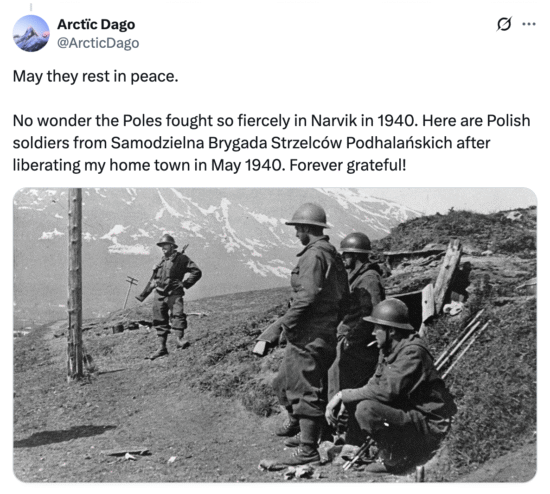
Despite the obstacles, the Poles captured Hill 275, though they were unable to hold it. The 1st Battalion then secured Hills 650 and 773, while the 2nd Battalion recaptured Hill 275 and advanced to the outskirts of Nyborg, prompting German forces to evacuate across the fjord to Narvik.
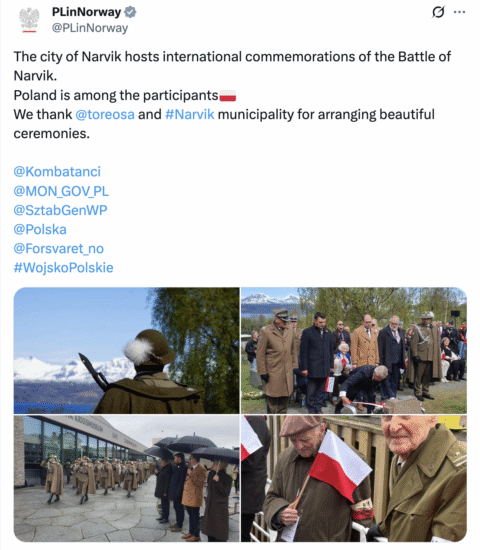
By 28 May, after fierce combat, Allied troops took control of Narvik, marking the first major Allied victory of the Second World War. Polish soldiers played a crucial role in this success, their determination and bravery earning them the respect of their British and French counterparts.
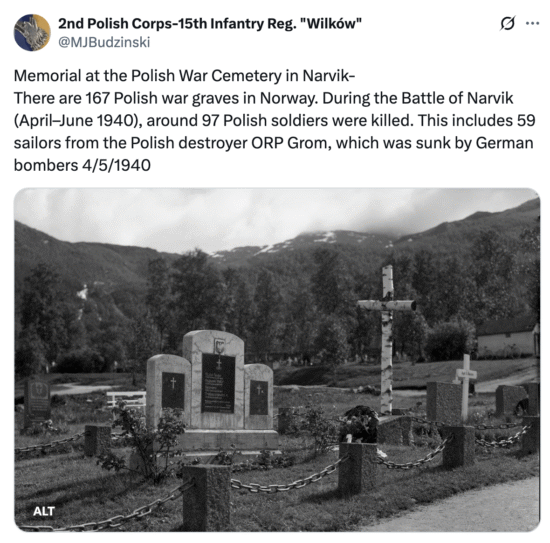
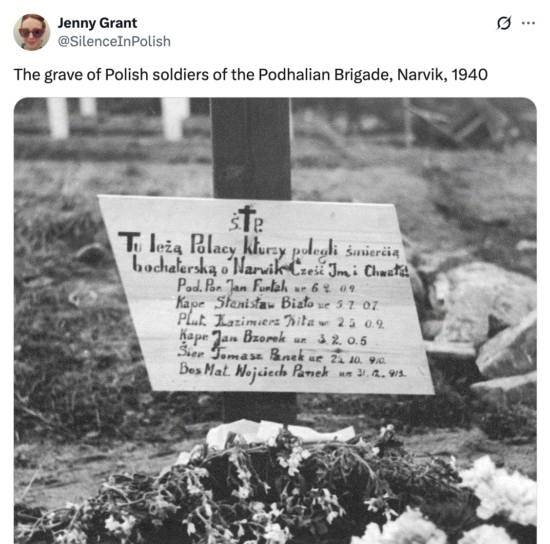
However, this hard-won victory was soon overshadowed by the worsening situation on the Western Front. Facing the collapse of France, the Allies made the painful decision to withdraw from Norway. The evacuation of the Podhale Brigade began on 3 June, and by 8 June, the last units—including Brigade Commander General Zygmunt Bohusz-Szyszko—departed for France. During the campaign, the brigade suffered 97 killed, 28 missing, and 189 wounded.
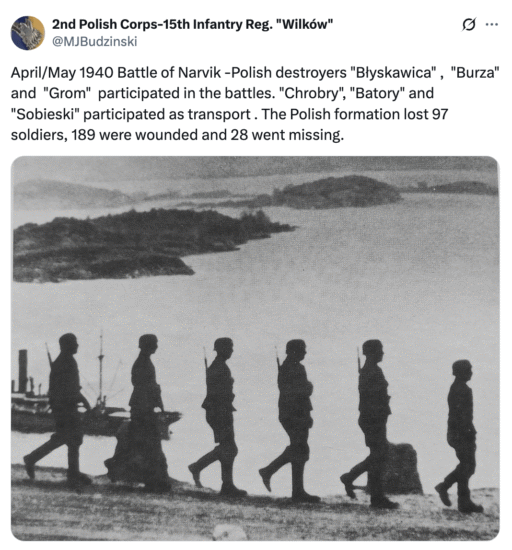
The land battle at Narvik was closely supported by the British Royal Navy—among its warships were three Polish destroyers: ORP Grom, Burza, and Błyskawica, which had been evacuated to Britain in the final days of August 1939.
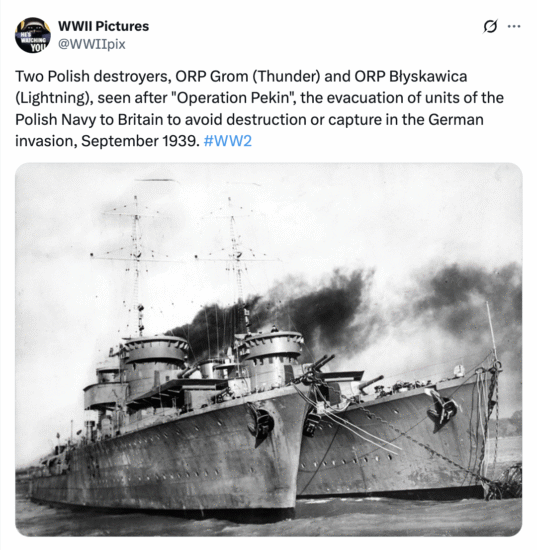
Tasked with patrolling the Norwegian coast and providing artillery support to ground forces, the Polish ships operated in perilous waters. ORP Błyskawica was damaged in combat, and her duties were assumed by Grom. Allied vessels were under constant threat from the Luftwaffe, and on one such air raid, tragedy struck.
On 4 May 1940, ORP Grom was hit by two aerial bombs and sank rapidly. Of her 213 crew, 59 perished.
Though often overlooked in mainstream histories, the contribution of Polish land and naval forces at Narvik was both courageous and consequential. Their sacrifice helped secure a critical, if short-lived, victory—and remains a proud chapter in the legacy of Poland’s wartime struggle.
Source: Dzieje.pl , IPN
Photo: IPN
Tomasz Modrzejewski