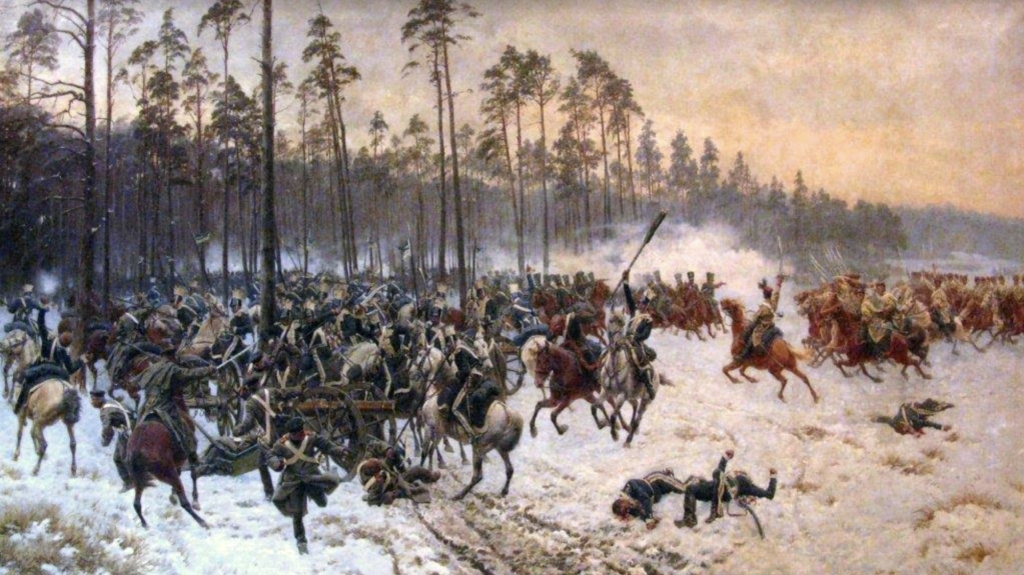
The Battle of Stoczek occurred within the broader context of the November Uprising (1830-1831) in the Kingdom of Poland, which was then part of the Russian Empire. This uprising was a pivotal event in Polish history and represented a concerted effort by freedom-loving Poles to regain their independence from Tsarist domination.
The roots of the November Uprising can be traced back to the aftermath of the Napoleonic Wars, during which Poland was divided and annexed by the neighbouring powers of Russia, Prussia, and Austria in a series of partitions that took place in the late 18th century.
In the early 19th century, discontent among the Polish population continued to simmer as Russian control over Poland tightened, accompanied by policies aimed at Russification and suppression of Polish culture and language under the authoritarian rule of Tsar Nicholas I.
The Battle of Stoczek unfolded as one of the decisive engagements of the November Uprising. Stoczek, a small village northeast of Warsaw. Its proximity to the Polish capital made it a crucial battleground in the conflict between Polish insurgents and Russian forces. Controlling Stoczek meant gaining access to key supply routes and potentially influencing the course of the wider military campaign.
Polish insurgents, led by General Jan Skrzynecki, faced a significant numerical disadvantage against the Russian army commanded by General Hans Karl von Diebitsch. Despite being outnumbered and outgunned, the Polish rebels mounted a determined defence.
The battle ultimately ended in defeat for the Polish insurgents, highlighting the formidable challenges they faced in their struggle for independence. However, the spirit of resistance displayed at Stoczek and similar acts of bravery throughout the uprising inspired several uprisings to come (1863, 1944,1956,…).
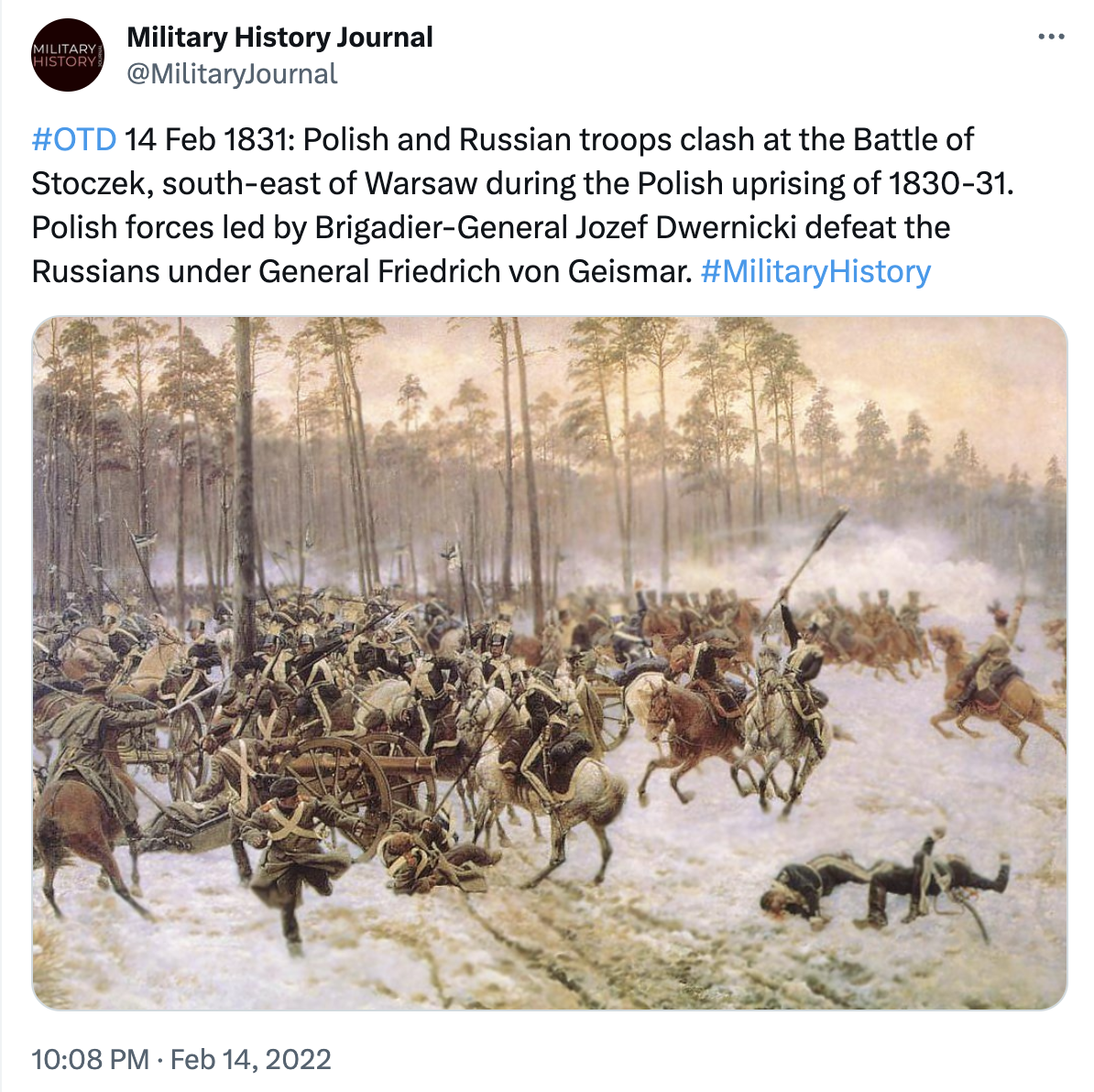
Image: X (@PortalHistory)
Author: Sébastien Meuwissen