After the Soviet aggression against Poland on 17 September 1939, some 250,000 Polish prisoners of war, including more than 10,000 officers, were taken prisoner by the Soviets. As early as 19 September 1939, Lavrenty Beria established the Board for Prisoners of War and Internees at the NKVD and ordered the creation of a network of camps. The aim was to gather the members of the Polish elite and murder them.
By late February 1940, more than 6,000 Polish police officers and personnel from similar services, along with over 8,000 army officers, were held captive in Soviet-run camps. Among the detainees were numerous reserve officers conscripted at the outbreak of the Second World War, many of whom belonged to Poland’s pre-war intelligentsia — doctors, lawyers, academics, engineers, writers, journalists, civil servants, and landowners.
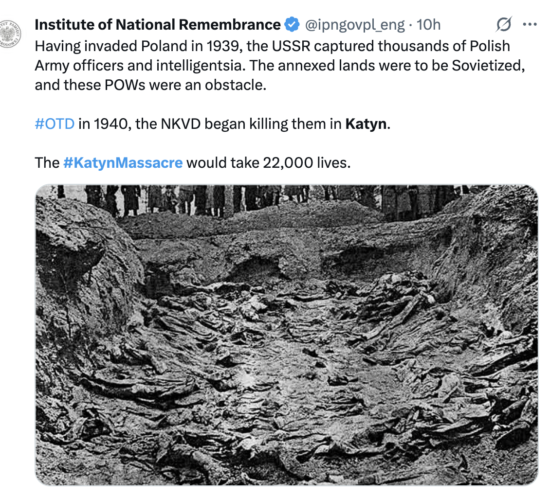
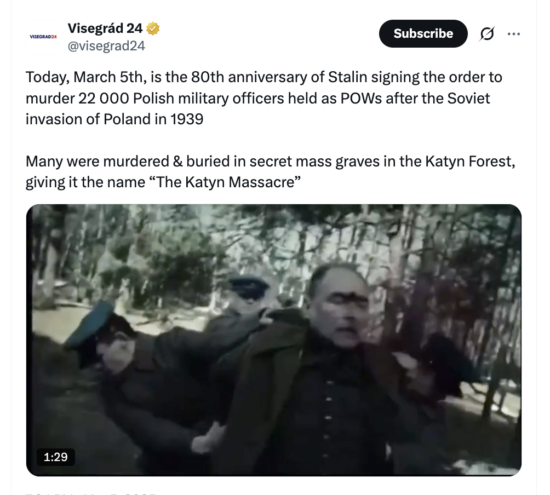
The fate of these prisoners was sealed in the uppermost circles of Soviet power. On 5 March 1940, the Politburo of the Central Committee of the Communist Party of the Soviet Union authorised the mass execution of Polish prisoners of war held at Kozelsk, Starobielsk and Ostashkov, as well as thousands of civilians imprisoned by the NKVD in the eastern territories annexed by the Soviet Union.
This decision followed a chilling memorandum from Lavrenty Beria, the head of the NKVD, who labelled the Polish prisoners as „hardened enemies of Soviet authority, beyond the prospect of reformation.” His recommendation was stark: execution without trial.
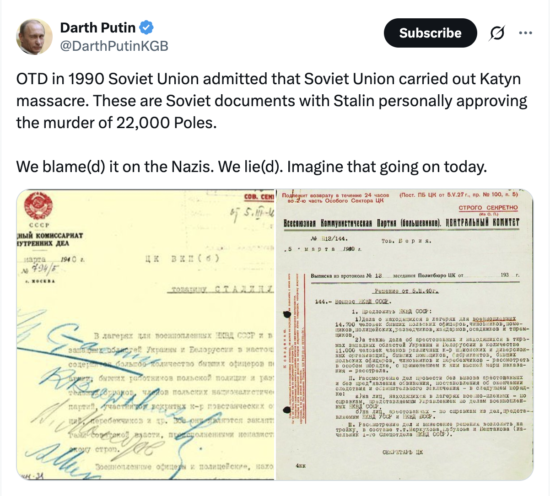
The systematic killings commenced in early April 1940. On 3 April, executions began at Kozelsk, followed shortly by those at Starobielsk and Ostashkov.
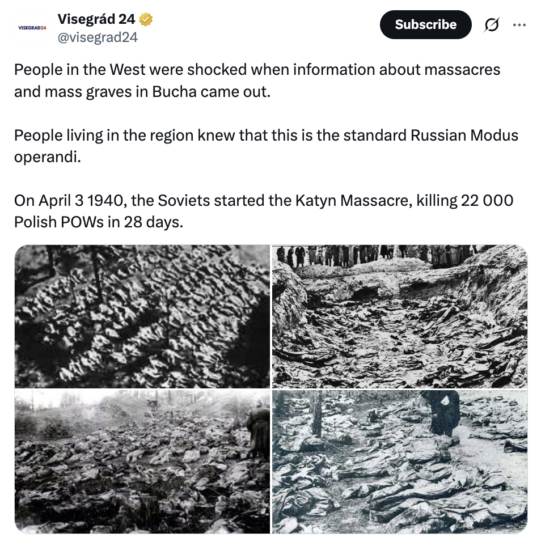
From Kozelsk, 4,404 men were transported to the Katyń Forest and executed with a shot to the back of the head. At Starobielsk, 3,896 were murdered in NKVD facilities in Kharkiv and buried in mass graves in Pyatichatky. In Kalinin (now Tver), 6,287 men from Ostashkov were executed and interred in nearby Mednoye. In total, 14,587 Polish prisoners were killed under this secret order.
Further atrocities were committed against approximately 7,300 Poles imprisoned in Soviet-annexed territories. In Ukraine, 3,435 were executed—many likely buried in Bykovnia near Kyiv—while around 3,800 were killed in Belarus, their remains thought to lie in Kuropaty near Mińsk.
 While these crimes were unfolding, a parallel tragedy was inflicted on the families of the victims. On the night of 12–13 April 1940, thousands were forcibly deported deep into the Soviet Union, part of a broader campaign to erase the Polish elite.
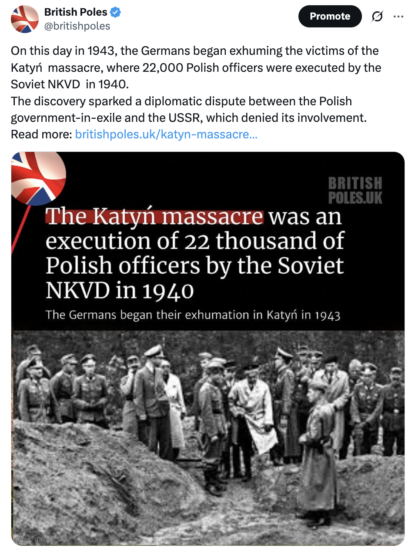
The massacre remained hidden until 13 April 1943, when Nazi Germany announced the discovery of mass graves in the Katyn Forest — a date now observed as the symbolic anniversary of the crime. The Soviet response was swift and accusatory. Two days later, the Soviet Information Bureau claimed that the Polish officers had been captured by the Germans in 1941, after the Soviet withdrawal from Smolensk, and murdered by German forces.
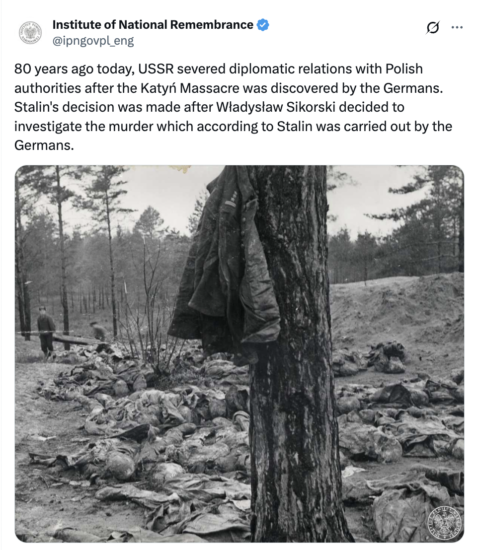
On 17 April, the Polish government-in-exile filed a formal protest to the International Committee of the Red Cross, having learned that the Germans had already made a similar request for investigation. Rather than engage with the inquiry, Moscow used the Polish appeal as a pretext to sever diplomatic ties with the London-based government-in-exile.
Stalin escalated the dispute further. On 21 April, he sent secret messages to President Roosevelt and Prime Minister Churchill, accusing the Polish government of collaborating with Hitler in a hostile campaign against the USSR. On the night of 25–26 April 1943, the Soviet Union officially broke off relations with the Polish government-in-exile.
In 1945, at the Nuremberg Trials, the Soviets attempted to pin the Katyn atrocity on the Nazis, incorporating the massacre into the indictment of German war crimes. However, due to a lack of evidence and international scepticism, the Tribunal excluded the charge from its final verdict in 1946.
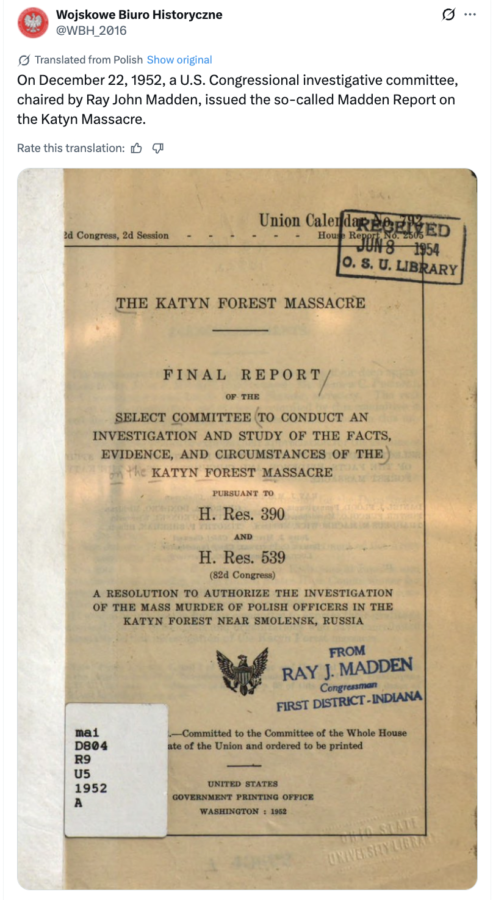
Soviet and communist propaganda continued to assert German responsibility for decades. Until 1956, Poland’s communist authorities referred to Katyn as a “perfidious German provocation.” During the Cold War, the United States House of Representatives established the Madden Committee (1951–52) to investigate the massacre. The committee’s findings left no room for doubt: the Soviet NKVD had committed the mass executions.
In response, a massive propaganda campaign was launched across the Eastern Bloc, reaching its peak in Poland. Meanwhile, efforts to uncover the truth persisted in the West. In the UK during the 1970s, journalists and Polish émigrés, including author Louis FitzGibbon, sought to raise awareness of the atrocity. BBC broadcasts and a series of books reignited international interest.
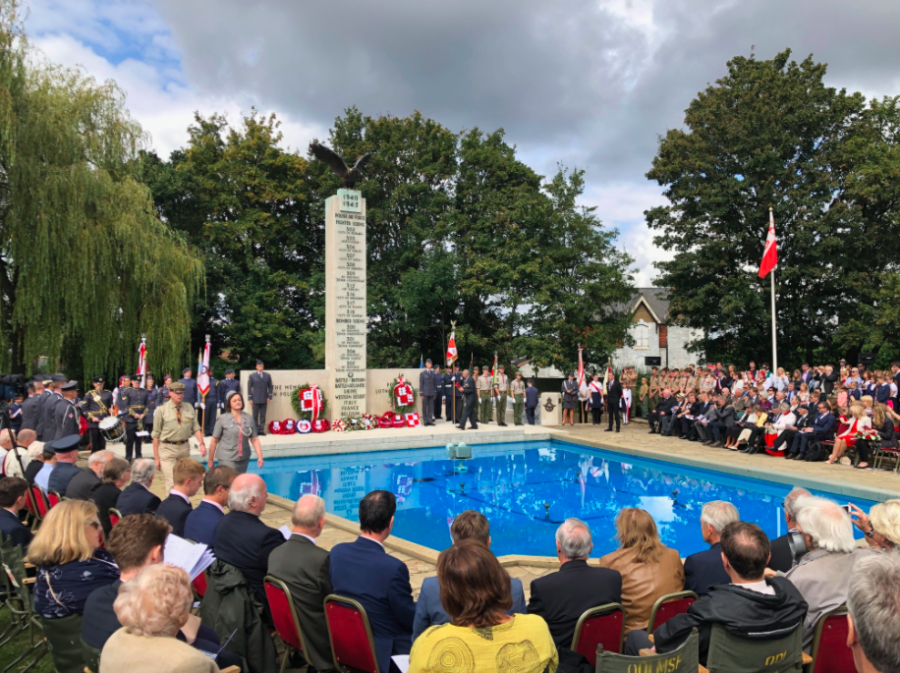
These efforts triggered official Soviet backlash. Moscow issued a formal démarche to the British Foreign Office, defending the Soviet narrative. The unveiling of a memorial in London to the Katyń officers on 18 September 1976, which directly implicated the USSR, was met with fury in both Moscow and Warsaw.
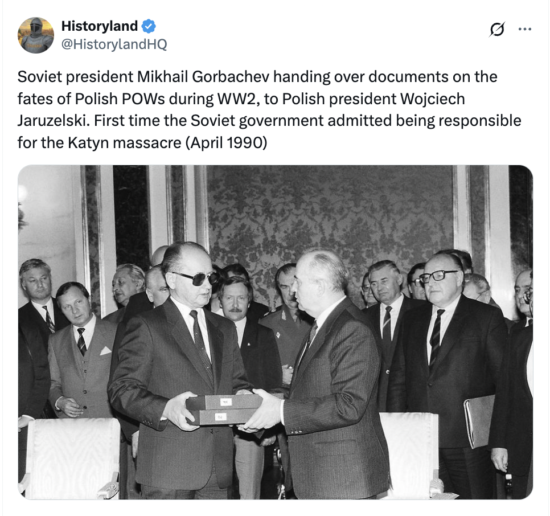
It must be noted that in the aftermath of the war, both the UK and US governments tacitly accepted the Soviet version of events as part of a broader policy of appeasement.
The disinformation campaign continued into the 1980s. Soviet-constructed monuments in Katyn (1983) and in Poland (1985) still named the perpetrators as “German fascists.” Yet, many Poles never accepted this version, and collective memory preserved the truth.
One of the most striking protests came on 21 March 1980, when Walenty Badylak, a veteran of the Polish Home Army, set himself alight in Kraków’s Main Square to protest the silence and lies surrounding Katyn.
Boris Yeltsin, the first President of the Russian Federation, formally acknowledged Soviet responsibility for the Katyn massacre and expressed regret in 1992.
An official apology came only in 2000, when President Aleksander Kwaśniewski publicly expressed regret for the role of communist authorities in perpetuating the Katyn lie.
Source: IPN, Dzieje.pl
Photo: @ipngovpl_eng
Tomasz Modrzejewski