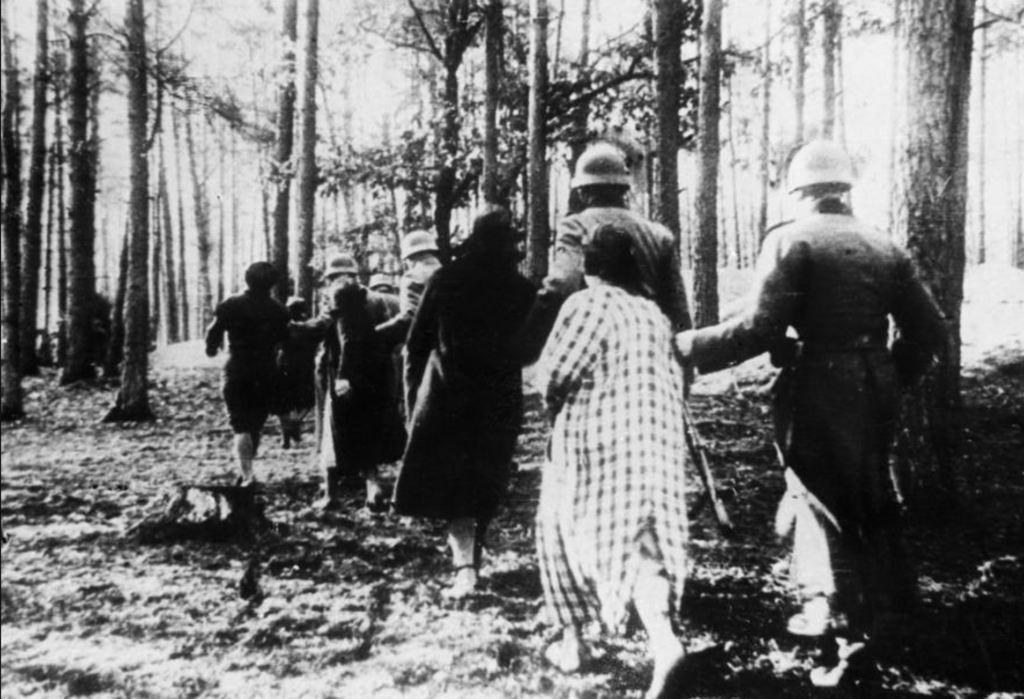
On 20-21 June 1940, nearly 400 people were killed in a large execution carried out by the Germans, in Palmiry near Warsaw. This horrific event stands as one of the worst massacres of the Polish intelligentsia during the German occupation.
This execution was the largest in Palmiry, claiming the lives of many prominent social and political activists, journalists, doctors, lawyers, and priests. Among the victims were the well-known socialist activist and editor of „Robotnik”, a long-time member of the Polish Parliament, Mieczysław Niedziałkowski, or the president of the People’s Party and Speaker of the Parliament, Maciej Rataj.
This list also includes the gold medallist in the 10,000 metres run at the 1932 Los Angeles Olympics, Janusz Kusociński. The outbreak of World War II interrupted Kusociński’s sports plans. The athlete volunteered for the Polish army, he fought as a corporal in the machine gun company of the 2nd battalion of the 360th Infantry Regiment. He was awarded the Cross of the Brave for his participation in the fights in defence of Warsaw, during which he was wounded twice.
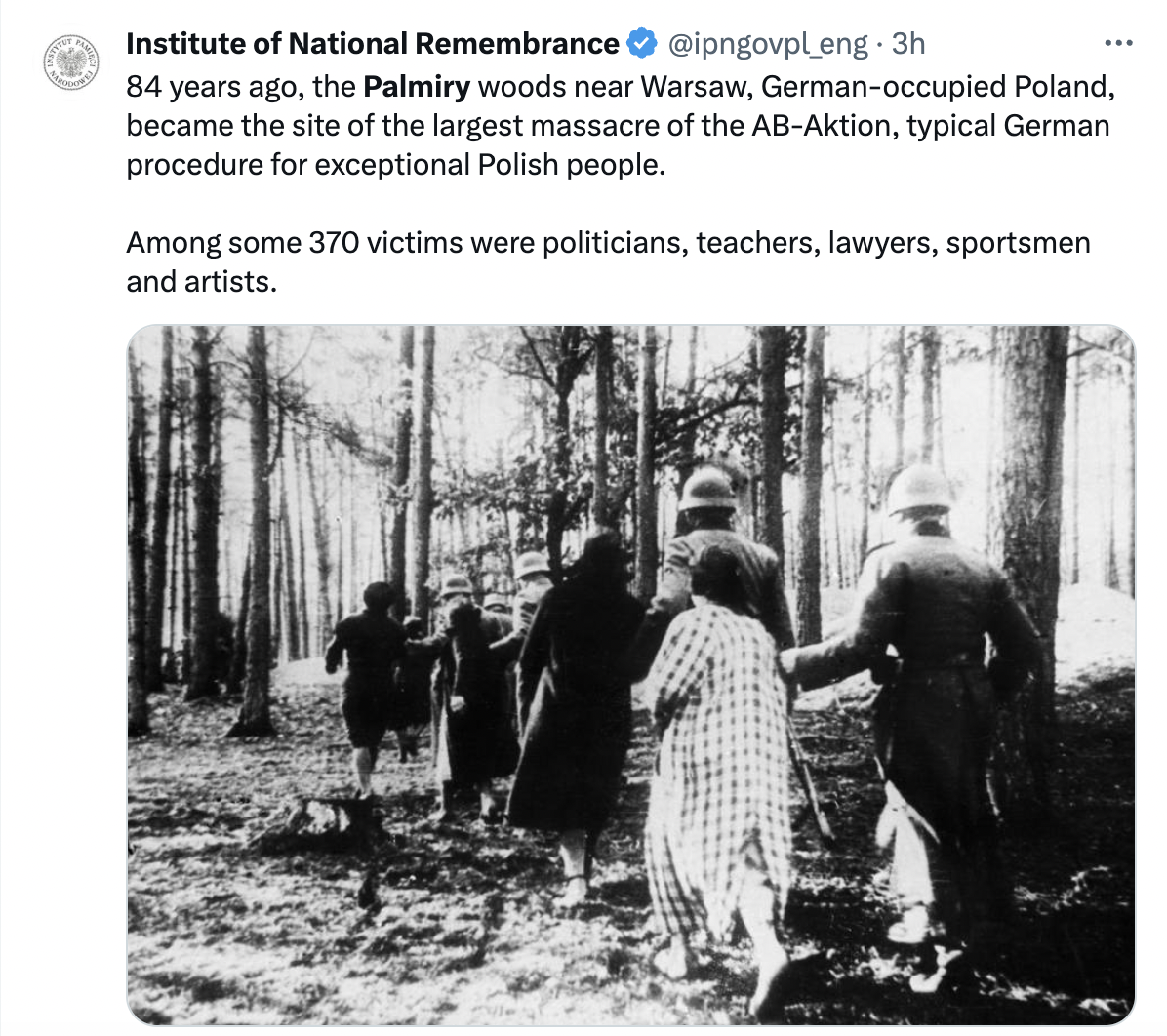
The Germans initiated a series of mass executions of civilians in early December 1939. Executions also took place in other parts of the Kampinos Forest, including Wólka Węglowa, Laski, and the Łużyckie Dunes. The last of these occurred in 1943.
Palmiry was not chosen as a place of execution by chance. Before September 1939, the Kampinos forests housed the Polish Army’s ammunition depots. Part of the area was fenced with barbed wire and closed to outsiders. The Germans deemed it an appropriate location for mass shootings.
Grave pits were usually dug by young people from the nearby Hitler Youth camp. The bodies were covered with earth and sand because the executions typically took place at the foot of the dunes. Trees were planted, and the area was camouflaged with underbrush and leaves. Trenches resembling anti-aircraft ditches were also dug.
During the days of execution, the area was surrounded by the SS and police. Polish forest workers were forbidden to approach the sites of execution. The executions were mainly carried out by SS and Security Police (Sipo) units. The executions were overseen by the SS and police commander for the Warsaw district, Josef Meisinger. He was sentenced to death in Warsaw in March 1947.
Polish foresters played a crucial role in identifying the execution sites. They marked these locations with crosses carved into the bark of nearby trees and embedded bullet casings in the trees. After the war, the Red Cross conducted exhumations at these sites.
At the cemetery-mausoleum established in 1948, the remains of 2,115 victims exhumed from the Kampinos and Chojnów forests are buried. Hundreds of bodies haven’t been identified until this day and most of the German peratrators of this massacre never faced responsibility, not to mention any punishment.
Author: Sébastien Meuwissen
Photo: IPN