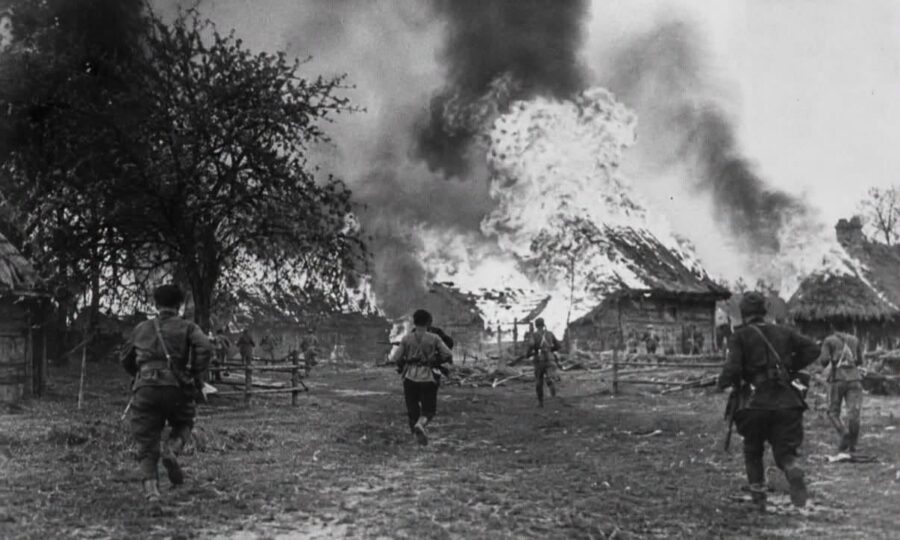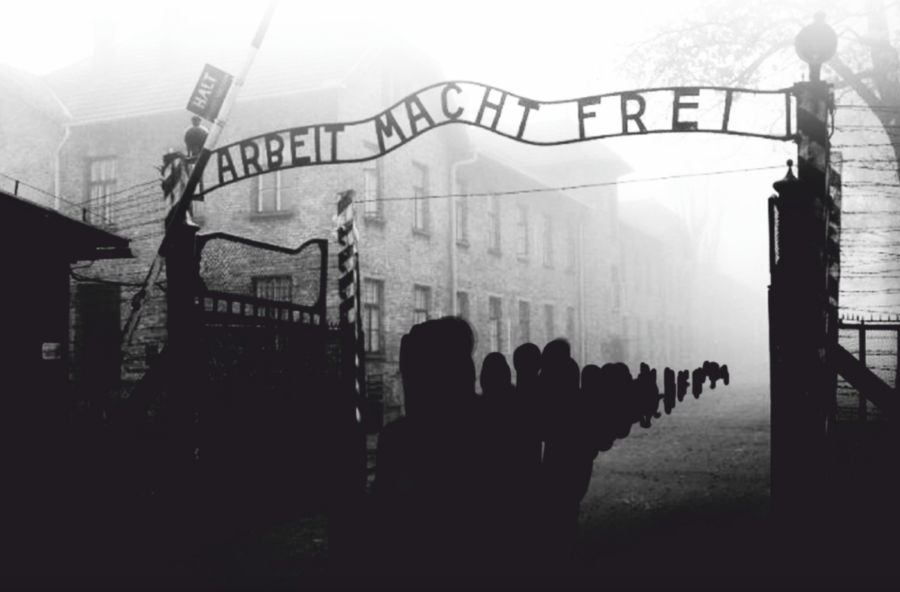
80 years ago in 1945 columns of people tormented with famine, torture and illness marched through the city of Gliwice in Silesia. According to the local witnesses of one of the Death Marches of Auschwitz prisoners, 30 people died during their walk through Rolnicza Street. An estimated 56 000 were forced to leave Auschwitz in Death Marches. Some sources claim that 15,000 people died along their route.
The Death March of Auschwitz prisoners moved through the Bojków district of Gliwice on 19-21 January 1945.
The memorial features sculptures of wooden shoes the prisoners was forced to use during their time in the German death camp. It is complemented by barbed wire and white and blue origami birds, in the colours of the stripes, created by children from Primary School No. 8 in Gliwice-Bojków.

The number of the birds is the symbolic 30 representing those who died on the eyes of the local population.
In mid-January 1945, thousands of Auschwitz prisoners, mainly Jews and Poles, were forced to evacuate on foot. Those unable to continue their march because of famine, disease or weakness were brutally murdered by German Nazi guards.
As Soviet troops approached Auschwitz 80 years ago, the Germans began a dramatic evacuation of the camp. From 19 to 21 January 1945, columns of emaciated prisoners passed through Schönwald.
The German association Schönwald’s Erben e.V. and the Bojków District Council, with financial support f the Haus Oberschlesien Foundation.
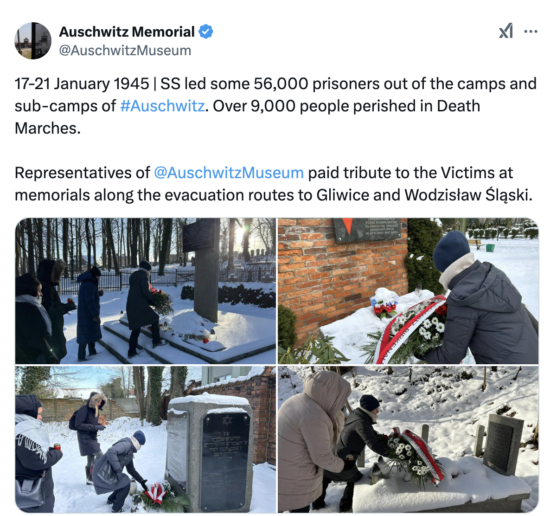
Polish and German delegations have been invited to the ceremony. The wreath was laid, among others, by a representative of the German Federal Archives (Bundesarchiv) and a representative of the State Parliament of North Rhine-Westphalia, a partner region of the Polish Silesia Voivodeship.
Similar commemoration observations were held in Oświęcim and other places that witnessed the tragic Death Marches for example Wodzisław Śląski.
Sources: Polskie Radio Katowice, Nowiny Gliwickie, Auschwitz Memorial
Photo: X @ipn_krakow
Tomasz Modrzejewski