According to historical sources, the date of the beginning of World War II is the date of the German aggression against Poland on 1 September 1939. 4.40 am and the air raid on Wieluń are the official time and place of the beginning of the German attack. Recent documents uncovered by the London history researcher Tomasz Muskus indicate that the first attack could have occurred almost 1.5 hours earlier.
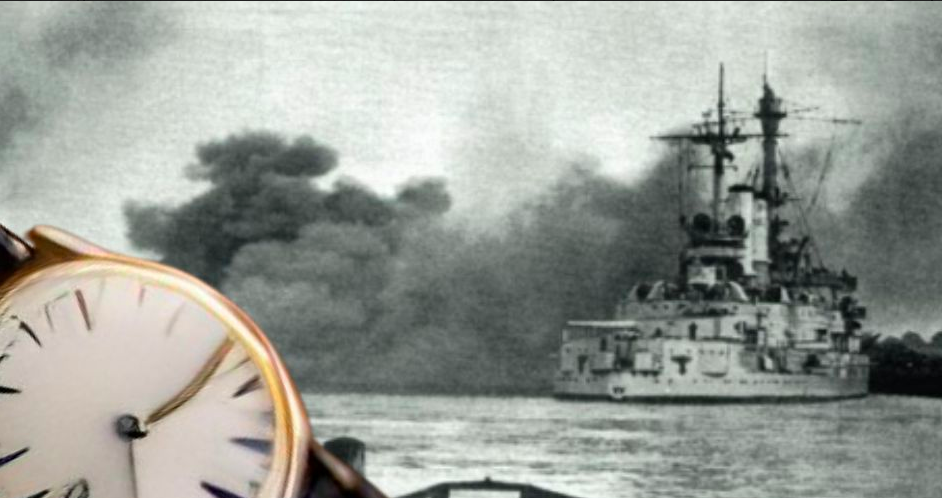
According to official data, the first German strike took place in Wieluń at 4.40 am, where German bombs fell on the sleeping city. This thesis is widely accepted in Poland. This attack is an example of the bestiality and unjustified terror of the German air force, which attacked civilians in the middle of the night. At that time, 75% of the city’s buildings, including the hospital, were destroyed. However, the most characteristic symbol of Germany’s attack on Poland was the attack on the Polish military depot in Westerplatte. It started at 4.45 am with shots being fired from the „Schleswig-Holstein” battleship, 5 minutes after the bombing of Wieluń.
Is it possible that the attack took place earlier?
Tomasz Muskus, a history researcher from London, found archival documents confirming that the first attack took place on the outskirts of Rybnik at 3.14 am, i.e. an hour and a half earlier. We turned to him with this question as he got to the documents indicating a different time and place than the official one. He replied: „I was examining the records of the Army of Kraków from 1 September 1939, which are in the archives of the Polish Institute and Sikorski Museum in London. During their analysis, I found telegrams from 1 September from individual border sections. To my surprise, I noticed on several of them that 3.14 am was presented as the time of the German attack on the outskirts of Rybnik. I was very surprised by this because, in public awareness, the first attack took place in Wieluń at 4.40 and at 4.45 on Westerplatte. Telegrams confirm that the first attack took place almost an hour and a half earlier. 30 German tanks and an infantry battalion took part in the attack, it was a great surprise for me, so I started looking further. I found the Polish translation of the 5th German Panzer Division, which was dated 1 September 3.45 am, which also confirmed my earlier discovery There were also more minor provocations near Rybnik, for example, at the Polish-German crossing in Stodoły (Stodoll in German, now a district of Rybnik – editor’s note), where the fake attack was taking place, while the 5th Armoured Division of the Wehrmacht was approaching the border. It was one of many German provocations. Hitler needed the pretext to launch a war.„

The disclosure of these telegrams aroused great interest among historians. World War II researchers who were unaware of the existence of such documents began to report to Tomasz Muskus. We asked him about further plans. „Various historians and journalists from Poland started writing to me, inspired by my discovery. I am happy to share my knowledge with them. I hope the topic will be continued and thoroughly researched by historians,” – he replied.
We publish both telegrams below. The first, with the reference number AII 9/21, indicates that the attack of 30 German tanks took place on the outskirts of Rybnik on 1 September at 3.14 am. Please click on the picture to enlarge it.

The second telegram informs that the Germans crossed the Polish border between 3.30-5 am.

Maria Byczynski
Translated by Sébastien Meuwissen
Pictures: The Polish Institute and Sikorski Museum in London
Main picture: IPN/British Poles