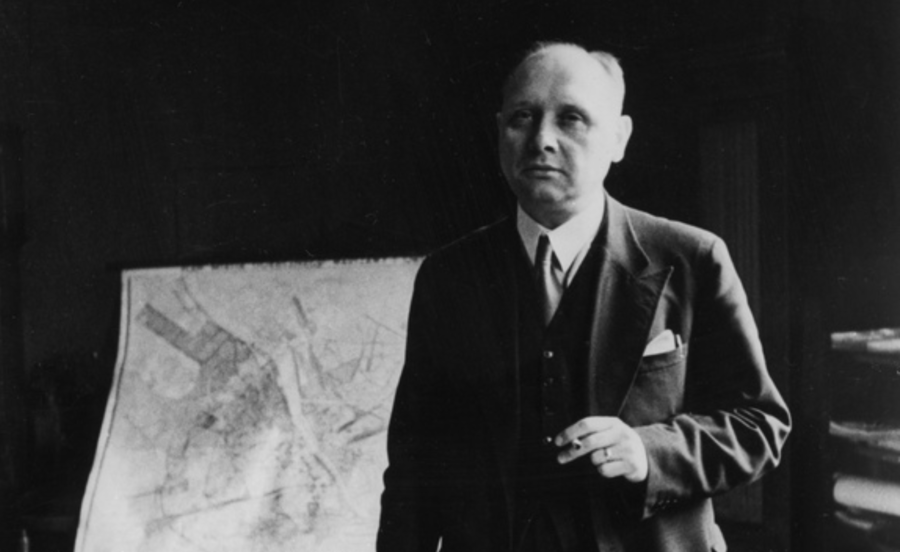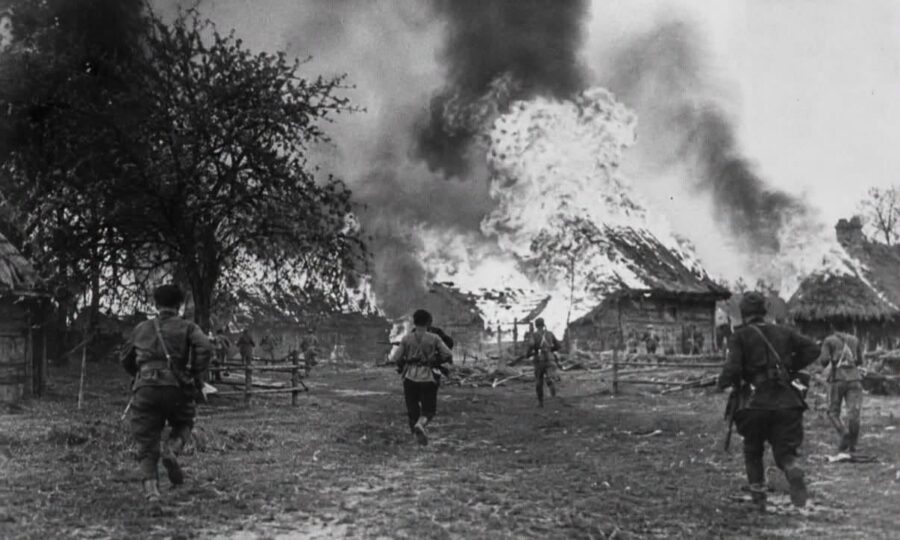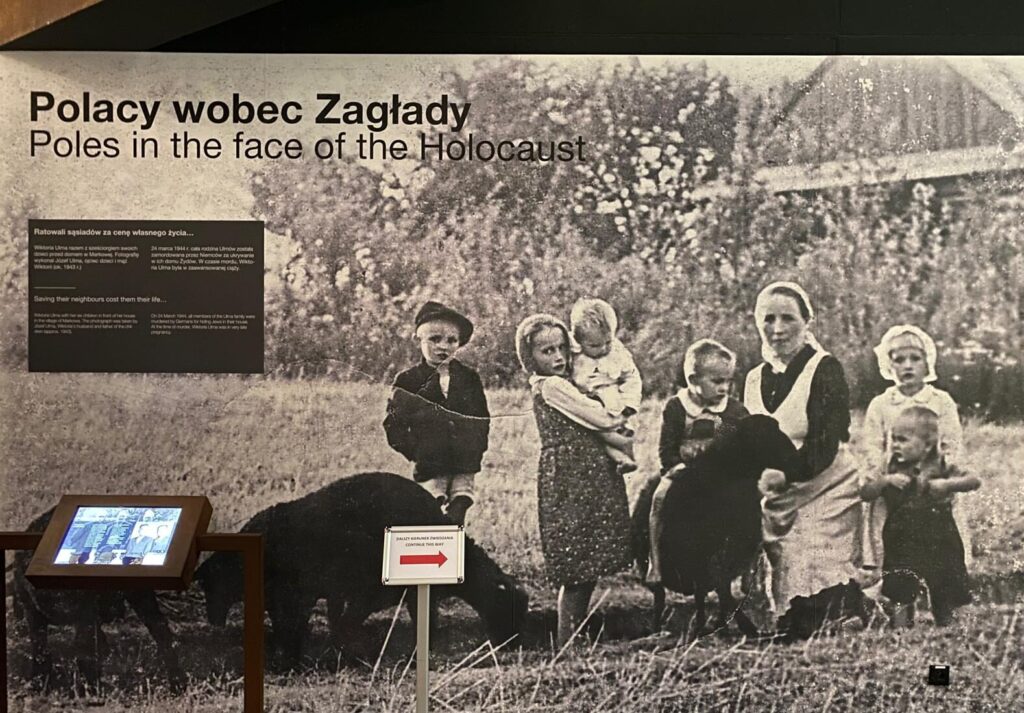
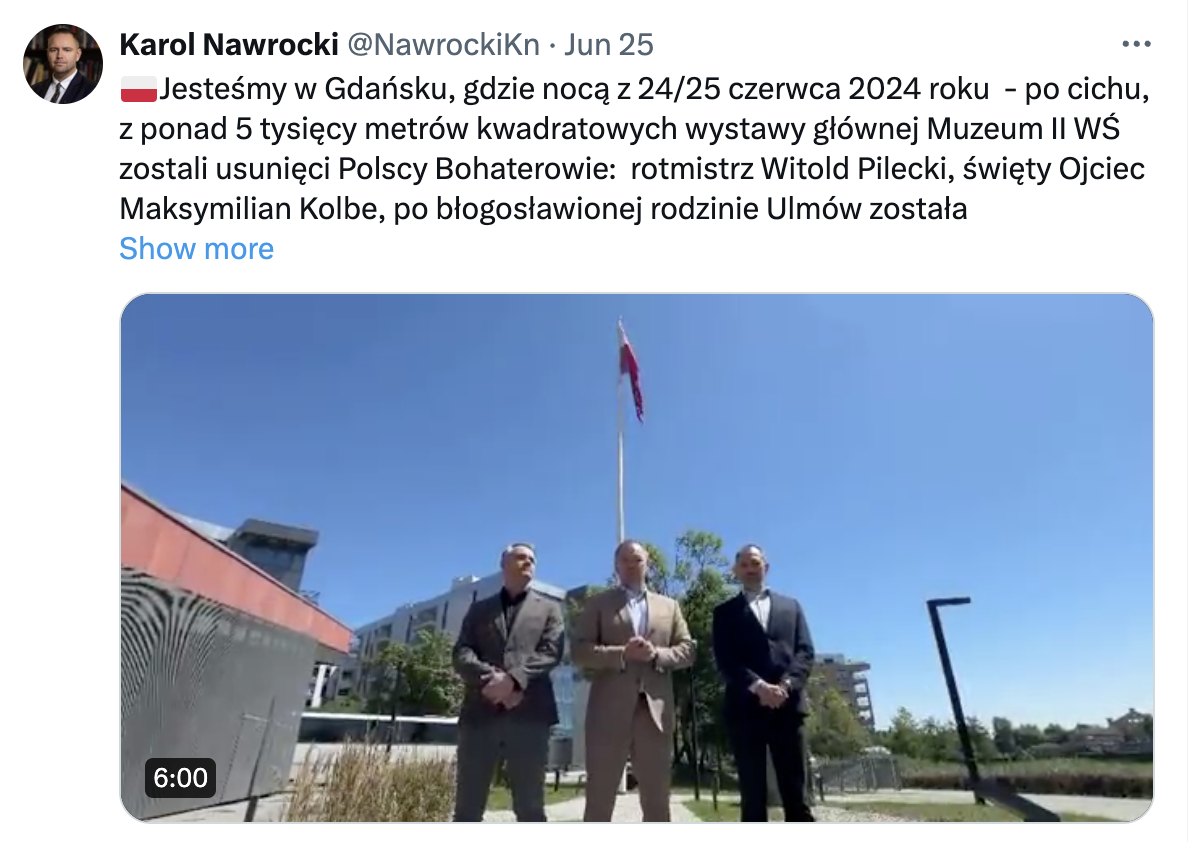
The ex-head of the World War II Museum in Gdańsk and current President of the Institute of National Remembrance, Dr Karol Nawrocki, informed the public that certain elements of the permanent exhibition had disappeared from the institution, including pictures of Cpt. Witold Pilecki, father Maksymilian Kolbe and the Ulma family. This information sparked outrage among patriots and historians around Poland.‘
It is unacceptable,’ Deputy Prime Minister and the Minister of Defence, Władysław Kosiniak-Kamysz wrote in a post on X. The Museum responded to the accusations by stating that the exhibition will now return to its past form, presented in 2017.
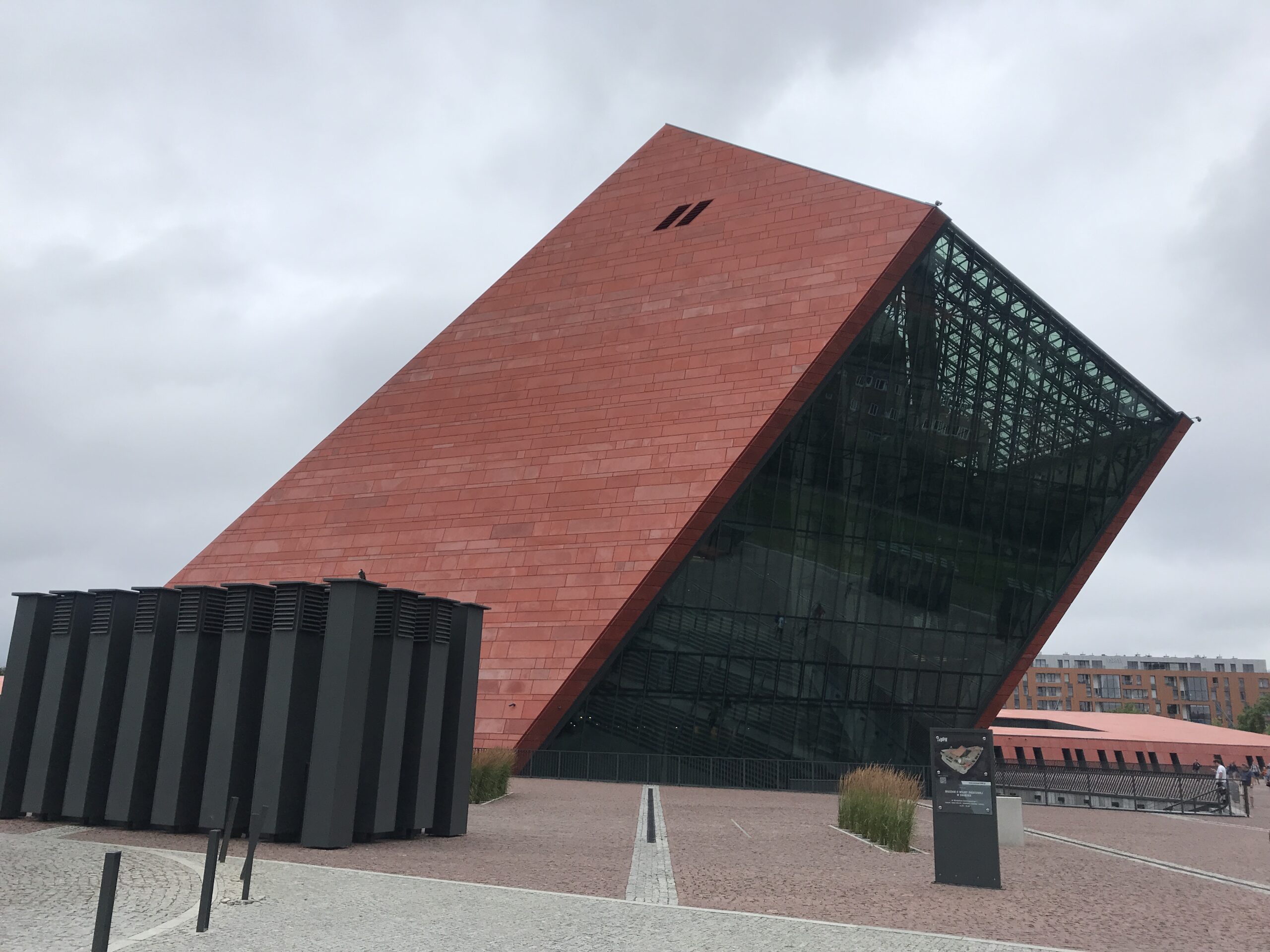
‘During the night of June 24-25, 2024 – quietly, from over five thousand square meters of the main exhibition of the Museum of the Second World War in Gdańsk, the images of Polish heroes were removed: Captain Witold Pilecki, Father Maksymilian Kolbe, and a black wall was left in place of the pictures of blessed Ulma family,’ Karol Nawrocki, head of the Institute of National Remembrance and previous director of the II World War Museum in 2017–2021 said in a post on X.
The new pictures presented in the original 2017 permanent exhibition of the II World War Museum came as a result of personnel changes in the institution’s management. The dispute over the exhibition content was taken to court by the previous management. The court decision allowed the modification of the original content by adding the now-removed pictures.
The Museum responded to the vast criticism in a statement.
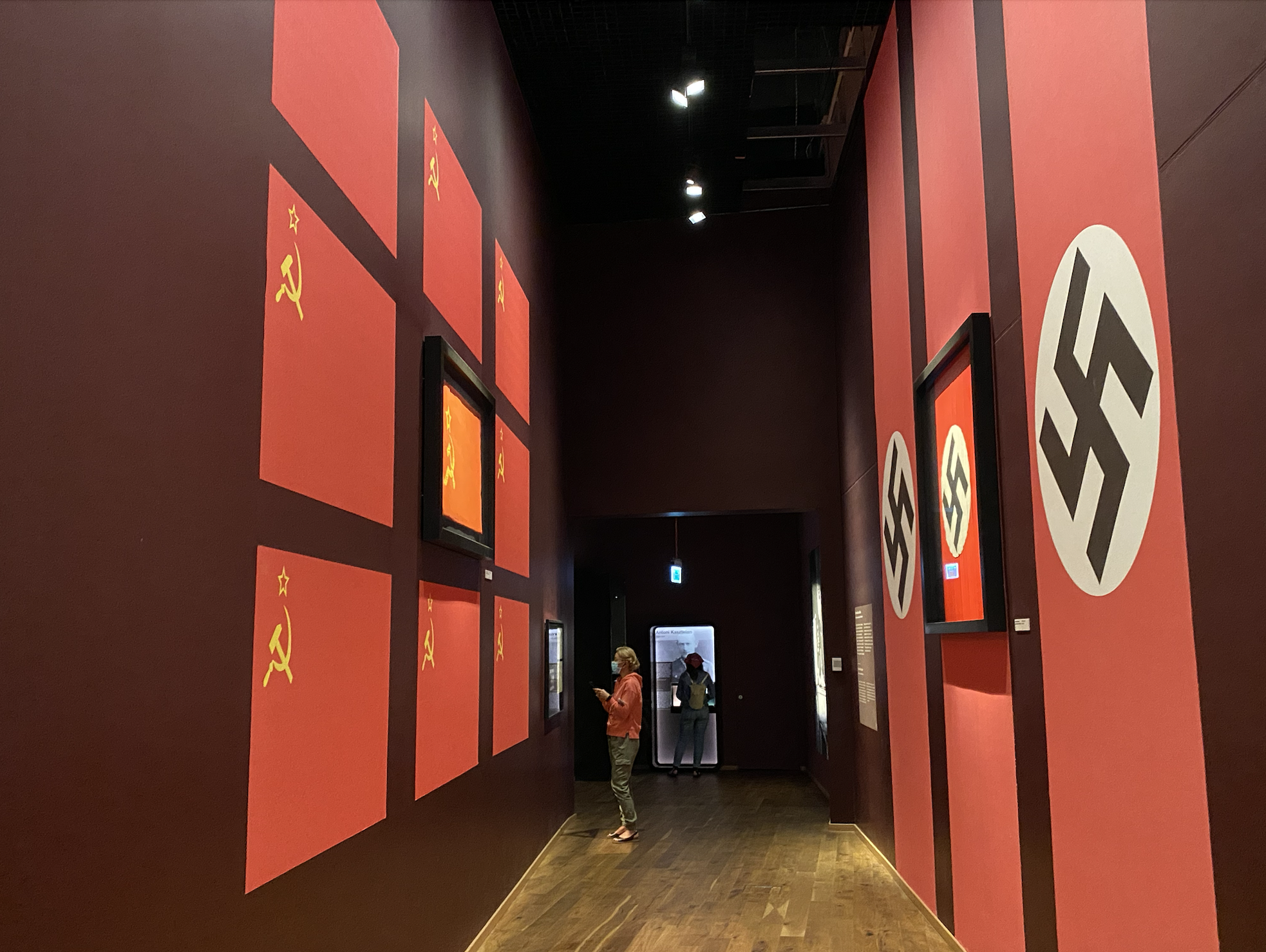
‘Introduction of a showcase dedicated exclusively to Roman Catholic clergy and hanging portraits of Father Kolbe and Rtm. Pilecki in the central points of this disturbed the anthropological nature of the narrative. Similarly, placing a large-format photograph of the Ulma family in the 'Road to Auschwitz’ section, which talks about the deaths of prisoners in mass extermination camps, broke the artistic composition and narrative coherence of this part of the exhibition,’ The Museum wrote on its website.
Władysław Kosiniak-Kamysz, the Deputy Prime Minister of Poland and Minister of Defence criticised the decision and called for immediate restoration of the previous form of the exhibition.
‘The main exhibition of the Museum of the Second World War in Gdańsk must be an example of what unites us, not divides us. Removing those who testified to patriotism and steadfastly fought for the good of the Homeland is unacceptable. Fragments of the exhibition concerning Captain Witold Pilecki, Father Maksymilian Kolbe and the Ulma family should be restored immediately,’ Kosiniak-Kamysz said.
Now it is up to the Museum’s new management to decide about the removed pictures of Polish heroes.
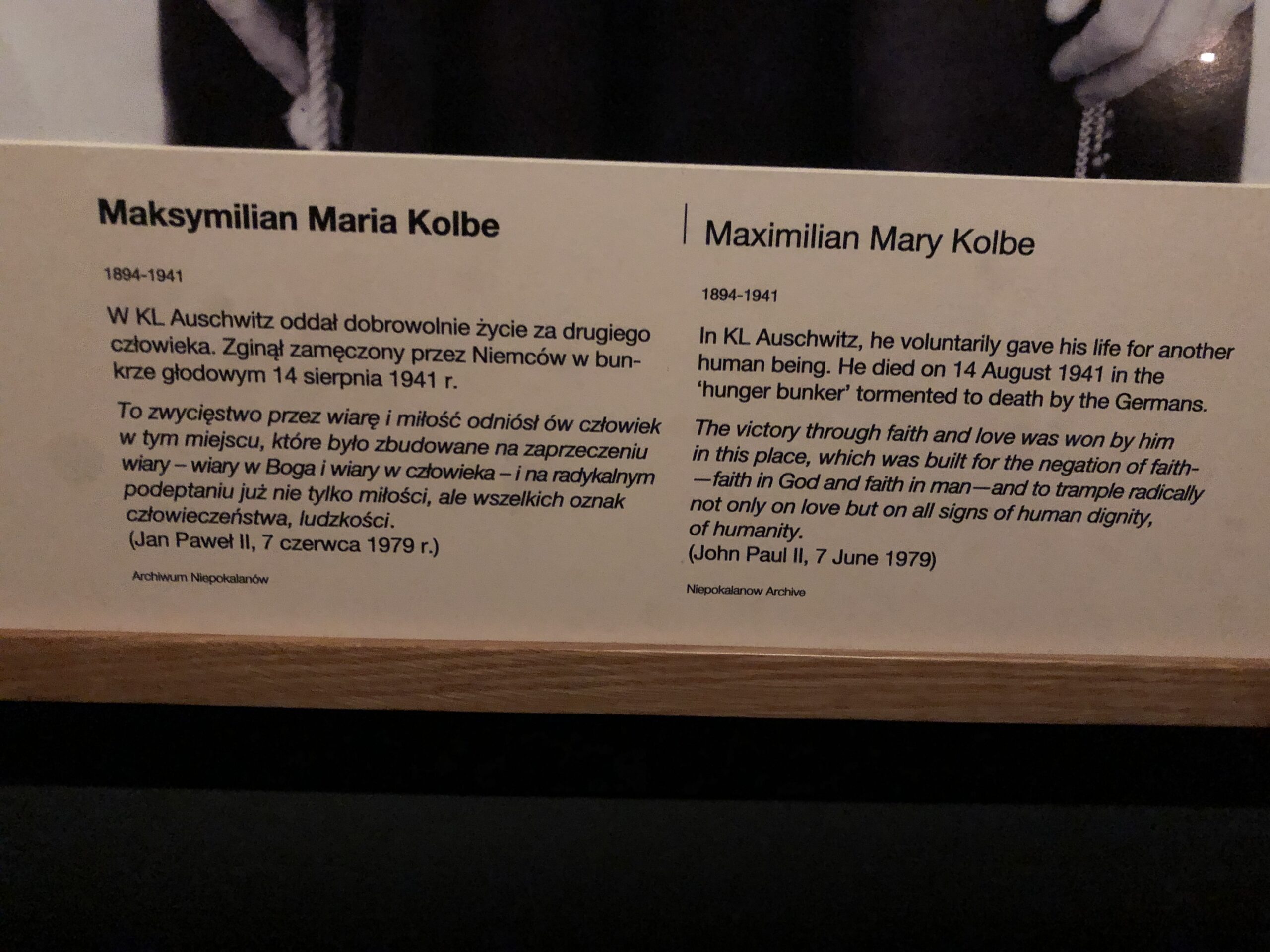
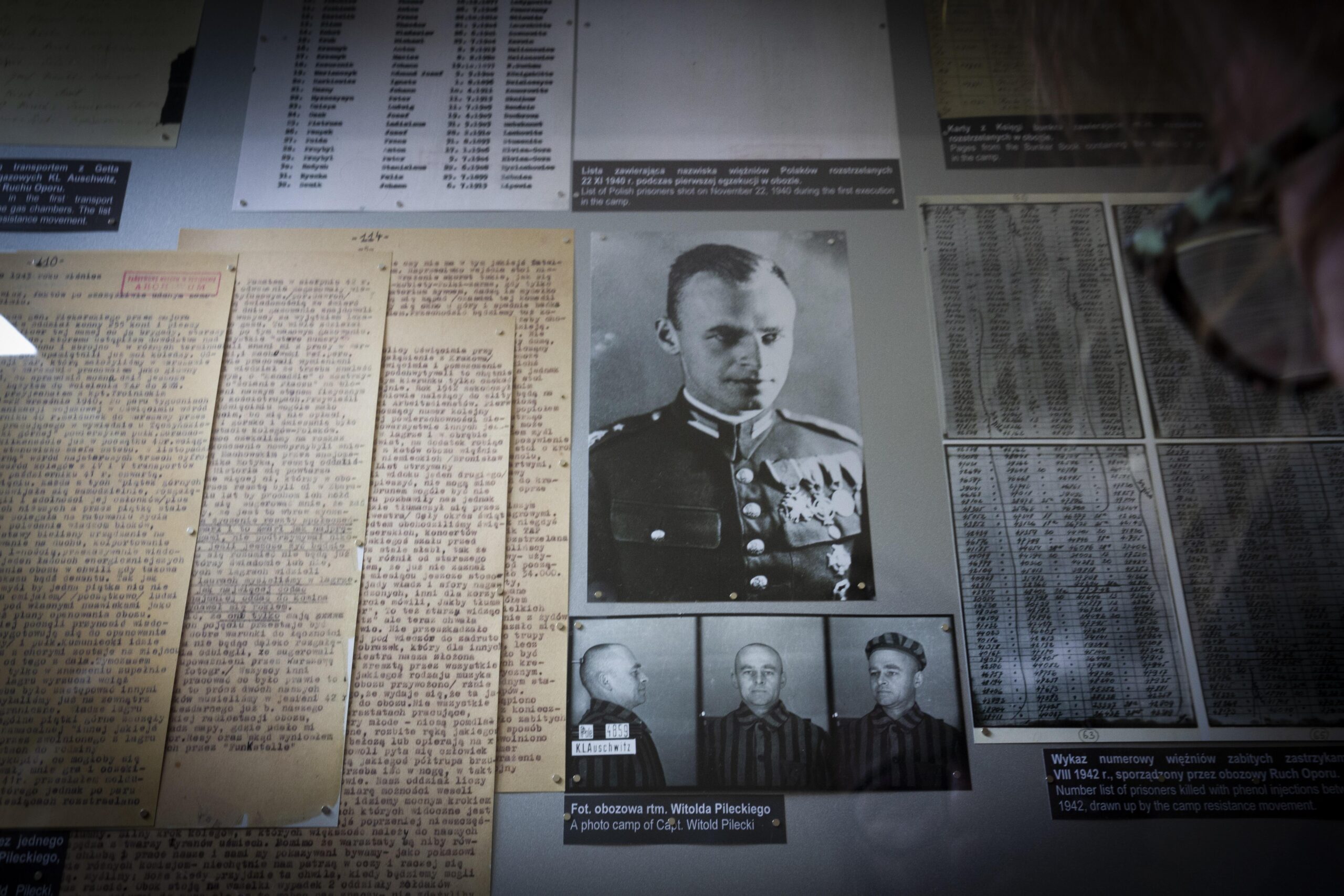
Who were those whose pictures were removed from the exhibition?
Witold Pilecki was a cavalry captain, co-founder of the Polish Secret Army, soldier of the Home Army, volunteer prisoner and a leader and a hero of the resistance movement within the German Auschwitz death camp. He was also the author of a report on the Holocaust, the so-called Witold’s Report. In the People’s Republic of Poland, he was accused and sentenced to death by the communist authorities. The location of his remains is still unknown.
Father Maksymilan Maria Kolbe was the founder of the organisation Catholic organisations and a Catholic Radio Niepokalanów in pre-war Poland, as well as the head of a monastery in Niepokalanów, Poland. During World War II, he was imprisoned in Auschwitz, where he voluntarily chose starvation death in exchange for his convicted fellow prisoner, Franciszek Gajowniczek. Father Kolbe is the first Polish martyr of World War II, raised to the altars during beatification as a confessor in 1971, and then canonisation by the Pope as a martyr in 1982.
The Ulma family – parents Józef and Wiktoria Ulma and their seven children are a Polish Catholic family from Markowa, which, during the German occupation during World War II, tried to save a Polish-Jewish family by hiding them in their own home during the Holocaust. All family members were murdered by the Germans on March 24, 1944, in the so-called crime in Markowa.
Tomasz Modrzejewski
Zdjęcia: Caroline Byczynski