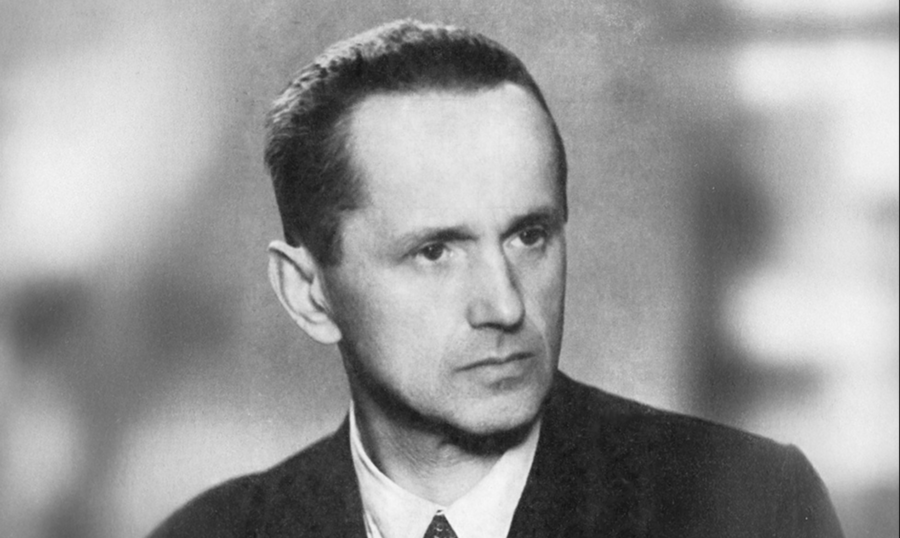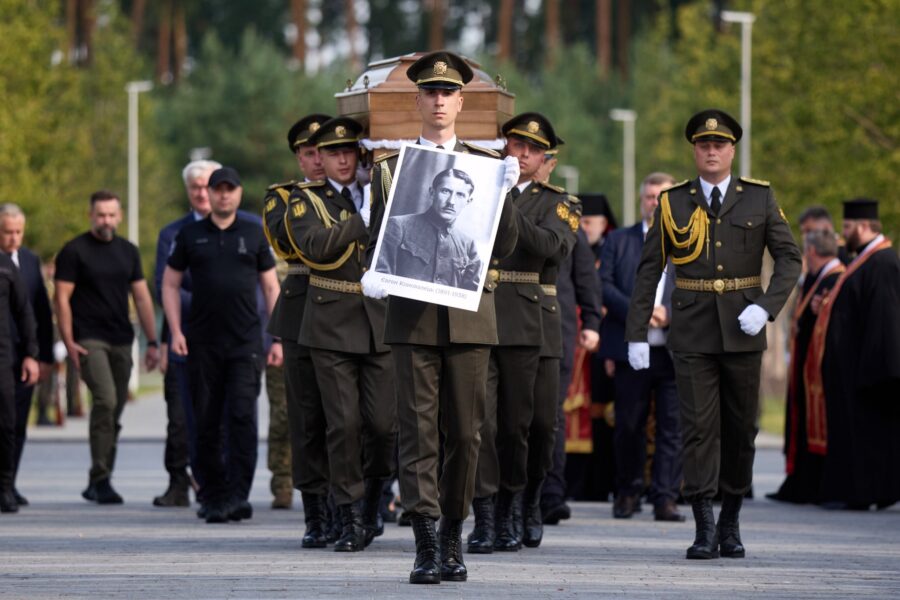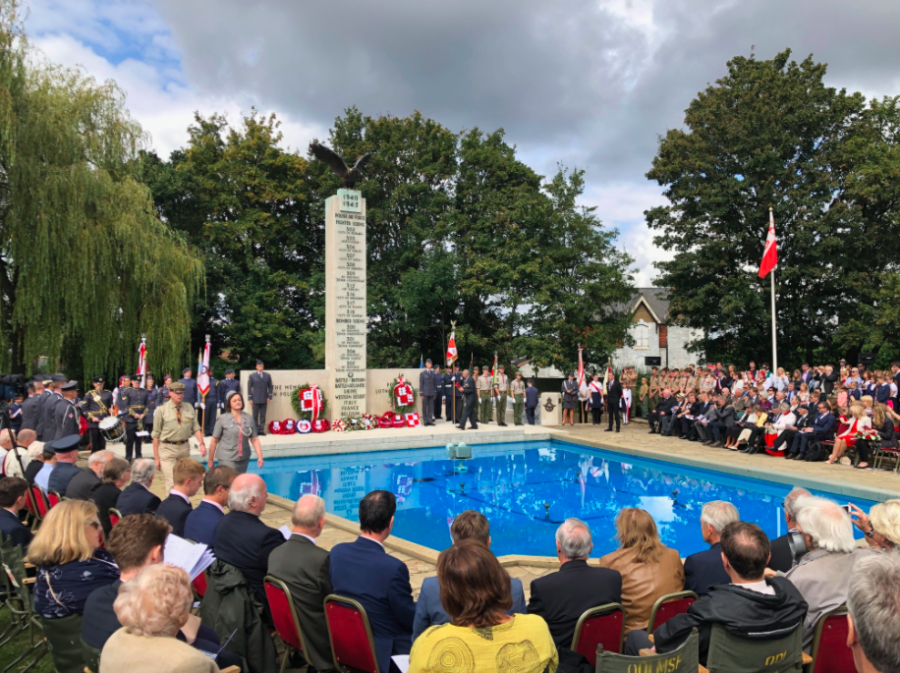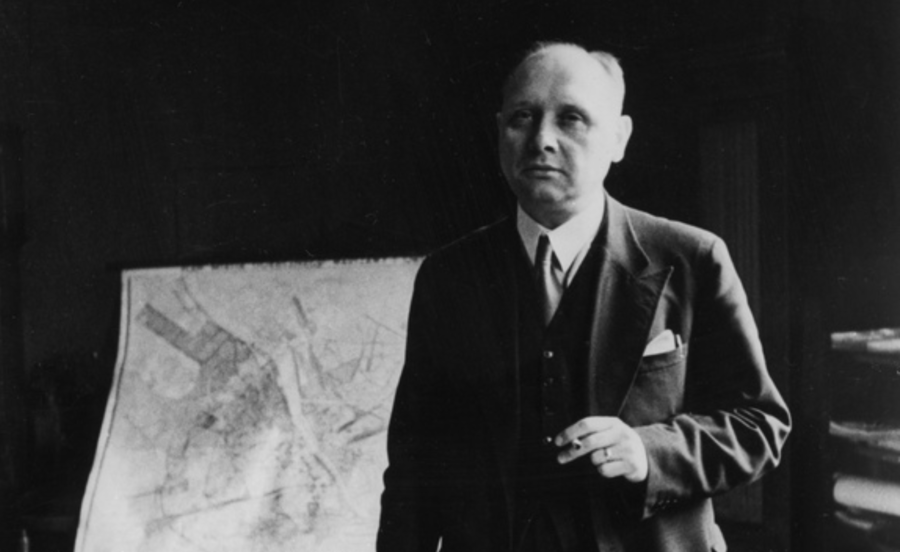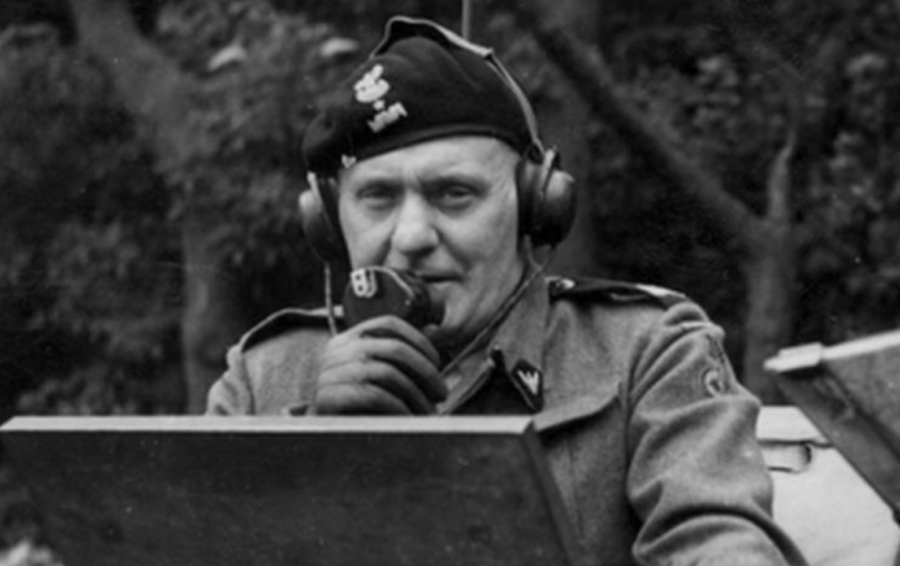
On 26 September 1946, the communist government in Warsaw passed a resolution to deprive 75 officers of the Polish Armed Forces in the West who had joined the Polish Resettlement Corps of their Polish citizenship. Among them was General Stanisław Maczek, the Polish war hero betrayed by ”new Poland” and the Allies. The Spectator magazine wrote about his story in an article by Allan Mallinson.
The corps was subordinate to the British authorities. It was open to Polish soldiers who had served under British command during the war.
During service in the corps, the Polish soldiers were provided with accommodation in former military camps and also received remuneration.
But foremost they were prepared to come back to a normal life by learning English and attending other courses to help them find a job in the UK.
When the communist government learned about that initiative it decided to strip 75 Polish officers of their citizenship.
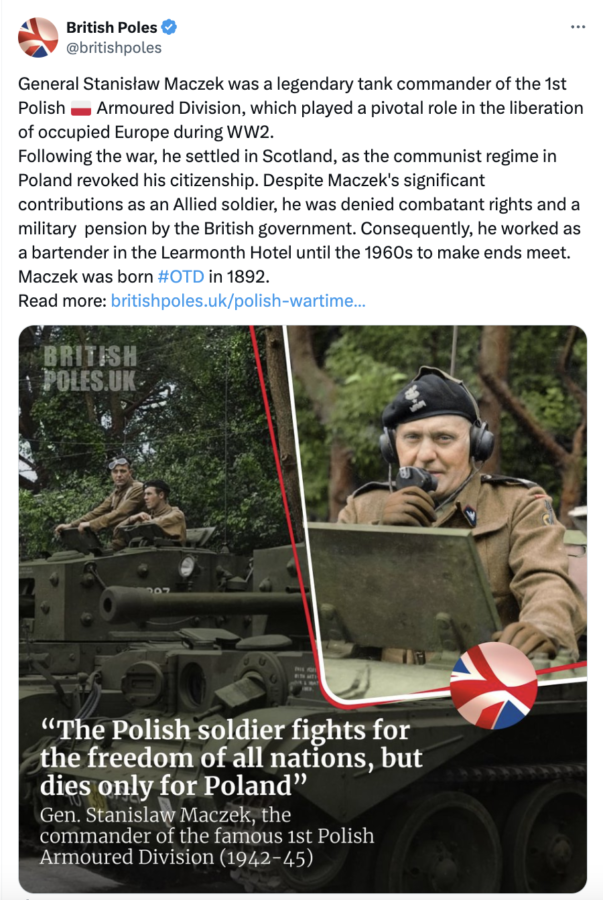
General Stanisław Maczek, the outstanding commander of the legendary 1st Armoured Division that fought alongside Allied forces in 1944-1945 was among those who lost Polish citizenship.
Maczek’s potential return to Poland was discussed by the communist leadership in Poland in 1947, which set the conditions for his return: no more military service, and only possible when it is preceded by a subordination letter to the authorities or an interview for the communist press.
General Maczek spoke about that painful moment in his first interview for the Polish press in 1988:
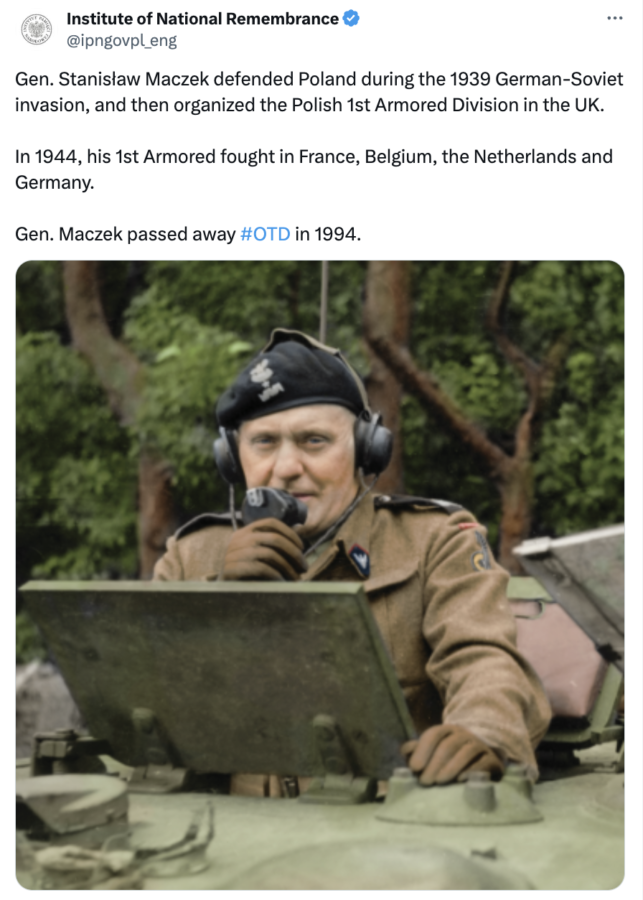
“I don’t want to scratch my wounds, to recount at least that circus of taking away our Polish citizenship. First, some people came to inform me that my Polish citizenship had been taken away, then others came to confirm it, and years later others came to say that they were sorry and would restore the previous status. That’s why I didn’t let such messengers into my house or accept the absurdity. Does someone have the right to take away my name as a Pole? – it was a paranoia.”
After the end of the World War 2 General Maczek showed no personal political ambitions. He always considered himself a soldier. He chose a simple life in Edinburgh, far from “Polish London”, where he could become involved in political activity or party disputes dividing the Polish exile societies. Instead, he was active in the veterans’ community.
Interestingly, in a recruitment instruction for the Polish communist armed forces (1950), the veterans of Maczek’s army were discriminated against from entering the service:
“Conscripts with political reservations, sons of former soldiers of the Anders corps, the Maczek brigade, guard units of the Western armies, sons of members of the NSZ and WiN,” the document said.
In 1951 that order included even the sons of those serving in Maczek’s brigade.
Just 10 years later in 1961 Maczek was persuaded to return to Poland. He replied:
“Each of us has two homelands. One big, in this case, Poland, and the other small – where he was born and grew up. In my case, this second one for me is Lviv. I can’t go there, so why go?” Maczek replied pointing out that his hometown Lwów was part of the Soviet Union based on the Yalta Conference decisions.
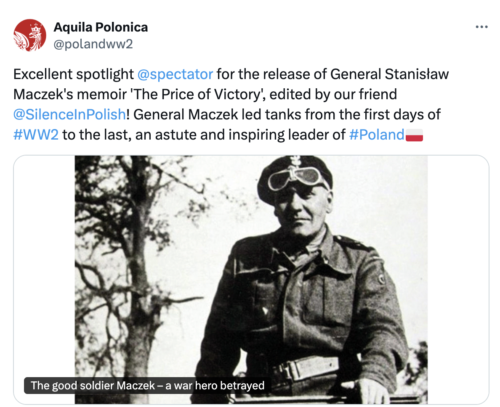
In the next years, Maczek was under the surveillance of the Polish communist intelligence, and that included another persuasion to visit the country by Wojciech Dzieduszyski, a Polish artist who served for the Polish services under the codename “Turgieniew”.
Finally, on 23 November 1971, the government of the People’s Republic of Poland repealed the shameful resolution of 1946 depriving 75 officers of the Polish Armed Forces in the West of their citizenship.
In 1989 Maczek received a letter from the Polish Prime Minister Mieczysław Rakowski who wanted to invite him to the 50th anniversary of the outbreak of World War 2.
“The letter from the Prime Minister of the People’s Republic of Poland, Rakowski, over 40 years late, did not give me any satisfaction and did not at all change my negative attitude towards the authorities of People’s Poland. This concludes this topic” Maczek responded in an interview for The Scotsman.
After the collapse of the communist government in 1989 Maczek was unable to travel to Poland because of his poor health.
In February 1994, the general was awarded the Order of the White Eagle – the highest order of the Republic of Poland.
He died just a few months later, on 11 December 1994, in Edinburgh at the age of 102.
Source: generalmaczek.pl
Photo: IPN
Tomasz Modrzejewski