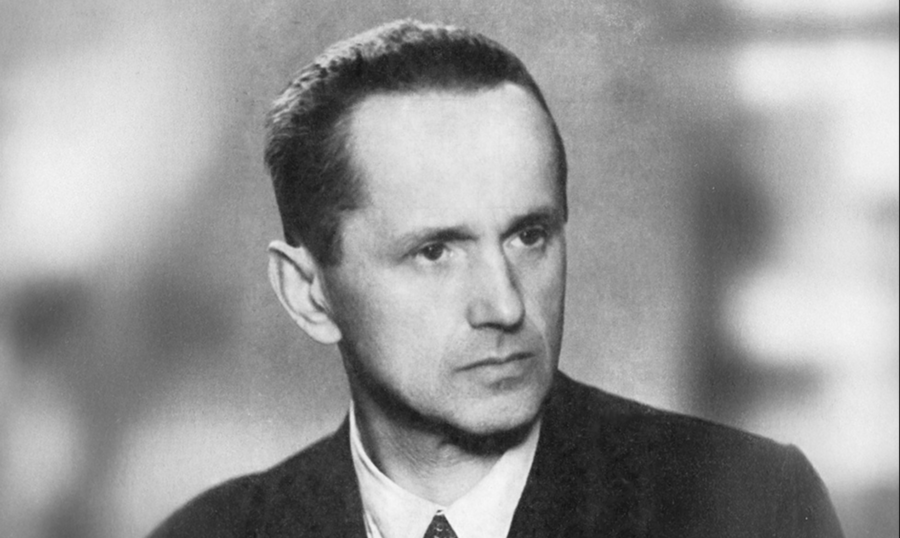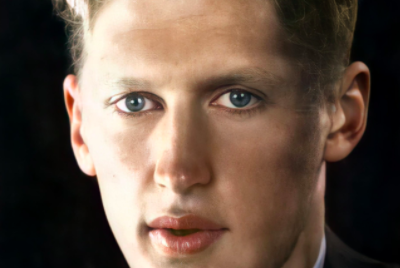
On 15 September 1944, during the Warsaw Uprising, 21-year-old Andrzej Romocki “Morro” was killed in action. He was a scoutmaster, commander of the 2nd “Rudy” Company of the “Zośka” Battalion, a recipient of the Virtuti Militari and the Order of Polonia Restituta, and widely regarded as one of the best commanders of fighting Warsaw. He died on Czerniaków, shot straight through the heart.
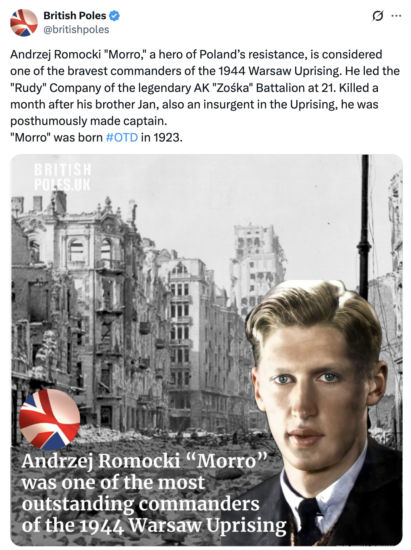
At the outbreak of war, Andrzej was only 16 years old and continued his education in secret underground classes. He grew up in a deeply patriotic family. His father was a major in the Polish Army, a veteran of the 1st Corps under General Dowbor-Muśnicki, and also a recipient of the Virtuti Militari. He was killed in 1940 after being hit by a car driven by a drunk German soldier. Andrzej graduated from the Private Mazovian Land Society High School in Warsaw with a mathematics and physics profile, passing his matriculation exam with very good results. On 25 May 1944, he completed the underground Kedyw officer cadet school “Agricola” with the third-highest score and was promoted to the rank of cadet platoon leader.
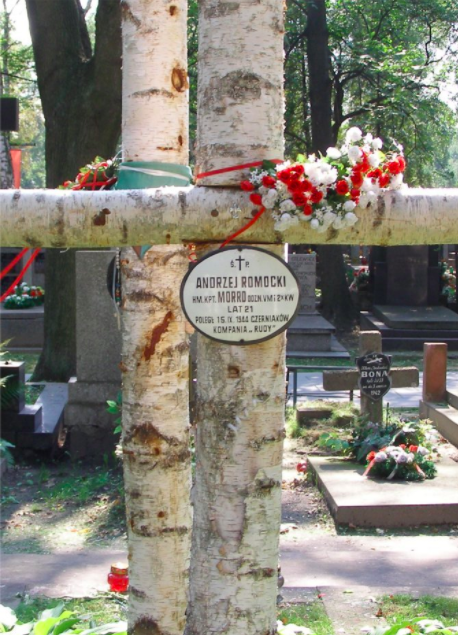
His conspiratorial pseudonym “Morro” (actually “Andrzej Morro”) was created by reversing the first two syllables of his surname. The same pseudonym had previously been used by his father during the independence conspiracy under the partitions. He also used the pseudonym “Kuguar Filozof” (“Cougar the Philosopher”). However, the soldiers of the “Rudy” Company affectionately called him “Amorek” because he signed orders as “A. Morro”. From August 1940, he was active in the underground youth organisation “Pet” (“Przyszłość” – The Future), mainly on Mokotów and Żoliborz. Andrzej led the Mokotów circles.
In 1941, he recruited his two-year-younger brother Janek “Bonawentura” into the organisation (Janek was killed a month earlier during the Uprising and is buried next to Andrzej at Powązki Military Cemetery).
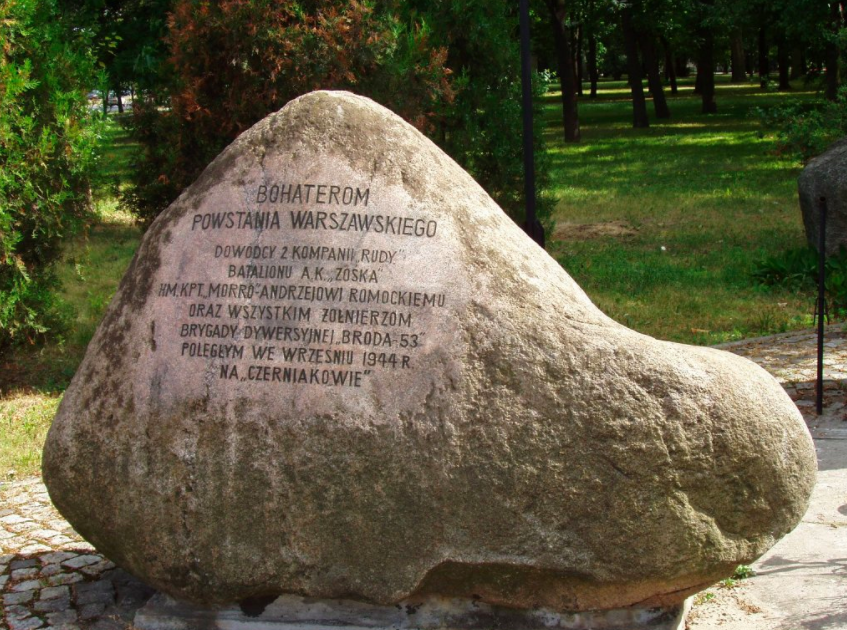
In early autumn 1942, the “Pet” organisation joined the Grey Ranks (Szare Szeregi). In May 1943, Andrzej commanded his first combat action – the attack on a German border post (Operation “Taśma”). During this action, Tadeusz Zawadzki “Zośka” was killed. In his honour, the “Zośka” Battalion was formed, and Andrzej Romocki took command of the 1st Platoon of the 2nd “Rudy” Company, led by cadet platoon leader Władysław Cieplak “Giewont”.
During the Warsaw Uprising he was only 21 years old. His combat trail included: Wola – Stare Miasto – Senatorska Street – Saski Garden (“the breakthrough”) – Śródmieście – Górny Czerniaków. He was wounded twice. On 19 August 1944, he was burned during the explosion of a “cow” shell. On 31 August, he was shot in the face while running across Senatorska Street – the bullet passed through the base of his nose and maxillary sinus, exiting through his cheek.
He was killed near the “White house” between Solec Street and the Vistula River while defending the Czerniaków bridgehead. A single bullet struck him directly in the heart.
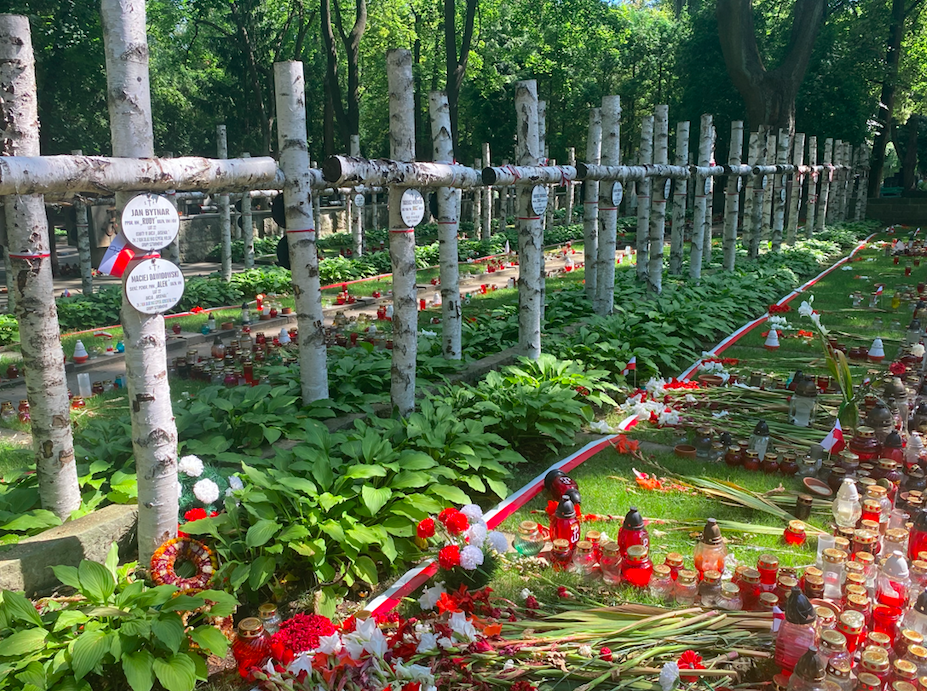
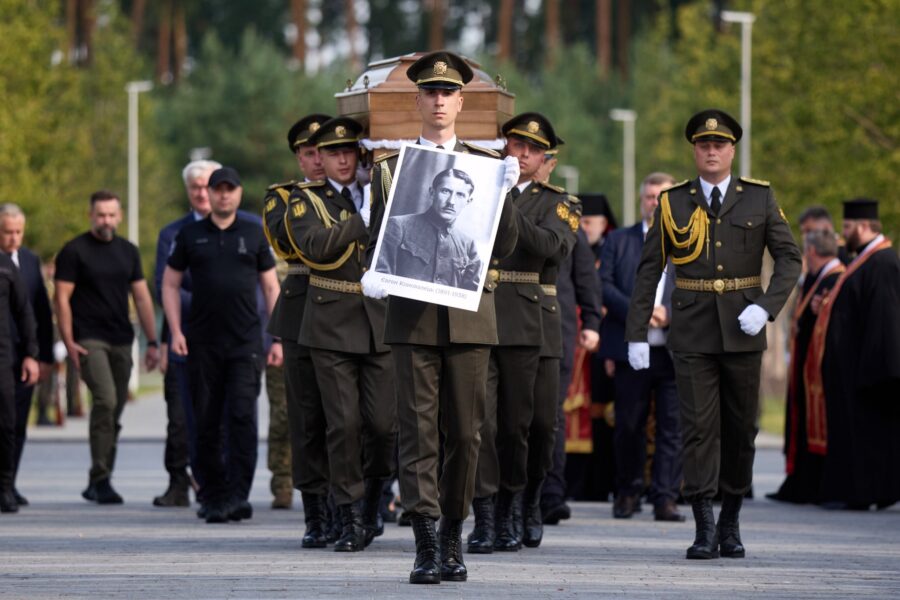
In autumn 1945, he was exhumed by his comrades-in-arms and his mother, and buried in the “Zośka” Battalion quarter at Powązki Military Cemetery in Warsaw. In the same grave rest his younger brother Janek “Bonawentura” and his cousin Stanisław Leopold “Rafał”, who also died during the Warsaw Uprising.
Daria Więcek based on the Warsaw Uprising Biographical Dictionary (Powstańcze Biogramy Muzeum Powstania Warszawskiego).
Main photo: Twitter @Kolor Historii
Photos: Twitter @FundacjaKurtyki, British Poles