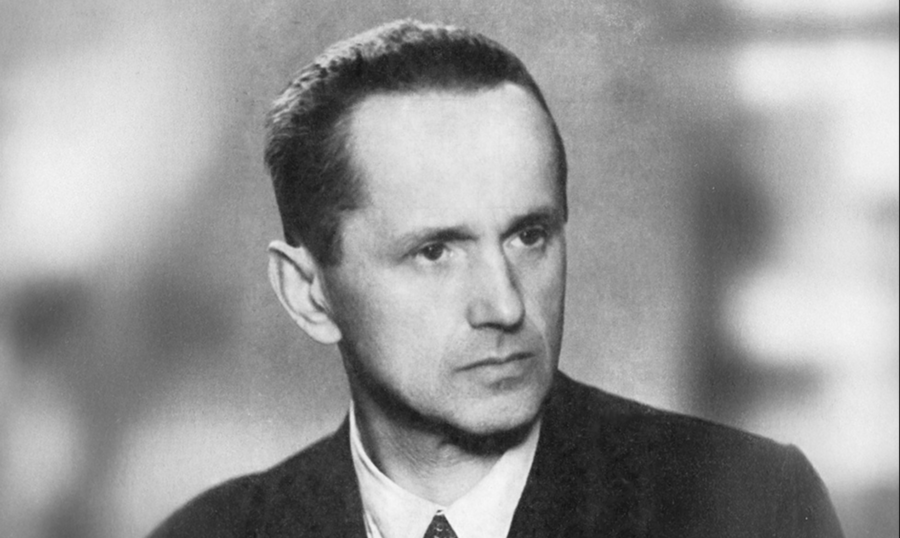
Among the generation of young Poles whose lives were cut short by the cataclysm of the Second World War, few figures embody the fusion of artistic sensitivity and patriotic duty as vividly as Jan Romocki. Known by his nom de guerre “Bonawentura,” he belonged to that tragic cohort of poet-soldiers whose voices were silenced almost as soon as they emerged.
Born on 17 April 1925 in Warsaw, Romocki grew up in a family steeped in patriotic tradition. His father, Paweł Romocki, was not only an engineer educated in Hanover and St Petersburg but also a decorated soldier and later a government minister in the reborn Polish state. Both of Jan’s grandfathers had fought in the January Uprising, and the ethos of service to the nation permeated the household.
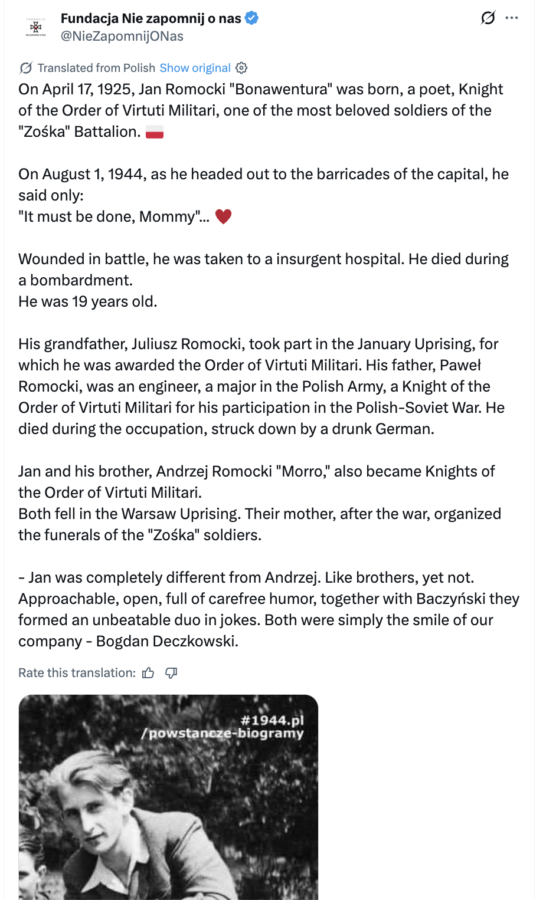
Yet Jan differed in temper from his elder brother Andrzej Romocki, a future commander in the Home Army. Whereas Andrzej was remembered as serious and disciplined, Jan affectionately called “Jasiulek” was witty, sociable, and full of youthful energy. This duality of lightness of spirit combined with deep moral seriousness would later define both his poetry and his conduct as a soldier.
Romocki’s adolescence coincided with the German occupation of Poland. He completed his education in clandestine classes, part of the secret Polish educational system that defied Nazi prohibitions. At the same time, he was active in the scouting movement, which evolved during the war into the resistance organisation known as the “Grey Ranks” (Szare Szeregi).
Within this underground milieu, Romocki developed both as a leader and as a writer. He rose to the rank of scoutmaster and joined the Home Army (Armia Krajowa), serving in the famed “Zośka” Battalion, one of the most renowned units of the Polish resistance.
Romocki’s literary legacy is small, barely twenty surviving poems, but it is marked by remarkable emotional intensity. Like his slightly older contemporary Krzysztof Kamil Baczyński, he belonged to a generation whose artistic development was inseparable from the experience of war.
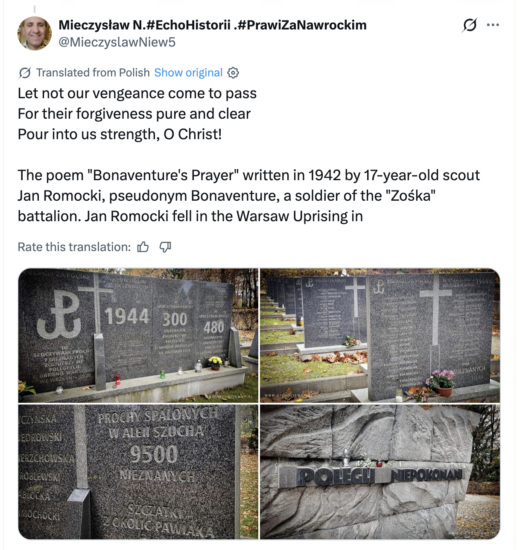
His poems oscillate between tenderness and foreboding, capturing both the fragile beauty of youth and the omnipresent reality of death. They are often imbued with a quiet acceptance of sacrifice, yet never entirely relinquish hope. In this sense, Romocki’s work stands as a lyrical testament to what has been called the “generation of Columbuses” young Poles coming of age in a destroyed world.
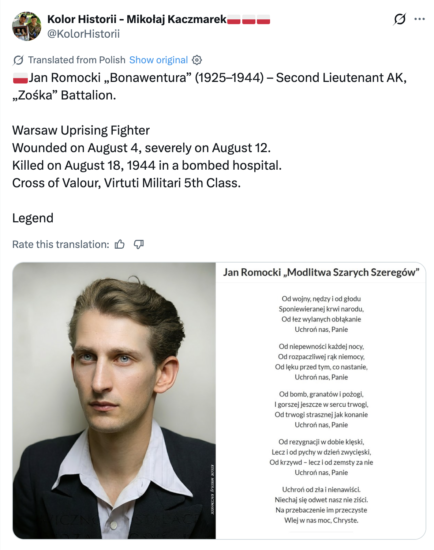
When the Warsaw Uprising broke out in August 1944, Romocki fought as a platoon commander in the “Zośka” Battalion. He took part in some of the fiercest engagements, including the battles in the Wola district and around the Stawki area, where he was wounded.
Despite his injuries, he continued to serve, displaying courage that earned him the Cross of Valour and, posthumously, the Silver Cross of the Virtuti Militari, Poland’s highest military decoration for bravery.
Romocki’s life came to an abrupt end on 18 August 1944. Severely wounded, he was being treated in a makeshift hospital on Miodowa Street when it was destroyed during a German air raid. He was just nineteen years old.
His death, like that of so many of his peers, symbolises the annihilation of a generation that combined intellectual promise with civic courage. He was buried at the Powązki Military Cemetery in Warsaw, among his comrades from the “Zośka” Battalion, a resting place that has since become a site of national remembrance.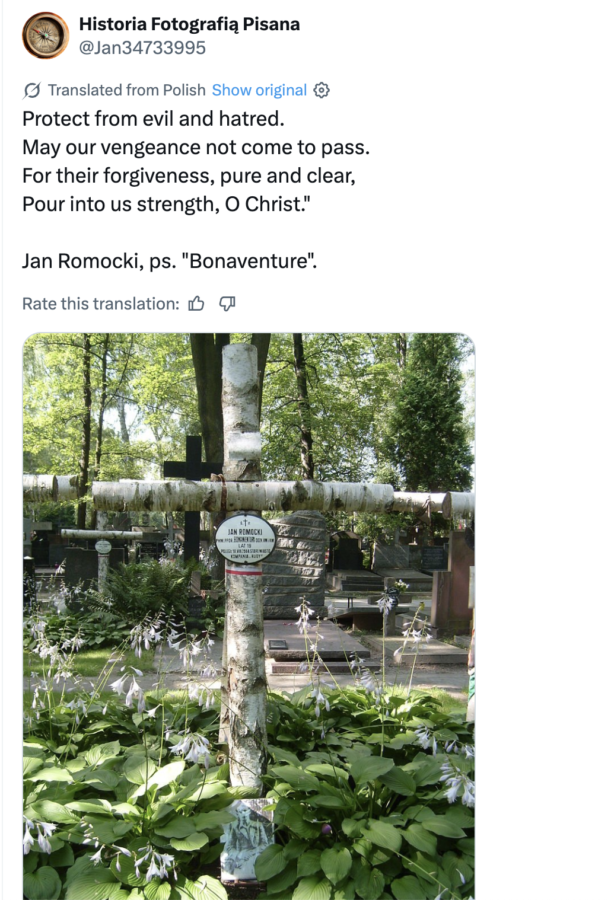
Though his oeuvre is modest in size, Jan Romocki’s poetry continues to resonate as a voice of wartime youth at once intimate and universal. His life illustrates a recurring theme in Polish history: the intertwining of literature and resistance, of pen and sword.
In remembering “Bonawentura,” one recalls not only a fallen soldier but also a poet who, in the brief span allotted to him, captured the moral drama of his time. His words, like his actions, remain a testament to a generation that faced destruction with courage, imagination, and dignity.
Photo: Muzeum Powstania Warszawskiego. Coulorisation: Mikołaj Kaczmarek
Tomasz Modrzejewski