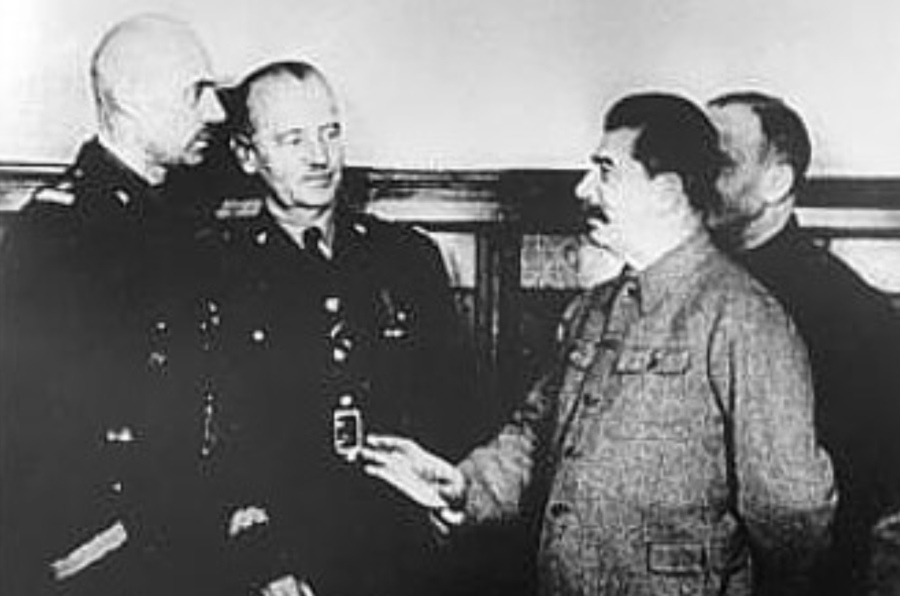
The situation of the Polish Army in the Soviet Union was very difficult in March 1942 but after an unexpected decision to cut the number of food rations from 20 March to only 26,000, a vision of starvation appeared before nearly 70,000 soldiers and civilians. General Władysław Anders decided to intervene and talk directly with Stalin. The decisive conversation took place in Moscow.
Years after the event General Anders described his conversation with the Soviet dictator. Stalin said that the food shortages were caused by the outbreak of the American-Japanese war, and grain supplies from the US were significantly lower than promised.
General Anders said he knew that food supplies from Britain were about to reach the USSR. After that remark, Stalin agreed to allocate 44,000 rations of food a day.
As the rations were not enough for the entire army and civilians Stalin asked if the Poles could work on Soviet collective farms to work on their food. Anders demanded that all Poles released from Gulags shall join the new Polish Army.
As the food shortage problem could not be resolved easily General Anders proposed an evacuation of the Poles to Persia.
During the same conversation, General Anders raised the issue of missing Polish officers who became POWs after 1939 and were held in NKVD camps in Kozelsk, Starobelsk and Ostashkov. As it later turned out some 22,000 officers were murdered by the Soviets in what is known as the Katyn Massacre.
The General confronted Stalin with the facts the Poles had about the missing soldiers. At that point, Stalin said he gave all orders to release the Poles and gave absurd explanations about their whereabouts.
The evacuation of the first part of the Polish Armed Forces began on 24 March. In late June Stalin agreed with the British Prime Minister to redeploy the remaining Polish troops. The second evacuation wave moved on 9 August.
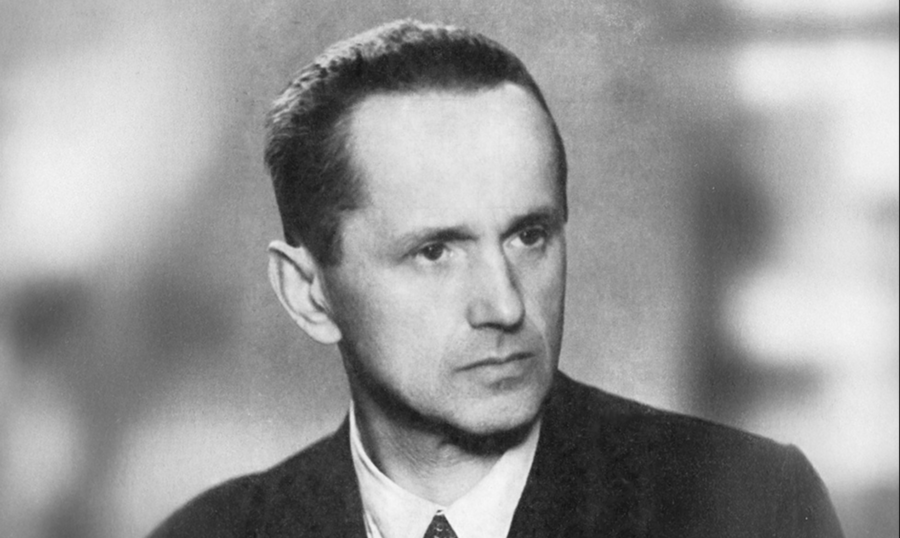
“The army’s departure was a catastrophe for the hundreds of thousands of Poles left behind in Russia and derailed the possibility of further cooperation. But leaving the three-division corps there was increasingly impossible given the strained political relations,” General Marian Kukiel recalled.
More than 115,000 people, including nearly 78,500 soldiers, were evacuated from the Soviet Union to Persia.
The sculpture of General Władysław Anders has been accepted for permanent display at the National Army Museum in London. Now, every visitor can admire his bronze bust. All this came to be thanks to the Polish community campaigning in the UK and worldwide, initiated and coordinated by the British Poles media. You can read about in our article Bust of WWII Hero General Anders unveiled in historic event at the National Army Museum in London.
Source: IPN, Przystanek Historia, MHP
Photo: IPN
Tomasz Modrzejewski