Precision in Action
Preliminary decisions regarding Allied troop movements in Europe were made a year earlier during a meeting between the U.S. President and the British Prime Minister in Casablanca. A few months later, at the Tehran Conference, where the leaders of the free world invited the Soviet leader, the concept of a Balkan front, pushed by Winston Churchill, was definitively abandoned. This plan envisaged an Allied march against Germany from the south of the continent, which would have brought “free world” forces into Central and Eastern Europe, including Poland. However, Stalin, envisaging this region as part of his post-war sphere of influence, successfully convinced both Roosevelt and Churchill to abandon the idea, to the detriment of Poland and other nations in the region. The adopted strategy instead called for the Western Allies to attack German forces from France and the Italian front. By late spring 1944, the Italian peninsula was largely captured, thanks in large part to the Polish 2nd Corps under General Anders, whose victory at Monte Cassino paved the way for the Allies to capture Rome on 4 June 1944, effectively knocking Mussolini’s fascist state, Hitler’s ally, out of the war. France remained the next target.
The Germans anticipated an Allied offensive, constructing the Atlantic Wall. However, the Allies engaged in an elaborate intelligence operation, spreading false information for nearly a year about a potential attack from Scandinavia or the Balkans. Hitler was not entirely fooled and deployed one of his best commanders, Erwin Rommel, the “Desert Fox” famed for his African campaigns, to France. For German intelligence, the only uncertainty was the precise location of the invasion. Here, Allied counterintelligence achieved one of its greatest successes. Through a massive deception operation codenamed “Fortitude,” they convinced the Germans that the main landing would occur near Calais, with any other actions serving as a mere prelude to the true invasion.
Deceiving the Enemy
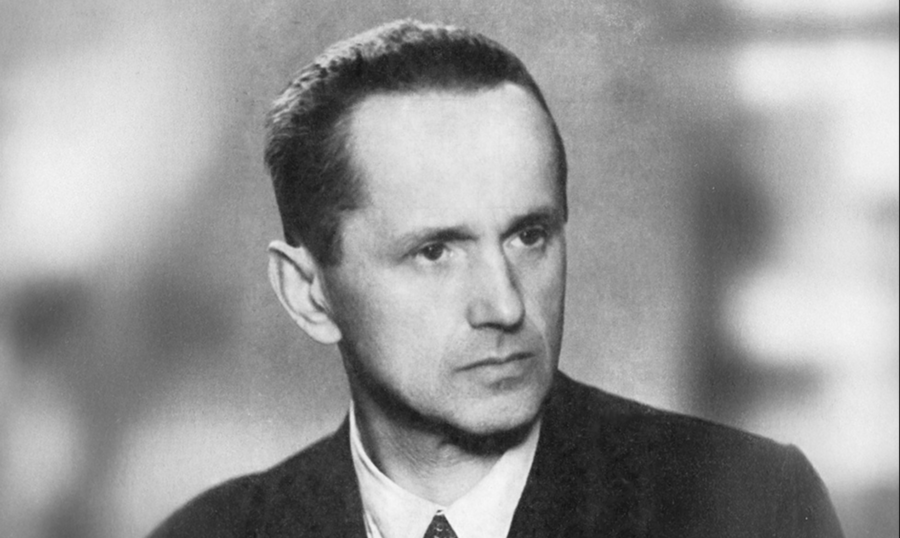
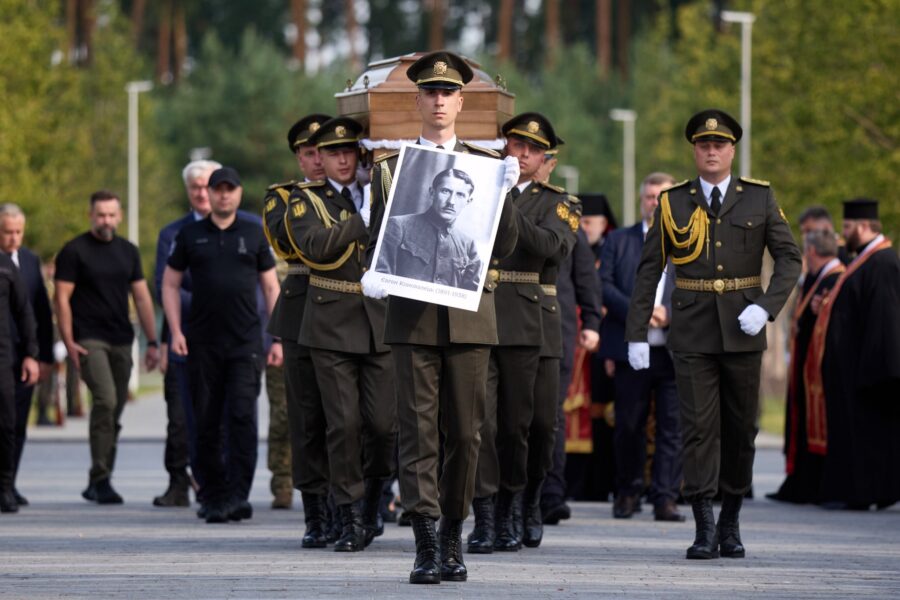
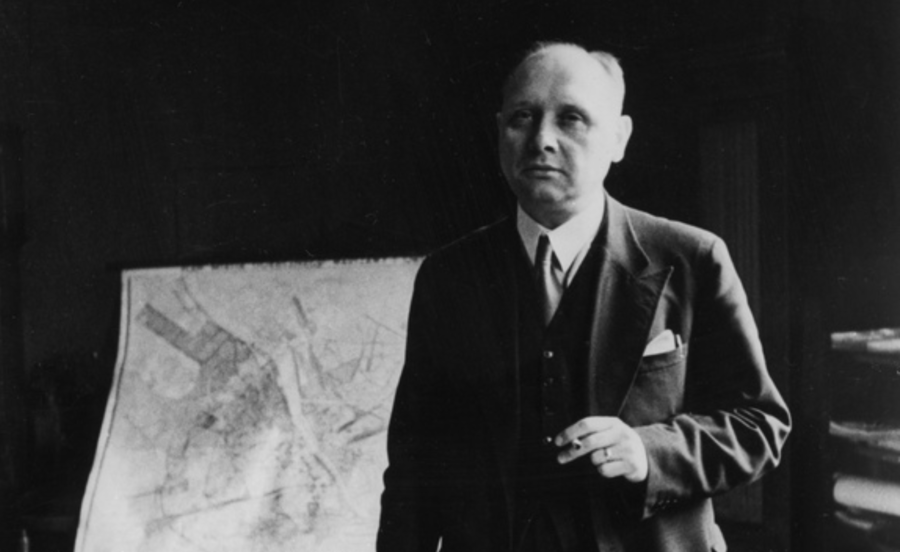
Simultaneously, the “Interalliee” intelligence network gathered critical information about the targeted landing area near Caen. Agents, alongside members of the French Resistance, even measured the size of beach pebbles to ensure that Allied tank tracks would not get stuck during the landing—an example of extraordinary precision. A key figure in these intelligence efforts was Major Roman Czerniawski, whose life reads like a script for a spy thriller. Before the war, he graduated from the Polish Air Force Academy and defended Polish skies during the German invasion in September 1939. After escaping to the West, his talents were utilised by Polish intelligence. Following France’s fall, he organised Polish intelligence cells in German-occupied Paris. For a year and a half, he operated successfully until his network was betrayed and exposed. Arrested and interrogated, he agreed to collaborate with the German Abwehr but managed to escape to Spain and then to London. Reporting to the Polish Armed Forces’ headquarters, he recounted his story. After thorough vetting, the Polish command took a risk and sent him back to occupied France under the fitting alias “Brutus.” As a double agent, he was considered a valuable asset by the Germans, while he fed them false information about the Allied invasion. His efforts significantly contributed to convincing the Germans to reinforce areas other than the planned landing sites. Though largely forgotten, Czerniawski played a significant role in the post-war history of the Polish independence movement, serving as Minister for Information in the Polish Government-in-Exile from 1978 to 1985, supporting the anti-communist opposition in Poland during martial law.
D-Day
The Allied commander, later U.S. President Dwight Eisenhower, faced a critical challenge: weather conditions. Allied aircraft had already disrupted German communication infrastructure, with 80,000 tonnes of bombs destroying railways and roads. However, the amphibious landing required favourable weather. High or low tides, dark nights, winds, and sea currents could derail an operation involving nearly 180,000 soldiers—an unprecedented number for a single assault. The operation was postponed several times until American meteorologists determined that the night of 5–6 June 1944 would be optimal. First, 733 aircraft dropped over 20,000 paratroopers to secure the landing zones. Simultaneously, over 7,000 ships carried soldiers to the beaches codenamed “Utah,” “Omaha,” “Juno,” “Gold,” and “Sword.” German gunfire greeted the troops, though the main German forces were stationed far away near Calais due to the Allied deception. On the five-kilometre “Omaha” beach, nearly 3,000 soldiers were killed in hours by relentless German machine-gun fire. The Germans, still believing the attack was a feint, kept their heaviest divisions at Calais. As time passed, they realised their mistake and began retreating. In Berlin, Hitler was enraged, and the tide of the war began to turn.
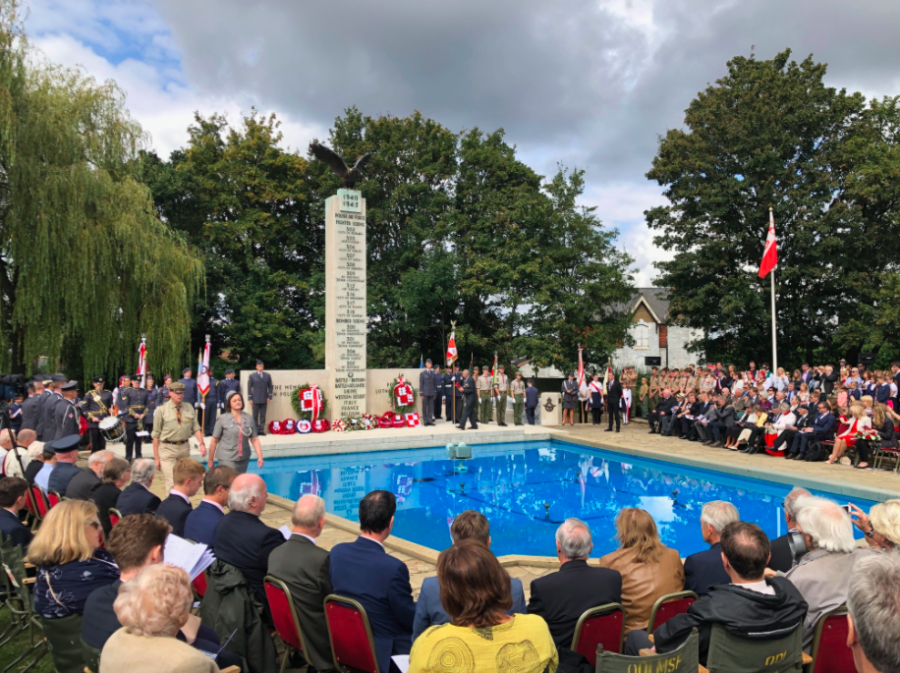
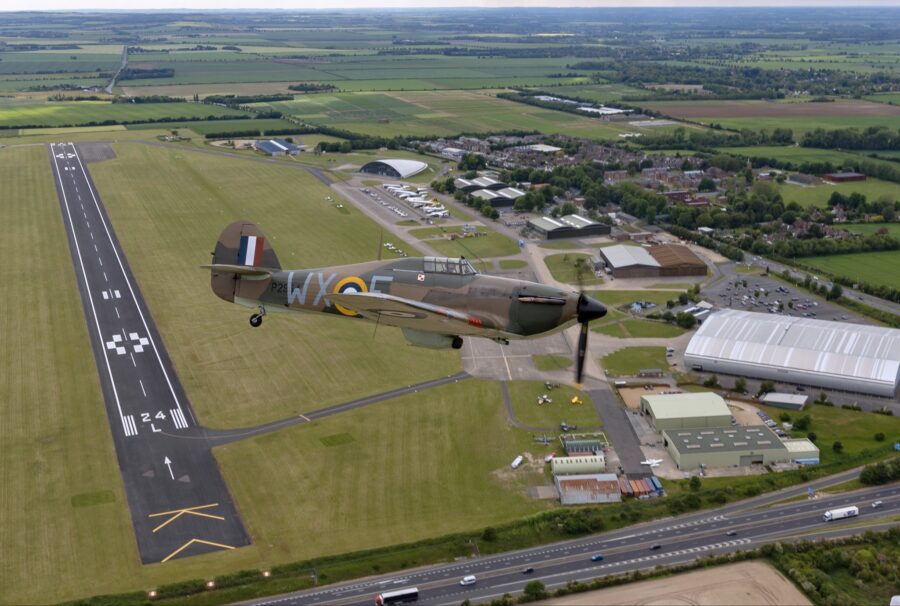
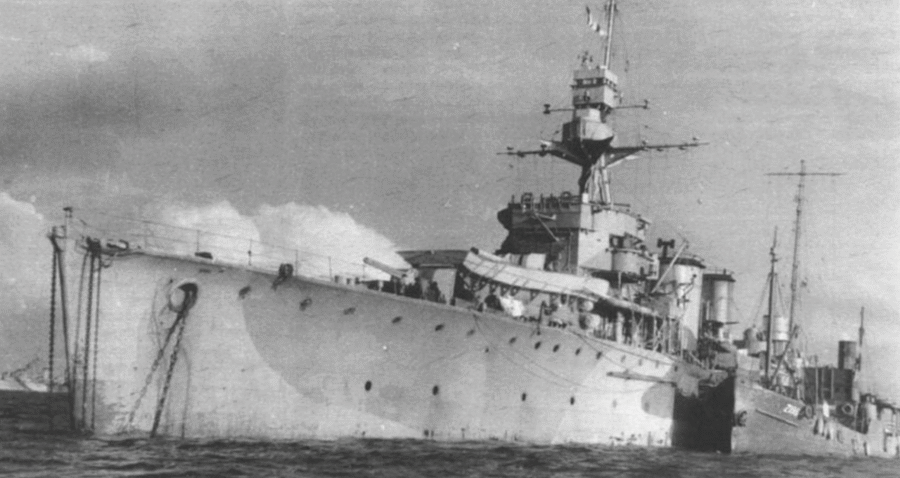
Polish forces played a significant role in supporting the invasion. The elite 1st Polish Armoured Division, led by General Stanisław Maczek, was held back for the “second phase” of the invasion, later achieving victory at Falaise and Mont Ormel in August 1944. Meanwhile, Polish airmen from the 131st and 133rd Fighter Wings, already renowned from the Battle of Britain, wreaked havoc on German anti-aircraft defences, while Polish sailors contributed significantly. The ships ORP Błyskawica and ORP Piorun protected the invasion fleet, while ORP Krakowiak and ORP Ślązak added to the legacy of Polish naval valour. The crew of ORP Dragon thwarted a counterattack by the elite 21st Panzer Division, though 37 sailors later perished when a German “Neger” human torpedo struck the ship’s ammunition stores.
The costly assault ended in victory, launching the Western Front that would crush the Third Reich within a year. Yet, in Polish hearts, one question lingered: would this bring freedom to Poland?
Jan Kasprzyk
The author is a historian and served as Head of the Office for War Veterans and Victims of Oppression from 2016 to 2024. The article was published in the weekly Niedziela.
Photo: ORP Dragon